
12 Bizarre Rituals Behind Royal Births
Nearly 200 people watch them give birth.
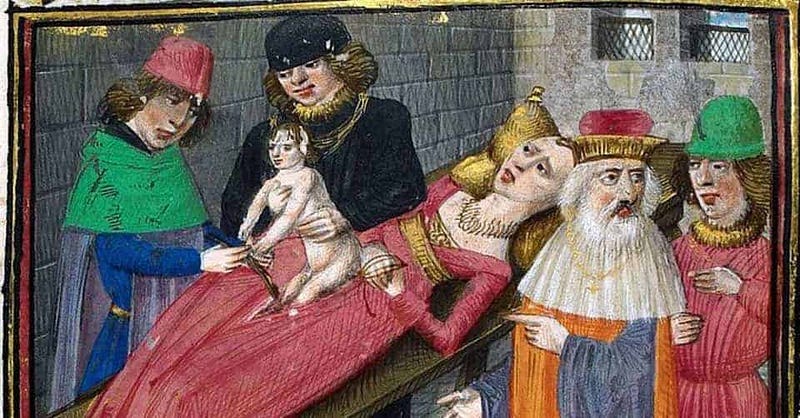
Several instances, events, and facts in history have already proved how being loyal is not a walk in the park, and this article dives into one such aspect — childbirth.
From medieval times to the present, some rituals are just stuck with the pregnancy process. Let’s dive into the interesting findings:
1. Queens giving birth in front of dozens
Queens were supposed to give birth in front of several people — an invasion of the fundamental human right of privacy.
From royal officials to servants, every individual used to be present, ensuring that no scandal rises around the delivery.
If we take the example of Marie Antoinette, then in 1778, she delivered in front of 200 people. Weird enough: a special announcement was made when the queen was going to give birth, an announcement that led to hundreds pouring into the chamber.
According to Antoinette’s chambermaid, the rush nearly killed her. Some people even climbed up on the furniture to catch a clear sight of the process.
2. Bizzare pregnancy tests with urine
In Tudor times, women didn’t even know of their pregnancy until they could feel the child move. Some women could go for a rough urine test where if upon inserting a needle, it rusted then it was a positive indication of pregnancy.
3. International cravings of royal women
The cravings of expectant mothers were also royal. Many queens who crave strange foods like Jane Seymour, Henry VIII’s third wife, had developed a bizarre craving for quail meat. Surrendering to her wife’s demands, King Henry got the delicacy shipped from Calais.
4. ‘Birth trays’ for royal mothers
Once delivered a healthy baby, the royal mothers were presented with birth trays, elaborately decorated with varying mythological and religious themes.
Covered with a protective cloth and filled with food together with small gifts, those trays acted as a celebration of childbirth.
Many trays were specially commissioned and later hung on the wall as a keepsake with the title of “triumph” labeled.
5. ‘Push presents’ very much existed
If you think that fathers showering their partners with presents is a ‘modern’ trend, let’s fix the facts. The idea of push presents is the legacy of royal kings who embellish their wives with several gifts.
Napoleon gifted his second wife Marie-Louise dozens of diamond necklaces upon the birth of their son. Edward IV, upon the delivery of his daughter, gave Elizabeth Woodville a jeweled ornament.
6. Royal mothers and the holy girdles.
Back then, people heavily relied on charms and prayers, making birth girdles of immense importance across varying social levels.
The pregnancy process of a royal woman was woven in rituals aimed at protecting both the infant and the mother, and one of such rituals was of accessing the Holy Girdle of the Virgin, held at St Peter’s Westminster and that of St Aelred at Rievaulx Abbey.
Interestingly, several times, other holy girdles, supposedly blessed by the Virgin Mary, were sent to the royal pregnant woman to reduce pain in childbirth and strengthen the contractions.
7. Special birthing chambers
The wholehearted preparations for the baby to come were highly elaborate. To ensure child’s peaceful entry into the world, birthing chambers were designed.
Acting as a type of “second womb”, those rooms were thoughtfully decorated like dim-lit fire, calming tapestries, and religious items for spiritual reassurance. Interestingly, the windows were constantly shut until the child’s birth as the light was thought to harm the mother’s eyes.
8. Proud illegitimate royal offspring
History is darted with several instances where kings produced several illegitimate offspring. Fifteen of George III’s children had cumulative 56 illegitimate offspring.
But Illegitimate royal children were not meant to live with the shame, as Henry VIII made his illegitimate one the Duke of Richmond and Somerset.
9. Picking a name was an incredibly delicate matter
Choosing a name for a baby is always a hard nut to crack, and situations become even more challenging when selecting royal names. Why?
One needs to analyze several aspects and potential pitfalls like a stroke of bad luck or flawed comparisons — no royal would like to carry the legacy of ‘Bad’ King John.
To play safe and maintain a tailored image, monarch families throughout history re-used the royal names like George, Henry, and Elizabeth.
10. Delivery rooms were women-only areas.
For centuries delivery rooms were restricted for women. Even the fathers were not allowed to be present while the mothers gave birth to children.
The presence of Prince Albert at Queen Victoria’s delivery was an exception who witnessed several of his children coming to birth — an act upon which Queen Victoria later wrote, “There could be a no kinder, wiser, nor more judicious nurse.”
The practice soon altered, and childbirth did not remain only an all-female affair.
With the developments in medical sciences and technology, the emergence of man-midwives, known as the accoucheurs, became increasingly popular.
The technology was thought to be a men’s business, so they charged higher fees than women. The presence of accoucheurs at the childbirth was indicative of the family’s wealth, and by 1764 royal family begin allowing men to chamber-like William Hunter was appointed to Queen Charlotte.
11. Royal mothers didn’t breastfeed their children
The act of breastfeeding was not much appreciated among royals. Moreover, it was not a practical approach too, as the primary responsibility of a queen was to provide more heirs.
Breastfeeding would have simply disabled the Queen to conceive again quickly. People also held the notion of breastfeeding milk ‘curdling’ upon the of marital relations, which was harmful to the child.
Breastfeeding a royal baby was a lucrative business, where wet nurses would enjoy a hefty sum and elaborated gifts for their duties.
12. Eltham Palace: a joyful place for Medieval royals
If you are not aware of the role of Eltham palace in raising the royal children, then you would like to know how the place was traditionally used to bring up the royal offspring between the 14th and 16th centuries.
Many children would spend their Christmas under their favorite royal residence, which treasured several memories of their childhood and youth. It was the best dwelling for Edward III and Henry VIII.
More from the author:
References:


