
The Immortal Majesty of York Minster
My A-Z of favorite travel destinations: Y
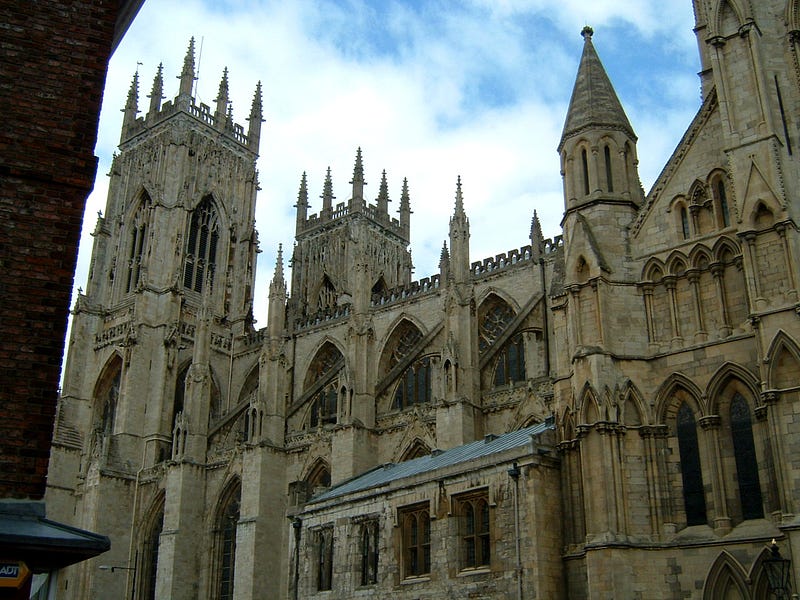
York Minster was one of the first cathedrals I ever saw, voyaging with my dad up through England in our rental car. It was my first trip overseas, the summer after my freshman year of college. I was wide-eyed, soaking up this foreign culture.
This was a time of learning, not of traveling with a hardened eye. Now at age thirty-seven, I’ve been in lots of Gothic cathedrals, but at the time I was still soaking in what they were and what they meant.
York Minster was astounding — a medieval monument in the middle of a modern city, having lasted for so many centuries and appearing, to me, still perfect.
The Minster is one of the largest cathedrals in Northern Europe, in fact, and was finally completed in 1472 after several hundred years of building. It’s the seat of the archbishop of York, the third-highest figure in the Church of England after the king/queen and the archbishop of Canterbury.
Just look at the intricate details on the towers. That’s the unbelievable craftsmanship of the Gothic style, making the Minster appear as though it is reaching up to heaven.
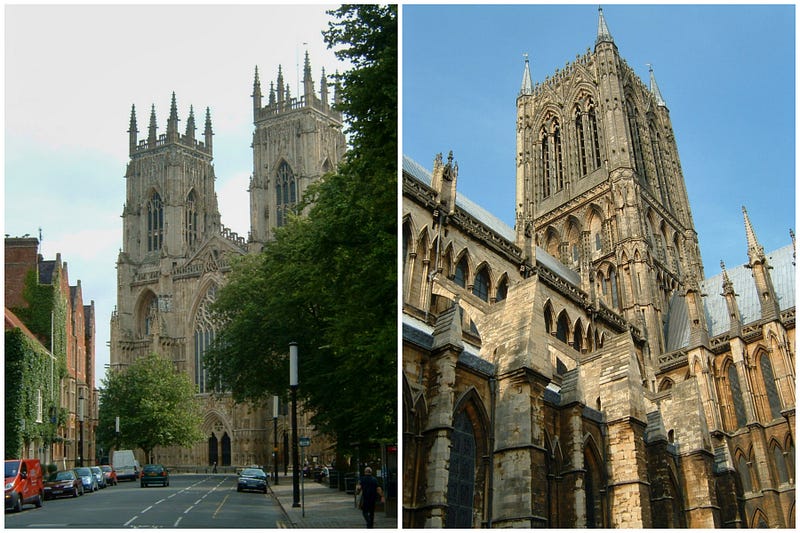
As I learned in my visitor’s pamphlet as I explored the cathedral, staring with awe, the grounds of York Minster have been an important site for Christian worship since at least AD 627.
In that year, during the early wave of England’s conversion to Christianity, a small wooden church was built hastily in order to have a place to baptize Edwin, King of Northumbria. England wasn’t even a complete kingdom yet, but contained seven kingdoms within it.
Ten years later, in 637, a stone church was built, and by the next century the church’s attached school and library were some of the most important in Europe.
The name “Minster” is an Anglo-Saxon word for a missionary teaching church, and it has stuck with York Minster for well over a millennium.
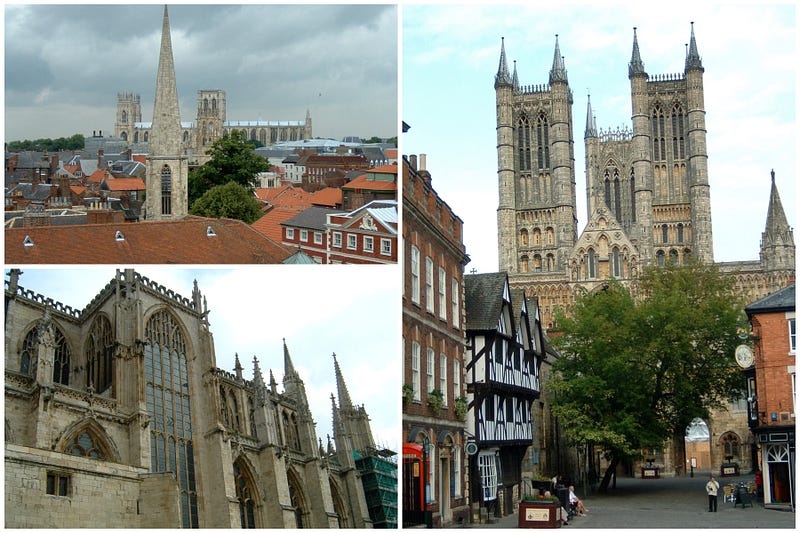
And what about the current York Minster? It appears as one serene artwork, a song in stone, but it is actually a patchwork of centuries.
After the invasion of William the Conqueror in 1066, the oldest pieces of the Minster were built in the Norman style — long and massive, with rounded arches and two towers on the western side.
Then the Gothic style of cathedrals swept through western Europe. I can easily see why the style became so popular. These are the high soaring ceilings, the elaborate details, the vast stained glass windows.
A certain archbishop of York, Walter de Gray, became jealous of the great Gothic cathedral growing up in Canterbury. He ordered that the Norman structure in York be used as a base for a new Gothic cathedral in York.
So more pieces came on — chapels and transepts and towers and a wooden spire. A catastrophe happened in 1407, when the main tower collapsed, but a new one was begun in 1420.
All these pieces came together in 1472, when York Minster was finally consecrated. Imagine all the thousands of builders and the clarity of purpose they had to maintain through the centuries, knowing they would never see their work finished with their own eyes.
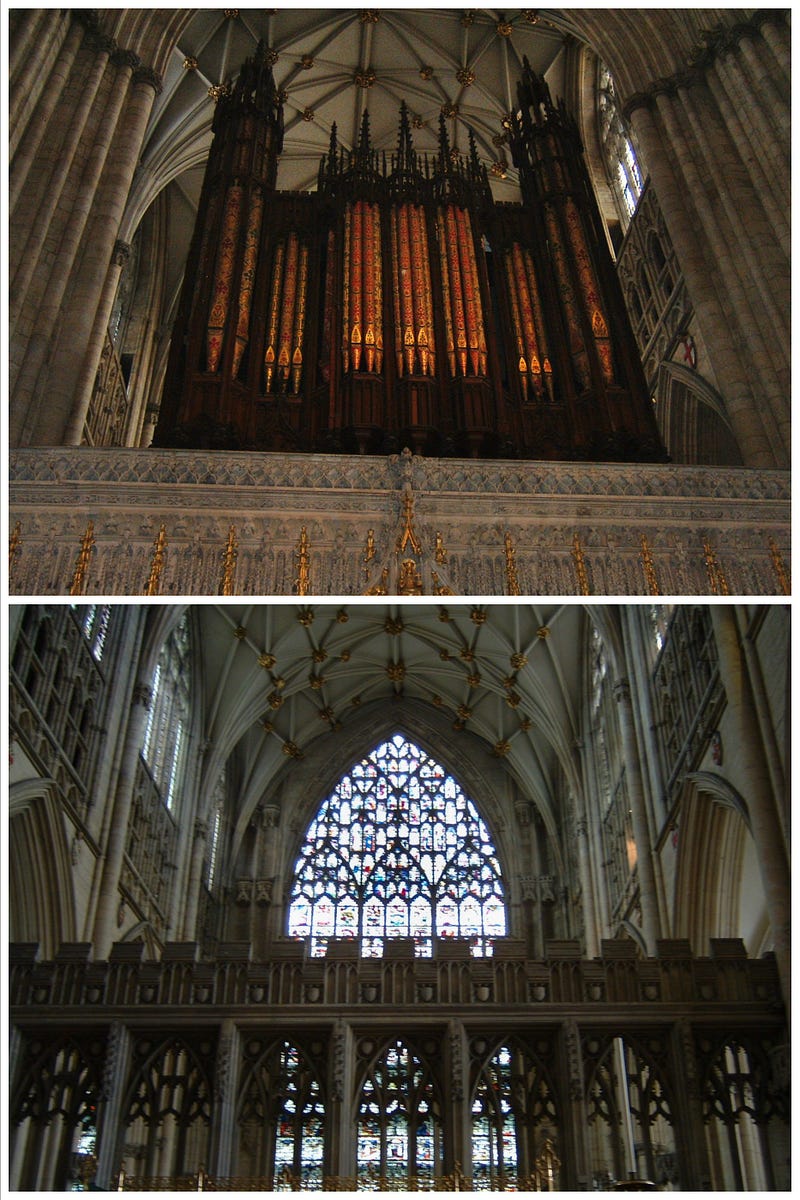
I am not religious, but inside York Minster, I felt infinite. I experienced the cathedral just as its builders intended — with an upward-looking, upward-reaching awe.
Cathedrals are meant to reach toward an immortal God. To me, they celebrate humankind, testament to the creative, expansive impulse within us.
At the time I visited York Minster, at eighteen years old, I was gradually forming the idea that God did not create man, but man created God.
This thought may seem obvious to all other atheists, but it hit me like a thunderclap — and I had that revelation within a cathedral, looking up toward heaven as the builders intended, but thinking,
This is the creation of man. It is humanity who we should worship, who had such imagination and ability to build such things.
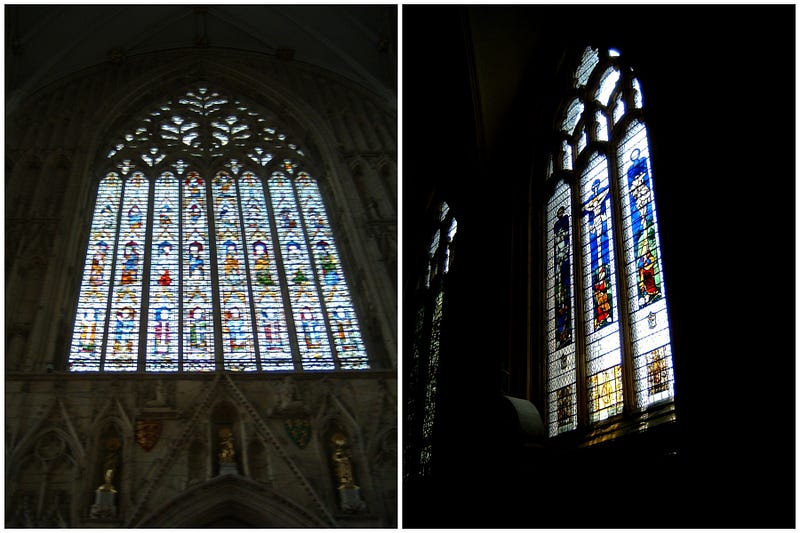
The stained glass inside York Minster especially attracted me. It made for glowing windows to the infinite, lighting up the inside of this massive building of solid stone.
As I strode around with my tourist brochure, intent on understanding the windows, the side chapels, the history of the cathedral, I gradually realized that above all, a cathedral must be felt.
It must come in through the eyes and ears (through the silence of the space, or the notes of the organ) and evoke wonder. York Minster more than fulfills this vision.
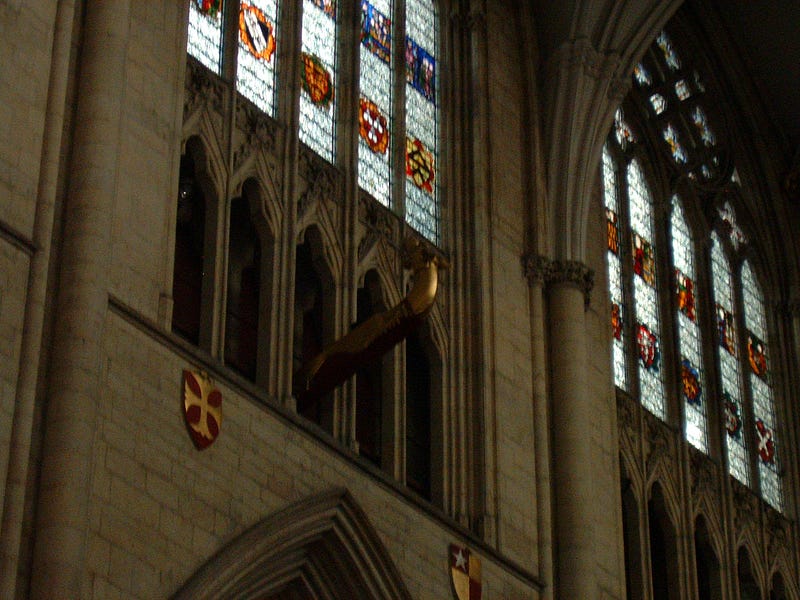
And so I went off, headed to more cathedrals that left me awestruck. York Minster was one of my first, and it sparked a passion in me which can never be fulfilled.
I need cathedrals, and cathedrals, and cathedrals. I need to reach toward the sky with the best intentions of mankind, soaring upward into the infinite.
Thanks for reading, and thank you to the editors at Globetrotters (JoAnn Ryan, Anne Bonfert, Jillian Amatt — Artistic Voyages, Adrienne Beaumont, Michele Maize) for running such a great publication.
For a story about a different kind of religious place from York Minster, check out Roshn Noronha’s wonderful article about Petra, Jordan:
I loved Craig K. Collins’s story about the well-fed cats of Istanbul:
This York Minster article is the fifth in my “A-Z” travel challenge undertaking (which I’m doing out of order). I’ve started a list of my articles here:


