
‘The Gift’: Part One(iii)
Season Three of ‘Atiye’

Season 3 of ‘The Gift’ begins with us having learned about the existence of the portal to the ‘Underworld reality’. We also know that Atiye and Erhan have always been together, over many years, many incarnations. They had forgotten each other when they left ‘the holy garden’, forgotten they were One, got separated — seeds and wombs ceased to be fertile.
This follows the tradition of paired gods and goddesses. The masculine balanced by the feminine, the heavenly and the earthly (encompassing the underworld caverns, the womb of the world) — Adam and Eve, Isis and Osiris, Jesus and Mary Magdalene, Atiye and Erhan.
A prophecy is given that when the stars align the daughter of Atiye and Erhan will be the one to bring hope to the world.
Atiye’s daughter is kidnapped shortly after birth, by Ozan whose father is part of a dark conspiracy devoted to chaos and the destruction of the world of man. (It becomes less obvious whether there is a clear cut division between good and evil with the two groups).
The third season begins eight years on. We see that Ozan is raising the stolen girl as his own, in a cabin by the sea. As the child grows, she begins to draw in the sand the same symbol Atiye always did, but at the centre she places an eye. The all seeing protective Eye. The eye seems to make it possible to loosely connect with Atiye, who tries to strengthen the connection and to piece together things she discovers about the heritage of her family and how the two opposing groups fit into the story of what is happening, everything which has happened before. At the same time, Ozan begins to realise that the child needs her mother and without the knowledge or permission of the organisation, takes her to Atiye.
Purple stones like the ones in the cavern at Gobekli Tepe are used to amplify the psychic third eye to enable Atiye’s daughter to open a portal to the other reality. We see now the reason for the eye in the centre of the symbol, with life spiralling out either side into the two different realities.
‘As above, so below’
We see the ‘Evil Eye’ symbol cropping up all over the place, along with the ‘Tree of Life’ — in artwork, on jewellery, in ancient stone carvings.
The girl is named Aden. A Quranic name meaning happiness, laughter, joy and delight.
“One who happily remains somewhere for Eternity.”
Of course, as you have no doubt guessed given the similarity between the two words, Aden is related to and probably translated to ‘Eden’ in English.
“[theirs will be the] gardens of perpetual bliss which the Most Gracious has promised unto his servants, in a realm which is beyond the realm of human perception: [and,] verily, His promise is ever sure of fulfilment.” — Quran, 19:61
The Garden of Eden in the Bible is also described as a place of pleasure and delight. It is God’s gift to the first humans, Adam and Eve, a place of serene beauty. There are two trees in the centre, one the tree of Life, the other (the forbidden one, the tree which holds the knowledge of good and evil), ultimately the tree of Death because eating from this was punished with mortality when the pair were cast out (Genesis 2:9).
Eden (Aydin), the Ancient Hebrew Meaning — Light of the World (wordpress.com)
Meanwhile, Atiye is surrounded by imagery which presents her as an incarnation of a nature goddess, like Demeter, who affects the seasons and the natural world with the strength of her emotions.
This season as a whole relies even more heavily on imagery and symbolism.
For example, in the beginning episodes, pine cones seem to be of great significance.
According to Sarah Greenman (who describes herself as a ‘creative alchemist’, artist, writer and storyteller and has a website which is quite the treasure trove): conifers are one of the oldest forms of plant life on earth and all the world over there have been spiritual and religious traditions which have included pinecones in their iconography. They all seem to have considered them to be symbols of spiritual consciousness, enlightenment and immortality.
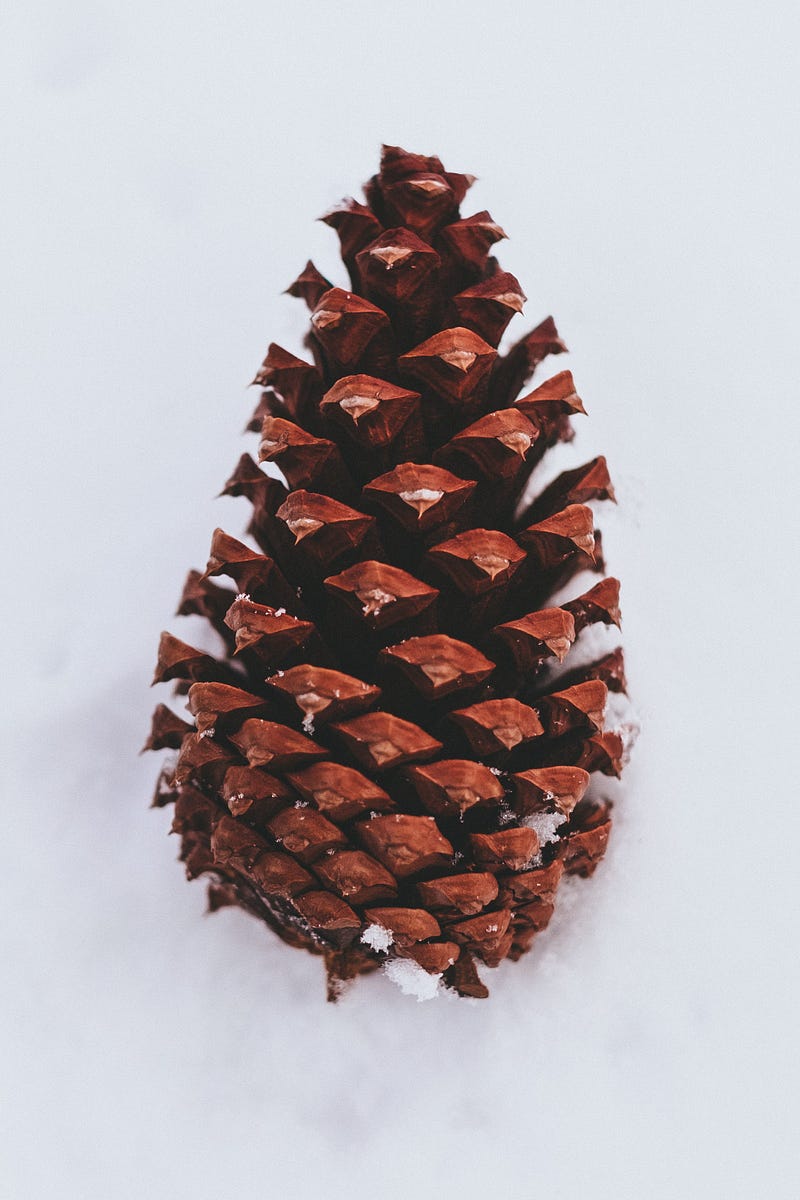
For example:
- The staff of the Egyptian god Osiris (1224 BCE) has two spiralling snakes rising up towards a pinecone.
- Ancient Assyrian palace carvings (1713–16 BCE) show two winged figures holding pinecones.
- Ancient Romans associated pinecones with the goddess Venus.
- The Celts thought pinecones representative of regeneration and used them as a fertility charm.
- Catholic iconography also has them carved into the holy staff the Pope carries during religious ceremonies — and there is also known to be a large bronze statue of a pinecone somewhere in the Vatican.
Mathematicians and scientists also find the humble pinecone fascinating, as the way a pinecone fans out provides a beautiful example of the Fibonacci Sequence (the Golden Spiral or Golden Ratio) occurring in nature. It can be found everywhere, from the growth pattern of leaves, to the spiral of galaxies in space.
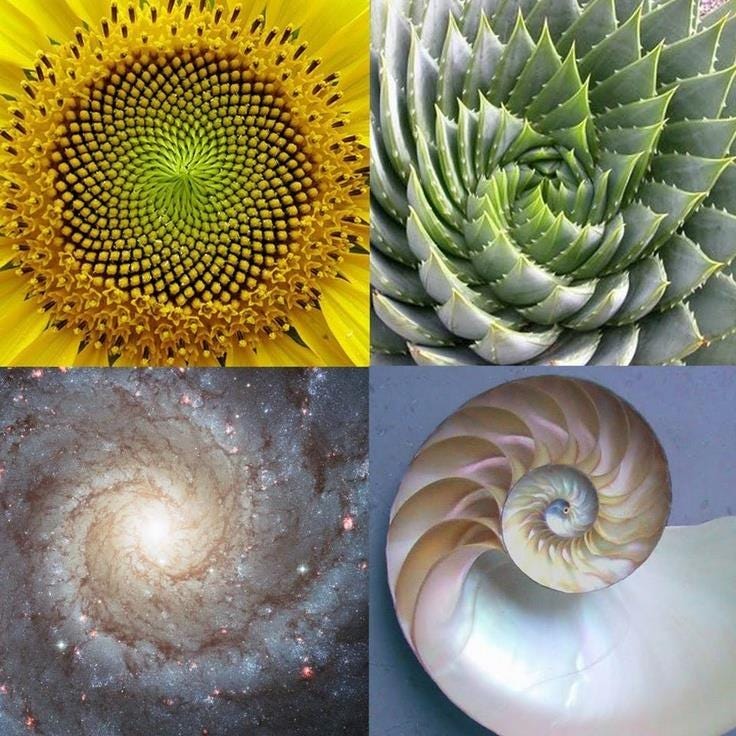
We continue to associate pinecones with the feminine. They are also therefore symbols of sexuality and fertility — and we are told that as (in mythology) their seed dispersal method was used to pollinate the Tree of Life, pinecones are seen as symbols of everlasting life (of course pines are evergreen trees too).
Time is cyclic, spiral, like the pattern the Fibonacci Sequence produces, like a DNA strand…
“Birth begins with death and our last day is the beginning of the first.”
— ‘Atiye/TheGift’
Thank you for reading. Stay safe. Stay well. Keep reading at Counter Arts and Rainbow Salad!