avatarJanice Harayda

Free AI web copilot to create summaries, insights and extended knowledge, download it at here

3707

Abstract

tury British warship.</p><h2 id="bb07">A ‘Hobbesian state of depravity’</h2><p id="f90b">“Faced with starvation and freezing temperatures, they built an outpost and tried to re-create naval order,” Grann writes. “But as their situation deteriorated, the <i>Wager</i>’s officers and crew — those supposed apostles of the Enlightenment — descended into a Hobbesian state of depravity. There were warring factions and marauders and abandonments and murders. A few of the men succumbed to cannibalism.”</p><p id="541e">Stranded on an island off Chile, the marooned <i>Wager</i> crew resembled the subjects in a lab experiment that tested human nature in extreme conditions, Grann <a href="https://www.nytimes.com/2023/04/12/books/david-grann-the-wager.html">said</a> in an interview. Their lives became “a story about the disintegration of a floating civilization.”</p><figure id="c432"><img src="https://cdn-images-1.readmedium.com/v2/resize:fit:800/1*ybCvVvGnkxRFmNu99d2bHg.jpeg"><figcaption>Jack London on horseback, early 1920s / Charmian London via <a href="https://london.sonoma.edu/">Sonoma State University</a></figcaption></figure><p id="61c0">Novels also portray descents into depravity, including William Golding’s satirical <i>Lord of the Flies</i>. But the gold standard for stories about a severed tie to civilization is Jack London’s novel <i>The Call of the Wild, </i>which first appeared in serial form in the <i>Saturday Evening Post</i> in 1903. It has never gone out of print and has been translated into nearly 100 languages.</p><p id="2fd7">London drew on his experiences in the Yukon during the Klondike Gold Rush in a classic built on the question: What turns a product of civilized society into a killer?</p><p id="185c">His answer is neither “nature” nor “nurture” but “both,” a prescient anticipation of the modern scientific view that environmental factors switch genes on or off.</p><p id="df68">Critics in postcolonial studies and other fields have faulted the old polarities of “civilized” and “barbaric,” asking worthy questions like: Why do we define those terms as we do? And who gets to define them?</p><p id="bf00">But London creates a fictional universe all his own in an adventure story that has retained its appeal amid the shifting winds of academic fashion.</p><figure id="a510"><img src="https://cdn-images-1.readmedium.com/v2/resize:fit:800/1*bHJ5BB1bGmSwNFvnSfZsbQ.jpeg"><figcaption>Cover of “The Call of the Wild” and other books / <a href="https://jacklondonpark.com/jack-london-books/">Jack London State Historic Park</a> in Glen Ellen, Calif.</figcaption></figure><p id="f46a">He tells his tale mainly from the point of view of Buck, a half-shepherd, half-Saint Bernard mix, who has spent the first four years of his life as the “unduly civilized” pet of a California judge. Then a groundskeeper kidnaps him and sells him to the first of a series of cruel owners, who soon attach him to sled-dog teams during the Klondike Gold Rush of 1897.</p><p id="82fc">In order to survive, Buck must shed more of his learned behaviors with each clash with his brutal masters and with rival dogs. He and the other dogs turn savage when starved, beaten, and forced to haul crushing loads in temperatures as low as 50 degrees below zero.</p><p id="0ec3">By the time Buck finds an owner who treats him kindly, the question is: At what point does “the call of the wild” become irreversible, or at least irresistible?</p><p id="b508">As E.L. Doctorow notes in his introduction to its Library of America edition, <i>The Call of the Wild</i> is a “mordant parable of the thinness of civilization.”</p><p id="8ff0">London’s genius was to show how a lifetime of restraints can fall away

Options

when circumstances are extreme, and his best-known book retains its appeal in part because it allows us to see that shedding of civilization at two removes: in the life of a dog and in a vast Yukon wilderness that few of us will ever visit.</p><h2 id="b9ef">A mythic allure</h2><p id="cf1b">The remoteness of the setting helps to give <i>The Call of the Wild</i> a mythic allure. And <a href="https://london.sonoma.edu/">London</a> shows how a good novelist can lend credibility to transformations that, if described in news reports, might defy belief.</p><p id="6c62">For all the horrors Buck and other dogs endure, London invests the story with the real joy that comes from living amid nature, however “red in tooth and claw,” as the poet Alfred Tennyson put it.</p><p id="4a45">“It was beautiful spring weather, but neither dogs nor humans were aware of it,” London writes in a memorable passage. “Each day the sun rose earlier and set later. It was dawn by three in the morning, and the twilight lingered till nine at night. The whole long day was a blaze of sunshine. The ghostly winter silence had given way to the great spring murmur of awakening life. This murmur arose from all the land, fraught with the joy of living.”</p><p id="be9e"><i>@janiceharayda is an award-winning critic and journalist who has been a staff writer and editor for </i>Glamour<i>, the book critic for Ohio’s largest newspaper, and a vice president of the National Book Critics Circle. She has also taught writing at two major U.S. universities. Her work has appeared in many major media including the </i>New York Times<i>, the </i>Wall Street Journal<i>, the </i>Washington Post<i>, </i>Newsweek<i>, and </i>Salon<i>.</i></p><p id="ddb0"><b><i>You might like some of my other stories about classics:</i></b></p><div id="830e" class="link-block"> <a href="https://janiceharayda.medium.com/the-dog-that-couldnt-hunt-straight-56548e939b4"> <div> <div> <h2>The Dog That Couldn’t Hunt Straight</h2> <div><h3>An acclaimed Canadian writer remembers a lovable mutt and its bizarre identity crisis</h3></div> <div><p>janiceharayda.medium.com</p></div> </div> <div> <div style="background-image: url(https://miro.readmedium.com/v2/resize:fit:320/1*U6PTAq3qLxx_JITLbxOkfg.jpeg)"></div> </div> </div> </a> </div><div id="fb8f" class="link-block"> <a href="https://fanfare.pub/why-lad-a-dog-still-charms-9c8da12a6e48"> <div> <div> <h2>Why ‘Lad: A Dog’ Still Charms</h2> <div><h3>A brave collie shines at the Westminster show</h3></div> <div><p>fanfare.pub</p></div> </div> <div> <div style="background-image: url(https://miro.readmedium.com/v2/resize:fit:320/1*vSDcOjyCgNKWItBrXU3p6w.jpeg)"></div> </div> </div> </a> </div><div id="6a28" class="link-block"> <a href="https://readmedium.com/dont-cancel-rudyard-kipling-63ebe9b6d5f1"> <div> <div> <h2>Don’t Cancel Rudyard Kipling</h2> <div><h3>He’s been called ‘a right-wing imperialist warmonger,’ but his great ‘Rikki-Tikki-Tavi’ shows why he’s making a…</h3></div> <div><p>medium.com</p></div> </div> <div> <div style="background-image: url(https://miro.readmedium.com/v2/resize:fit:320/1*f_M_ROQEwouexAlbHZj_Xg.jpeg)"></div> </div> </div> </a> </div></article></body>

CULTURE

The Genius Of ‘The Call Of The Wild’

Why Jack London’s classic is still relevant to a world that often seems to be coming apart at the seams
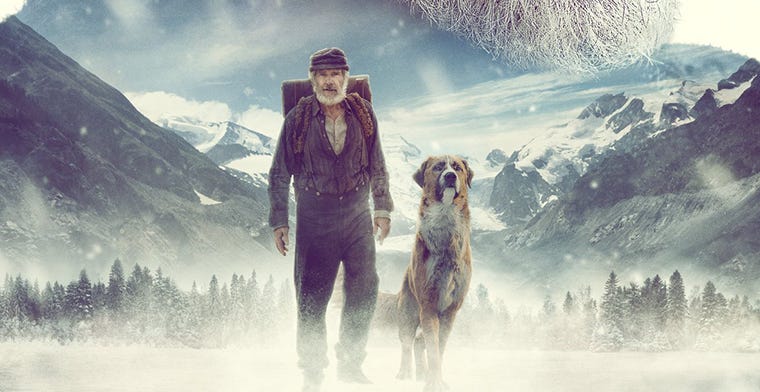
Harrison Ford in the 2020 film version of “The Call of the Wild” / DisneyPlus

The other day a woman was sentenced to two years in federal prison for trying to firebomb a Southern California bank. She hurled a Molotov cocktail into the middle of the bank, she said, “because she believed she had been waiting in line for too long.”

If you didn’t hear of her sentencing, you may have missed it because so many similar events competed with it for your attention.

A few days earlier, a man died at an Albuquerque movie theater after a second man arrived with his girlfriend and found another couple in one of their reserved seats. The victim was fatally shot, the Associated Press said, after a dispute “escalated with a hurled bucket of popcorn.”

Has the world gone feral?

Those are just two of the recent events that might make you wonder: Has the world gone feral?

Every day seems to bring fresh evidence of the fraying of civilization, whether it involves the bombing of a maternity hospital in Ukraine or the latest U.S. school shooting, which left six people dead at an elementary school in Nashville, Tennessee, in March.

A vast amount of scholarly and journalistic research disproves the cliché that when such events occur, the perpetrator “just snapped.” Some of the most recent came from Mark Follman, the national affairs editor of Mother Jones, who refutes it his recent book Trigger Points (Dey Street, 2022).

It’s a myth, Follman writes, that mass shootings are spur-of-the-moment events involving no forethought. Shooters, he says, act with a purpose:

“They decide. They develop violent ideas, arm, and ready themselves, and then choose where and when to strike.”

History supports Follman and others who refute the idea that most perpetrators of mass shootings “just snapped.”

David Grann gives an especially vivid example in his №1 nonfiction bestseller, The Wager. He describes a shipwreck and mutiny involving men pushed to their limits by horrific disasters on a journey across the Atlantic and around Cape Horn on an 18th-century British warship.

A ‘Hobbesian state of depravity’

“Faced with starvation and freezing temperatures, they built an outpost and tried to re-create naval order,” Grann writes. “But as their situation deteriorated, the Wager’s officers and crew — those supposed apostles of the Enlightenment — descended into a Hobbesian state of depravity. There were warring factions and marauders and abandonments and murders. A few of the men succumbed to cannibalism.”

Stranded on an island off Chile, the marooned Wager crew resembled the subjects in a lab experiment that tested human nature in extreme conditions, Grann said in an interview. Their lives became “a story about the disintegration of a floating civilization.”
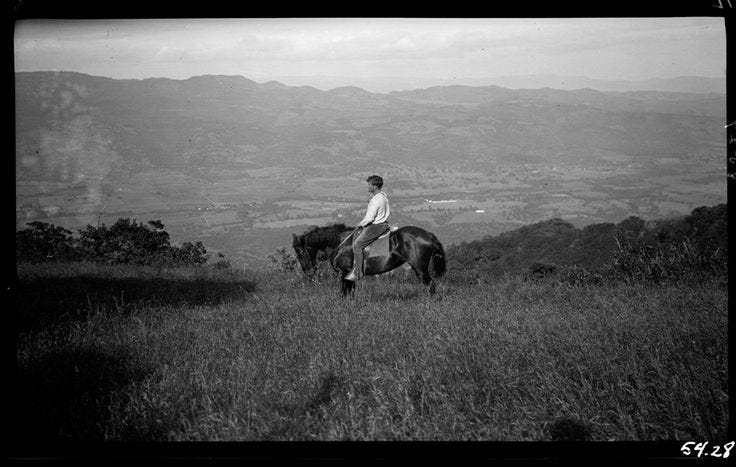
Jack London on horseback, early 1920s / Charmian London via Sonoma State University

Novels also portray descents into depravity, including William Golding’s satirical Lord of the Flies. But the gold standard for stories about a severed tie to civilization is Jack London’s novel The Call of the Wild, which first appeared in serial form in the Saturday Evening Post in 1903. It has never gone out of print and has been translated into nearly 100 languages.

London drew on his experiences in the Yukon during the Klondike Gold Rush in a classic built on the question: What turns a product of civilized society into a killer?

His answer is neither “nature” nor “nurture” but “both,” a prescient anticipation of the modern scientific view that environmental factors switch genes on or off.

Critics in postcolonial studies and other fields have faulted the old polarities of “civilized” and “barbaric,” asking worthy questions like: Why do we define those terms as we do? And who gets to define them?

But London creates a fictional universe all his own in an adventure story that has retained its appeal amid the shifting winds of academic fashion.
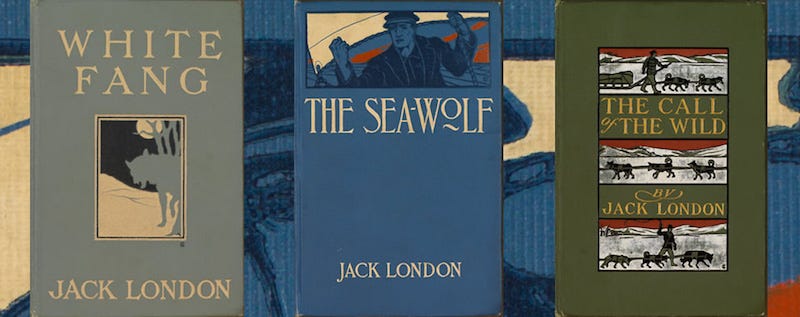
Cover of “The Call of the Wild” and other books / Jack London State Historic Park in Glen Ellen, Calif.

He tells his tale mainly from the point of view of Buck, a half-shepherd, half-Saint Bernard mix, who has spent the first four years of his life as the “unduly civilized” pet of a California judge. Then a groundskeeper kidnaps him and sells him to the first of a series of cruel owners, who soon attach him to sled-dog teams during the Klondike Gold Rush of 1897.

In order to survive, Buck must shed more of his learned behaviors with each clash with his brutal masters and with rival dogs. He and the other dogs turn savage when starved, beaten, and forced to haul crushing loads in temperatures as low as 50 degrees below zero.

By the time Buck finds an owner who treats him kindly, the question is: At what point does “the call of the wild” become irreversible, or at least irresistible?

As E.L. Doctorow notes in his introduction to its Library of America edition, The Call of the Wild is a “mordant parable of the thinness of civilization.”

London’s genius was to show how a lifetime of restraints can fall away when circumstances are extreme, and his best-known book retains its appeal in part because it allows us to see that shedding of civilization at two removes: in the life of a dog and in a vast Yukon wilderness that few of us will ever visit.

A mythic allure

The remoteness of the setting helps to give The Call of the Wild a mythic allure. And London shows how a good novelist can lend credibility to transformations that, if described in news reports, might defy belief.

For all the horrors Buck and other dogs endure, London invests the story with the real joy that comes from living amid nature, however “red in tooth and claw,” as the poet Alfred Tennyson put it.

“It was beautiful spring weather, but neither dogs nor humans were aware of it,” London writes in a memorable passage. “Each day the sun rose earlier and set later. It was dawn by three in the morning, and the twilight lingered till nine at night. The whole long day was a blaze of sunshine. The ghostly winter silence had given way to the great spring murmur of awakening life. This murmur arose from all the land, fraught with the joy of living.”

@janiceharayda is an award-winning critic and journalist who has been a staff writer and editor for Glamour, the book critic for Ohio’s largest newspaper, and a vice president of the National Book Critics Circle. She has also taught writing at two major U.S. universities. Her work has appeared in many major media including the New York Times, the Wall Street Journal, the Washington Post, Newsweek, and Salon.

You might like some of my other stories about classics:

Books
Fiction
Movies
Dogs
This Wasnt Boosted
Recommended from ReadMedium