avatarMike Alexander

Free AI web copilot to create summaries, insights and extended knowledge, download it at here

2614

Abstract

te id="b409"><p><b>Later, my wife assured me that if it had been an Australian snake there is no way the dog would have yelped or turned around before moving on to the “happy place”.</b></p></blockquote><figure id="87cf"><img src="https://cdn-images-1.readmedium.com/v2/resize:fit:800/1*PxFuNIg-deXQ-GXLKlYtOw.jpeg"><figcaption>Photo by <a href="https://www.pexels.com/@pixabay?utm_content=attributionCopyText&amp;utm_medium=referral&amp;utm_source=pexels">Pixabay</a> from <a href="https://www.pexels.com/photo/garter-snake-on-stone-162347/?utm_content=attributionCopyText&amp;utm_medium=referral&amp;utm_source=pexels">Pexels</a></figcaption></figure><h2 id="3e7f">The pupil test — A local way you must avoid</h2><p id="1916">Now, as the weather in France begins to warm, local snakes will start to make their appearance. There are nearly a dozen types of snakes in France but they can be loosely classed into two categories. (Herpetologist will hate me for making such a broad sweeping generalization, but this isn’t the place for a snake-by-snake identification parade so bite your tongues).</p><p id="1e31">First are the vipers which are mildly venomous, and the second are the more common grass snake which are totally harmless. This doesn’t stop my wife from hating both of them with equal intensity.</p><p id="2188">The thing I find most interesting is that if you ask a local how to tell the two of them apart, they will invariably inform you that the viper has a horizontal pupil whilst that of the grass snake is round.</p><blockquote id="1212"><p><b>This is the sort of useful information that I rate right up there with playing dead when charged by a grizzly bear or punching great white sharks in the nose as they hurtle towards you like runaway steam trains with teeth.</b></p></blockquote><p id="39a4">I do know a fair bit about sharks, as it so happens. For around five years, I was a commercial construction diver and many of the contracts that I worked on were off the South African coast. There, sharks do put in an appearance from time to time.</p><p id="0ae8">Professional divers don’t hold to the theory about sparring with man-eating sharks. They are trained to deal with them in a far more effective manner which I will share with you now, just in case you happen to tumble into shark-infested waters.</p><figure id="b171"><img src="https://cdn-images-1.readmedium.com/v2/resize:fit:800/1*UsnFHvMKGQ-56u0F4jMs9Q.jpeg"><figcaption>Image by <a href="https://pixabay.com/users/sarahrichterart-1546275/?utm_source=link-attribution&amp;utm_medium=referral&amp;utm_campaign=image&amp;utm_content

Options

=2435605">Sarah Richter</a> from <a href="https://pixabay.com/?utm_source=link-attribution&amp;utm_medium=referral&amp;utm_campaign=image&amp;utm_content=2435605">Pixabay</a></figcaption></figure><p id="d726">Firstly, we always work in pairs, and secondly, professionals always carry a knife. On the rare occasions when sharks pose a threat, working divers will get together back-to-back, and draw their knives.</p><p id="47e8">When you spot the shark coming towards you, you reach behind you, stab your buddy in the back, and then swim away as quickly as possible.</p><h2 id="01ae">Back to snakes</h2><p id="29fd">Going eye to eye with a snake, even a wimpy French one, is not something I can see myself doing. Under the best of circumstances, it might be risky.</p><p id="2fdf">Doing so with my wife in the background helpfully screaming “Kill it, kill it. Where is the Fu**ing nine iron?” would only exacerbate the problem.</p><p id="a5fc">For those of you that may happen to be in southern Europe and come across a snake, here is a slightly easier way to tell them apart.</p><p id="3ddd">The viper has a distinct diamond-shaped head and tends to have dull gray and brown markings, while the grass snake is larger, more brightly colored, and glides in a swift fluid movement, which it is almost bound to do as soon as it spots you. Good luck trying to see its eyeball.</p><blockquote id="7f49"><p><b>Both of them feed on rodents and frogs and neither has ever been seen eating an Australian.</b></p></blockquote><p id="ba30">Just last week, the French government made it illegal to harm or disturb any snake in this country.</p><p id="afdf">My dearly beloved is exploring emigration to Ireland.</p><p id="4494"><b><i>Thank you for reading.</i></b></p><p id="77e1"><i>If you are a lover of the environment, nature, and wildlife, you may enjoy the following articles published in <a href="https://medium.com/the-environment">The Environment</a>.</i></p><ol><li><a href="https://readmedium.com/once-we-saw-purple-d06c9f53397d"><i>Once, We Saw Purple</i></a></li><li><a href="https://readmedium.com/those-with-the-biggest-balls-b71738101462"><i>Those With the Biggest Balls</i></a></li></ol><p id="7c82"><i>You can also inspire others to experience the beauty of this lovely planet. Just<b> click the below image</b> and be a <b>writer</b> for <a href="https://medium.com/the-environment"><b>The Environment</b></a></i></p><figure id="8a70"><img src="https://cdn-images-1.readmedium.com/v2/resize:fit:800/1*tIEOOKGsU4EGXj1yscJbJg.png"><figcaption>Write to Save The Environment</figcaption></figure></article></body>

The Game of Snakes and Adders

Helpful snake identification tips to avoid
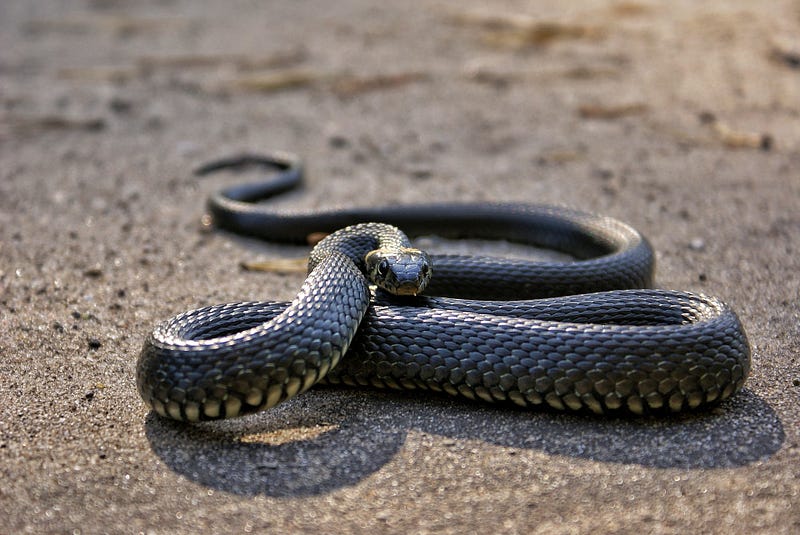
Photo by Alёsha Lamkinson from Pexels

I grew up in Africa and my wife spent many years in Australia. This frequently leads to heated arguments about the rather unusual subject of venomous snakes.

Africa has its fair share of cobras, mambas, and the like, all of which can give a fatal bite. According to my wife, none of these snakes have a thing on Australian snakes, which, as she tells it, can cause death if you just walk in the same neighborhood.

The Biblical book of Genesis is quite unequivocal about the fact that there will always be animosity between serpents and women, and I have yet to encounter a woman who disproves this prophecy. Well… there were an exotic dancer and a python once, but that is a story for another day.

Differentiating good snakes from the bad ones

Growing up in Africa or Australia, most people had a fairly simplistic way of differentiating between snakes. They divided them into two distinct categories — good snakes and bad snakes. Bad snakes were live snakes and good snakes were dead ones.

Behind every front door, stood a semi-retired nine iron that was kept for the sole purpose of converting bad snakes into good ones.

Things have progressed slightly and most people will at least try to distinguish venomous snakes from less dangerous ones. The problem is that they are not particularly good at it. This was brought home to me rather forcefully on a recent visit to South Africa.

I received an urgent call from my niece telling me that there was a snake in the garden. When I arrived, carrying the nine iron, she met me, snake identification book in hand, and informed me that the snake was in fact harmless. My services were no longer required.

A few hours later, one of the family dogs encountered the snake. There was a sharp yelp, the dog did a quick three-hundred-and-sixty-degree turn and promptly dropped dead.

Later, my wife assured me that if it had been an Australian snake there is no way the dog would have yelped or turned around before moving on to the “happy place”.
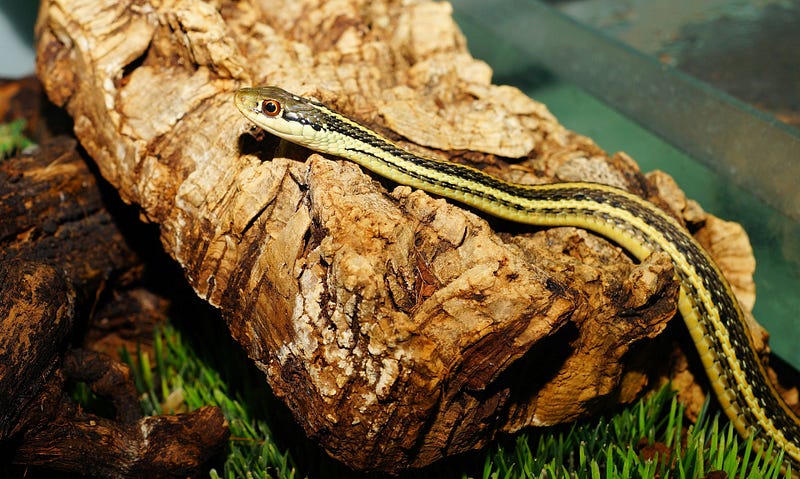
Photo by Pixabay from Pexels

The pupil test — A local way you must avoid

Now, as the weather in France begins to warm, local snakes will start to make their appearance. There are nearly a dozen types of snakes in France but they can be loosely classed into two categories. (Herpetologist will hate me for making such a broad sweeping generalization, but this isn’t the place for a snake-by-snake identification parade so bite your tongues).

First are the vipers which are mildly venomous, and the second are the more common grass snake which are totally harmless. This doesn’t stop my wife from hating both of them with equal intensity.

The thing I find most interesting is that if you ask a local how to tell the two of them apart, they will invariably inform you that the viper has a horizontal pupil whilst that of the grass snake is round.

This is the sort of useful information that I rate right up there with playing dead when charged by a grizzly bear or punching great white sharks in the nose as they hurtle towards you like runaway steam trains with teeth.

I do know a fair bit about sharks, as it so happens. For around five years, I was a commercial construction diver and many of the contracts that I worked on were off the South African coast. There, sharks do put in an appearance from time to time.

Professional divers don’t hold to the theory about sparring with man-eating sharks. They are trained to deal with them in a far more effective manner which I will share with you now, just in case you happen to tumble into shark-infested waters.
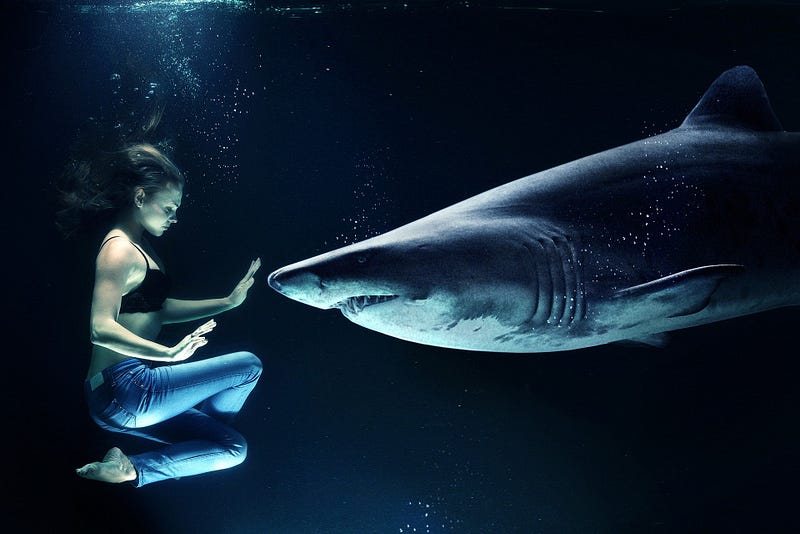
Image by Sarah Richter from Pixabay

Firstly, we always work in pairs, and secondly, professionals always carry a knife. On the rare occasions when sharks pose a threat, working divers will get together back-to-back, and draw their knives.

When you spot the shark coming towards you, you reach behind you, stab your buddy in the back, and then swim away as quickly as possible.

Back to snakes

Going eye to eye with a snake, even a wimpy French one, is not something I can see myself doing. Under the best of circumstances, it might be risky.

Doing so with my wife in the background helpfully screaming “Kill it, kill it. Where is the Fu**ing nine iron?” would only exacerbate the problem.

For those of you that may happen to be in southern Europe and come across a snake, here is a slightly easier way to tell them apart.

The viper has a distinct diamond-shaped head and tends to have dull gray and brown markings, while the grass snake is larger, more brightly colored, and glides in a swift fluid movement, which it is almost bound to do as soon as it spots you. Good luck trying to see its eyeball.

Both of them feed on rodents and frogs and neither has ever been seen eating an Australian.

Just last week, the French government made it illegal to harm or disturb any snake in this country.

My dearly beloved is exploring emigration to Ireland.

Thank you for reading.

If you are a lover of the environment, nature, and wildlife, you may enjoy the following articles published in The Environment.

  1. Once, We Saw Purple
  2. Those With the Biggest Balls

You can also inspire others to experience the beauty of this lovely planet. Just click the below image and be a writer for The Environment

Write to Save The Environment
Outdoors
Wildlife
Nature
Environment
Sustainability
Recommended from ReadMedium