
Once, We Saw Purple
Will our children even notice the natural world?
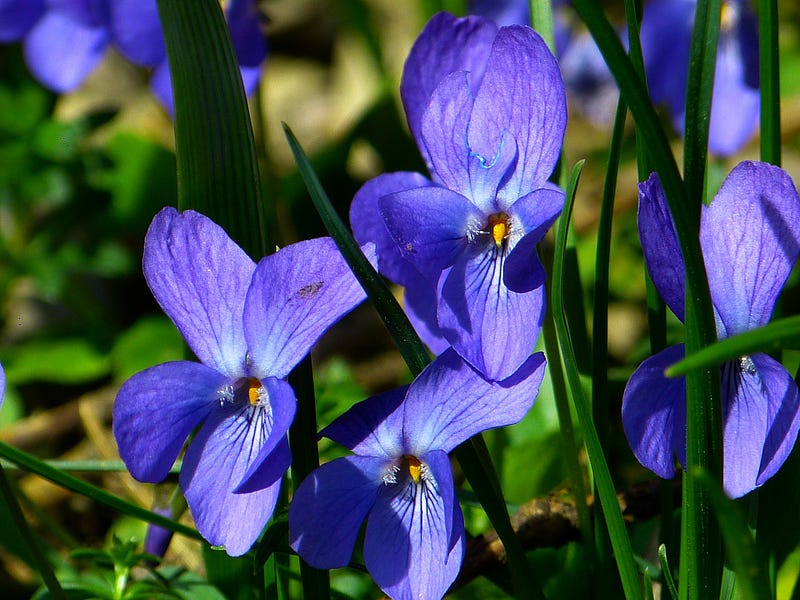
With spring finally starting to make her reappearance, the violets are beginning to elbow their way through the earth here in south-western France.
There are so many of these little purple flowers popping up in the wild that it can be difficult not to tread on them when walking out in the countryside. As we are still strictly confined, countryside walks are one of the few activities we can easily engage in at the moment.
Although I am fond of violets, it is the way they have managed to incorporate their way into both French culture and history that makes them so interesting to me. They were a favorite of Josephine, the first wife of Napoleon Bonaparte, and she carried a posy of them down the aisle on her wedding day.
The Emperor himself became enamored by the smell, and it was said that he would order fifty bottles of eau de cologne de violette per month. This soon earned him the nickname Caporal la Violette among his troops.
In those days, there was not the distinction between perfumes used by men and women that exists today.
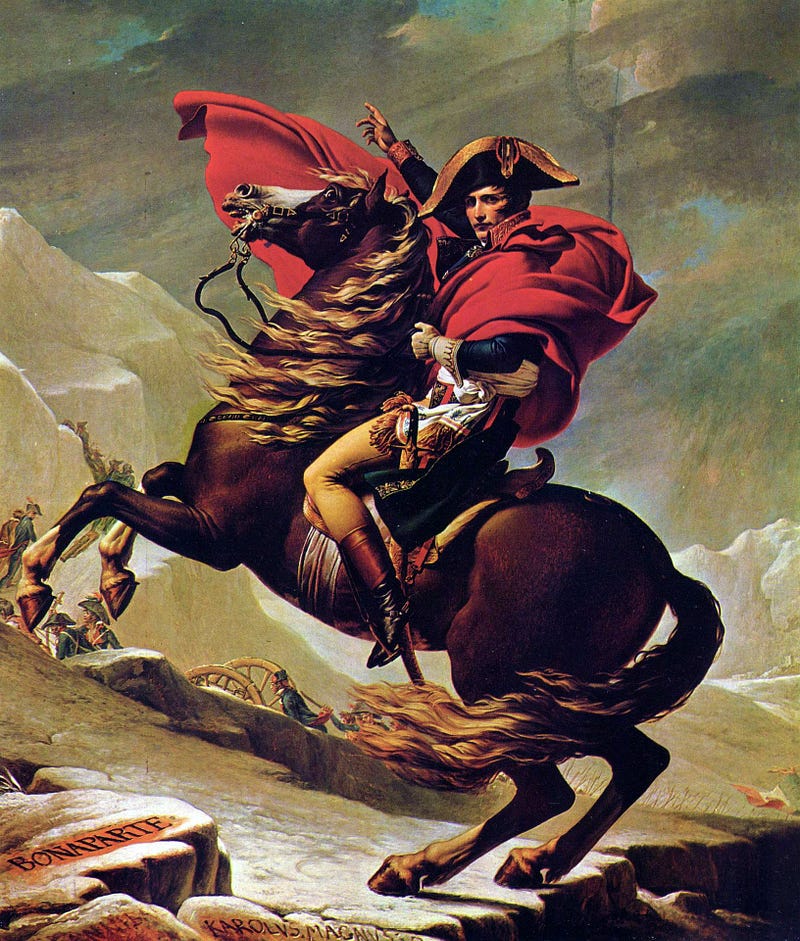
Napoleon, Josephine, and Violet
Napoleon’s support would have come as a welcome relief for hard-pressed parfumiers who had seen so many of their wealthy clients go to the guillotine during the revolution.
Napoleon divorced Josephine to marry the eighteen-year-old Arch Duchess Marie Louis when Josephine failed to provide him with the male heir he was so desperate for.
Josephine remained the love of his life, however, and he never lost his feelings for her.
When he was exiled to the island of Elba, Napoleon told his troops that they could count on the fact that he would return in time for the next blooming of the violets.
True to his word, he stepped ashore at the seaside town of Frejus, in southern France, in March of 1815, just as the first purple blooms were making their appearance. He was met by men and women wearing violets in their hair or on their epaulets to show their support for him.
A cottage industry had built up around the violet while he was away. As a clandestine sign that you preferred him to the king, you could purchase postcards, snuff boxes, and jewelry, all carrying this small, secret sign of your allegiance.
Josephine had died while he was in exile, and soon, the man who had made such a dramatic mark on the history of Europe would meet his Waterloo. He was exiled again, this time to the island of Saint Helena in the southern Atlantic.
I visited that tiny island many years ago. There was no airport. The only way to get there was on a cargo ship that delivered supplies every six weeks or by yacht.
When he died, Napoleon was wearing a locket around his neck. It contained a strand of Josephine’s hair, her picture, and some dried petals taken from the violets he had planted on her grave.
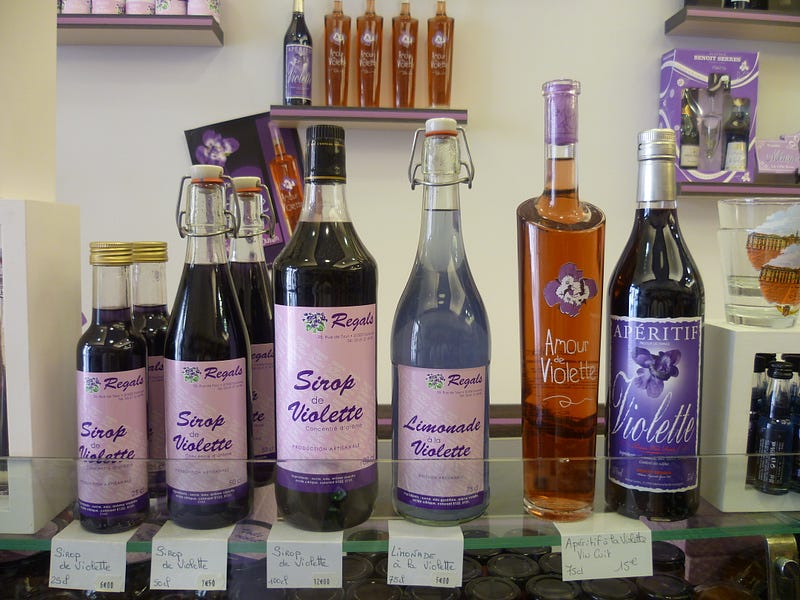
Violets today
Violets still play a part in the French economy, particularly in the city of Toulouse. There, they hold an annual Fete de la Violette and there are several shops that sell only violet-related products. These include scented soaps, perfumes, and even liquor made from the flowers.
The cultivar Violette de Toulouse was said to have been introduced by Napoleon’s nephew Napoleon III to that city.
As the perfume industry discovered synthetic ways to reproduce the woody scent, the local flower producers were left struggling to find a market for their product. Luckily the Toulousain violet was well received by the horticultural industry.
Very often, the local vegetable producers used to supplement their incomes by selling these little flowers, and at the turn of the 20th Century, there was even an association with the unlikely name of The Onion and Violette Co-operative.
Violets tomorrow
It is not the rather inconspicuous flower that intrigues me here. It is the way that nature managed to weave herself so delicately, but firmly, into the history books.
Napoleon stamped his indelible mark right across Europe — one that is still visible today. Many of the laws of modern France are based on the Napoleonic code that he introduced.
That minute flower is indicative of a relationship between nature, man, and history, that we seem to be losing with each passing year.
A generation from now, I wonder if our urbanite, computer obsessed children will still be in touch enough with the wild to even notice the tiny smiles that nature flashes at us on a daily basis.
Thank you for reading.
If you are an excellent mind who cares about the natural world, you may read the following articles on the environment and wildlife.


