
The French Revolution and the Pain(e) of Inequality
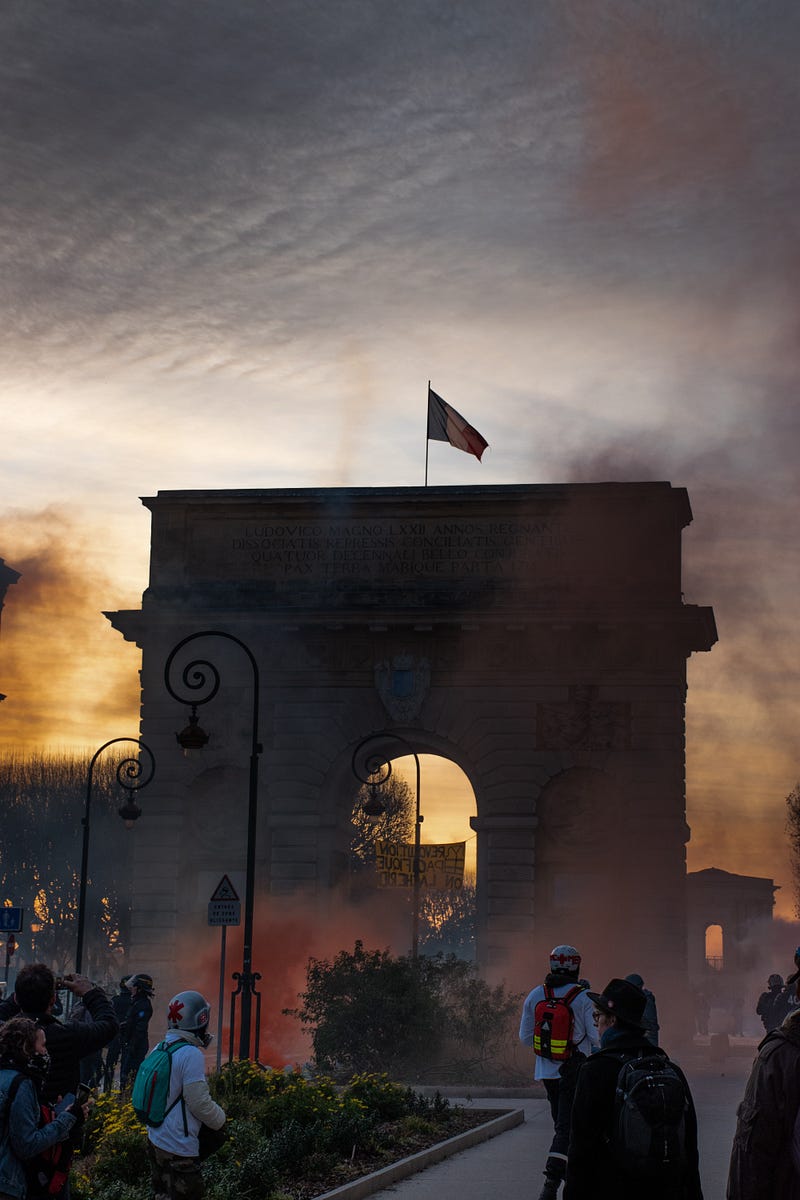
234 years have elapsed since the Fall of the Bastille on July 14, 1789. On one hand, it feels like a very quaint and distant past as we conjure up visions of powdered wigs at the court of Louis XVI and French peasants storming the Bastille. Or perhaps a Reign of Terror march to the guillotine with a decapitated head held up for display to the crowds.
Yet, make no mistake about it: the French Revolution is as relevant today as it was back in 1789–especially as the French have protested what they construe as the loss of their rights with the raising of retirement age while other parts of Europe have risen up against inflation and cuts to welfare. The fact is that the current phenomenon of Western inequality is arguably more pronounced today than it was back then.
Although the West is no longer held hostage by a laced and bewigged aristocracy, much of the world is placed in no less precarious a position by a neoliberal establishment with its tentacles extending from multinational corporations to the financial markets, its power players now clad in $8000 Italian designer suits and $1000 shoes. For just like their aristocratic forbears once pulled the strings of the government with their heavy pockets, the new .01% continues the same charade today while pretending we have anything that approximates a democracy. Pay to play, or the power of property, in other words, continues to predominate and determine foreign and domestic policies while ultimately determining the lifestyle and (dis)comfort of the 99.9%.

But let’s return to the French Revolution and the debates it triggered to see what lessons it might offer us today. Although the revolution may have taken place in France, debates on its relevance and application for other nations would rage for at least three decades — and not surprisingly, right across the Channel in England. Many liberals, or Whigs as they were called back then, cheered the revolution.
However, not all were pleased: most notably, Edmund Burke, who had earlier backed the American cause during the war of Independence. In 1790, he lashed out against the dismantling of feudalism in France, from the eradication of aristocratic titles to the disestablishment of the church, rejecting the concept of rights no less than 34 times throughout his ponderous Reflections on the Revolution in France (1790).
Everything was fine in France, he insisted. Why the need for such drastic change when a few tweaks here and there would do? The presence of a monarchy and aristocracy helped elevate the nation — as did a state-church establishment. There was nothing wrong with respecting birth; in fact, anything was better than a world which learning and culture were trodden by the hooves of the “swinish multitude.” The power of property reigned paramount in Burke’s mind as he argued that if “a man with five shillings in a partnership has as much right to it as a man with five hundred pounds to his own respective portion,” the former had no right to an “equal dividend in the product of the joint stock”; in other words, he should not have the same rights in the “management of the state.” Wealthy people, in other words, had every right to govern society.
Burke’s Reflections quickly unleashed a number of angry replies from liberals, including the likes of Mary Wollstonecraft who would later publish her early feminist tract, The Vindication of the Rights of Woman a year later. Other Enlightenment luminaries such as Sir Brooke Boothby, James Macintosh and Joseph Priestley joined in the fray. But it was Thomas Paine’s Rights of Man that proved by far the most controversial.
Having already made an argument in Common Sense for American independence and a republican form of government fifteen years earlier, Paine argued that the concept of equal rights stretched all the way back to the beginning of time, when all of “MANKIND” were “originally equals in the order of creation,” with “male and female” the only “distinctions of nature,” and “good and bad the distinctions of Heaven.” It was ludicrous to think that man entered society “to become worse than he was before” or “to have fewer rights.”
Titles of nobility were silly and childish. In crisp prose, Paine held that the French did not level man, but exalted him: “It has put down the dwarf, to set up the man. The punyism of a senseless word like Duke, Count or Earl has ceased to please. Even those who possessed them have disowned the gibberish, and as they outgrew the rickets, have despised the rattle.”
As for the monarchy itself, France was to be applauded for its sensibility in to wresting the power to declare war from the king to the legislature. Perhaps then, there wouldn’t be so useless wars fought over bloodlines and territories. Paine, however, was not quite ready to reject the monarchy altogether as he had some hope for the young Louis XVI who once supported the American colonies.

But that changed in June 1791, when Louis XVI made his failed attempt to escape from France with his entire family disguised as servants. Unlike Part 1, Part 2 of Rights of Man would seek solutions to problems in England, mostly arising from inequalities of birth and wealth.
For one thing, Paine deplored the miserable conditions endured by the poor. If Rousseau had once opined in his Discourse on Inequality that the process of civilization has heightened inequality because civilized people had less empathy for suffering, Paine would turn this argument upside down. If anything, poverty should be attended to in a civilized society and living standards improved for everyone. Societies that fail to do so are in fact uncivilized when they wage war while neglecting the masses:
… governments being yet in an uncivilised state, and almost continually at war, they pervert the abundance which civilised life produces to carry on the uncivilised part to a greater extent. By thus engrafting the barbarism of government upon the internal civilisation of a country, it draws from the latter, and more especially from the poor, a great portion of those earnings, which should be applied to their own subsistence and comfort.
So ironically, even though European nations are the wealthiest and most civilized by virtue of their progress in science and technology over the course of the century, Paine suggests they are actually far from being constructed “on the principle of universal civilization, but on the reverse of it.” We probably don’t have to wonder what Paine would think of the 21st-century West–especially his adopted American republic–that has been waging war more often than not over the course of the 20th and 21st centuries rather than considering the needs of the bottom 60%.
It was only proper, according to Paine, to care for the most vulnerable members of society–the poor and the elderly. A system of progressive taxation that taxed the wealthiest at the highest rates was necessary for the sake of fulfilling some of the basic needs of the least well off. The elderly should not have to work desperately into their 80s but be allowed a certain subsistence beginning in their 50s when their physical capacities begin to weaken. Indeed, “At sixty his labour ought to be over, at least from direct necessity. It is painful to see old age working itself to death, in what are called civilised countries, for daily bread.”

As for the poor–the bottom thirty percent, families with more children should receive subsidies adequate to support them while all children should be provided with funding for education since “a well-governed nation “should permit none to remain uninstructed.” It is only “monarchical and aristocratical government” that “requires ignorance for its support.” Given our federal government’s stinginess in matters of public education and our declining standards, we might wonder if a neoliberal, capitalist government also “requires ignorance for its support.”
On the other hand, the extremely wealthy who received largesse from the government usually didn’t need it: for instance, the royal court that received monies for supporting a lavish lifestyle or the Duke of Richmond who “alone (and there are cases similar to his) takes away as much for himself as would maintain two thousand poor and aged persons.”
Ironically enough, it was also the less well-off who paid disproportionately higher taxes. As Parliament, largely comprised of the wealthiest and most pedigreed men, sought to lessen the burdens of taxation on families like their own, they took care to keep taxes on land minimal while shifting more to consumables which affected the poor and middle classes. It’s not difficult to see how this system resembles our own today as the wealthy pay even less than their counterparts did during the Gilded Age. But it’s not surprising when our government — not unlike the 18th-century British Parliament — is comprised largely of millionaires and billionaires. A case of plus ça change?
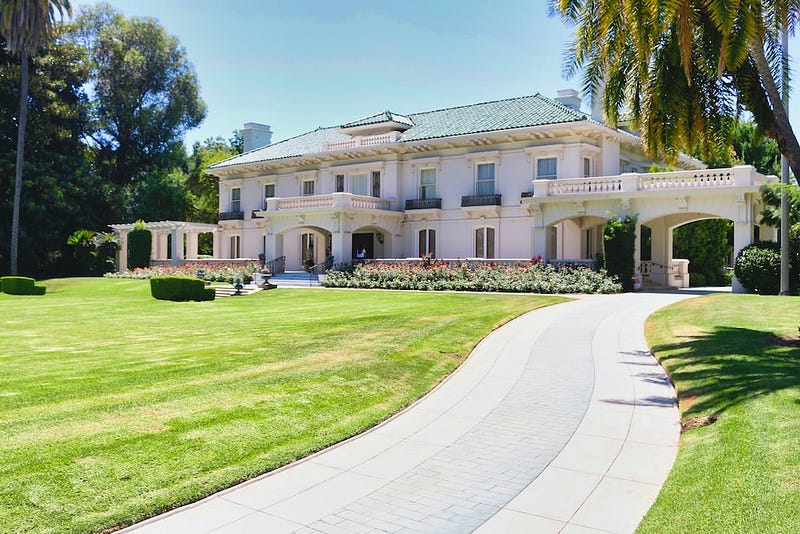
Most likely, Paine would have a pretty dismal view of our century when we see the following words on 18th-century Britain. These words could easily be applicable to the US today, where retirement and has been steadily raised to 67–with some seniors working into their eighties–and large numbers of Black youths are imprisoned while Wall Street bankers and corporate CEOs reap great amounts from the government.
–When, in countries that are called civilised, we see age going to the workhouse and youth to the gallows, something must be wrong in the system of government. It would seem, by the exterior appearance of such countries, that all was happiness; but there lies hidden from the eye of common observation, a mass of wretchedness, that has scarcely any other chance, than to expire in poverty or infamy ….
Civil government does not exist in executions; but in making such provision for the instruction of youth and the support of age, as to exclude, as much as possible, profligacy from the one and despair from the other. Instead of this, the resources of a country are lavished upon kings, upon courts, upon hirelings, impostors and prostitutes; and even the poor themselves, with all their wants upon them, are compelled to support the fraud that oppresses them.
Paine then poses a rhetorical question that we might want to reflect upon too:
Is it, then, better that the lives of one hundred and forty thousand aged persons be rendered comfortable, or that a million a year of public money be expended on any one individual, and him often of the most worthless or insignificant character? Let reason and justice, let honour and humanity, let even hypocrisy, sycophancy and Mr. Burke, let George, let Louis, Leopold, Frederic, Catherine, Cornwallis, or Tippoo Saib, answer the question.
Interestingly enough, just as Paine advocated the beginnings of our welfare planning and Social Security, he would also propose a NATO-like alliance. For one thing, he believed that a republican government would be less warmongering. The different nations would pool their military resources together with France and Britain reducing their navy forces by 90%. (Having said that, Paine would probably be shocked that the US spends far more on the military than the next ten or so countries below it!)
Paine’s new utopia would be one where the “number of petty crimes, the offspring of distress and poverty, will be lessened.” The poor and rich would both be” interested in the support of government, and the cause and apprehension of riots and tumults will cease.” (Consider that the insurrection of January 6, 2021 was caused in part by financial difficulties.) Finally, in a dig at the crowned heads, he tells them “Ye who sit in ease, and solace yourselves in plenty, and such there are in Turkey and Russia, as well as in England, and who say to yourselves, ‘Are we not well off?’ have ye thought of these things? When ye do, ye will cease to speak and feel for yourselves alone.”
Upon publication, Part 2 of Rights of Man quickly became a bestseller of the century. But as radicals praised Paine, the government — not to mention the landed classes — was horrified. No aristocratic titles? Higher taxes on land? HELL, NO! They also feared that subsidies to the poor and elderly would make them “indolent” and “less inclined to work.” And why should poor children be sent to school? They’ll become dissatisfied with their lives. From there came the roots of astroturfing as aristocrats set up popular organizations to decry Paine as they encouraged the burning of Paine effigies. In December 1792, Rights of Man was declared to be “seditious libel” by a packed jury after Paine himself was hounded off the coast to France.
So here we are more than two centuries later, grappling with many of the same questions — except that our problems have become less transparent. For instance, as much as we like to pretend that we’ve moved away from 18th-century nepotism, we are as fully ensconced in it as indicated by our own, newly coined term, “nepobaby.” Needless to say, the idea of meritocracy is almost as much a sham today as it was back then.
And if Instagram and Tiktok offer any clues, we worship the concept of “Old Money” — just as Jane Austen’s Lady Catherine DeBourgh and Sir Walter Elliot take inordinate pride in their birth and long, distinguished lineage. Nor do we need to be reminded that the concept of “Old Money” is, of course, an inherently racist idea in the West since only whites were allowed to accumulate wealth for centuries and this is easily discerned in the sea of white faces and bodies in such reels.

If our .01% chooses to blindly immerse themselves in the eighteenth century, perhaps it’s also time for the rest of us to revisit Paine’s Rights of Man and right ourselves. Enough is enough!
© Frances A. Chiu, July 14, 2023
For a more indepth look at Paine’s Rights of Man, see my Routledge Guidebook to Paine’s Rights of Man (2020).
My other articles on Paine: https://readmedium.com/remembering-thomas-paine-on-the-fourth-of-july-c785e3471361


