
Remembering Thomas Paine on the Juneteenth
We commemorate Juneteenth for the true and final act of the abolition of slavery.
However, maybe if the nation had heeded the words and advice of Thomas Paine — one of the few Founding Fathers who did not own slaves — abolition would not have been delayed for so long. Upon his arrival in Philadelphia in 1774, Paine was shocked by a slave auction not too far from his new residence. He grew interested in the cause of abolition and has been credited with publishing the essay, “African slavery in America” (its authenticity has since been called into question)
Here, he criticized those who “willfully sacrifice conscience, and the character of integrity to that golden idol” while adding that just as the “true owner has a right to reclaim his goods that were stolen, and sold; so the slave, who is proper owner of his freedom, has a right to reclaim it, however often sold.” Paine would also argue for the equality of men, pointing out the hypocrisy of white Americans who sought liberty but denied it to slaves.
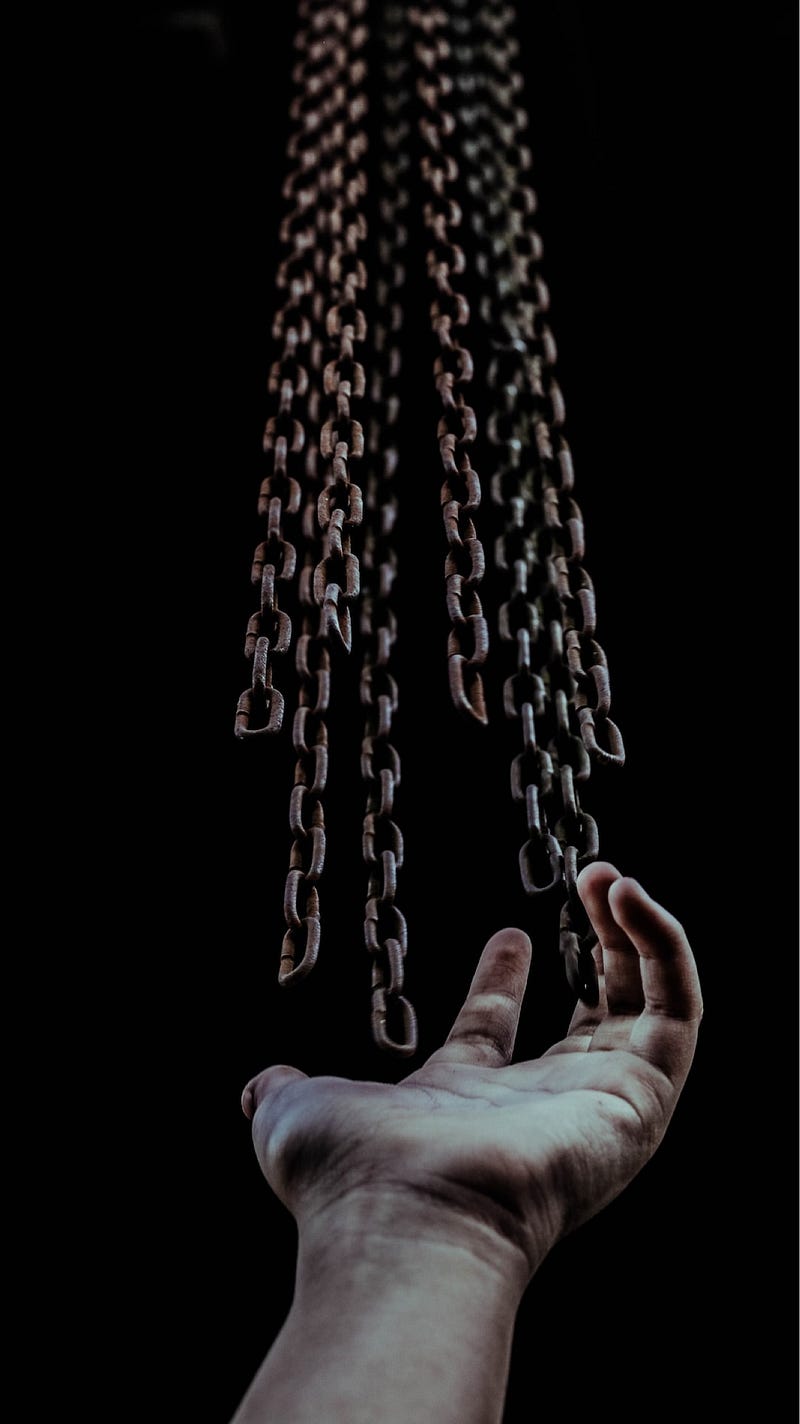
What is more interesting here is how Paine envisioned a country where freed slaves would be integrated into society; in this respect, he diverged radically from his friend, Thomas Jefferson who wanted them shipped back to Africa. Here, Paine suggested that:
Perhaps some could give them lands upon reasonable rent, some, employing them in their labor still, might give them some reasonable allowance for it; so as all may have some property, and fruits of their labors at their own disposal, and be encouraged to industry; the family may live together, and enjoy the natural satisfaction of exercising relative affections and duties, with civil protection, and other advantages, like fellow-men.
This would be a new world where “they may become interested in the public welfare, and assist in promoting it; instead of being dangerous, as now they are, should any enemy promise them a better condition.”
It is also interesting to see Paine flip the idea of savages on its head as he compares Christians to “inhuman savages.” Christians must “repair those injuries as far as possible, by taking some proper measures to instruct, not only the slaves here, but the Africans in their own countries” because they have “singular obligations” to “these injured people!”
And in a private letter, he hoped that Liverpool, a major port of the slave trade would be blasted with “fire and brimstone” as the “Sodom and Gomorrah of brutality.”
Nonetheless, a few contemporaries as well as modern scholars have questioned the extent of Paine’s commitment to the abolition of slavery. He was asked by a friend why he “had not taken up his pen to advocate the cause of the blacks.” Paine replied that he did not know enough about slavery to advocate abolition. He suggested that it would be best if a few were to be sufficiently educated to “take their own part.”
At first glance, this might appear to be Paine’s way of shrugging off a responsibility. If he had already heard of such contemporary publications as The Letters of the Late Ignatius Sancho (1782) and An Interesting Narrative of the Life of Olaudah Equiano (1789), both of which were penned by former African slaves, he may have believed that his own writings would be less detailed — and hence, relatively useless. This possibility becomes all the more real when we consider some of the statements found in his own works.
In one of his earliest extant pieces, “The Case of the Excise Officers” (1772), Paine points out that the rich simply cannot address poverty because they have never experienced it; indeed, much of Rights of Man can be said to offer a critique of British government from the perspective of a man from less well-off artisan classes.
It is perhaps for the same reason that he did not write on women’s rights — especially as his friend, Mary Wollstonecraft, had already published the popular, if controversial Vindication of the Rights of Woman. One simply cannot write effectively about matters outside of one’s experiences. In fact, history has mostly vindicated Paine’s belief. Without the writings of Frederick Douglass and other former slaves in the following century, slavery would likely have lasted considerably later.
Let us consider Paine’s efforts to convince Jefferson of the need not only to scoop up the land about to be offered by Napoleon in the form of the Louisiana Purchase, but to abolish slavery and providing a region for the settlement of freed slaves. Upon hearing of complaints from Louisiana about restrictions on the slave trade, Paine promptly wrote a public letter to its citizens, lambasting them for attempting to repeal these restrictions and observing that such attempts only betrayed their inability to govern themselves.
Without mincing words, Paine writes: “And you already so far mistake principles, that under the name of rights you ask for powers; power to import and enslave Africans; and to govern a territory that we have purchased.” Later on, he mocks their “petition for power, under the name of rights, to import and enslave Africans!” The slavery lobby, however, was much more powerful than a few, paltry white abolitionists and sympathizers.
It is thus perhaps interesting and fitting that Paine ‘s funeral, attended by only six people — as opposed to tens of thousands in the case of Benjamin Franklin and Thomas Jefferson — included two Black boys. We do not know the identities of these boys. But we like to think that perhaps Paine was kind to them. That he treated them according to his own principles of equality.
© Frances A. Chiu, June 19, 2023


