
The Forgotten Map to Forbidden Knowledge
The Secret Book of James and the path of seven parables
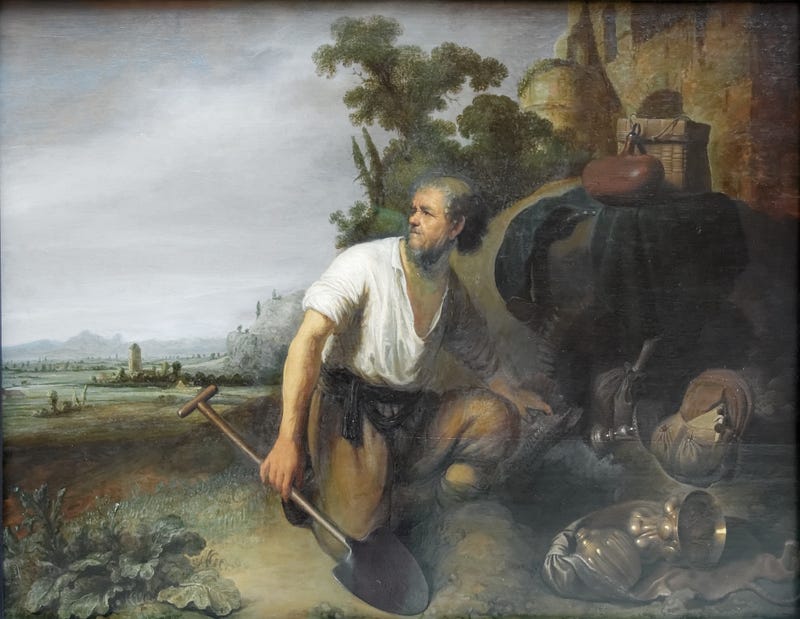
The Apocryphon (Secret Book) of James
Among the many texts found within the Nag Hammadi library, one of the more interesting is The Secret Book of James. You can found out more about the text itself here and you can read the text yourself here.
The focus of this article is the following section:
“Since I have been glorified in this manner before this time, why do you all restrain me when I am eager to go? You have constrained me to remain with you eighteen more days for the sake of the parables. It sufficed for some persons to pay attention to the teaching and understand ‘The Shepherds’ and ‘The Seed’ and ‘The Building’ and ‘The Lamps of the Virgins’ and ‘The Wage of the Workers’ and ‘The Double Drachma’ and ‘The Woman’. …”
The author, who is identified in the text as James, writes that Jesus was forced by the disciples to remain an extra eighteen days so for His parables. The number eighteen is significant as it occurs only three times in all the synoptic Gospels and when it does occur it is connected to the healing of a crippled woman.
In the article above, I reveal that there is a hidden layer of meaning contained within the story’s narrative. Actually, this layer of encryption fairly easy to identify as it is used in multiple stories:
Suppose that you were a student of the scriptures who discovered this second level of hidden meanings. You had deciphered three miracles, but mostly out of luck. You are on your own.
You’ve figured out a few things, mostly by instinct. Stay away from John. Let the synoptic Gospels work their magic. But you don’t have a guiding hand, showing you the ropes. Nobody assigning tasks of increasing difficulty.
You are just winging it.
But here, in a text that I identify as originating from the same school as the Gospel of Thomas, is a list of parables certified by Jesus himself. Supposedly, the proper understanding of these seven parables will allow one to unlock the secret of the teaching of Jesus.
This seems a much more attainable goal than … well, having no real goal at all and just winging it. Now we have a list of seven parables. First, we just need to pick our seven ‘special’ parables from the following list of thirty-seven (37) as taken from Wikipedia:
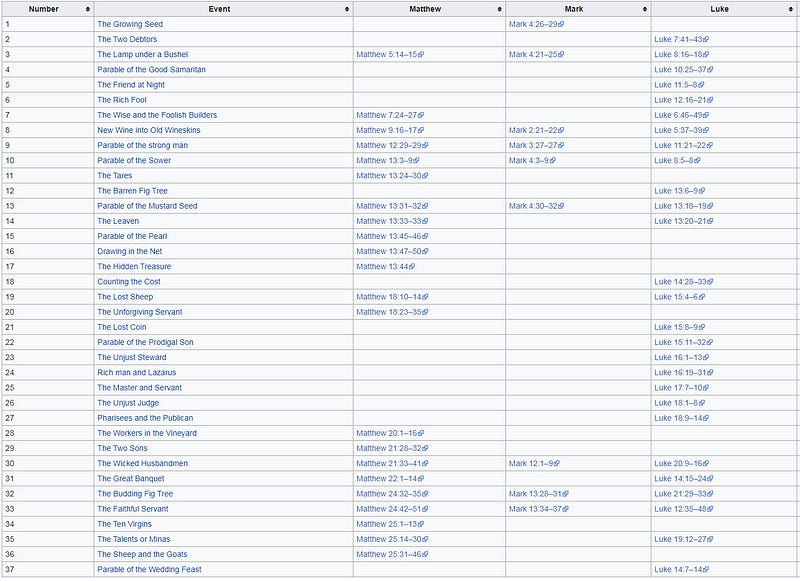
I will go ahead and reproduce the names of the parables for those reading this on phones.
- The Growing Seed
- The Two Debtors
- The Lamp under a Bushel
- Parable of the Good Samaritan
- The Friend at Night
- The Rich Fool
- The Wise and the Foolish Builders
- New Wine into Old Wineskins
- Parable of the Strong Man
- Parable of the Sower
- The Tares
- The Barren Fig Tree
- Parable of the Mustard Seed
- The Leaven
- Parable of the Pearl
- Drawing in the Net
- The Hidden Treasure
- Counting the Cost
- The Lost Sheep
- The Unforgiving Servant
- The Lost Coin
- Parable of the Prodigal Son
- The Unjust Steward
- The Rich Man and Lazarus
- The Master and Servant
- The Unjust Judge
- Pharisees and the Publican
- The Workers in the Vineyard
- The Two Sons
- The Wicked Husbandmen
- The Great Banquet
- The Budding Fig Tree
- The Faithful Servant
- The Ten Virgins
- The Talents or Minas
- The Sheep and the Goats
- Parable of the Wedding Feast
That’s quite a list. First on our list of seven ‘special’ parables is The Shepherds. After careful study, I have come to the conclusion that the only parable this could refer to is The Lost Sheep. The titles aren’t an exact match because there is only one shepherd, but there are two versions, with one in both Matthew and Luke, so maybe Jesus counts them separately?
Next, we come to The Seed, which could only mean … um, The Growing Seed, which is the first parable on the list. Or maybe The Tares, which is also known as the Parable of the Good and Bad Seed. And then there is the Parable of the Mustard Seed. And, let’s not forget the Parable of the Sower. Okay, plenty of work ahead of us there.
The third entry on the list is The Building. I see a couple of possibilities for this one. The Wise and the Foolish Builders is one. Counting the Cost is the other.
The Lamps of the Virgins is The Ten Virgins.
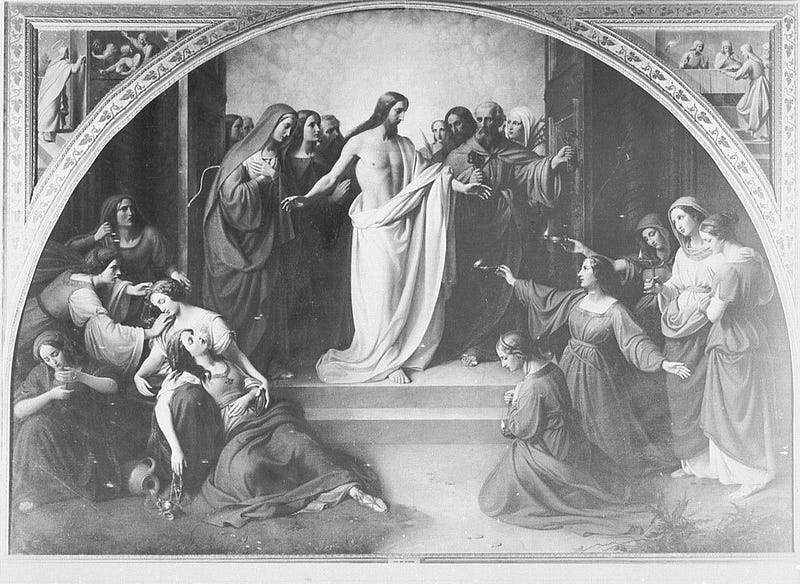
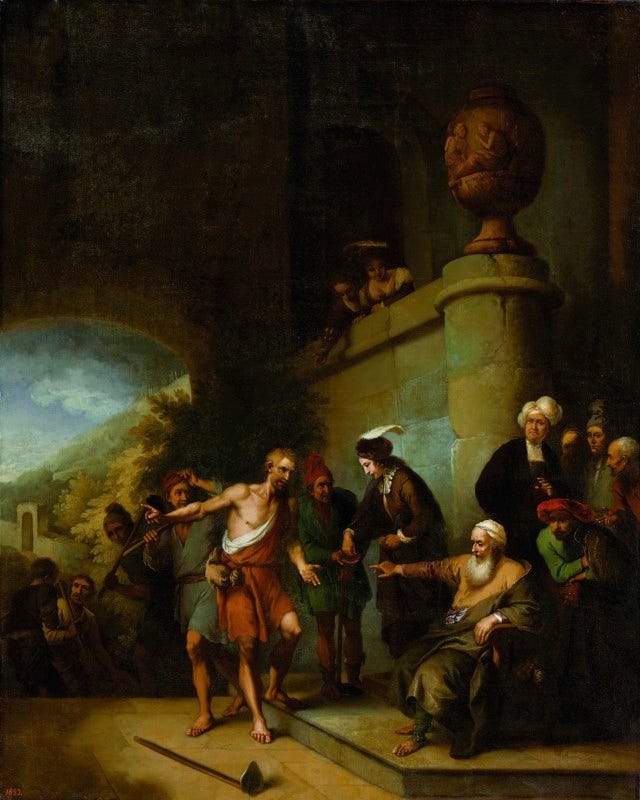
The Wage of the Workers is The Workers in the Vineyard. Another easy one.
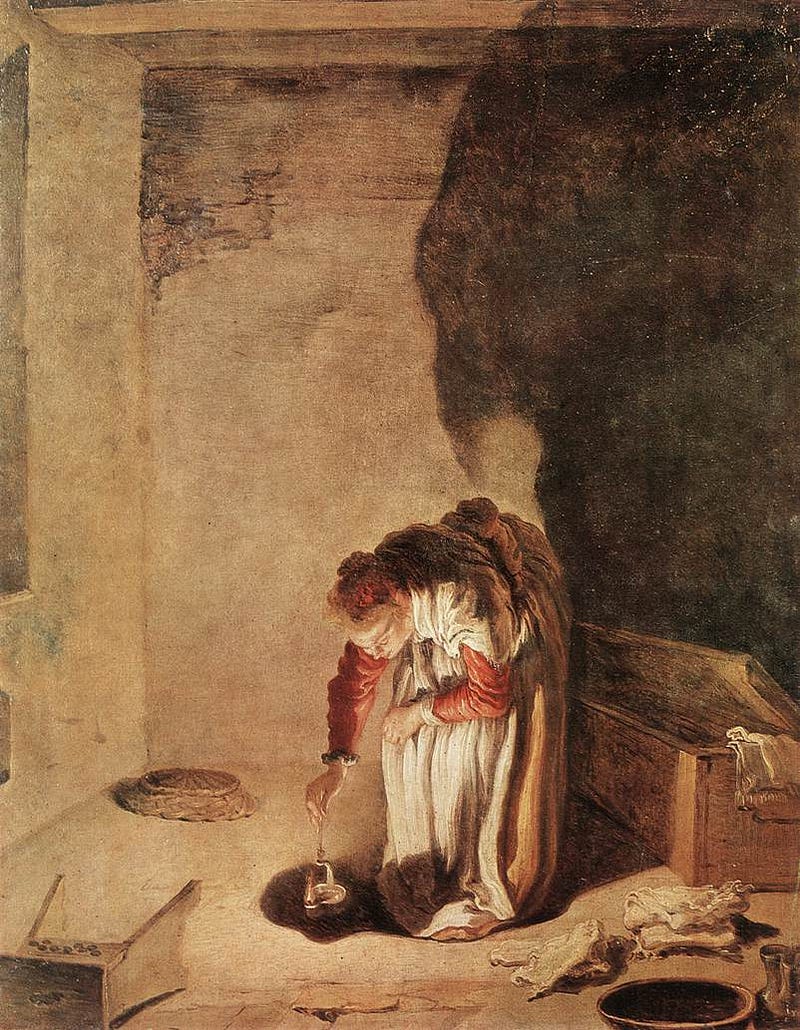
The Double Drachma is The Lost Coin.
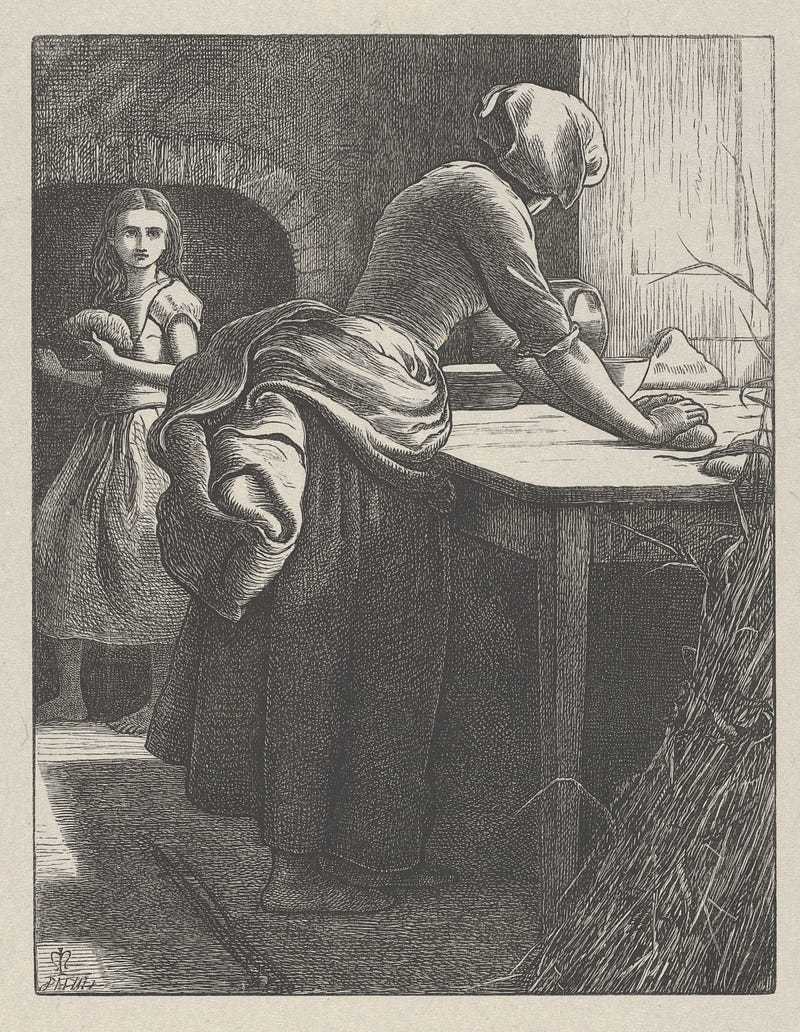
Finally, we come to The Woman. Strangely enough, out of all of the parables, there is only one that could be identified as The Woman. Well, actually two, but as we already have The Coin above, that leaves only one, The Leaven.
Okay, so the plan is to work through each of the parables, with an eye towards identifying hidden esoteric meanings. Supposedly, once we do so, we will have a better idea of the message that Jesus meant to deliver. More importantly, we’ll be setting out on a path marked out for seekers such as ourselves nearly two thousand years ago.


_MET_DP835792.jpg)