
The Forgotten Genocide of Christians in Japan
How they went from a flock of 300 thousand to a band of hidden worshipers
The age of imperialism saw the renewed spread of Christianity across the globe. Portuguese, Spanish and Dutch missionaries in the 16th century, set forth to proselytize and spread the word of Christ.
One such place Christianity gained a foothold was Japan.
Here, it was considered a way to reduce the influence of Buddhist monks, promote better relationships with the west (and thus improved trade), and had a somewhat exotic allure (think: medieval hipsters).
At its height in the 1610s, it was estimated that there were around 300,000 Christians in Japan.
This included not just the poor, but Great lords like Andre of Arima, Bartholomew of Omura and Dario So of Tsushima.
Hideyoshi himself, one of the three great unifiers of Japan, was known to wear a crucifix (mostly as a fashion accessory rather than a profession of faith).
It was not to last, however, and eventually it all came crashing down.
What happened?
The latter half of the 1500s in Japan saw a series of wars to unify Japan under a single warlord. Hideyoshi emerged as the victor.
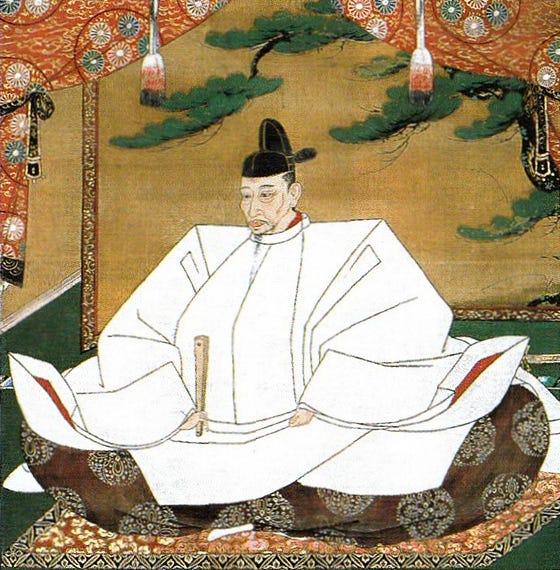
With the various factions of samurai and warrior monks finally brought under heel, he maintained vigilance on other potential threats: both within — and without the country.
One internal threat came in the form of Roman Catholicism, the faith of Spanish and Portuguese explorers. The nature of the Catholic Church’s leader, the Pope, frightened Hideyoshi. The title of “Pope” translated into Japanese to roughly mean: “God-King”.
The notion of a priest who had little temporal power — but still of greater rank than the Kings of Europe — had eerie parallels to Cloistered Emperors of earlier centuries (under the insei system) who routinely abdicated, joined monasteries and ruled the nation from behind the scenes.
One had to wonder — to whom would a Christian samurai have paramount allegiance? The Pope, or the Shogun?
There cannot be two suns in the sky.
Things came to ahead in 1596 when a Spanish ship, the San Felipe, ladened with precious cargo headed out from Manila. Bad weather forced them ashore in coastal Japan — where the local daimyo and his folk helped themselves to the cargo.
Angry at the seizure of his goods, the ship’s Captain over-zealously warned the warlord that the Spanish Empire spanned the globe — and did so by first sending missionaries to establish Christianity. Allegedly, newly converted adherents would act as a fifth column who rose up in support of the Spanish King when he finally launched a land invasion.
This boast did not go down well.
The matter was escalated all the way up to Hideyoshi and led directly to the crucifixion of 26 Christians (including both European missionaries, and local Japanese).
In 1612, the Okamoto Daihachi incident saw a corruption and bribery scandal involving two leading Japanese Christians. Seeing the collusion between two co-coreligionists saw the Tokugawa Shogunate (which succeeded Hideyoshi) expel all Catholic priests from Japan. This saw Christian communities needing to self-organize (due to the dearth of formal clergy).
The final straw came in the Shimabara Rebellion of 1637 which was led by a Christian. Once ruthlessly suppressed, the ban on Christianity was final and strictly enforced.
Suspected adherents were forced to step onto images of Jesus or the Virgin Mary with their feet (in a practice known as fumi-e) to prove their loyalty.
Those who refused or otherwise proven to be Christians were executed.
Christianity survived by going underground — henceforth being known as “Kakure Kirishitan” (Hidden Christians). They marked themselves by secretly embedding crosses in their swords, specific tiles in their roofs, or behind religious statues.
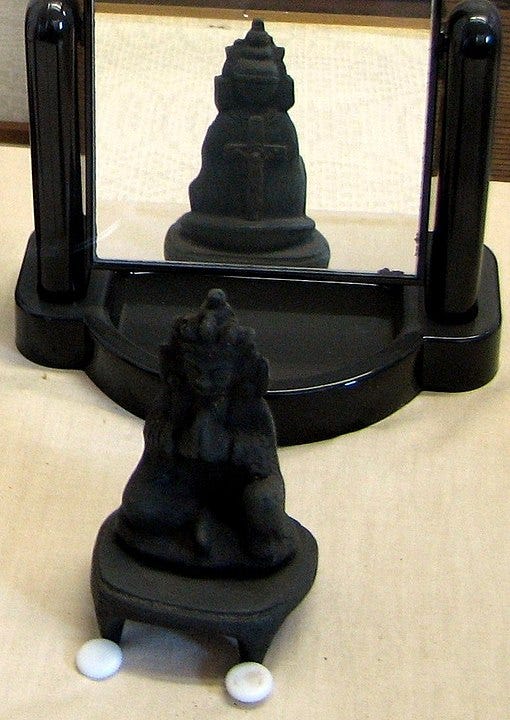
It was another two centuries before Christianity was once again allowed to be practiced in the open.
You may also like: