
Forget Conquerors — Here Are Five of History’s Greatest Defenders
Sometimes the hardest thing to do is just survive — the leaders who enabled this deserve equal recognition

Conquerors get all the glory. They’re the ones whose names echo through the ages.
Names like Genghis Khan, Julius Caesar and Alexander the Great are household names. Songs and movies tell their tales, and many cities are named in their honor.
While they certainly helped shape the world, there are others who stared down the strongest of invaders against insurmountable odds — to defend their country.
Without these men and women, entire nations or peoples would have long been erased from the history books.
Today we look at five such unsung heroes:
#5: Porus — saved India from Alexander the Great
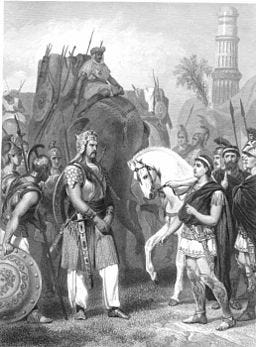
That most infamous of Macedonian Princes; a supposed descendant of both Achilles and Hercules, ascended the throne at the age of 20. Alexander inherited one of the greatest armies in the world as well as a god complex (believing himself to be the son of Zeus).
After invading all Egypt, Anatolia and Persia — he set his sights on India.
Defeating some smaller tribes through and around the Khyber Pass, he finally crossed the Indus river to campaign in India-proper.
On the banks of the Hydeaspes river, he encountered an Indian King, Porus.
Standing nearly 7 foot tall and supported by an army of war elephants, Porus waged the toughest (and what would be the last) battle Alexander fought.
Alexander won of course (Alexander always won), but during Porus’ surrender, Alexander asked him how he would like to be treated — to which he replied: “like a king”.
So impressive was Porus’ valor and performance on the battlefield that Alexander re-appointed him as ruler of the domain (albeit under Macedonian suzerainty) and granted him new lands.
Having faced such a tough enemy, and fearing that the rest of India might put up the same stiff resistance — Alexander’s army refused to go on. They turned back toward Greece and the rest of India lived to fight another day.
#4: Béla IV — saved Hungary from The Mongols
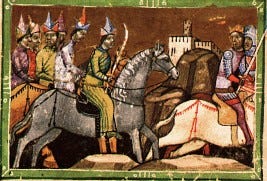
What started out as a group of bedraggled horse nomads in north-eastern Asia — burst onto the global stage, quickly establishing the largest contiguous land empire the world had ever seen.
The Mongols conquered China, Russia, the Khwarazmians (which covered Iran, Afghanistan, Turkmenistan and Uzbekistan), as well as a myriad of other areas in just a couple of decades.
When they got to the gates of Europe, they came upon the Hungarians led by King Bela IV.
The Battle of Mohi in 1241 saw the annihilation of the Hungarian forces and subsequently led to some 25% of the population dying either by the sword or from resulting epidemics.
With Hungary ripe for the taking — the country received, due to what must’ve seemed like divine intervention, a stay of execution.
The Mongol forces suddenly stopped their invasion, turned around, and promptly went back to whatever part of the world they came from.
Astonished yet relieved, King Bela learned some important lessons and was determined to be ready should the Mongols appear again.
Noticing that the invading heathens struggled to take stone fortresses, Bela built 100 new ones.
He also enacted a series of sweeping social reforms whereby new classes of knights composed of heavy cavalry were created; new settlers or free folk with small land-holdings could enter the nobility if they armed themselves and pledged support in future wars; and hired 1,000 crossbowmen who were shown to be effective against the enemy last time.
The Mongols did return, and while Bela IV had long since died, his reforms allowed Hungary to resist and repel them.
Thanks to Bela, Europe was saved from the Mongols, and lived to fight another day.
#3: Nzinga — saved Angola from Portuguese
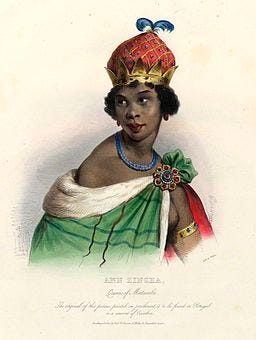
The age of colonialism was a dangerous time for those outside Europe.
Driven by greed, armed with superior naval and military technology, and invigorated by religious zeal — Iberian conquistadors went forth and encroached the lands of many native peoples.
One such place receiving unwanted attention from the Portuguese in the 1600s was the Kingdom of Matamba — in modern-day Angola.
Queen Nzinga entered the stage to stymy Portuguese efforts to take control of the region and the slave trade.
She used a blend of strategic alliances like those with neighboring kingdoms, the Dutch, and the Catholic Pope himself; along with more direct forms of confrontation such as defeating the Portuguese at the Battle of Kombi and guerrilla warfare.
After decades of conflict with the queen, the Portuguese relented — giving up their claims on her territory in 1657. Portuguese expansion in Angola was effectively arrested for nearly a century — and once they did conquer the region, it remained relatively autonomous.
Bonus points for “bad assery” go to this lady for having multiple husbands (unusual for women in the 17th century), and forcing them to wear women’s clothes and share accommodations with her maids in waiting (should they try to engage in any funny business with these women though — they’d be executed).
#2: Jan III Sobieski — saved Europe from the Turks
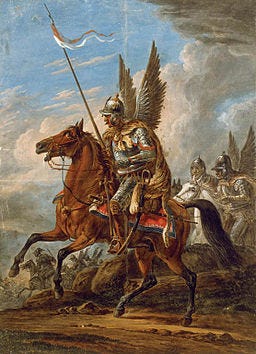
The Ottoman Empire grew out of the steppes of central Asia, and over the centuries conquered much of the Middle East, North Africa — and to the chagrin of Christendom, much of Eastern Europe.
In 1683, the Sultan’s eye fell upon the city of Vienna which not only controlled enviable trade routes but provided a path into Western Europe.
As the Turks reached the very walls of Vienna itself, the Emperor of the Holy Roman Empire, Leopold, fled. Running out of food, and outnumbered 10 to 1, the people within the city turned to eating cats, and then rats.
With France refusing to come to Habsburg aid, it fell to the King of Poland — Jan Sobieski to intervene. Leading his famed “winged-Hussars’’, his cavalry swept in to save the day.
The rest, as they say, was history. The Ottomans never seriously threatened Europe again.
#1: Admiral Yi Sun-sin — saved Korea from Japan
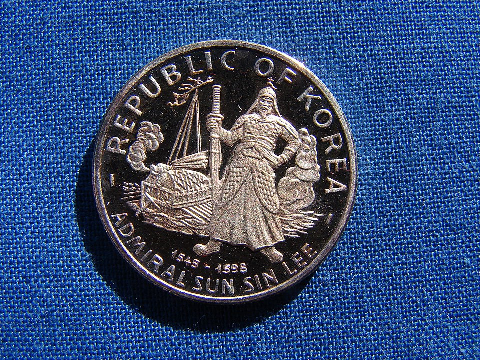
It’s hard being Korea.
Sandwiched between the Celestial Empire, China; and the Empire of the Rising Sun, Japan; means you’re going to end up being a stomping ground under both.
The 16th century saw a particularly brutal invasion of Korea by Japan, during the Imjin war. In the face of overwhelming force one-man — Admiral Yi Sun-sin stood steadfast.
Outnumbered, outgunned, and out supplied in almost every encounter — he used his knowledge of tidal currents and narrow straits to repel the Japanese sea attacks.
His most notable performance was at the Battle of Myeongnyang, where he defeated a Japanese fleet of 333 ships with just 13 of his own.
What’re your thoughts? Are there any other great defenders who ought to get a mention?
You may also like:


