avatarKesh Anand

Free AI web copilot to create summaries, insights and extended knowledge, download it at here

2428

Abstract

d match against increasing…woes”</p><p id="e682">This would be better known as “Unity Makes Strength”. A motto evidently used by various European states over the centuries from Bulgaria to the Dutch Republic; from Haiti to South Africa.</p><p id="16c3">There was definitely more to this pendant than I had been told. The trail was leading somewhere…but where?</p><p id="6935">Flipping it over, I found the following:</p><figure id="c040"><img src="https://cdn-images-1.readmedium.com/v2/resize:fit:800/1*jmuZSU7C-NmokWFyLUFVAA.jpeg"><figcaption></figcaption></figure><p id="f7cb">This read:</p><p id="ff53" type="7">MOORD PROVIN FOEDER BELGAD LEGIMP</p><p id="8b6b">Google Translate couldn’t tell me what this meant, but the internet did indicate that this was from the Dutch Republic and used as a 1 Ducat coin.</p><p id="71d2">A coin.</p><p id="48a4">Well of course it was — that would explain its round shape!</p><p id="953c">So it appears to be that some 270 years ago, a coin was minted somewhere in the Dutch Republic. It was in circulation for some time until it ended up in the hands of a would-be trader. He (for it would have been a he) enlisted with the Dutch East India Company, got on a boat from the low countries and sailed around the world to India’s Pepper coast (also known as the Malabar coast).</p><p id="2174">There he met a local merchant and traded some ducats for pepper or other spices.</p><p id="565d">This local merchant then either traded these coins with other Malabari Indians, or kept them for himself.</p><p id="2171">One of these Indians decided to create an ornate necklace — to which he had attached this coin — along with six others. It was likely a gift to mark his daughter’s wedding.</p><p id="6893">This necklace was then passed from mother to eldest daughter as a wedding gift for one and a half centuries — until eventually, it made its way to my mother’s hands in Malaysia, and finally my hands in Australia.</p><p id="504a">This coin has traveled over 16,600 kilometers in nearly three centuries.</p><figure id="4a40"><img src="https://cdn-images-1.readmedium.com/v2/resize:fit:800/1*HWB5Kq-wbmP0Sz11QC9IuA.png"><figcaption>Distance traversed by the coin</figcaption></figure><p id="87cd">Over the centuries the nature and origin of the pendant were lost to the ages — only to be re-discovered in the Age of Google.</p><p id="ec92">Alas, the unbroken line of mothers to daughters ende

Options

d with me. I too have no daughters to pass it onto — only sons.</p><p id="3606">As such, this pendant will lie idle, skipping two generations of weddings at least.</p><p id="7397">Perhaps one of my sons will have a daughter. Then this coin will once more continue its matrilineal journey…and someone ages and ages hence will once again discover that this pendant was once a coin, and re-piece together its history.</p><p id="f314"><i>You may also like:</i></p><div id="8f31" class="link-block"> <a href="https://readmedium.com/i-found-my-grandfathers-notes-20-years-after-he-died-here-s-what-i-learnt-b550a65069d7"> <div> <div> <h2>I Found My Grandpa’s Notes 20 Years After He Died — Here’s What I Learnt</h2> <div><h3>Sometimes your hero is just a man with many of the same worries as the rest of us</h3></div> <div><p>medium.com</p></div> </div> <div> <div style="background-image: url(https://miro.readmedium.com/v2/resize:fit:320/1*8H-ZT0_xVe3cKWa8-8mcSw.png)"></div> </div> </div> </a> </div><div id="31a2" class="link-block"> <a href="https://readmedium.com/why-dont-tamil-people-have-last-names-e68327e9444c"> <div> <div> <h2>Why Don’t Tamil People Have Last Names?</h2> <div><h3>It’s the result of one of the world’s greatest social reform movement to de-stratify society</h3></div> <div><p>medium.com</p></div> </div> <div> <div style="background-image: url(https://miro.readmedium.com/v2/resize:fit:320/1*-4j0j0lCIyHPMVi5Y6QEhA.png)"></div> </div> </div> </a> </div><div id="6de7" class="link-block"> <a href="https://readmedium.com/a-beginners-guide-to-indian-names-4343e00bc4"> <div> <div> <h2>A beginner’s guide to Indian names</h2> <div><h3>Tips to recognise what the common ones mean</h3></div> <div><p>medium.com</p></div> </div> <div> <div style="background-image: url(https://miro.readmedium.com/v2/resize:fit:320/1*PLJHTxI8Ww6G53scLMfqiQ.png)"></div> </div> </div> </a> </div></article></body>

My 270-year-old Family Heirloom Is Not At All What I Thought It Was

An unexpected journey of a “pendant” across 12 generations and three continents

When my Indian-born grandmother was terminally ill, she handed me what appeared to be a golden pendant.

“It has been in my family for hundreds of years” she said. “There is a date on it — whatever it is, that’s how long we’ve had it”
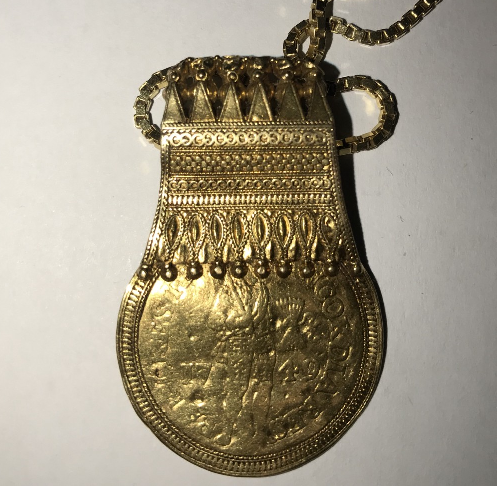
Pendant from my grandmother

Looking at it, and knowing that it was old (1749 according to the faint numbering on the object) — I concluded it was a picture of a colonial-era sepoy rifleman.

What an odd image to have on a pendant, I thought to myself.

I asked my mother about it who provided further context: “It had once been part of a larger necklace with 7 such pendants — passed from mother to daughter for generations.”

Turns out my great-great-grandmother who had seven children — disassembled the necklace and passed one pendant on to each of her children around 1920.

Eventually, it reached my mother — who had no daughters, and thus had no choice but to break with the matrilineal tradition and have it pass onto me.

There was something weird about it though. About the pendant that is. Something a little off.

Upon inspecting it further, I could make out there was some writing on it. It was some sort of lettering written in the Latin alphabet.

Why would 18th century Indians on the Malabar coast create jewelry with European writing on it? 1749 was before the British presence in the region.

It made no sense.

I took a sheet of paper, laid it over the pendant, then scribbled up and down over the area on top of the pendant with a pencil.

It revealed the words:

CORDIA RES PAR CREST

The writing at the top portion of the circular pendant was obscured due to the brace/loop affixed to it (as in the picture). A little googling however clarified that it was probably actually:

CONCORDIA RES PAR CRES TRA

Literally translating to: “In concord match against increasing…woes”

This would be better known as “Unity Makes Strength”. A motto evidently used by various European states over the centuries from Bulgaria to the Dutch Republic; from Haiti to South Africa.

There was definitely more to this pendant than I had been told. The trail was leading somewhere…but where?

Flipping it over, I found the following:
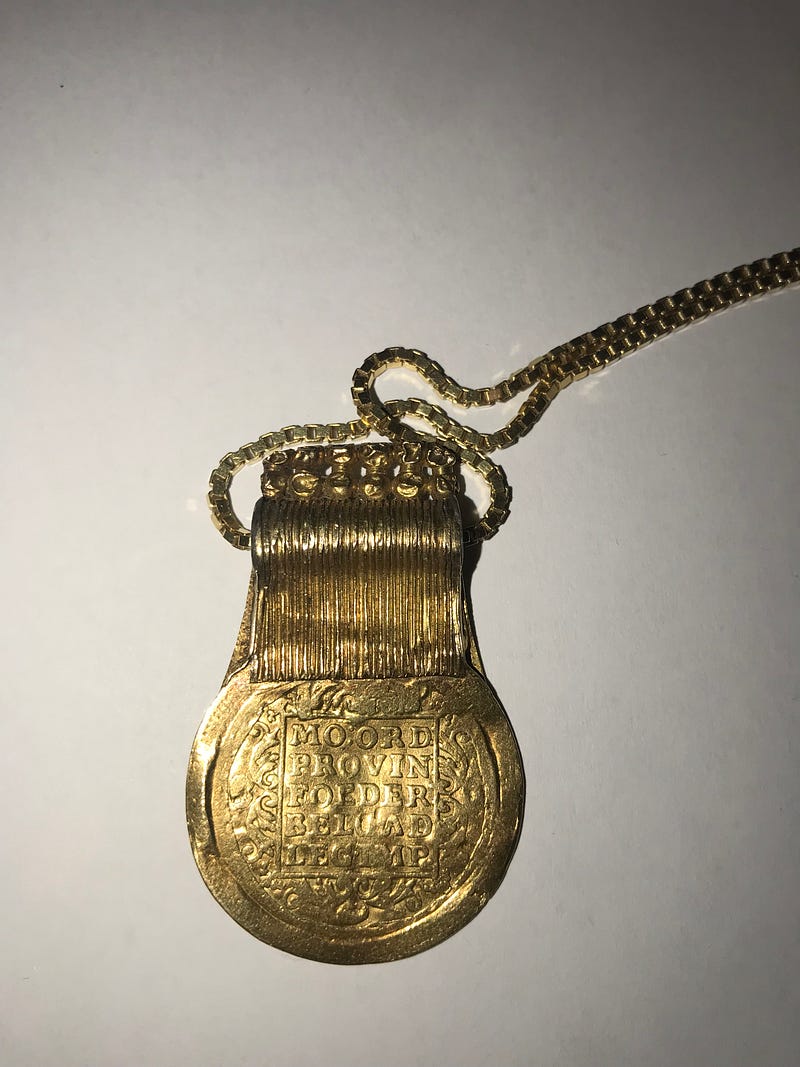
This read:

MOORD PROVIN FOEDER BELGAD LEGIMP

Google Translate couldn’t tell me what this meant, but the internet did indicate that this was from the Dutch Republic and used as a 1 Ducat coin.

A coin.

Well of course it was — that would explain its round shape!

So it appears to be that some 270 years ago, a coin was minted somewhere in the Dutch Republic. It was in circulation for some time until it ended up in the hands of a would-be trader. He (for it would have been a he) enlisted with the Dutch East India Company, got on a boat from the low countries and sailed around the world to India’s Pepper coast (also known as the Malabar coast).

There he met a local merchant and traded some ducats for pepper or other spices.

This local merchant then either traded these coins with other Malabari Indians, or kept them for himself.

One of these Indians decided to create an ornate necklace — to which he had attached this coin — along with six others. It was likely a gift to mark his daughter’s wedding.

This necklace was then passed from mother to eldest daughter as a wedding gift for one and a half centuries — until eventually, it made its way to my mother’s hands in Malaysia, and finally my hands in Australia.

This coin has traveled over 16,600 kilometers in nearly three centuries.
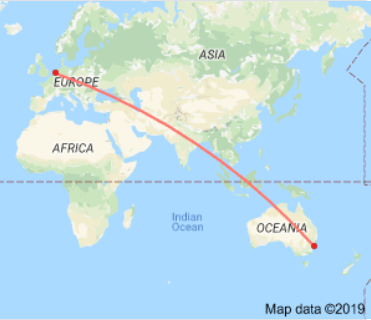
Distance traversed by the coin

Over the centuries the nature and origin of the pendant were lost to the ages — only to be re-discovered in the Age of Google.

Alas, the unbroken line of mothers to daughters ended with me. I too have no daughters to pass it onto — only sons.

As such, this pendant will lie idle, skipping two generations of weddings at least.

Perhaps one of my sons will have a daughter. Then this coin will once more continue its matrilineal journey…and someone ages and ages hence will once again discover that this pendant was once a coin, and re-piece together its history.

You may also like:

Jewelry
History
World
India
Dutch
Recommended from ReadMedium