
I Found My Grandpa’s Notes 20 Years After He Died — Here’s What I Learnt
Sometimes your hero is just a man with many of the same worries as the rest of us
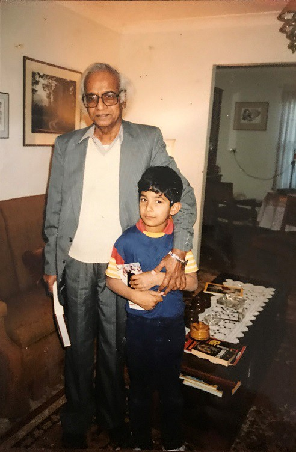
In many respects, he was your typical grandpa.
He wore thick glasses, had little remaining hair, and wore cable sweaters at home (but always a suit with accompanying briefcase when venturing out).
I remember being brought presents when he visited us from his overseas adventures, and as he grew less mobile — spending many hours curled up in bed alongside him as he conjured up many a story about faraway lands and the most ludicrous of characters.
In addition to his professional career as a doctor, he was also an avid writer — having published several novels and poems.
This invariably meant that among his artifacts when he passed away were a lot of notes — including some memoirs. They were both handwritten and typed (on a typewriter of course).
I gathered these up at the time and put them away; promising myself that I would look at them one day.
That was in 1998.
Flash forward 22 years, and I’m doing some spring cleaning at home. Low and behold: I come across those very notes.
I dusted them off and decided it was high time I dove into them.
I’m glad I did because I got to learn about who he was as a man, not just as my grandpa.
Here are 5 things I learned:
#5: He Did Time In Jail
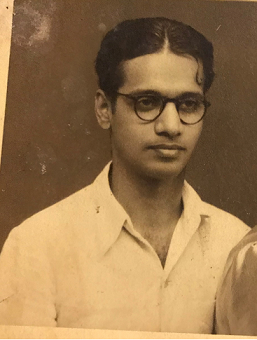
He was born in India over a century ago — during the heyday of colonialism.
Every generation faces its great challenge. Today it might be climate change, but then it was freedom from the British Empire.
As the Indian Independence movement grew from strength to strength; he found himself getting caught up in it.
Whilst at university (ever the fertile ground for dissent), he was the deputy-lead organizer of a protest (the lead was a Muslim boy).
Protests were unsurprisingly frowned upon by the authorities. As such — my grandfather and many of his companions were rounded up and sent to jail.
I knew something of this story so far— and thought he’d done a night or two until bail was posted.
Turns out he spent six months there. He formed strong bonds with some of the other prisoners— Hindus, Muslims and Christians. Some locked up for many more years to come.
He wrote about the emotional last night he spent there as he said farewell to his comrades.
The first thing he did upon being released was not to go home — but to visit the sweetheart of one of the other prisoners to pass on some personal messages.
#4: He was rejected from medical school
As mentioned earlier — he was a doctor.
In fact — arguably, his most defining accomplishment in life was being the first person of South Asian citizenship (India, Pakistan, Bangladesh or Sri Lanka) to qualify as a heart surgeon.
So what on earth happened?
Turns out that as he was about to sit his entrance exams — he got a severe bout of chickenpox. This left him bedridden for most of his exams — and he was not allowed to resit them.
Shattered, he returned to his home town at the end of the semester. His own father urged him to consider other fields like the veterinary sciences or the post office but my grandfather remained steadfast. All he wanted to do, he said, was medicine.
Several months passed. One day as he was sitting in the courtyard and chatting with his family, the postman arrived with the second mail delivery of the day.
Turns out that they were opening a new medical school “for natives” in a neighboring province — to which he had just been naturalized a few months before. In line with quotas for each religion and caste — he had been accepted to start in this new medical school when it started.
The rest as they say…was history.
#3: He Agonized About Euthanasia
As a doctor, there are people you think you can save, and there are people you know you can’t.
The latter go into palliative care.
In his work across the 1940s, 50s, 60s,70s and 80s, there were many he could not save. He could see and hear their suffering and could not understand how a kind and loving God would allow such torment.
He himself agonized on whether or not a Doctor should intervene.
In his short stories, he had the characters champion opposing sides of the issue — but it is not clear to me on where he landed.
#2: He was very religious
It may seem an odd thing to say — especially about a man who went to church every Sunday. However, it always appeared to me as largely a social thing.
He never really spoke to me about God, or delved into biblical stories or moral lessons therein.
The extent of his faith was apparent from his writings — as he recounted his period of doubt, the episode he observed that convinced him, and the fact that many of his short stories related to Mary and the disciple Thomas (who was a key figure in Indian Christianity).
#1: He was just a man
He was widely regarded as a pundit. A figure of towering life experience and knowledge.
That was a caricature of him, however. In truth, he was a man like any other.
He had hopes and dreams. Triumphs and failures. Faith and doubt.
You may also like: