
031 | ESSAY | CULTURE
The Festival of Sun AKA “Sinhala & Hindu New Year”
Renewing bonds and strengthening relationships through the traditions
Read this article for free here.
Hey folks, I’ve got another New Year’s story to share with you! Remember how I talked about the mad shopping sprees and cleaning craziness earlier? Well, now it’s high time to talk about the New Year and how we Sri Lankans celebrate the occasion.
You know, Besides the standard Georgian calendar, we also follow the solar and lunar calendars. And New Year is a function, that comes under the solar calendar.
When the sun travels across the zodiac, it takes a month to pass through a constellation. For all you science nerds out there, it’s like the background constellation with respect to Earth revolving around the sun.
The start of this travel cycle marks the beginning of our new year, as the sun moves from the last constellation Pisces to the first constellation Aries. This happens every year around April 12th or 13th.
Typically, this is the time of year when our Sri Lankan countrymen finish up their harvest season and finally get a chance to relax before the next season. So we’re all in the mood for some celebrating!
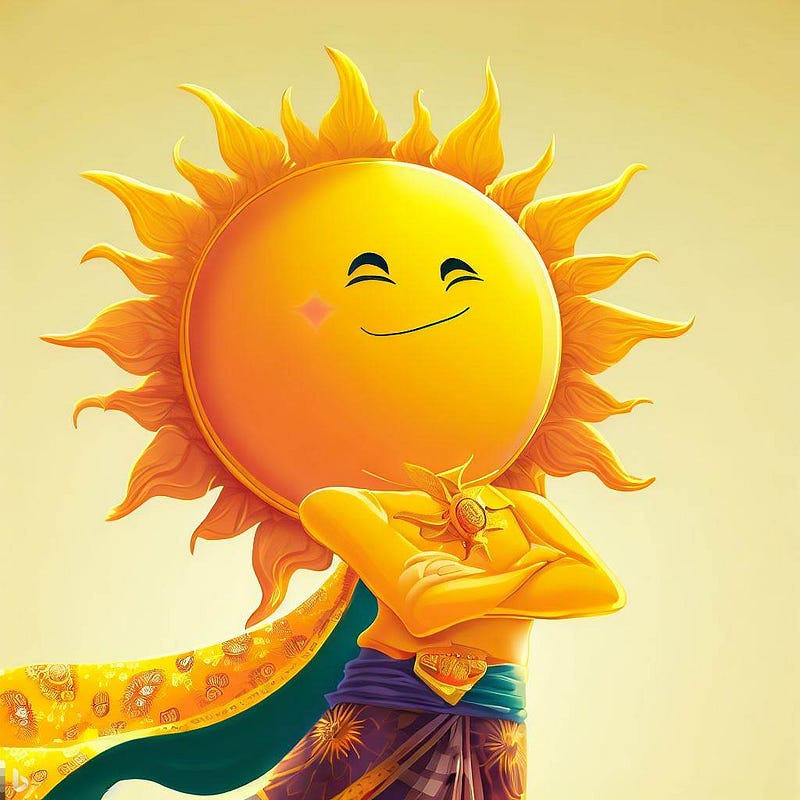
As the New Year is closely tied to the sun, it is often symbolized by this celestial body. In fact, the sun is often referred to as the “Sun Prince,” and is depicted as a handsome figure in a golden dress.
The arrival of the Sun Prince marks the start of this New Year of the “Festival of the Sun.” Ironically, at this time of year, the sun is directly overhead our island at noon, which makes perfect sense from both a geographical and astronomical perspective.
The next thing is our environment. Since we can visibly observe several changes they are also used to represent the New Year. You can call them official event mascots of the New Year if you want.
The first one is the Koha or Asian Koel, a cuckoo bird whose distinctive call is a must-have for the New Year. Then there’s our official flower, the Erabadu or Eramudu, also known as the Tiger’s Claw or Indian Coral Tree. Its bright red flowers are impossible to miss during this time of year.
Finally, we have the Cashew nut and fruit, which were introduced to our culture during the Portuguese colonial era and have since become a popular representation of the New Year.
If you’re still skeptical about global warming, please trust me when I say it’s real. You see, we have observed the delayed arrival of the Koha bird in recent years.
Additionally, the cashew season is also becoming less predictable. While the disappearance of the Erabadu tree cannot be solely attributed to global warming, it is becoming increasingly rare to spot this species in our environment.
Next comes the most interesting thing, Seasonal Sweets. Those are one added taste to the New Year. As a nation whose staple food is rice, many of our traditional sweets are also made using rice. To prepare for the New Year, we set aside a portion of the newly harvested crop specifically for making these sweets.
The first step in making rice flour for sweets is to grind it using a large wooden mortar and pestle, which are much bigger than the ones you use to chop herbs. While a mill could be used to grind the rice, traditional sweets require a coarser texture that is achieved by grinding the rice manually.
Additionally, the rice is ground in wet conditions to obtain the perfect texture. Once the grinding is complete, the rice flour is sifted using a sieve. It is widely believed that sweets made using traditional methods are tastier than those made using machines.
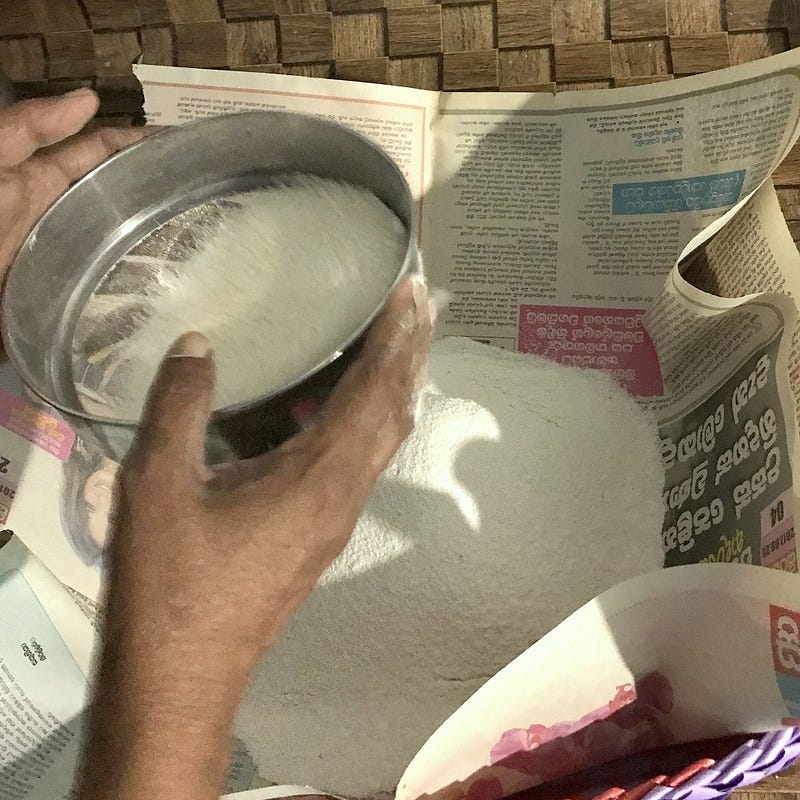
Although I took some extra pictures of my mother preparing the rice flour, they did not turn out well due to the light condition of our black kitchen, and she strictly prohibited me to publish them because she didn’t look presentable. I apologize for that.
Once you have prepared rice flour, your options are unlimited. We already prepared “Kokis” a crunchy snack like chips and “Kewum” aka Oil Cakes, a sweet passed down for over 2 and half millennia from generation to generation.
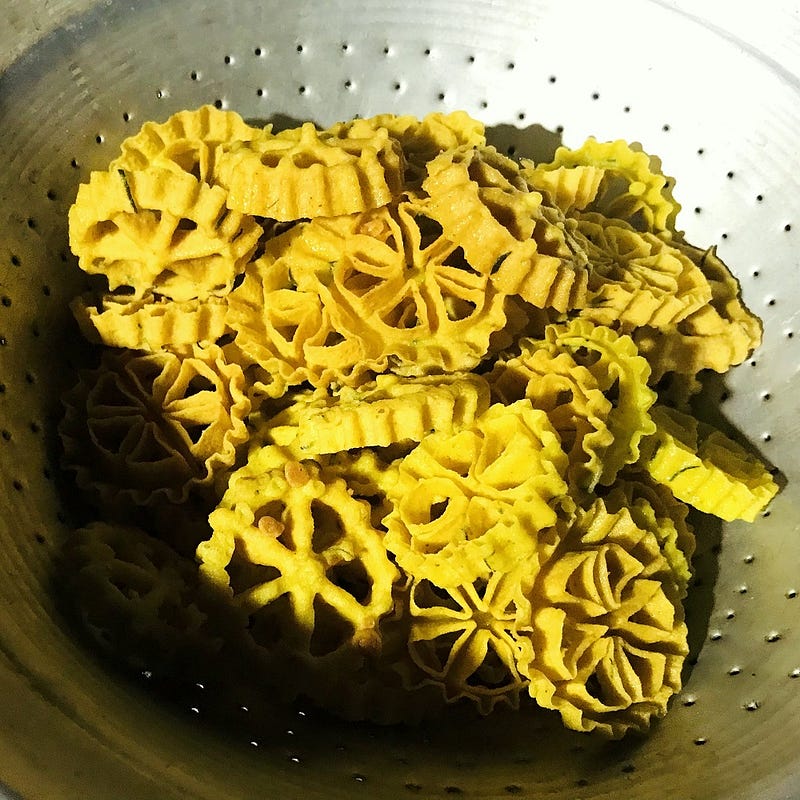
As preparing these sweets takes some time, we make them well in advance of the New Year. We need them for the auspicious time for food-eating and to present to guests who visit us during this period. Additionally, we like to gift them when we visit our relatives and neighbors.
These seasonal sweets come in different varieties, about a few dozen different types. Of course, an average household like ours cannot afford to make so many, but we hope to have at least a handful of sweets on the New Year’s table.
You may be wondering what makes a tiny nation’s New Year so special, given that every culture has its own festivals. Well, for us, the New Year is all about unity.
As a family, we come together to clean our houses and prepare sweets. Normally, mothers do all the cooking in traditional families, but during the New Year, all family members join in to help. This strengthens the bond between family members and creates a sense of closeness.
Being at home is crucial during the New Year, which is why the streets of our capital are empty as everyone returns to their families. We participate in auspicious activities and play games together as a family, which further strengthens our unity.
We also visit our neighbors and relatives to renew our connections. As a village, we come together for a New Year festival that includes several traditional games, further uniting our community.
Finally, as a nation, we come together. This new year is celebrated by all on our tiny island. Hence, the name Sinhala and Tamil New Year or Sinhala and Hindy New Year.
I sincerely hope that you can take a lesson or two from us and use this time to renew your connections with loved ones. Prepare food together with your family and share it with your neighbors and others. Because the real celebration of the New Year lies in these moments of togetherness, regardless of outward appearances.


