
028 | STORYTELLING | CULTURE
How We Prepare for the New Year by Saying Goodbye to Spiders
My adventure tour exploring the perfect solution
Read this article for free here.
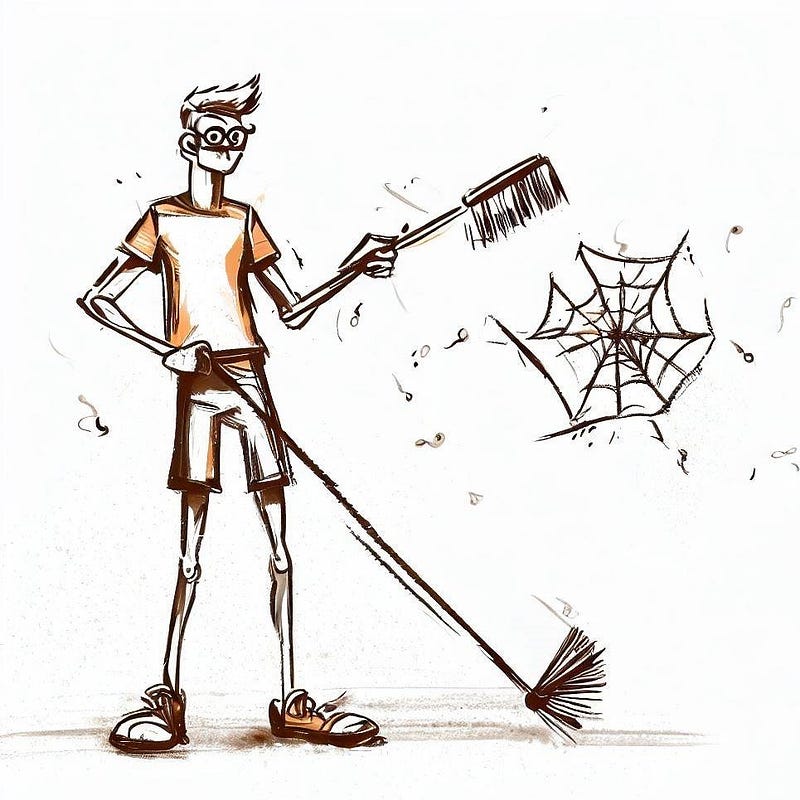
Hey, folks! It’s me, spending an entire half-day getting rid of spiderwebs in my house. You might think I live in some old barn abandoned for years.
Nah, man, we live in a tropical country. It means spiders are part of our lives. It is fair to say that we are building houses for spiders, and if they allowed it, we could live there.
To make things worst, I wanted a fancy slab-free area in my house, which gave them a perfect, out-of-reach spot to set up nests. I won’t bore you with how I almost broke my neck trying to clear out those devilish spiderwebs.
Instead, let’s talk about the Sri Lankan way of preparing for the new year by getting rid of spiderwebs.
You know, In our day-to-day lives, we’re constantly clearing out spiderwebs. If we don’t, they’ll quickly take over our homes. Spiders lay many eggs and guess what? Almost all of them become baby spiders who soon have a separate web in a corner of the house. I am sure it’s like real estate craziness up there!
Have you ever tried to clean up those pesky spiderwebs, only to have the spiders jump from place to place and hide in another corner? It can be frustrating to shake your head in disappointment, realizing the webs are back to their former glory in just a day or two. But, before the new year rolls around, it’s time for a complete turnover and bidding farewell to all those eight-legged creatures. Have you read Dr. Preeti Singh’s following post about the giant spider?
In this post, she mentioned using a professional pest control service to clean up the house, but that’s an unheard-of thing in our country. My great-grandma would curse us from beyond the grave if we even considered such a thing!
We Sri Lankans still stick to the traditional way of cleaning spiderwebs — manually clearing every corner with a broom. Thankfully, these days we have fancy plastic brooms and dusters that make the job much more manageable and hassle-free.
But even with these modern tools, we know it’s only a temporary fix. Those bloody spiderwebs always seem to reappear after a few days. That’s when our reliable traditional method is handy when dealing with stubborn spiderwebs.
We use a branch from a particular bushy tree to eliminate these webs once and for all. These branches are readily available in abundance near shrubs.
So I decided to explore them in hopes of finding what I needed. Unfortunately, the once well-used paths through the shrub have become overgrown with time. It is unsurprising given that children nowadays have less time to explore nature due to their heavy educational workload and dependence on modern technology.
However, in the past, we used to spend our time on these shrubs. Therefore these pathways hold many fond memories for me. I could tell you numerous stories about them all day long.
Finally, I found what I looked for — the bushy type tree we call ‘Keppetiya,’ or Croton Aromaticous, which has a pleasant and distinctive smell, as its name suggests.
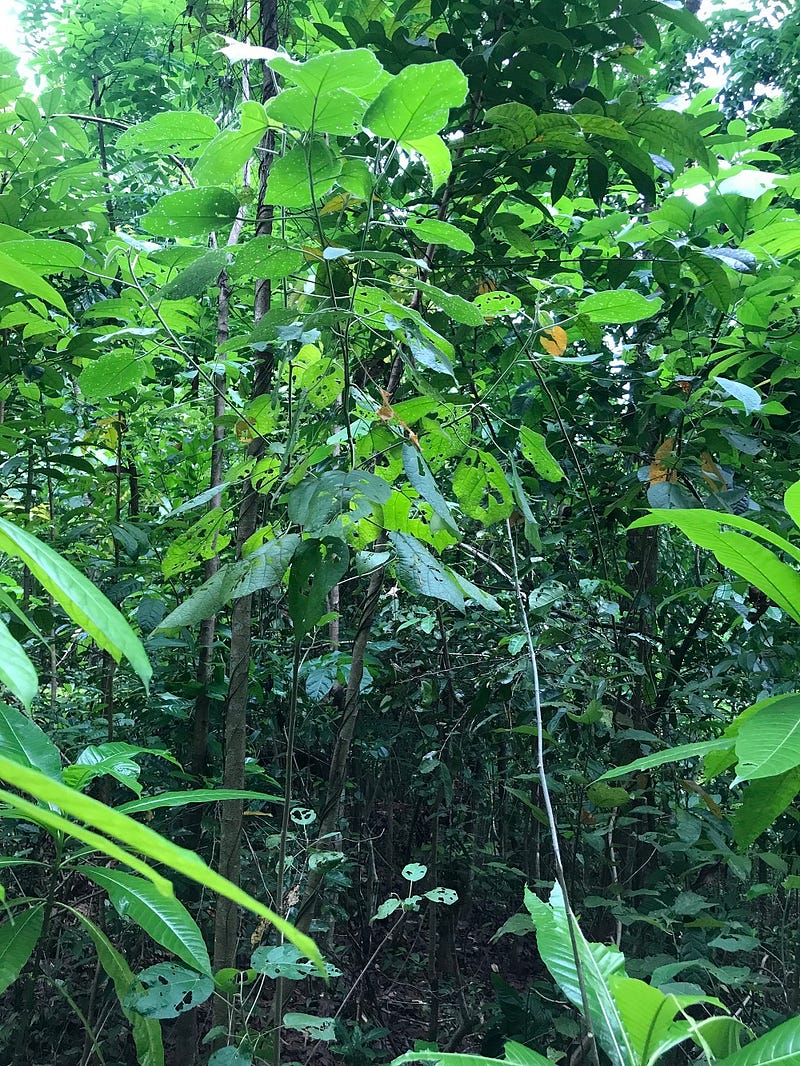
I cut a few branches from the beginning of the stem and brought them home.
At home, I bonded them to a modern plastic broom for use. The leaves of this tree have a rough and brushy surface similar to a stinging nettle, and their aromatic scent has spider-repellent properties. Once the spider webs are broken with these leaves, the spiders stay away for a long time.
Moreover, due to the roughness of the surface, the spider webs stick to the leaves. They can be easily disposed of in isolation without harming the spiders.
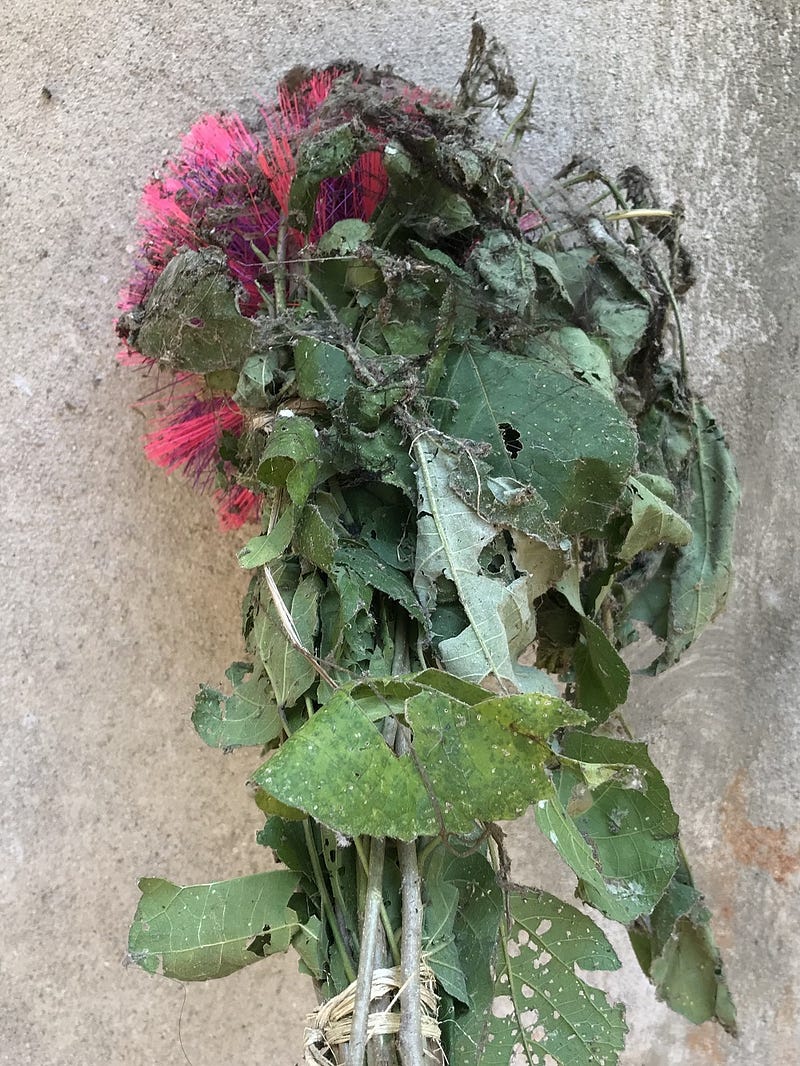
This traditional method of removing spider webs is still as effective today as it was in the past, and we still use it before the new year. Perhaps you are wondering what is the use of learning about spider-web cleaning in a distinct country. Well, consider this as an introduction for the upcoming new year post series.
I am writing this during a break because my wife has started complaining about my excessive time reading and writing on Medium. Since I need to have meals for the rest of my vacation, I will sign off now. But I will be back soon with another story to share.


