The Fall of the Empire: Germany
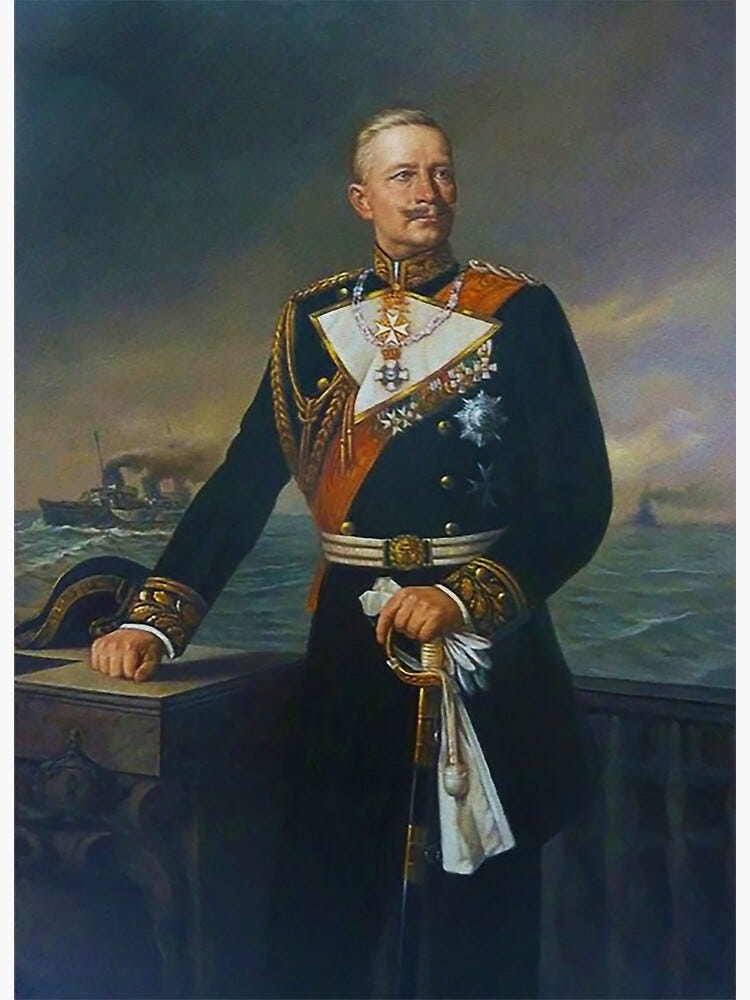
By autumn 1918, many German citizens were fed up with the war. There were major food shortages and protests and rallies throughout the country. The population blamed Kaiser Wilhelm II for all the sacrifices made during World War I and demanded his abdication. Most soldiers were tired of fighting as well and wanted the war to end. A Farewell to Arms was not just a metaphor for millions of Germans; in 1918, they all wanted peace, a new life and a return to their loved ones.
The military leaders of Germany knew that they could not win World War I. By this point, the military was largely in control of the country and had gained enormous influence over the Kaiser. Field Marshal Paul von Hindenburg and his loyal deputy General Erich Ludendorff were in a quandary. In hopes of gaining more favorable terms when they surrendered to the Allies, German generals urged the liberal Prince Max von Baden to form a new German government that would be more democratic. But they were unable to control the navy, whose leaders wanted to go down fighting rather than surrender.
In the face of defeat, the Naval Command insisted on trying to precipitate a climactic pitched battle with the British Royal Navy utilizing its secret naval order of 24 October 1918. Operational order Op. 269/AI was a plan made by the German Admiralty to provoke a decisive battle between the German High Seas Fleet and the British Grand Fleet in the southern North Sea. All the forces of the German navy were to take part in the operation. For the evening of the second day of the operation, it was planned to attack the British forces with destroyers and submarines, which had taken up their positions in advance. The plan was suicidal, as the British forces outnumbered the Germans many times over, which is why, according to British experts themselves, it had every chance of success. It was to culminate in the unheard of extermination of the Germans and the British at sea.
The battle, fortunately, never took place. Instead of obeying their orders to begin preparations to fight the Grand Fleet, German sailors led a revolt in the naval ports of Wilhelmshaven on 29 October 1918, followed by the Kiel mutiny on 3 November. The news of the mutiny touched off uprisings in support of the sailors throughout Germany. The events in Kiel, Berlin, Munich, Frankfurt am Main and other major cities ultimately led to the end of the German Empire and to the establishment of the Weimar Republic.
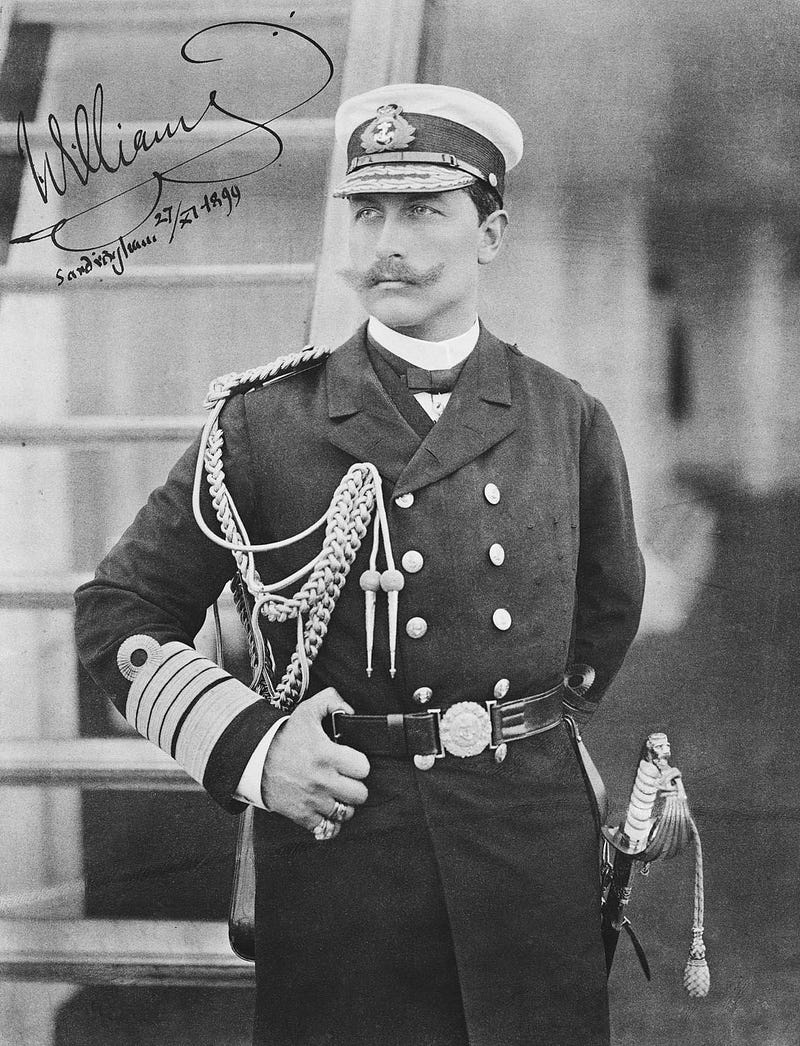
On 9 November 1918, the Imperial Chancellor, Prince Max of Baden, announced the abdication of the Kaiser. He did not even bother to notify the emperor of the announcement, as time was too precious. Prince Max handed over the office of Chancellor of the Reich to Friedrich Ebert, chairman of the Social Democratic Party. On the same day, social-democratic politician Philipp Scheidemann proclaimed the republic from the balcony of the Reichstag building. A few hours later, communist leader Karl Liebknecht proclaimed the “Free Socialist Republic”. This twofold proclamation of the republic reflected the conflict that underlay the revolution. While social democrats wanted a constituent national assembly to be convened without delay, the communist party advocated the rapid realisation of Socialist ideals in a system of soviet-style councils following the example of the Bolsheviks in Russia.
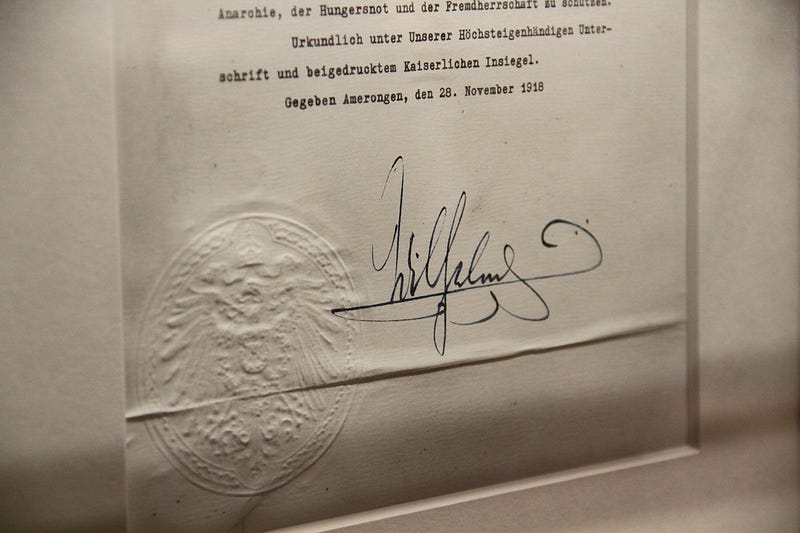
As a result of the unrest, Kaiser Wilhelm, Prince Max of Baden, and other German monarchs abdicated, or gave up their power. The Kaiser fled to the Netherlands, unable to bear the disgrace of the revolution, and was granted asylum thanks to the neutrality of the Dutch government and Queen Wilhelmina. Only on 28 November 1918, did the Kaiser sign a formal abdication.
Radical groups and other political parties also tried to seize power in the confusion that followed the end of the monarchy. They took control of many city halls and state governments across the country. The war was over, the German empire had fallen, and now the question was whether Germany could create a new future and what kind of society it would become.
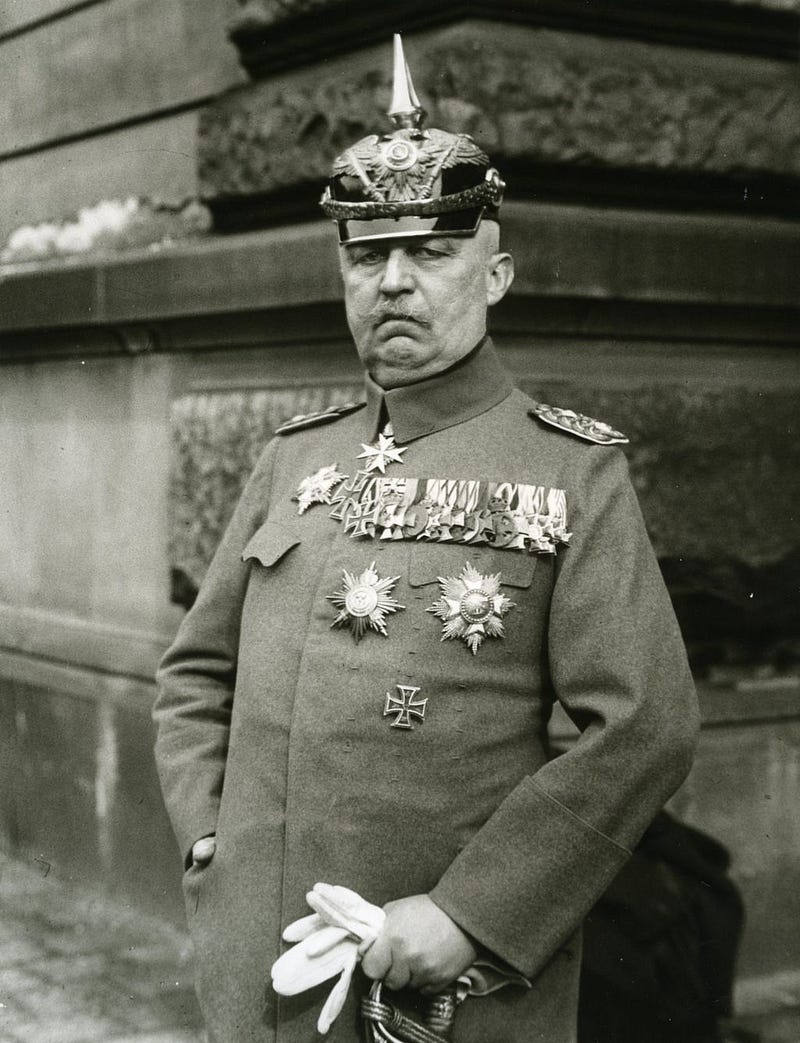
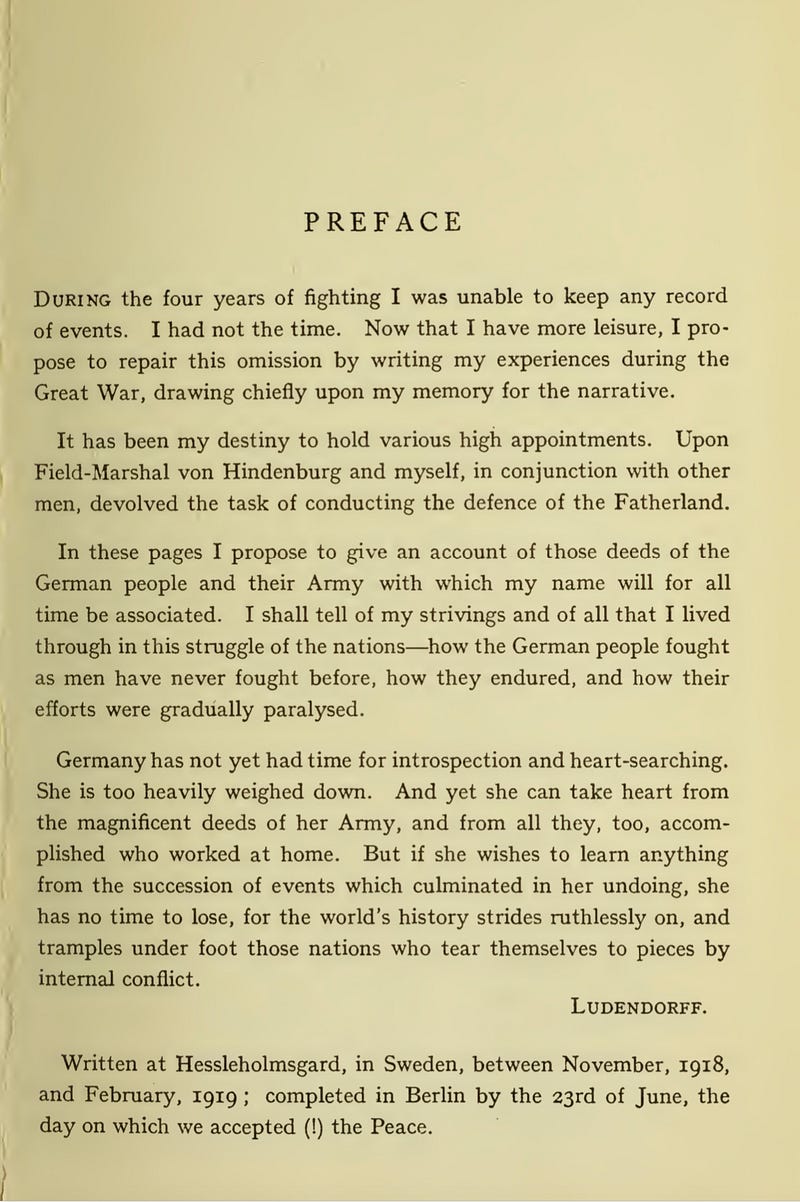
Erich Ludendorff, the First Quartermaster-general of the Imperial Army’s Great General Staff, speaking of the events leading up to the revolution, recolled:
The homeland itself was completely under the influence of hostile propaganda and of speeches made by enemy statesmen which were directly levelled at us. We still failed to realize the mental attitude of our enemies. All parties represented in the Reichstag Majority, with the exception of the right wing of the Centre, persistently echoed the catch-words of hostile propaganda, and, just as before, rushed forward their proposals for universal reconciliation, understanding and disarmament.
The Secretary of State for Foreign Affairs, who was the very personification of this idea of universal understanding, expressed his opinion that the war could not be decided on the battlefield.
He was quite right, if he meant that it should be waged against the enemy home front, and that the conduct of the war should be supported by an active war policy. But he was wrong, if he placed his faith in reconciliation and understanding, as was really the case.
The Secretary of State was only repeating what was in the minds of the majority. And this was the doctrine that was preached everywhere, in the Reichstag, in the Press, to our worn and weary people and to our soldiers, whom the High Command was asking to offer their lives on the battle-field for the sake of the Fatherland. […]
In addition there was ever increasing evidence of the creeping growth of Bolshevism, only too gladly accepted and disseminated by the Independent Social Democrats, and which had all this time been allowed to establish itself officially in Berlin. […] We were soon familiar with the working methods of Bolshevism. Warnings innumerable were given. Members of the General Staff sent ample data to the responsible authorities in Berlin regarding Bolshevik activity in Germany. Unfortunately, further conduct of the affair was out of their hands.
Meanwhile the Army Command in the Marches and myself repeatedly drew the attention of the Imperial Chancellor, the War Ministry and Foreign Office, and also the Home Office, to the revolutionary intrigues of the Russian Embassy in Berlin, with its very large staff and its association with the Independent Social Democrats, as well as to the revolutionary activity of the latter. But it was all in vain. […]
At the beginning of November the Revolution, the work of the Independent Socialists, broke out, starting in the navy.
The Government of Prince Max had not the strength to nip the outbreaks in the bud, although they were only local at first, on the Russian model. It was incapable of leadership, and let things run their course.
At noon on the 9th November Prince Max, on his own initiative, announced the abdication of the Emperor. The old Government issued orders to the troops which amounted to a prohibition to use their arms, and immediately afterwards it disappeared.
The Emperor was confronted with a fait accompli. On the advice of G.H.Q. at Spa, he went to Holland. The Crown Prince followed him, after Berlin had refused his unconditional offer of further service. The princes of the States abdicated.
On the 9th November Germany, lacking any firm guidance, bereft of all will, robbed of her princes, collapsed like a house of cards. All that we had lived for, all that we had bled four long years to maintain, was gone. We no longer had a native land of which we might be proud. Order in state and society vanished. All authority disappeared. Chaos, Bolshevism, terror, un-German in name and nature, made their entry into the German fatherland. Soldiers’ and Workmen’s Councils, an institution prepared in long, systematic underground work, were now established. Men had worked at this who might by service at the front have secured a successful issue of the war, but who had been dubbed “indispensable,” or had deserted.
The bulk of the troops in depots, among whom the idea of revolt had long been gaining ground, went over to the side of the revolutionaries.
Erich Ludendorff viewed the revolutionary upheavals as a right-wing conservative and a military man who did not entertain the idea of Germany’s defeat. His views were typical of the proponents of German revanchism who began to raise their heads soon after the November Revolution. Unfortunately Ludendorff was not the only one to hold such views. Millions of Germans thought along the same lines, and a return to “order” and “native land” became the holy dream of many German revanchist politicians in the 1920s. That is why the young and vibrant German democracy, born in November 1918, lasted only 13 years.
This article is part of a new project: The Fall of the Empire, in which we will tell the story of the fall of European empires through the mouths of their contemporaries. We will speak about the last days of Imperial Russia, Kaiser’s Germany, the Dual Monarchy, and the Ottoman Empire. Four once-influential powers, as if frozen in their glorious past.
Our experts will be an experienced British diplomat, the chief of the German General Staff, an Austrian writer and journalist, and a Turkish politician, the founder of the new Turkish Republic. What all four have in common is not only that they lived 100 years ago. Their ideas are especially relevant today in an era of global challenges and military conflicts. Subscribe so you don’t miss a thing.


