The Fall of the Empire: Austria-Hungary
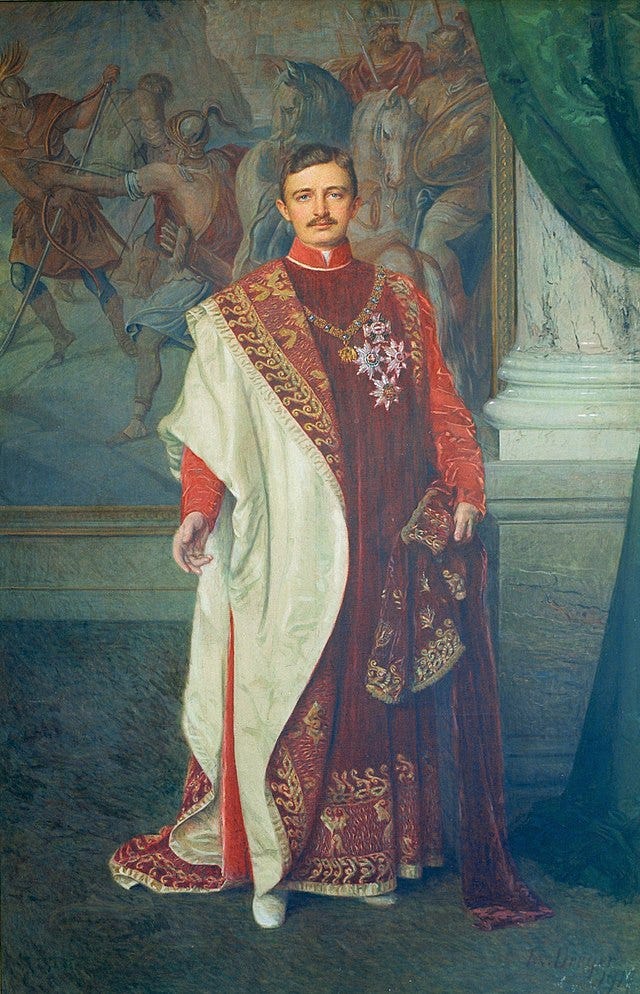
The Austrian Emperor Franz Joseph once remarked that his main goal as ruler was to keep his subjects safe from politicians. For more than six decades, the Austrian monarch so successfully implemented this principle that he was able to become a living symbol of peace and stability for three generations of Austrians. Franz Joseph’s familiar character traits — restraint, self-discipline, simplicity in dealing with his subjects, and finally “the very respectable old age, supported by state propaganda” — all contributed to the high prestige of the monarchy.
Nevertheless, the late Habsburg monarchy did not always conform to the ideal of peace and prosperity to which the founders of most European empires aspired. The failures of World War I, the aggravation of interethnic and social contradictions, and the collapse of the economy called into question the very existence of Austria-Hungary. Many were no longer satisfied with the system of Austro-Hungarian dualism, of which the penultimate Austrian emperor remained the living embodiment. His death in November 1916 and the accession to the throne of the 29-year-old Archduke Karl (Charles) meant for the Austrians the hope of a renewal of the country and the implementation of long-overdue reforms.
In the eyes of his contemporaries, Charles I (1916–1918) was supposed to be the ideal monarch. A zealous Catholic, an excellent family man, a graduate of Charles University in Prague, and a talented military commander who held the rank of Austrian field marshal, he possessed all the qualities necessary for a ruler. The only thing Charles lacked was that he was not a politician. The era of his grand-uncle, who had no patience for such a profession, affected his education and upbringing. Nevertheless, in his short time in power, Charles did much to preserve his empire, although many of his efforts were never appreciated by his contemporaries.
Like the emperors of Germany and Russia, Charles faced revolutionary upheavals that completely destroyed his world. Among the leaders of the three then collapsed empires, he was the only one who did not abdicate and was able to remain faithful to the monarchical principle even in exile. Charles’s wife, Empress Zita of Bourbon-Parma, supported his endeavors in everything, although her Italian origins caused a lot of trouble in the war. According to the Slovenian historian T. Griesser-Pecar, “Charles respected her not only as a wife but also as an educated adviser who was able to balance his own shortcomings.”
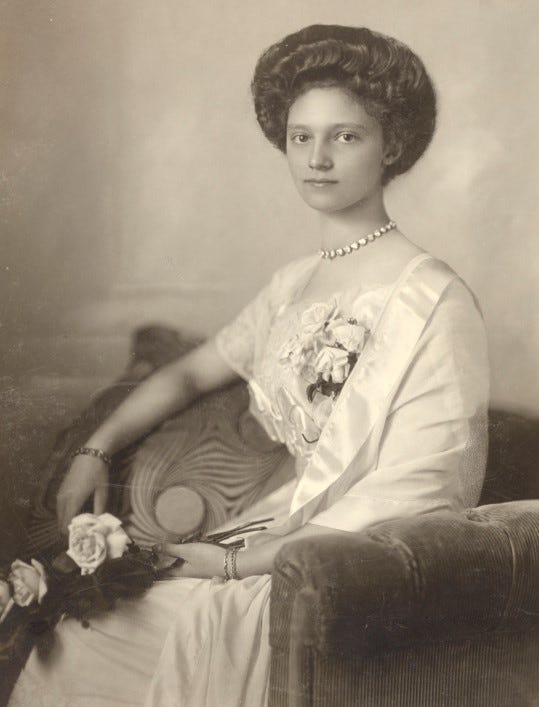
The religiosity of the imperial family markedly set it apart from the rest of the Austrian elite and, according to the observation of many contemporaries, contributed to the “alienation” between the monarch and his cronies. However, this same quality attracted the sympathy of ordinary subjects.
Coronation
The new monarch’s first step was his coronation in December 1916 in Budapest, as king of Hungary, which was intended to demonstrate the inviolability of the Austro-Hungarian union. The Hungarian elite insisted on it in the first place. Charles swore an oath on the Hungarian constitution and guaranteed the inviolability of Hungary’s borders and its political system. The Hungarian prime minister Istvan Tisza and the local aristocracy achieved their goal — the conservative character of the Hungarian kingdom was fully preserved.
The Emperor did not dare to reform the system of Austro-Hungarian dualism — it would have looked unwise under war conditions. The contribution of Hungary to the overall war effort of the empire was very significant — of the 8 million soldiers mobilized, 3.8 million, that is, about half, were the subjects of the Hungarian kingdom. However, the loyalty of the Hungarians raised the question of reward, which became a favorite topic for the Hungarian opposition. Since the Hungarians did not wish to conquer new territories, their aspirations were aimed at strengthening Hungary’s autonomy within the dualist monarchy and strengthening Hungarian influence within it.
According to politicians in Budapest, only Hungarians could constitute a political nation in the Hungarian kingdom. As a result of the dominant position of Hungarians, the will of other major nationalities (Romanians, Slovaks, Serbs) was not considered, or was completely marginalized.
Charles I rejected the proposals of all the former associates of Archduke Franz Ferdinand, who wanted to carry out a series of reforms in Hungary and bring the empire to trialism. The possibility of an agreement with all the national communities of the kingdom was never realized. At the end of November 1916, Count Anton von Polzer-Hoditz, head of the Imperial Chancellery, prepared a memorandum in which he proposed that Charles postpone his coronation in the Hungarian capital. Instead, he urged the monarch to negotiate “with the entire Hungarian people,” including representatives of national minorities. According to the Austrian politician, the obstacle to this was the current composition of the Diet of Hungary, “since the present electoral law gives only a small percentage of the population the opportunity to participate in political life.”
But in war conditions, any serious reform of the electoral system was out of the question. The Hungarians were vigilant not only to preserve the principle of dualism and parity between the two parts of the monarchy, but also to maintain the tradition of Hungarian “supremacism” within the kingdom. The challenges brought by the war, including the growth of the national movement, undoubtedly had an impact on the position of the Hungarian elite. But the policy of the Hungarian prime minister, Istvan Tisza, consisted “in a stubborn and unyielding defense of the old order” and in a resolute resistance to any attempts at reform. The representatives of the moderate opposition were not opposed to the democratization of suffrage, but the realization of these aspirations seemed possible only after the war was over.
Under these circumstances, the emperor refused to follow the example of Archduke Franz Ferdinand. Under pressure from the Hungarian elite, especially the Count of Tisza, he left the foundations of the Hungarian kingdom intact.
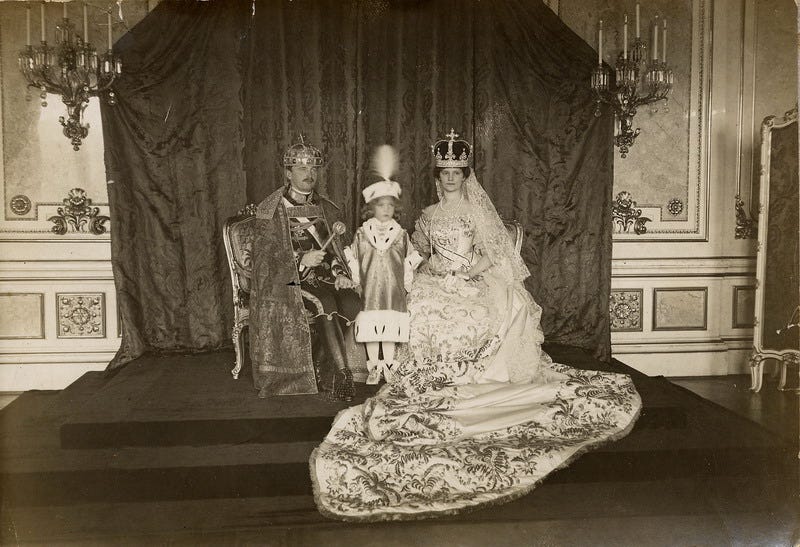
The coronation of Charles I took place on December 30, 1916, in St. Matthias Church in Budapest, near the royal castle of Buda. The 1,000-year-old relic of Hungarian kings, the crown of St. Istvan, was placed on the head of the Habsburg monarch for the last time.
The peculiarities of Hungarian political traditions showed themselves on this occasion as well. Hungary was characterized not so much by the sacralization of the monarch’s personality as by the crown as a symbol of power. For several centuries, the “Holy Crown” played a significant role in creating the image of the ideal ruler of the country and in legitimizing him. During the coronation, it gave the ceremony a solemnity and made it almost medieval, but at the same time, it attracted the sympathy of Hungarian subjects.
As the Minister of Foreign Affairs of Austria-Hungary, Count Ottokar Czernin, remarked, “Only now I understand why the Hungarians were so insistent on the coronation. Whoever saw the Hungarian coronation will never forget it. And in this, the political foresight of the Hungarians was evident.” The coronation was the last solemn event in the life of the departing empire. The imperial couple were greeted on the streets of the Hungarian capital by 60,000 jubilant subjects, which seemed the best confirmation of their patriotic feelings. However, this decision tied Charles’s hands, as it prevented him from extending the reforms he had conceived to the Hungarian kingdom, which later had fatal consequences.
Mistakes of secret diplomacy
The question of continuing the war was of vital importance to the empire — the number of supporters of a separate peace even in the capital was growing. In the aristocratic circles of Vienna the phrase was echoed with pleasure, as if it had been said by the British Prime Minister David Lloyd George: “I see no way to win the war, except by making a separate peace with Austria.”
As the head of the Austrian Foreign Ministry O. Czernin believed, “a victorious peace is very unlikely, a compromise with the Entente is necessary, there is nothing to count on the captures.”
The emperor decided by all means to give peace to Austria-Hungary, the only thing he thought would give a chance to preserve the monarchy. Charles already expressed his attitude toward the war in his Manifesto of Accession in December 1916, in which he promised to “return to my people a blessed peace, without which they suffer grievously.”
Speaking at a meeting of the Crown council in January 1917. Charles went even further. He not only called for the normalization of relations with Russia but also declared that Serbia should receive “guarantees of its state existence”. The emperor’s position on Serbia resonated with many Hungarian politicians who did not want the annexation of the Serbian lands. Such annexation, in their opinion, would jeopardize the existence of the Hungarian kingdom because of the inevitable predominance of “Slavic elements”.
On March 22, 1917 the Hungarian prime minister, Istvan Tisza, at a meeting of the General Council of Ministers of Austria-Hungary, expressed the opinion that a peace concluded on the basis of the principle of status quo ante bellum was beneficial to the empire. According to Ottokar Czernin, “Tisza had the great advantage that he did not seek to continue the war for conquest purposes; he wanted the alignment of the borders on the Romanian side and nothing else.”
But Hungarian politicians made it clear that it was also not in their interest “to enlarge Austria considerably, because in that case the balance between the two parts of the Monarchy would be upset, which would call into question the dualist parity important to the Hungarians.”
Charles I, supported by his wife, proposed to end the war, leaving the question of annexations in the past. Events in Austria-Hungary’s neighbors forced the Austrian emperor to hurry. The February Revolution in Russia and the fall of the Russian monarchy made a great impression on Charles I. The monarchical principle was threatened, and this was much more serious than possible territorial losses. In the emperor’s view, Germany and Austria-Hungary were on the same perilous path as the Russian Empire.
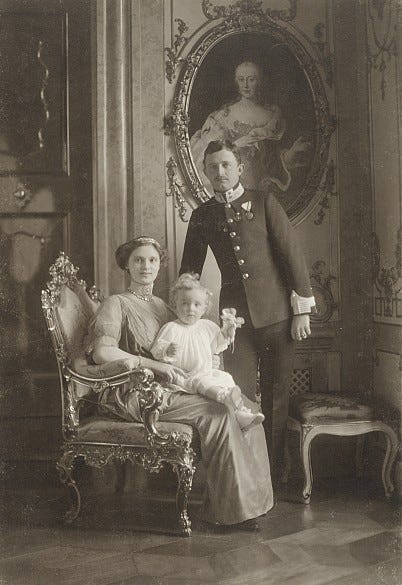
Charles chose the empress’s own brothers, who had served in the Belgian army, as mediators to broker contacts between Austria-Hungary and the Entente. One of them, Prince Sixtus of Bourbon-Parma established contact with the French foreign minister, who informed him of his peace proposals: the return to France of Alsace and Lorraine (without reciprocal concessions in favor of Germany), the restoration of Belgian and Serbian sovereignty. In March 1917. Charles wrote a letter intended for the French president in which he called the demands of Alsace and Lorraine “perfectly just.” The emperor promised to use all his influence to fulfill the French demands for Alsace and Lorraine and to restore Serbian sovereignty.
Then, after Prince Sixtus met with President Raymond Poincaré, Charles was also unequivocally offered a separate peace.
At a meeting with Wilhelm II on April 3, 1917, Charles offered the Kaiser to give up Alsace and Lorraine in exchange for which he was ready to cede Galicia to Germany and agree to the actual transformation of Poland into a German satellite. These initiatives found no support from Wilhelm.
In the same month, Charles wrote a memorandum to the Kaiser urging support for his peace initiatives: “If the monarchs of the Central Powers prove unable to make peace in the coming months, the peoples will do so over their heads. We are at war with a new enemy even more dangerous than the Entente — with an international revolution whose strongest ally is hunger. I ask you to give due weight to the importance of this matter and to consider whether a rapid end to the war might not be an obstacle to the coups being prepared.” These words of the emperor proved prophetic, but in Berlin the appeal of Charles I was not heard. Moreover, Germany unilaterally declared an unrestricted submarine warfare, which predetermined the entry of the United States into the conflict. The position of the Central Powers then became truly critical.
Negotiations with the French had to stop in the summer of 1917, when a new government headed by Alexandre Ribot and later Georges Clemenceau, who was a supporter of the war to the bitter end, came to power in the country. Italy, bound to the Entente by a treaty of alliance, was also unwilling to make concessions. Under the 1915 Treaty of London, Italy was promised Tyrol, Trieste, Istria and Dalmatia. In May 1917, Charles hinted that he was ready to cede Tyrol to the Italians. However, this was not enough. On June 5, Alexandre Ribot declared that “peace can only be the fruit of victory.”
Only British Prime Minister Lloyd George commended Charles’s initiatives and described his letter as “very kind,” but this made no difference. The new French leader, G. Clemenceau, saw only a military way to resolve the conflict.
In April 1918, Foreign Minister Ottokar Czernin, speaking before the Vienna city assembly, declared the country’s readiness for peace negotiations. However, he carelessly disclosed the contents of Charles’s letters to the French president, and distorted their meaning. The initiative, according to Czernin, came from Paris, and the negotiations were interrupted allegedly because of Vienna’s refusal to consent to the annexation of Alsace and Lorraine to France. Georges Clemenceau’s answer was brief and categorical: “Czernin lied.” A great scandal broke out, in the course of which the authority of the ruling dynasty suffered considerably. Czernin was forced to resign, and Kaiser Wilhelm received irrefutable evidence of his ally’s separatist plans. The “Sixtus Affair” ended in complete failure.
Charles was forced to make excuses to Berlin, and in May, under pressure from Germany, signed an agreement for an even closer military and economic alliance of the Central Powers. The Habsburg Empire finally became a satellite of the more powerful German Empire.
Imperial “Perestroika”
The most important part of the reforms proposed by Charles I was the liberalization of domestic politics. In war conditions, however, this strategy proved to be not the best solution. Whereas at the beginning of World War I the Austrian authorities were engaged in the search for “internal enemies”, repression and restrictions, after the change of monarch they began to liberalize. This only exacerbated internal contradictions. Charles I, guided by better motives and humane principles, himself questioned the preservation of his dynasty and empire.
The transformation began in May 1917, when the Reichsrat, the parliament of Austria that had not met for more than three years, was convened. Also on 15 June, the Prime Minister of Hungary, Istvan Tisza, who was the embodiment of Hungarian conservatism, was dismissed. He was replaced by a young Oxford graduate, Count Móric Esterházy, and only a few months later by Sándor Weckerle (a representative of the Danubian Swabians). Both politicians advocated the democratization of the Hungarian electoral system and political reforms.
There is no doubt that these decisions were made under the impression of the revolutionary upheavals in Russia, where by that time power had gone to the Provisional Government formed in Petrograd. The specter of the Russian revolution, though it inspired hopes for a quick collapse and the fall of the eastern enemy, still forced the Austrian authorities to take preventive steps. It was as if Charles was inviting the democratic elements of Hungary and Austria to share responsibility for the fate of the country with him and hoped in this way to consolidate the nation. And this might have brought results, but not in conditions of war.
The resumption of Parliament proved to be Charles’s great mistake. The convocation of the Reichsrat was perceived by many opposition politicians as a sign of the weakness of imperial power. The leaders of the national communities were given a rostrum from which they could openly propagate their ideas and exert pressure on the monarch. The Reichsrat quickly became an opposition center, essentially an anti-state body. As the parliament continued to meet, the position of the Czech and Yugoslav deputies (they formed a single faction) became more and more radical. The Czech Union demanded the transformation of the Dual Monarchy into a “federation of free and equal states” and the creation of a Czech state, including the Slovaks. Budapest was outraged because the annexation of the Slovak lands to the Czech lands meant a violation of the territorial integrity of the Hungarian kingdom. At the same time, Slovak politicians themselves took a wait-and-see attitude, giving no preference to either an alliance with the Czechs or autonomy within Hungary. The orientation towards an alliance with the Czechs won only in May 1918.
It should be noted that the Yugoslav Committee did not have the support of the majority of the Serbs, Croats, and Slovenes of Austria-Hungary at this time either. Most of the South Slavic politicians in Austria-Hungary itself at that time were in favor of broad autonomy within the Habsburg monarchy, provided it was transformed into a federation.
After the October Revolution in Russia, on November 30, 1917, the Czech Union, the South Slavic Club of Deputies and the Ukrainian Parliamentary Association issued a joint statement. In it, they demanded that delegations of various national communities of the Austro-Hungarian Empire be present at the Brest peace talks with Russia. Peace negotiations, in which both the Russian and Austrian sides were interested, seemed to them an excellent opportunity to exercise their national rights.
When the government of Charles I rejected the idea, a congress of Czech deputies of the Reichsrat and members of the land assemblies met in Prague on January 6, 1918. They adopted a declaration in which they demanded that the peoples of the Habsburg Empire be granted the right of self-determination and, in particular, that a Czechoslovak state be proclaimed. The Prime Minister of Cisleithania (the Austrian half of the empire), Ernst Seidler, declared the document “an act of high treason.” However, the authorities could no longer oppose nationalism with anything other than loud statements. The imperial authority did not enjoy its former unity, and the army and local officials were demoralized, and could not resist the collapse of the empire.
According to the Czech historian Milan Hlavačka, “At the end of the war, […] under the influence of general liberation from illusions, demoralization and hunger on the home front, bureaucratic solidarity weakened, and the bureaucracy began to nationalize very quickly in the interests of self-preservation.” And if in 1914 the country, like other participants in the world war, was experiencing a patriotic upheaval, three years later regional interests and socio-economic particularism were coming to the fore.
The parallels between Charles’s policies and Russian events become even more striking if we remember the role of the State Duma in preparing the revolutionary upheavals in Petrograd in February and March 1917. During the war, the Duma, convened by decree of the emperor, had become almost the main opposition center in the country, and which is more important, an absolutely legal center. The course it chose to discredit the efforts of the government led society to believe that the monarchy was incapable of running the state. The famous phrase “What is this, foolishness or treason?” uttered by P.N. Milyukov in November 1916 was only an apotheosis of this policy and did not cost its author anything, thanks to his parliamentary immunity.
In Austria-Hungary, as in Russia, the main issue was not whether the reforms were necessary (no one doubted that), the question was who would carry them out. The temptation for the opposition to take the lead in this process was too great, and radical Czech and especially South Slavic politicians were more likely to enlist the support of the Entente than to wait for the long-promised “federalization” by the imperial authorities. The only difference from Russia was that the catastrophe that struck Austria-Hungary was not only social but also national.
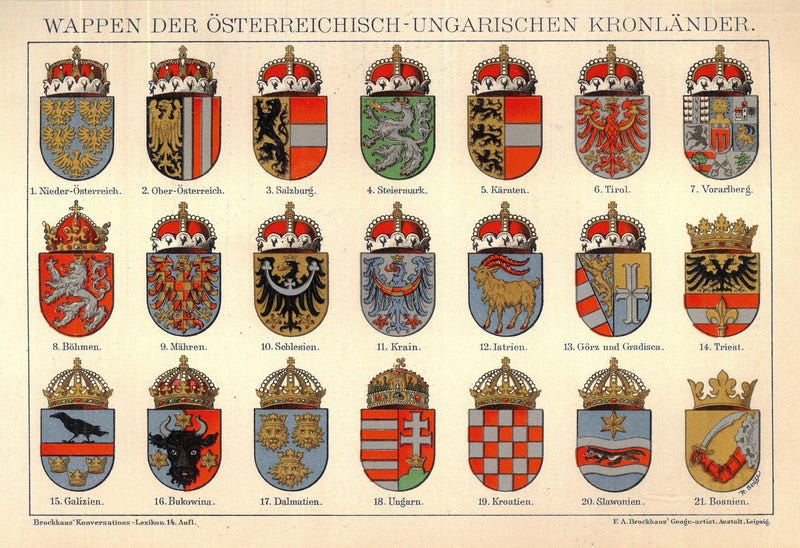
Politicians in Vienna were ready to make concessions to the national movement, in particular, Minister-President E. Seidler allowed the unification of Bosnia with Croatia and Dalmatia (leaving the Slovenian lands in the Austrian part of the monarchy). The authorities in Vienna proposed the unification of the Yugoslav territories, thus trying to offer a competitive alternative to the concept of Yugoslavism which was being put forward by some émigré circles. This was an attempt to seize the initiative from the Yugoslav Committee, which acted in alliance with the Entente. But the Hungarian elite opposed such plans, defending the principle of dualism and resisting any attempt at a trilateralist restructuring of the monarchy. The new territories the Hungarians were prepared to annex to the kingdom only separately, as corpus separatum.
The inability of E. Seidler’s cabinet to reach an agreement with the national communities of Austria and to overcome the food crisis critical to the empire led to its loss of confidence and the resignation of the government in July 1918.
The last attempt to save the monarchy was made by Emperor Karl I in the fall of 1918. On 16 October he published the Imperial Manifesto, the title of which sounded almost ironic: “To My Faithful Austrian Peoples”. It proclaimed that “Austria must become, in accordance with the wishes of its peoples, a federal state, in which each nationality forms its own state on the territory it inhabits.” The “imperial perestroika,” as Czech historian Ivan Šedivý called the liberalization begun by Charles, did in some respects resemble the reforms of the late 1980s in the USSR. Local power was transferred to the national councils, which were supposed to build relations with Vienna on the new principles of federalism. Local elites benefited from this change. However, the granting of long-awaited freedoms also opened a wide path for the growth of national separatism.
Austria’s ruling circles hoped that this manifesto could save the disintegrating empire; at the same time, they hoped that it would be perceived as Woodrow Wilson’s Fourteen Points, which would improve Austria-Hungary’s chances in the upcoming peace talks.
In addition, on 26 October, Charles I denounced the treaty of alliance with Germany, which had become fatal for Austria-Hungary. The same treaty that had been signed in 1879 by the native father of the last Minister of Foreign Affairs in the history of the Dual Monarchy, Count Gyula Andrássy senior.
However, the time for such steps had already been missed. Independently come out of the war and maintain the unity of the monarchy, Austria-Hungary no longer had a chance. Among the regional elites, Charles had almost no allies. The initiative of the emperor was supported by the Austrian and Czech Germans, Slovaks and Ruthenians in Galicia. The policies of Hungary, the Czech Republic, Poland, and Croatia were categorically opposed. In Zagreb, the People’s Veche (Assembly) declared its readiness to take all power in the Yugoslav provinces into its own hands.
The weakest point of the Manifesto of October 16 was that it did not apply to Hungary, because Charles, faithful to his royal oath, could not federalize the unitary Hungarian kingdom. The archaic nature of the Hungarian political system, based on custom and historical law, prevented Hungary from joining the reform process and transforming the Austro-Hungarian Empire into a federation.
In Austria, the national provincial councils, formed at the suggestion of the emperor, were no longer talking about federalization, but about self-determination. The Entente did not stand aside. On October 18, 1918 in Washington, on the initiative of T. Masaryk, the Declaration of Independence of the Czechoslovak people was promulgated. It stipulated that “neither federalization nor autonomy mean anything if the Habsburg dynasty persists.” In the second half of October 1918, the collapse of Austria-Hungary became rapid and uncontrollable.
The end of the monarchy
In November 1918, Field Marshal Svetozar Borojević, commander of the Italian Front, approached the emperor with a proposal to transport loyal units to Vienna to restore order there. Charles I, who reasonably feared that such a move could lead to the outbreak of civil war in Austria, refused. While seeking peace with his external opponents, he was by no means prepared to fight his internal ones. Typical was the advice of one of the emperor’s secretaries: “Your Majesty should wait until the peoples come to their senses.” Among the elite, there was still hope that after the end of the war the empire could be preserved.
On November 11, 1918, Charles signed a manifesto in which he declared that he was renouncing his participation in public affairs without abdicating the throne. Legally, this was not tantamount to a renunciation of the title and powers of the monarch. The last Habsburg only suspended his powers but he undoubtedly expected to return to power later.
On November 12, 1918, the deputies of the Austrian Reichsrat proclaimed Austria a democratic republic. New bodies of power were subsequently formed: the National Constitutional Assembly, and a government dominated by the Social Democrats.
A peculiar outcome of this was the adoption by the Austrian National Assembly in 1919 of the “Habsburg Law,” which stated: “In the interest of the security of the republic, the former monarch and his family are expelled from the country, since they have not renounced their membership in the monarchical house and all related claims and have not accepted the citizenship of the Austrian republic.” The law applied to all members of the Bourbon-Parma family and was intended to be a safeguard against a possible attempt at monarchist revenge.
Despite the popularity of leftist ideas, for many compatriots, the destruction of the “old world” and the loss of values was a cause for open displays of regret and nostalgia.
One of Charles’s famous contemporaries, the eminent writer Stefan Zweig, left a vivid memoir of how Austria bid farewell to its emperor. In March 1919, Stefan Zweig happened to encounter Emperor Charles, who was on a train travelling in the opposite direction bound for Switzerland. In his memoirs Die Welt von Gestern (The World of Yesterday), Stefan Zweig records this encounter.
Slowly, almost majestically it seemed, the train rolled near, a special sort of train, not the customary, shabby, weather-beaten kind, but with spacious black cars, a train de luxe. The locomotive stopped. There was a perceptible stir among the lines of those waiting but I was still in the dark. Then I recognized behind the plate glass window of the car Emperor Karl, the last emperor of Austria, standing with his black-clad wife, Empress Zita. I was startled; the emperor of Austria, heir of the Hapsburg dynasty which ruled for seven hundred years, was forsaking his realm!
The glorious succession of the Habsburgs, who from century to century had handed on the imperial orb and crown from hand to hand, was ending at this very minute. Everyone around us sensed history, world history, in this tragic sight. The gendarmes, the police, the soldiers seemed embarrassed and looked aside awkwardly, unsure whether the old salute was still in order … At this moment the Monarchy, almost one thousand years old, was truly at an end. I knew that it was a different Austria, a different world, to which I was returning.
After two attempts by Charles I to regain the Hungarian throne, the Hungarian parliament also legally deposed the Habsburgs. This took place without much solemnity and much later, only at the end of 1921. The decision of the National Assembly invalidated the Pragmatic Sanction of 1713, by virtue of which the Habsburg-Lotharing House had occupied the Hungarian throne for more than three centuries. Having formally deposed the Habsburgs, Hungary was still a kingdom. A former subject of Charles I, Regent Miklós Horthy, became Hungary’s authoritarian ruler and advocate of its historical legacy for two decades. It was only after World War II, in February 1946, that the National Assembly abolished the monarchy and proclaimed Hungary a republic.
This article is part of a new project: The Fall of the Empire, in which we will tell the story of the fall of European empires through the mouths of their contemporaries. We will speak about the last days of Imperial Russia, Kaiser’s Germany, the Dual Monarchy, and the Ottoman Empire. Four once-influential powers, as if frozen in their glorious past.
Our experts will be an experienced British diplomat, the chief of the German General Staff, an Austrian writer and journalist, and a Turkish politician, the founder of the new Turkish Republic. What all four have in common is not only that they lived 100 years ago. Their ideas are especially relevant today in an era of global challenges and military conflicts. Subscribe so you don’t miss a thing.


