
IRAN. GLOBETROTTERS MAY CHALLENGE
The Eternal Flame of Zaratustra
Ruins of the City of the Dead
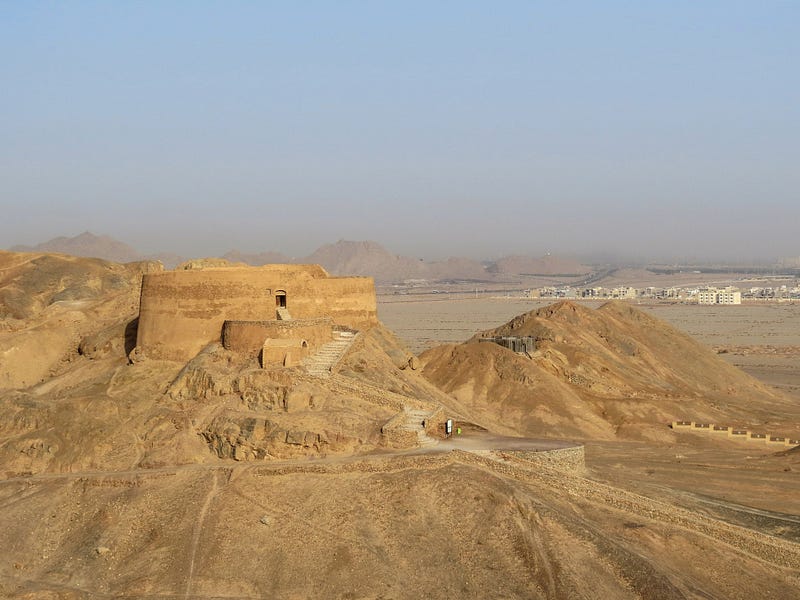
These two clay towers are located on the deserted outskirts of Yazd City in central Iran. Yazd is one of the oldest cities in the world, populated for more than 5000 years, and it made a great impression on me. But the city deserves a separate story, and today we’ll see only the forgotten towers with surroundings. They weren’t part of a castle or some other defense buildings.
They are ruins of the former city of the dead.
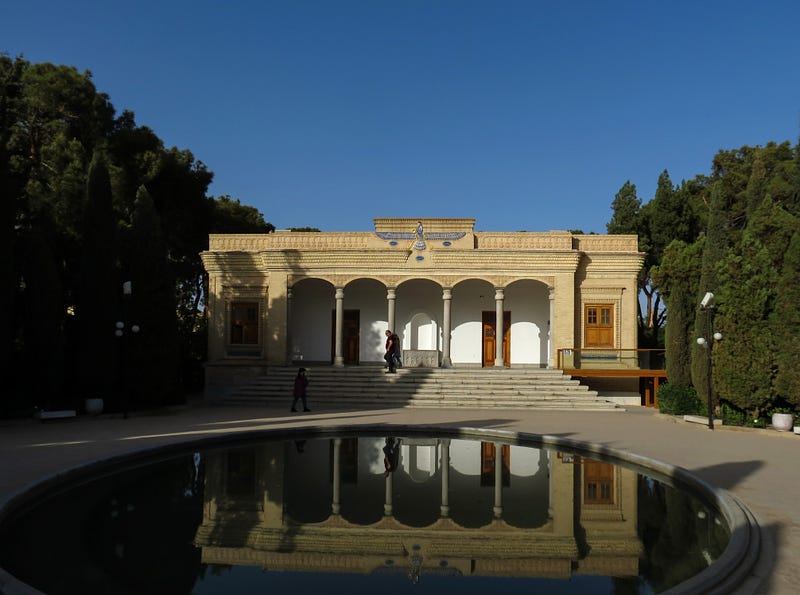
To tell about their meaning, first, I should talk about Zoroastrianism — a very interesting facet of Persian culture. So let’s go to the fire temple called Ateshkade. It is hidden on an ordinary city street.
Zoroastrianism is one of the oldest world religions, which is still alive. Its basis is the revelation of God (Ahura Mazda) to the prophet Spitam Zarathustra. The period of Zarathustra’s life and Zoroastrianism’s appearance is undefined. Also, nobody could tell if it was a natural person or a myth. This religion is based on a person’s free moral choice of good thoughts, words, and actions (and in general, everything seems simple, but I can’t explain it in a few words). First, Zoroastrianism was monotheistic, but later it absorbed characters from older Persian cults.
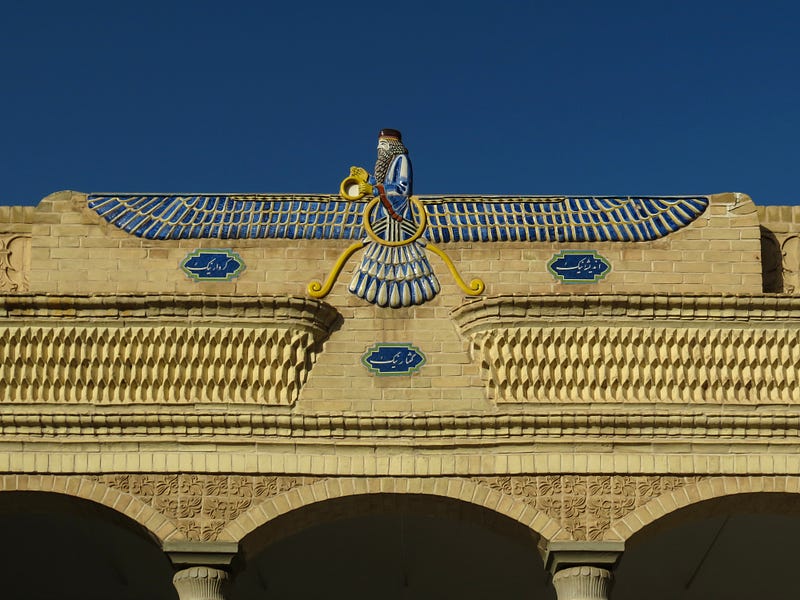
Ateshkade was built in 1934. The main facade is decorated with Faravahar. It’s a main Zoroastrianism symbol. Initially, it was a sun with wings, but later it acquired human features and now looks like a guardian angel.
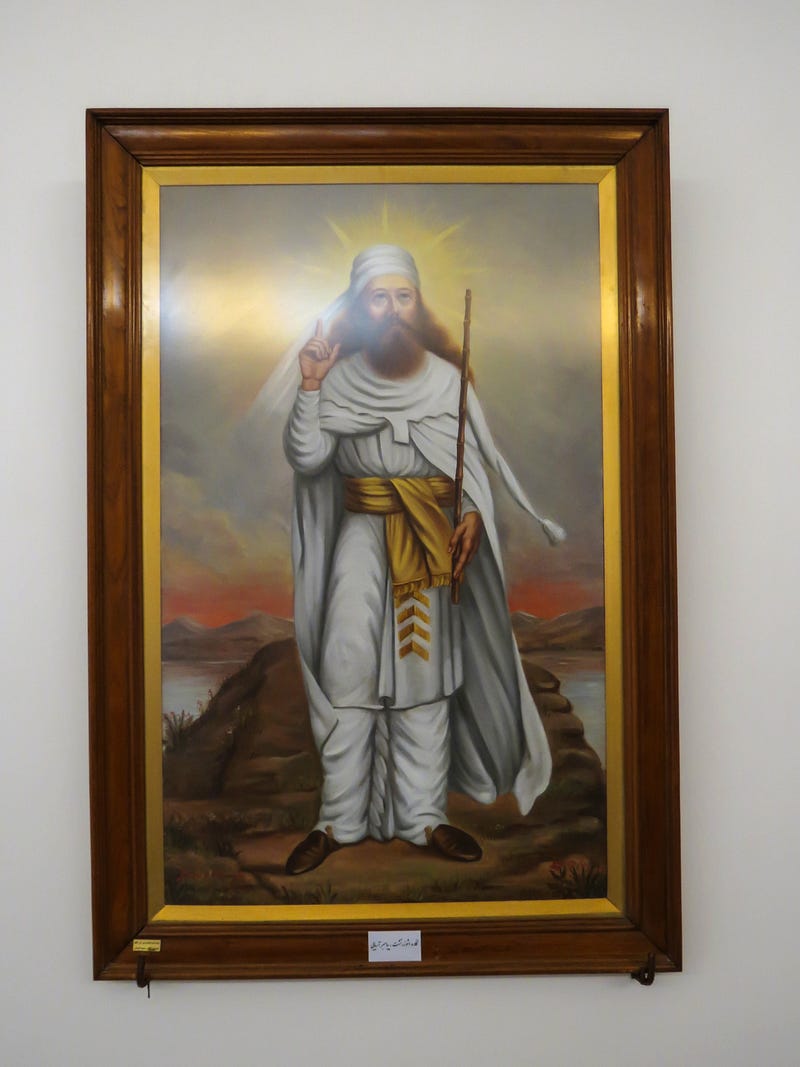
An icon with the prophet:
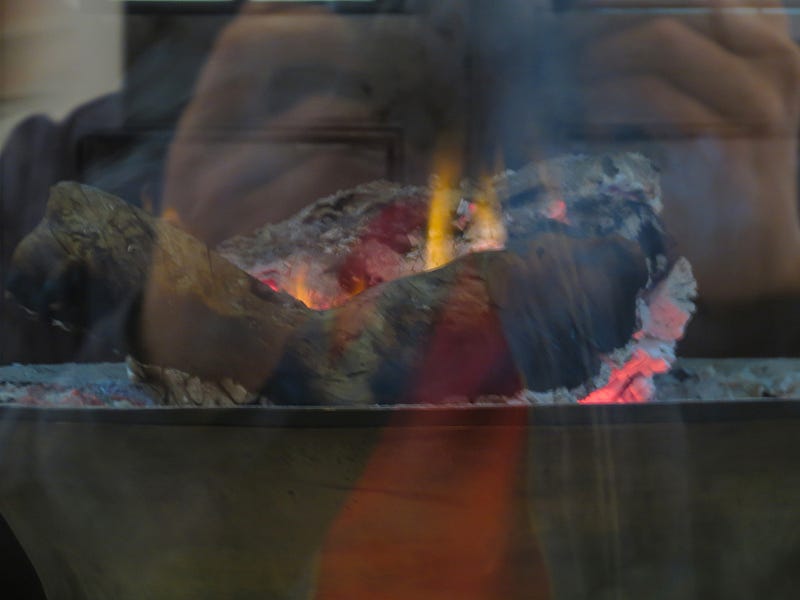
Despite the solemn name (fire temple), the building is ascetic and looks like a museum. The only valuable thing here is a fire. Why? Because it’s one of the visible manifestations of God (like daylight as well). A particular person is responsible for keeping the fire never going out.
This fire has burned since 474 (more than 1500 years). It is separated with glass to prevent people from defiling it with their breath. So I could take a photo only with my hands’ reflection.
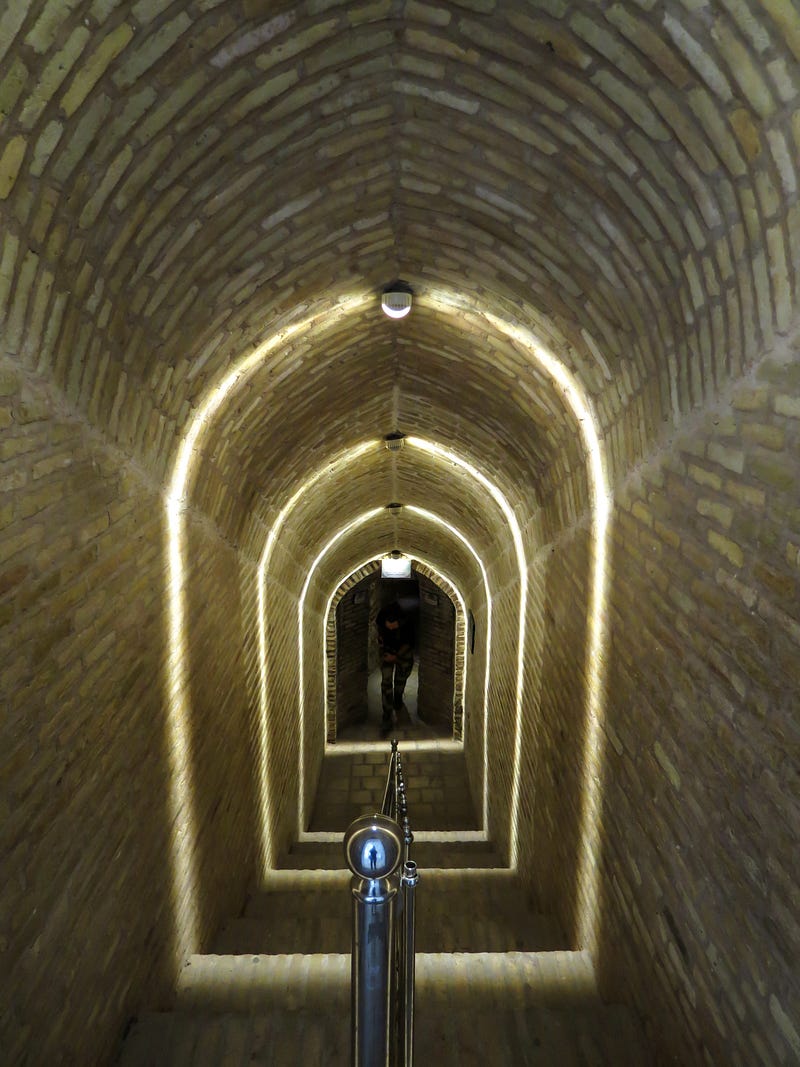
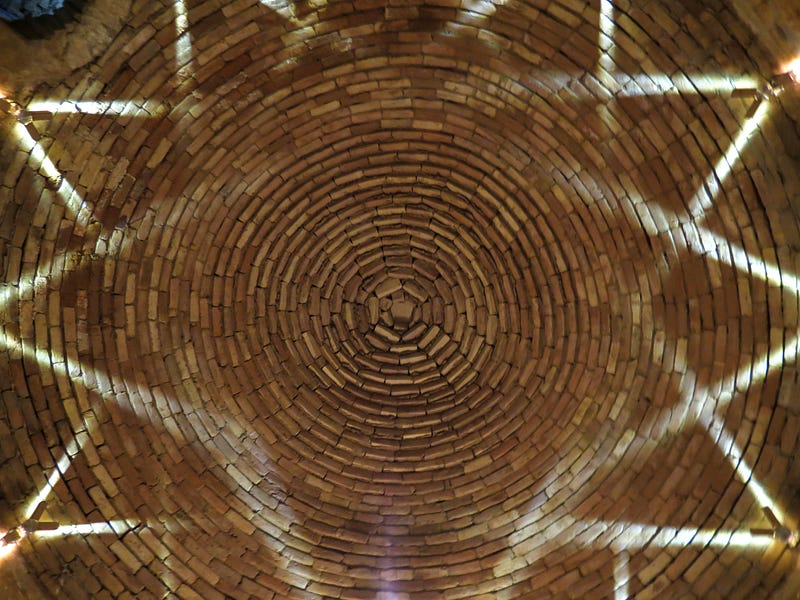
The temple has an underground water reservoir, which enchants with its textures and play of light.
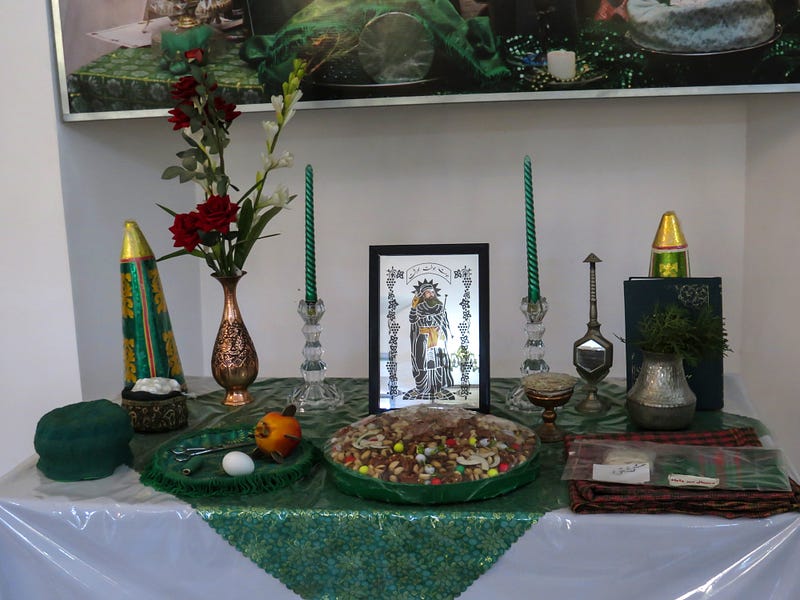
Icons are analogous to the Orthodox ones. Many world religions took something from Zoroastrianism. Navruz, one of the main holidays of Islamic Iran, is also born here.
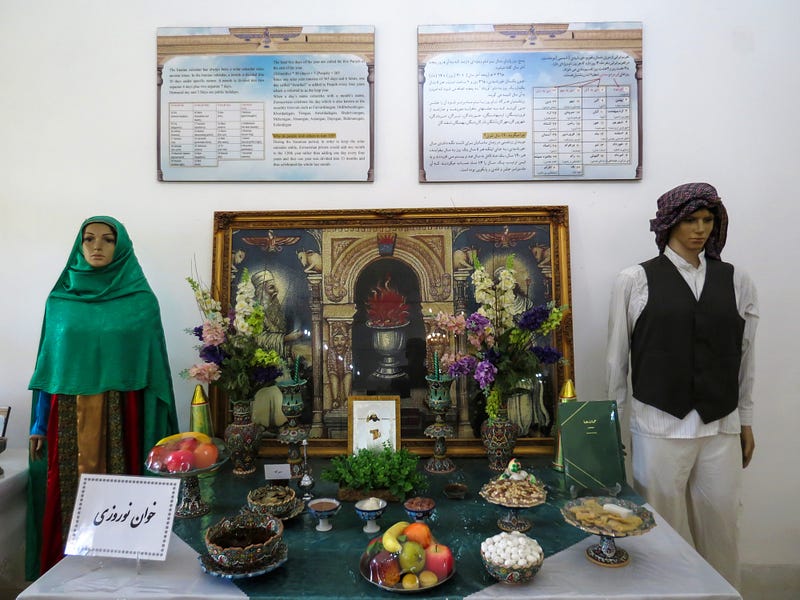
The most sacred place for Zoroastrians is Chak Chak sanctuary, hidden in the mountains 100 km from Yazd. Such remote areas were logical for their temples because of centuries of Muslim persecution.
But later, all changed. Although the Islamic Republic of Iran is pretty radical, they are Persians first of all. Persians have a history of a few thousand years, and Zoroastrianism is one of the bases of this history. So now, it is entirely legal, and there are around 50,000 followers of this religion in Iran. But unofficially, this number can be much more: many people select Zoroastrianism as a protest against Shariah and ayatollah politics. Also, a large community of Zoroastrians lives in India and a small count in many countries worldwide. By the way, Freddy Mercury was one of them too.
Fire, water, and ground are sacred to Zoroastrians and shouldn’t be defiled by dead flesh, which is considered impure. That’s why they buried their dead in oiled cloth or wax but later discovered an original way to get rid of them. For this purpose, they build Towers of Silence or “dakhma”. Let’s go back to them.
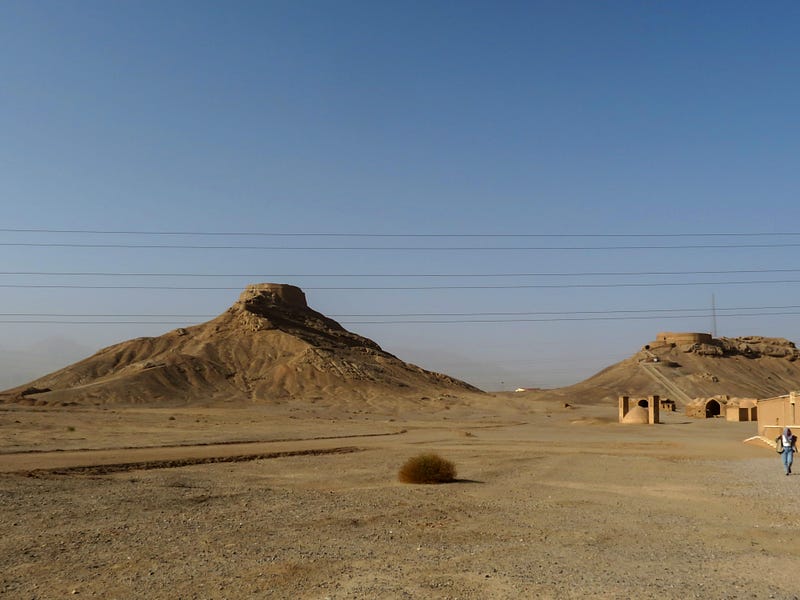
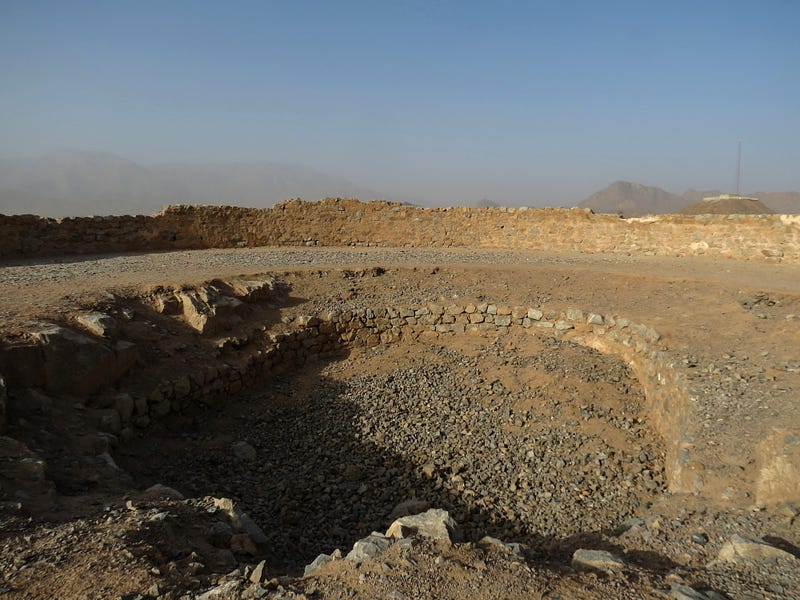
Bodies were stacked on the top of the towers. Vultures ate flesh, and bones decomposed by themselves (later, they began to use lime to speed up this process). If I remember correctly, the upper tower was for men’s bodies, and the lower one was for women’s. First, we climbed the “men” tower.
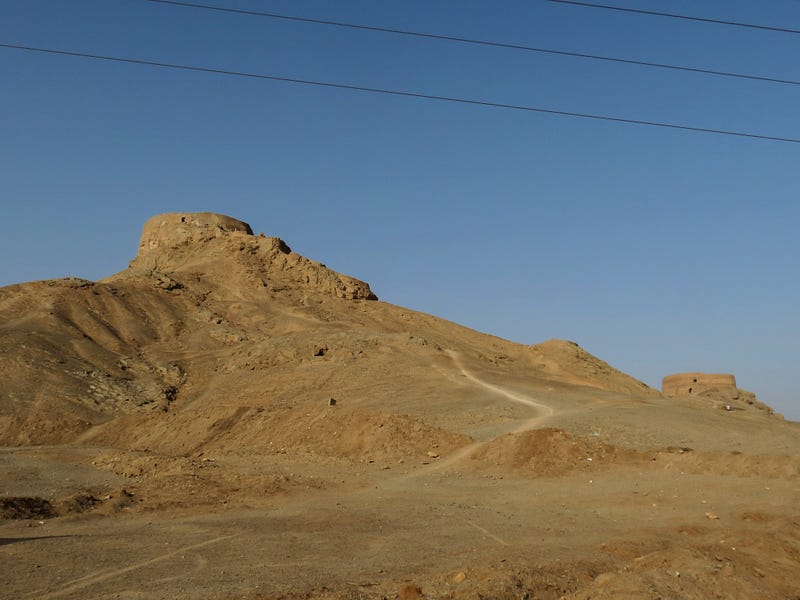
There are beautiful views. The lower tower is very photogenic both by itself and surrounded by mountains… if you stop to think about its purpose.
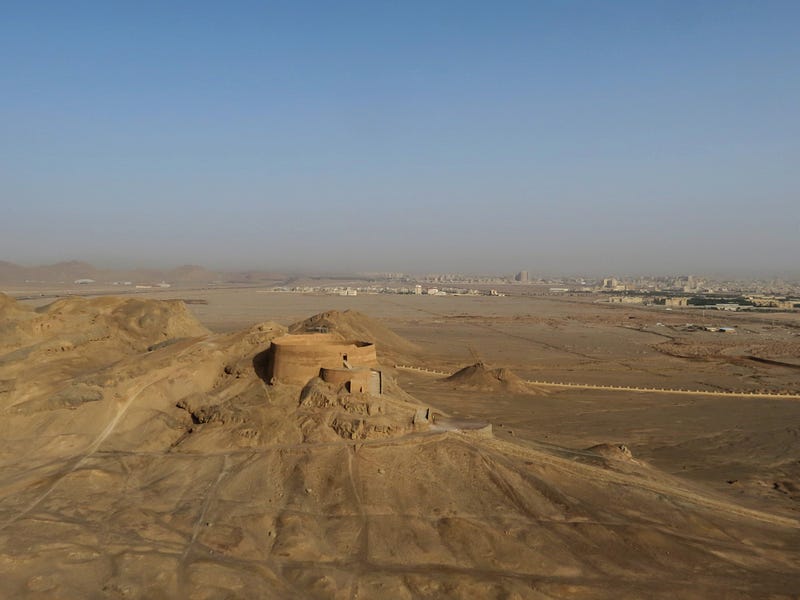
A notch in the roof center was for bones. I can’t say I had specific feelings about the place with such a history. Either my imagination dried up, or there was just nothing to feel.
Views of the modern part of Yazd from the top:
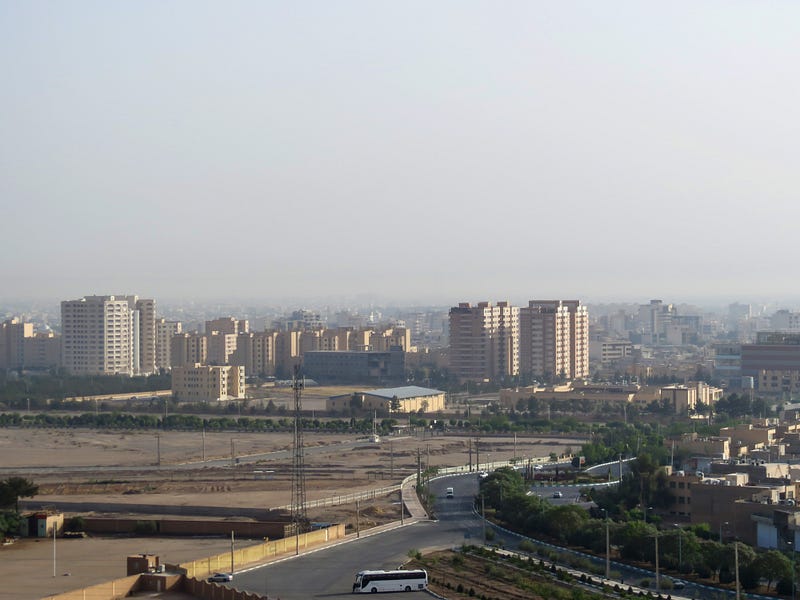
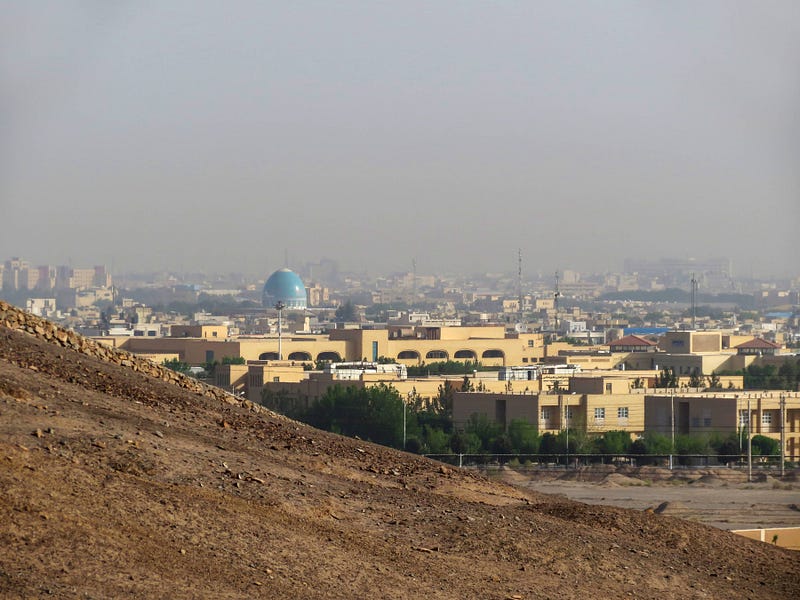
With the blue dome of the mosque, of course. But the low-rise city center isn’t visible from here.
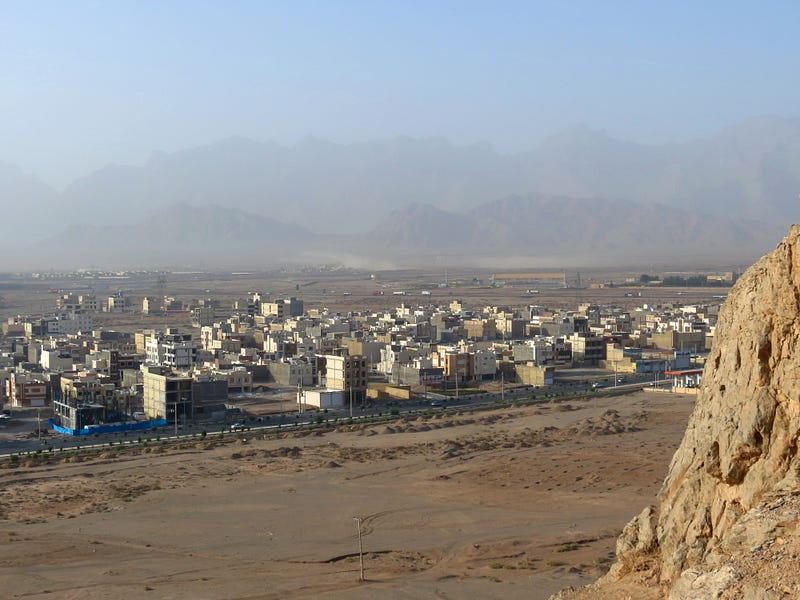
Visibility is spoiled by smoke or dust (or both), typical for Iran. At first, the surrounding districts didn’t look unusual, but later I noticed such a small number of herbs.
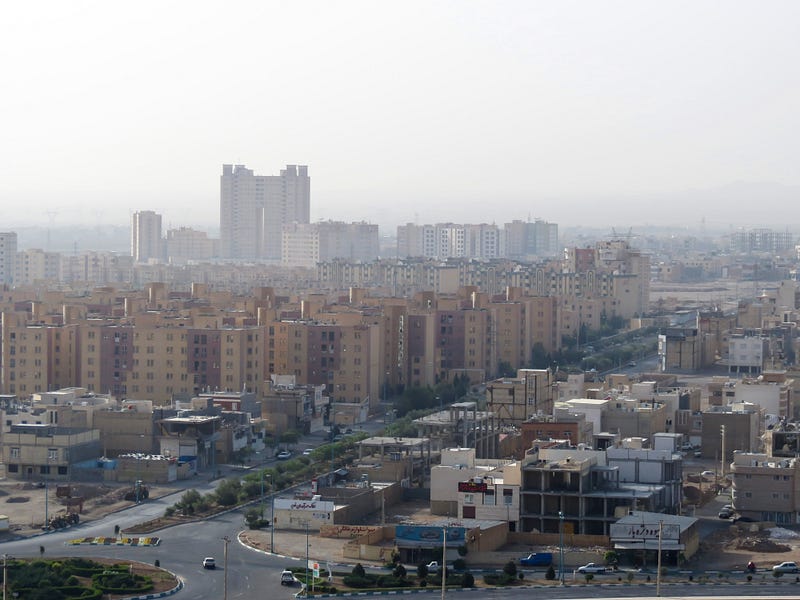
Mountains dissolved in the haze:
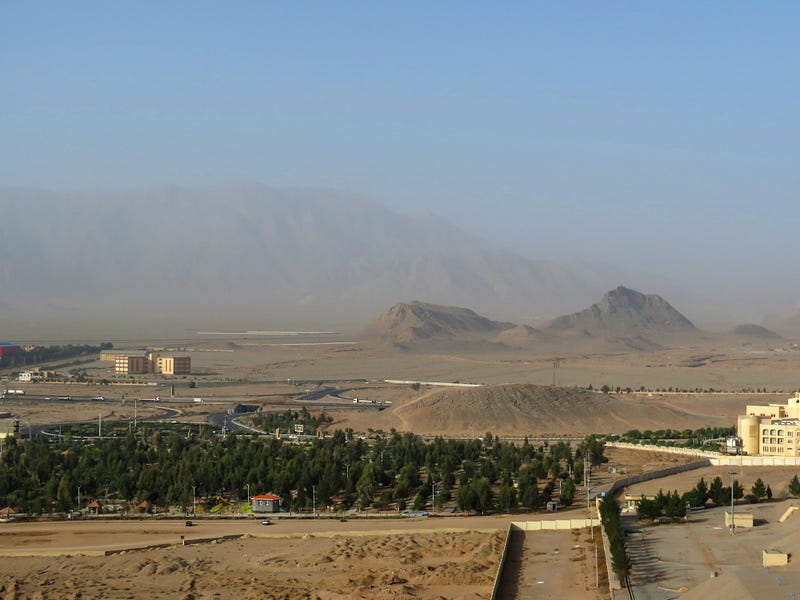
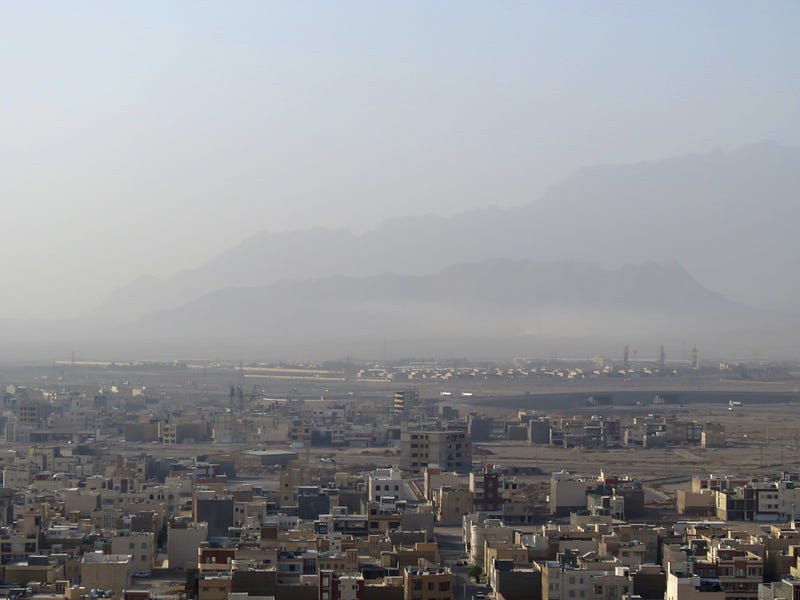
A kind of city of the dead is located in the foreground. I’ll talk about it below.
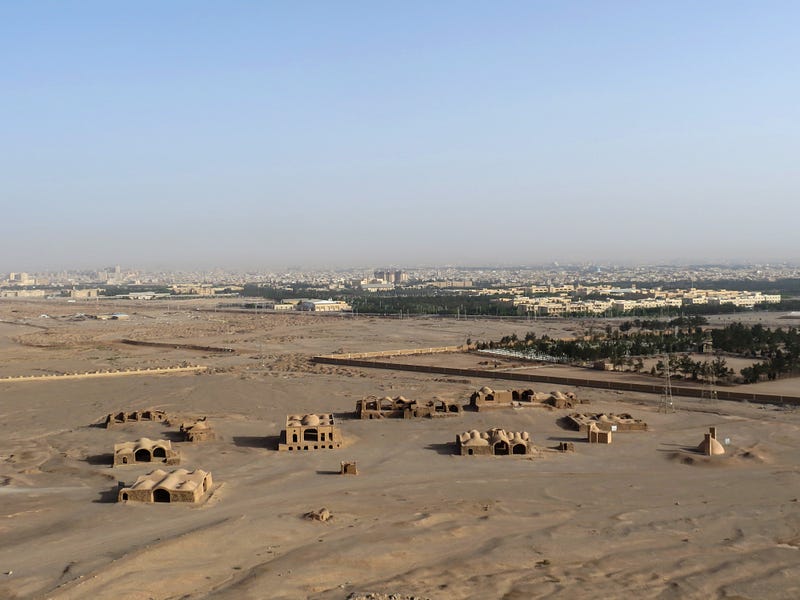
Most Towers of Silence were abandoned at the beginning of the 20th century, but a small number were active until the 1960–70s when the laws of the Islamic Republic finally forbade them. Nowadays, Zoroastrians use specific cemeteries to bury bodies in hermetic concrete niches. One of the active cemeteries is not far from the towers.
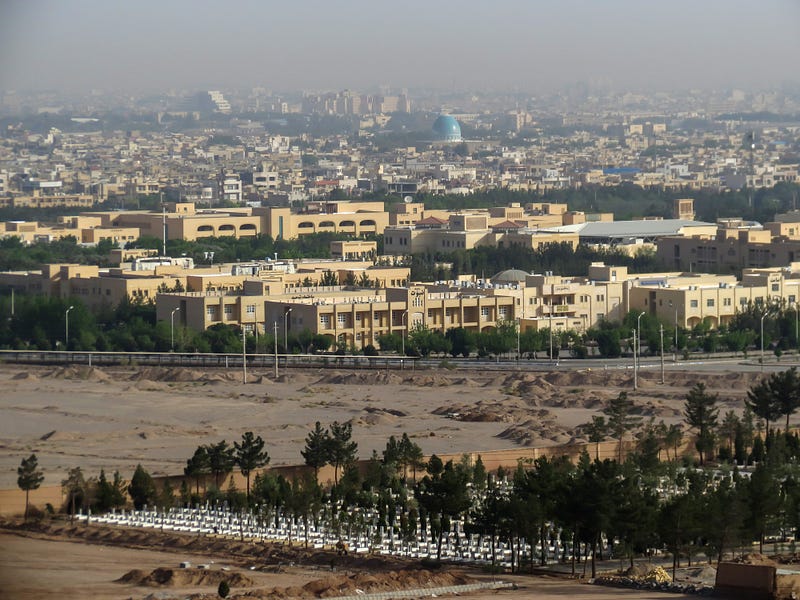
The buildings under the towers had two purposes. The bigger ones were used for nusessalars living. They were gravediggers who served the city of the dead. After permanent contact with dead bodies, they could be sources of infection (moreover, in Zoroastrians’ belief, demons could live in mortal bodies). Thus, these gravediggers had to spend here whole their lives.
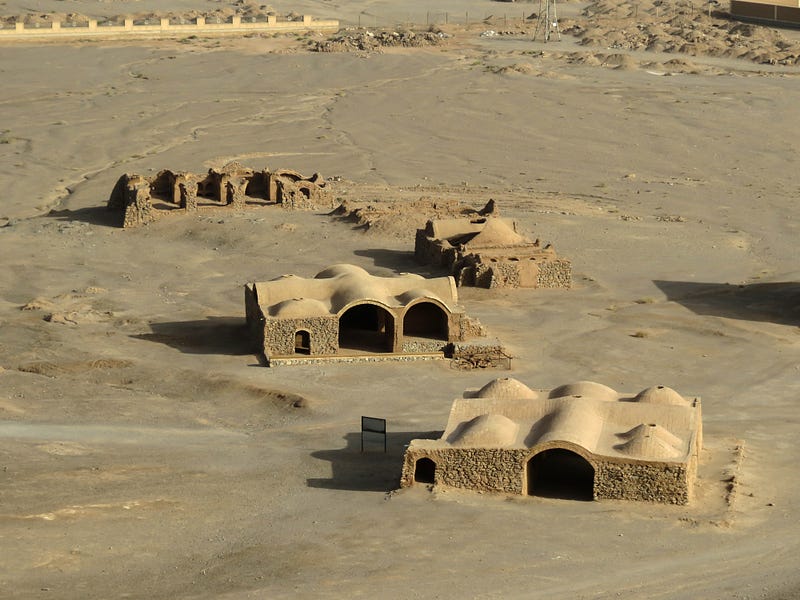
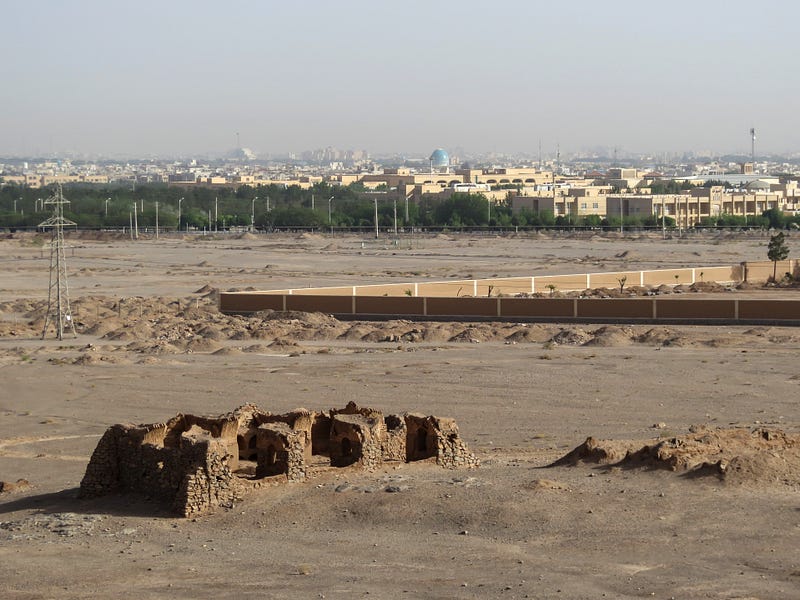
Other buildings were family prayer rooms. Relatives of the deceased had to pray for three days for the soul (so that it wouldn’t lose and find a way to paradise).
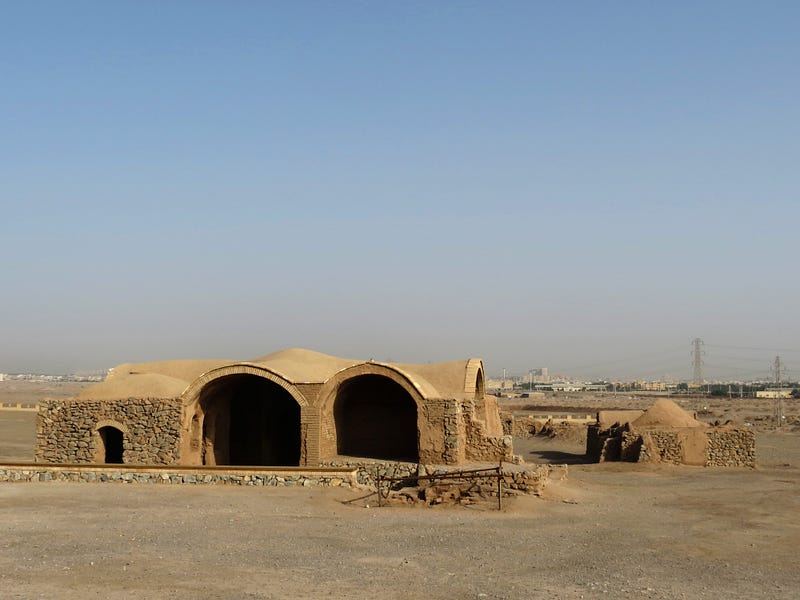
Nusessalars also had their separate water reservoir.
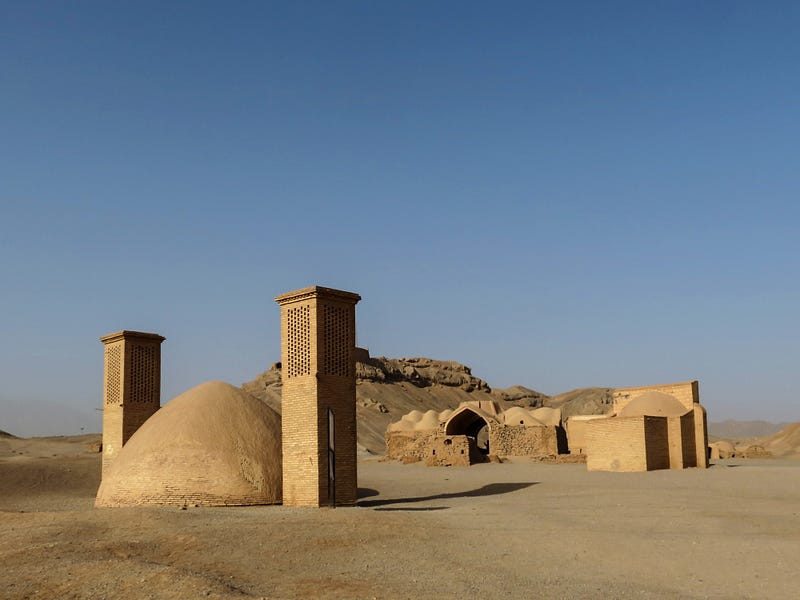
In the end, we climbed to the lower tower as well.
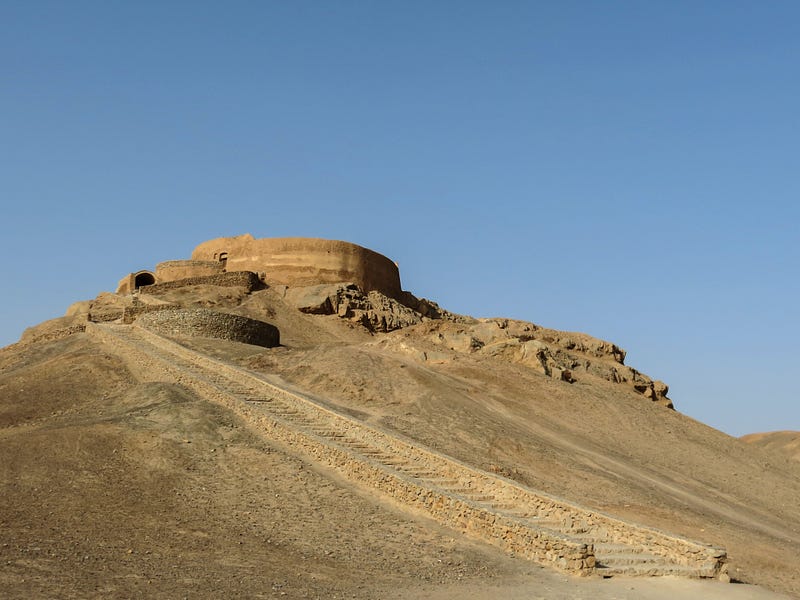
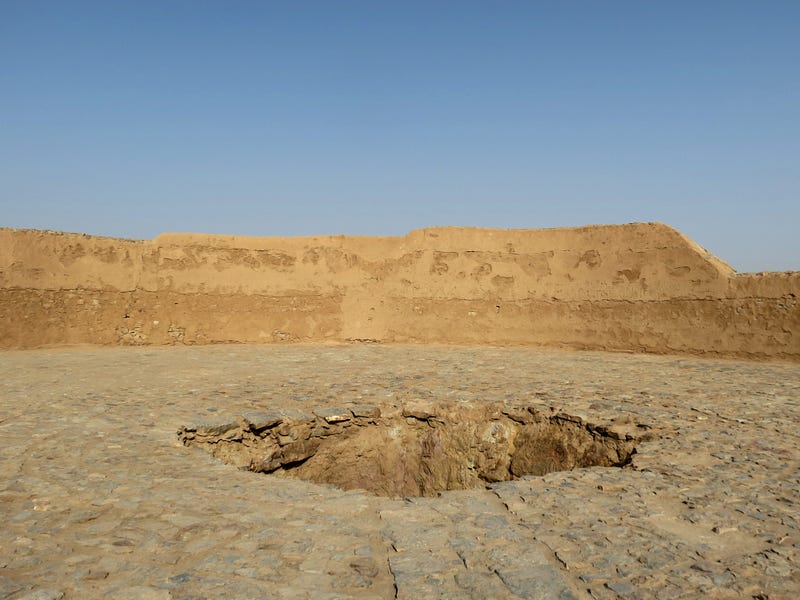
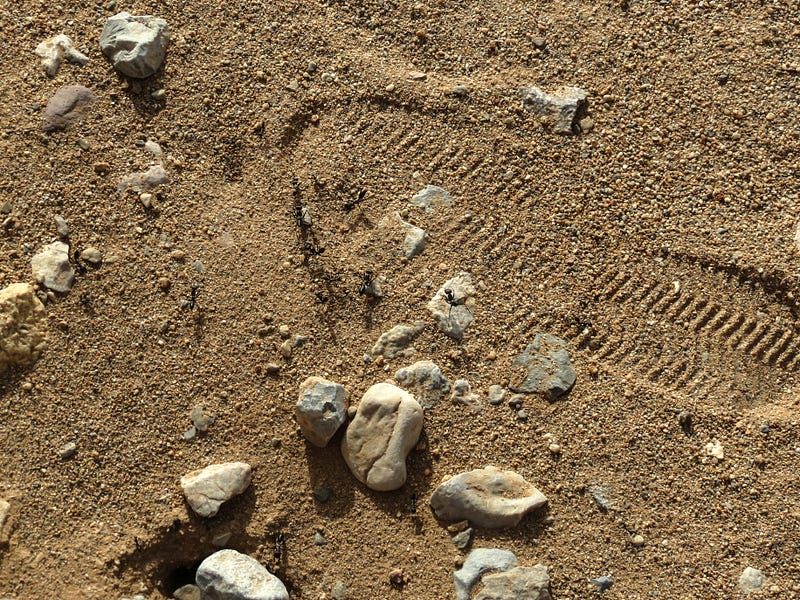
But our time was limited, and we had to move further. So let’s leave this place for those who owe it rightfully: souls from the afterlife and giant black ants.
I regret that I missed the ability to see the fantastic ruins of Eastern Türkiye. Some were destroyed by the great earthquake in February; others disappeared because of people’s activity, like this great place shown by Kim Baker.
But I managed to visit Malta before covid. Now I can recall the fortress of Mdina thanks to Anne Bonfert’s story.
If you don’t want to miss out on my new stories, you can subscribe to updates on my blog. If you appreciate my photos or tellings, you can buy me a coffee.
While you’re reading this text, Ukrainian people are dying from russian attacks. You can support Ukraine defenders and save lives no matter where in the world you are.


