
The Emptiness that Underlies Shame and Loneliness

Early emotional abandonment causes not only psychological emptiness and codependency, but also toxic, internalized shame, including associated guilt and low self-esteem, which can follow us throughout life [25]. Parental shaming aside, lack of maternal responsiveness in infancy can contribute to persistent negative affect. When a mother is absent or unresponsive, her baby’s experience of “no-thing” is filled with negative sensory and affective impressions, which if not tolerated, the “no-thingness” can devolve into the disintegrative nothingness of a “black-hole” [24, 26]. When a child’s failure to receive empathy and fulfillment of needs is severe or chronic, it profoundly affects his or her sense of self and belonging.
Internalized shame makes us doubt our worth and lovability. It alienates us not only from ourselves, but from others. We then project our own critical self-evaluation onto others, personalize other people’s actions and feelings, and feel guilty and responsible for them, compounding low self-esteem and shame. This perpetuates our childhood erroneous beliefs that if we were different or didn’t make a mistake, our real self would be cherished and accepted by our parent(s).
Loss, loneliness, rejection, or the mere awareness of our separateness from others can easily arouse emptiness, shame, guilt, and anxiety. The reverse is also true. Shame and emptiness can create a sense of isolation and rejection and activate feelings of abandonment and shame from childhood. This creates a self-reinforcing, vicious circle shown in Figure 1, although there is no particular order.
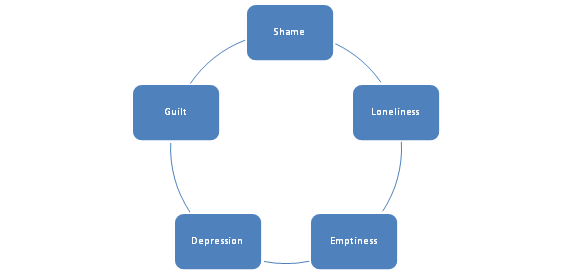
Shame provokes destructive defenses, including defenses to emptiness, which undermine intimate relationships, making it “Love’s Silent Killer” [25]. Low self-esteem and the inability to tolerate emptiness also make it difficult to trust and receive [20]. Moreover, the false self formed to protect us from shame and rejection simultaneously walls us off from the authentic connection we both crave and fear. Shame can result in self-imposed isolation, people-pleasing, and other codependent symptoms, which in turn perpetuate self-alienation, shame, depression, and emptiness.
When we’re alone, feel bored, or shift from the stress and pressure of work to non-doing, internalized shame can quickly fill our emptiness with obsession, fantasy, negative thoughts, or self-persecutory judgments. That is at least something, as we struggle with our superego, but when the self is fiercely rejected, our inner conflict is replaced with emptiness.
A client on sick leave following surgery explored her emptiness with me. She complained that when she wasn’t doing something useful, she felt empty and “worthless, like I don’t have a right to be.” She had to earn that right by being productive. She also felt guilty imagining that she was burdening and upsetting me if I thought about her between sessions or showed empathy to something sad that she talked about. Tearfully, she said she had to walk a fine line between being interesting enough to gain my attention, but not cause me to react or care too much. She couldn’t believe that I might be interested in her and insisted that my concern was only about her problems, because she wasn’t worthy of my interest in her as a person.
In the codependent mind, internalized shame endures without end. It can convince us that we’re doomed, sentenced by others to a lonely prison that we create. We become both persecutor and victim, tormented precisely because we’re unable to be rid of our loathsome self. “The despairing man cannot die; no more than ‘the dagger can slay thoughts,” writes Kierkegaard [27]. He notes ironically that although Macbeth became king, but shame robbed him of his life, which became empty and meaningless; he lost himself and the capacity to enjoy the fruits of his ambition or the possibility of grace. But unlike Macbeth, for codependents, their internalized shame is unwarranted and often unwittingly transferred from their parents.
This is the fourth installment of several that examine perspectives on emptiness. Next up is emptiness and addiction. Stay tuned for strategies to deal with emptiness. Check footnote references and read the entire original article.
© 2019 Darlene Lancer


