
The East Gets Wetter And The West Gets Drier
Why aren’t we building a water pipeline?
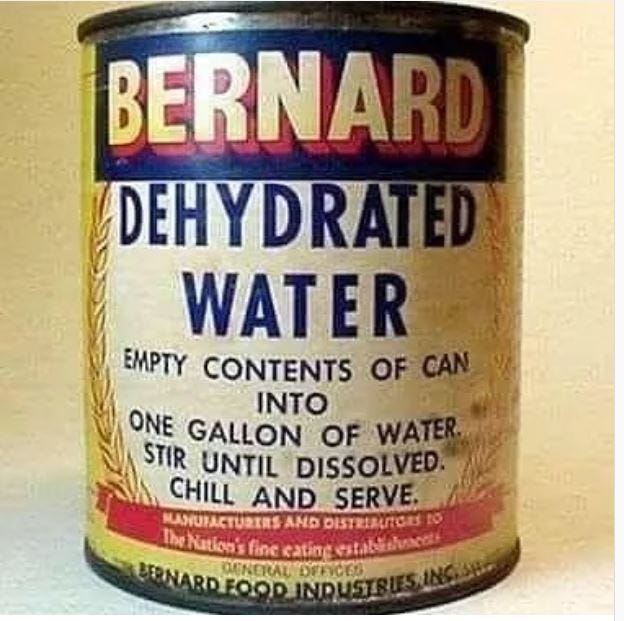
As I was finalizing this story, I had to do a Walgreen’s run to buy cigs. When I turned on the radio, an interview from that day’s Meet the Press covered the water crisis in California. I began to feel that California is going to be safe even amid the megadrought. They are prepared.
Wait a minute. Is this just the media playing games with us? Perhaps. Does this story diminish all the time and effort I’ve put into my climate change stories?
I missed the guest's name, but I bet it was someone from the California Department of Water Resources trying to calm fears. She painted a rosy picture of how California will survive and thrive based on conservation measures that have been in place for years. You know, stuff like low-flow toilets and showerheads and drip irrigation. She said that Los Angeles’ water usage hasn’t been as low as now since the 1970s, even with one million more people.
If agriculture uses 75% of California’s water, and that’s the sector that will be first affected by shortages, our food source will be at risk. So while I was at Walgreen’s, I bought more almonds because you never know…
If you think the answer to the West’s water shortage is a pipeline, you’re not the only one.
My last story about the megadrought elicited some responses, including the suggestion of building water pipelines.
The Great Lakes are the single largest source of fresh water in the world. So doesn’t it make sense to build a pipeline to the West?
Or how about the Mississippi River? Just this century, the river has flooded in 2002, 2008, 2011, 2014, 2017, and 2019. Transporting that floodwater to the West would save billions for farmers along the Mississippi and individual homeowners.
SO WHY DON’T WE JUST BUILD A DAMN PIPELINE???
At Present
There is one water pipeline under construction today, and that is the Navajo-Gallup Pipeline. Water is pumped from the San Juan River (a Colorado River tributary) south to the Navajo Nation, where one-third of the population lives in households without running water. The pipeline will also serve the Jicalarra Apache Reservation and the city of Gallup, NM. Gallup uses groundwater supplies, and they have diminished about 200 feet over the past ten years.
Could this serve as a model for future, larger-scale projects?
It is time we think outside the box of rain. ~Letter to the Editor, Los Angeles Times, July 13, 2021
We don’t have a water problem as much as we have a water distribution problem. The flooding along the Mississippi over the last 20 years coincides with the same period as the West’s megadrought.
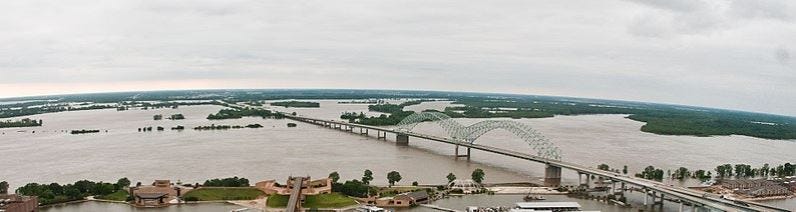
The Mississippi has 30 times the average annual flow of the Colorado River. Would limiting the amount of water emitted into the oceans help prevent rising sea waters? Or is it required to maintain the saline equilibrium?
With every idea comes an environmental answer and another expensive study.
The Search for New Sources of Water
In New Mexico, the Gila River (another Colorado River tributary)begins in the state's Southeastern mountains and runs free and wild until it reaches Arizona. There it has been dammed and diverted several times, to the point where it rarely reaches the Colorado River with any water left.
At contention is the New Mexico portion. The Secretary of the Interior, New Mexico Senators, and the area’s Congressman want it designated a Wild and Scenic River. Conservationists want the same, of course. So it will take legislative action to protect it.
Meanwhile, back in Arizona, the legislature has introduced a bill to Congress to fund a study that would harvest Mississippi River floodwater to replenish the Colorado. The price tag for the study alone, which the Bureau of Reclamation would commission, stands at $140 million.
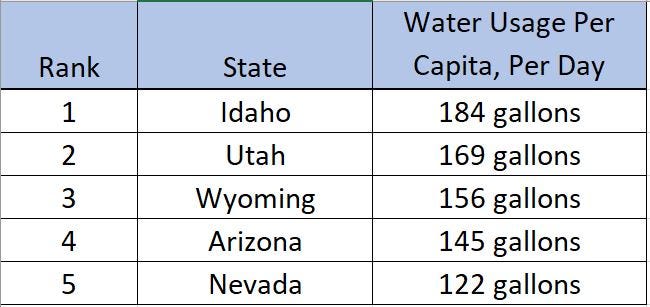
Only Idaho is not within the Colorado River watershed. Nevertheless, agriculture makes it the most significant water user in the U.S., albeit mostly from underground sources and the Snake River.
Another area of the country we’ve had our eyes set on for some time is the Great Lakes, the largest reservoir of fresh water in the world. Surely they can share just a bit of their water for the greater good. But, in 2008, under the Bush Administration, The Great Lakes Compact was formed among the eight states that border the lakes. The compact prohibits any large-scale diversion of water outside of the Great Lakes basin. To overturn it would require a Supreme Court ruling.
The level of the Great Lakes is just off of a historic high in 2020 and remains above their long-term average, according to the website Thumbwind.com. The amount of energy it would require to pump water over the Continental Divide is astounding. And its expense would be ongoing, not a one-time cost.
Perhaps it’s not the wisest development to continue to expand and sprawl into arid locations without water. ~Nicholas Shroeck, Assistant Professor at Wayne State University
Ya think?
A (The Only?) Solution
One solution I have often thought of is now a real thing. It is the “Interstate Water System” (IWS) proposal.
Modeled after the Interstate Highway System, our primary road network became a reality under Eisenhower’s Federal-Aid Highway Act of 1956. Construction started the same year. (Oh, the good old days when we didn’t have to drag our heels through every impossibility.) The IWS would run concurrently in the medians of, or adjacent to, existing Interstate Highways. A pipeline would become a vast infrastructure project, employing untold thousands.
Let’s do a for instance. Let’s say a water pipeline was planned and built from the Mississippi River at Vicksburg to the final destinations of Lake Powell and Lake Mead.
Details
- For the most part, the pipeline would run concurrently with Interstate Highways.
- There is a 330-mile stretch between Sweetwater, TX and Santa Rosa, NM, not adjacent to an Interstate. Therefore, negotiations over potential land settlements may have to be made with individual landowners (although we may have the right of way on either side of a U.S. Highway).
- At Flagstaff, AZ, a fork would separate water going to Lake Powell from that going to Lake Mead. In any event, water would flow to both lakes simultaneously.
- Much of the route from Flagstaff to Lake Powell runs through the Navajo Nation along U.S 89. Any deviation from this route might prove impossible depending on the Navajo response and because of the terrain. (Again, having the right of way may be a way around this.)
- The pipeline leaves the Interstate System completely at Kingman, AZ, heading northwest concurrent with U.S. 93 to Lake Mead.
Costs
- I’m going to estimate the cost based on the proposed Utah pipeline, which would pump water from Lake Powell to the city of St. George, Utah. The proposed cost is $2 billion for 140 miles of pipeline, which is $142,857/mile.

Let’s take it up to $250 billion, based on probable cost overruns and increased cost of materials.
That is A LOT of money to take care of only four states’ needs.
But it’s not even as big as the current infrastructure bill circulating through the halls of Washington, D.C.
However, Washington County, Utah, would be the sole beneficiary of the Utah pipeline. (It is proposed that Utah pay for this, not the Feds.) As a result, it predicts the individual water bills could rise by up to 500%.
Imagine your water bill going from $45 per month to $160-$225, accounting for more than $2,000 of your hard-earned money annually. ~No Lake Powell Pipeline
Negatives
We have performed many feats of technology, and from an engineering standpoint, this project defies odds. However, the IWS may be too big to bite off, given these challenges and obstacles:
- The cost in and of itself.
- Acquiring property rights (if applicable).
- Increased highway congestion due to construction.
- Receiving buy-in from the legislators of 46 states for a project meant to benefit only four. (Although seeing the Southwest as a significant food source to the country might augment that objection.)
- Environmental studies and legal battles.
- Unlike oil and gas pipelines, there is no ROI.
- Requires ongoing maintenance.
- It’s already been studied multiple times. (The Bureau of Reclamation looked at piping 600,000-acre-feet of water from the Missouri and the Mississippi. The study cited the high cost and lengthy timelines.)
- It’s been said that it still wouldn’t be enough water to make up for the losses over the past years, as well as a burgeoning population.
Positives
- As a public works project, the system would create thousands of jobs both directly and indirectly.
- As a financial alternative, perhaps the project's cost is split up among the four states with a subsidy from the Feds. Water would be apportioned based on an agreed-upon usage per capita and agricultural needs.
- Environmentally, it is the best use of land that we already have most of the rights to. Buried, it would show no evidence.
- It’s clean. A break wouldn’t harm the land nearly to the extent an oil pipeline break would.
- It would help protect our vital ranching and farming industry, and our food supply, for generations to come.
Epilogue
As I take a sip from my bottle of smart water ($3.50 to begin with, refilled with Albuquerque tap), I reflect on what this is all about. We Americans are prone to whine over things that we are so lucky to have, one being fresh, drinkable water in our homes. (Well, save for Flint, MI.)
America anteed up and agreed upon the WPA projects during the Great Depression, such as the construction of Hoover Dam and the Tennessee Valley Authority. Neither one served the whole country. This project would be not unlike those.
I like to eat, and in a sense, this all comes down to food. I like my almonds at $5.99 a bag (on sale, of course) at Walgreen’s. On the other hand, I'm not fond of the visual of farmers chopping down their nut and fruit trees for lack of water. The world doesn’t produce enough food to feed the hungry United States.
The monsoon season has gotten off to a good start in the Southwest, but it’s almost a little too late. So it’s on all of us to agree on a solution. We need to work on one today, for its fruition is perhaps decades down the road.
Read the whole series on ILLUMINATION! * The American West: Long on People, Short on Water * How The West Went Dry * 6 Of The Most Unsustainable Cities, Analyzed


