
The Destruction of the Black Civilization by Chancellor Williams.
Looking at Systematic Destruction before 2000 AD
Book Dedication:
Chancellor Williams dedicated this book to the youth of the 1960s for beginning the Second Great Emancipation — the liberation of our minds, thus changing the course of history.
Goals:
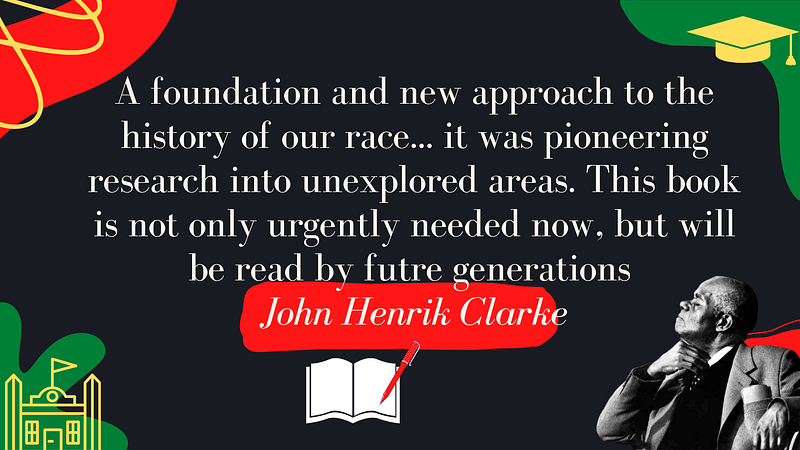
This work was urgently put out and is a summary of the all research he completed vs the detailed 2 volume books initially intended. Dr. Williams realized that it would take an additional 5 years to get the published work out to the masses. Dr. Chancellor William’s goal for this work is extremely significant to me personally. He wrote this work so that a cab driver or a housemaid as well as college student or professor could read this work, understand the history, and comprehend what actions needed to be taken as a black collective.
This work was meant to provide an understanding of:
- What is considered the cradle of civilization geographically and its interconnectedness to the whole of Africa.
- What Black Civilization(s) created: community practices, written and verbal languages, laws, science, art and oral traditions, technology, religions, and various other cultural practices
- How we are truly one people regardless of the various languages, flags (nations divided by Europeans), and colorism. By understanding migration and how to recognize patterns that link us to our origin.
- How this civilization was systematically destroyed
- Showing us where we are now as the African Diaspora
- Imploring & showcasing the need to organize.
- What strategies to implement to thrive in this future world.
Again, this book is not meant just for those in institutions of higher learning. It is meant for the black community to read this book and use it as a plan of action, to rebuild our black civilization.
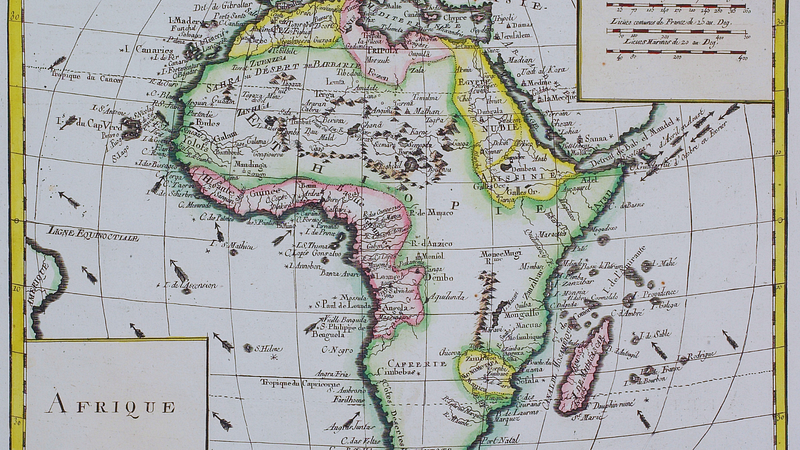
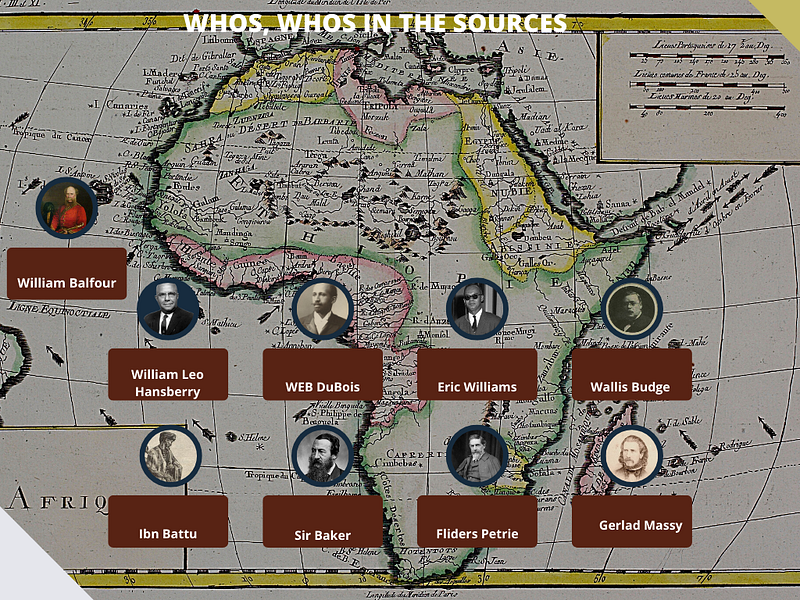
I personally “discovered” this work by Chancellor Williams in 2014–2015. Here is another one of those books not presented to me at my PWI for study in my Black and African history classes. The audible book was so informative, that I purchased the paperback book to have access to the maps & charts in the book. If you need to “learn and go”, get the audio version of the book. However, I would advise having a paperback book on hand. This will provide you access to the maps and illustrations along with his source references (pg. 361–370), which is invaluable.
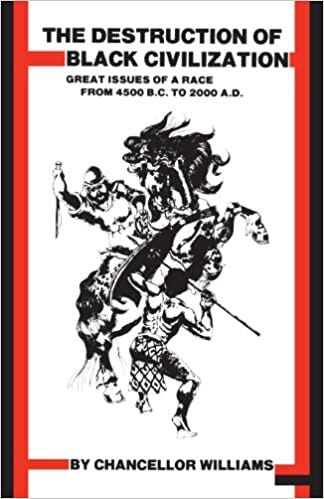
This book is key because it is an African history book written from the black perspective. I would also advise readers to become familiar with Cheikh Anta Diop, a Senegalese historian who has contributed several significant historical works, written through the lens of an African. Chancellor William’s work is vital to the conversation, out of the sheer fact that it is not contributed with a Eurocentric point of view.
I had fun doing this joint read project with Erica J. She is fun and an intellectual, and that is a hard combination to come by in a reading partner. Typically, you need different partners for all of your various interests and Erica J’s diverse reading choices across various genres match how I read as well. Please check out her article and book review. Erica J provides great insight into Chancellor Williams as a person along with a great review of the book, the LIFE works of Dr. Chancellor Williams.
On my Know Thyself Journey, is one of the top books in my collection that has assisted with this journey. The book is a straightforward analysis of the destruction of the black civilization. There are black civilizations that you can find outside of Africa courtesy of migrations out of Africa. Whether that is in the south of India, Philippines, Australia, Papa New Guinea, or Indonesia to name only a few. If I had to conclude with what thesis statement that Dr. Williams wanted us to walk away with after reading this book it would be that the destruction(s) of black civilization(s) was systematic.
Themes:
There are some other key findings that he discovered as a re-occurring theme of the destruction of these various Black civilizations:
- Every black civilization in Africa had a culture before colonization. These cultures were either appropriated or destroyed. All Black Civilizations come from the root Civilization of Ethiopia. North Ethiopia is what we know as Egypt and Southern Ethiopia is what we know as Sudan.
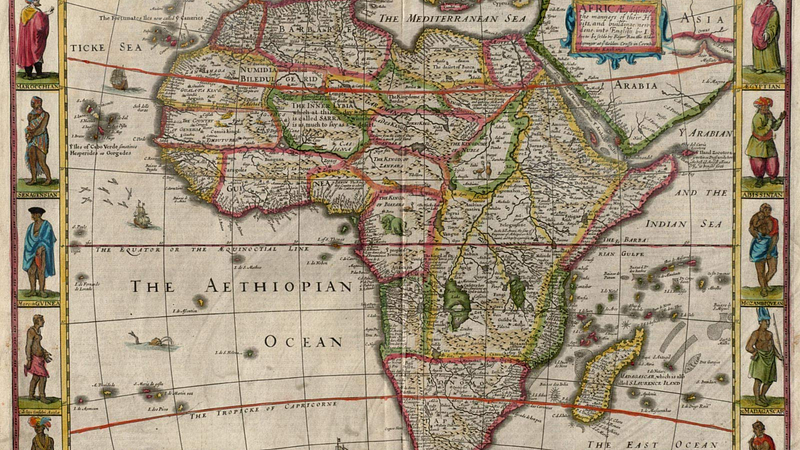
- When the whole cradle was known as Ethiopia, Sub-Saharan Africa use to be known as Aethiopia, along with the Atlantic Ocean (Aethiopia Ocean). This author would like to note that all of these maps and country borders were decided by European nations not the indigenous people who live on the continent.
- Whether that was via violence (besiege)or immigration(settlers), when you look at civilization pre- and post-European colonization, they were all strategic.
- Excluding the categorization of slaves in North America.
- Enslaved were able to elevate their children’s status via the whitening out of the skin if the slavers were of Arab descent.
- Black African men who were enslaved by “Arabs” were made eunuchs in comparison to being made laborers and bulls by “Europeans.” The author refers to both groups as whites making distinctions between the 2 groups based off geographic locations.
- Black African women were used to birth a “whiter race” of persons by both “Arabs” and “Europeans”. The African women were left enslaved in both scenarios.
- However, how the children were utilized varied depending on which cultural group the offspring belonged to. These children were often used as political pawns, further adding to the destruction of the Black Civilization(s) by being able to create different social constructs such as colored or white. This would give the group closer proximity to Whiteness and the privileges that come from that.
- Chancellor Williams uses the term mulatto, a lot when referring to the children of this combination. I will not be using that term as I personally find it offensive due to the meaning of mulatto.
7. Black Africans resisted challenges and the forceable acquisition of their territories.
For those of us that have been sold lies & myths about Ethiopia, Egypt, and Africa as a whole, this book rips the bandage off and leaves you to deal with the truths of what truly took place in Africa over 6000 years. For those who like to tone police, the book can be very offensive in how matter-of-factly the information is presented leaving no room to infer, that these destructions were not malicious and intentional. At this point, the reader can choose to walk away and state that the writer is “just a Pan-Africanist.” Or the reader can take this as an invitation to study who were the initial inhabitants, the culture that they birth, and the gradual erasure of their contributions.
Methodology:
As mentioned, there are several historians and historical works that were utilized to validate his research and writings. Williams primarily used a Qualitative Research Methodology to create this historical document. The data for this work was obtained through various methods over 16 years. The Author breaks his research methodology up into 4 key stages. For the sake of this writing, I am consolidating those processes into 2.
- Field Studies- Dr. Chancellor Williams spent 2 years in Africa in 26 countries with 105 language groups studying the current community practices, written and verbal languages, laws, science, art and oral traditions, technology, religions, and various other cultural practices.
- Study/Documents — The Author did a comprehensive study of Arab, Islamic, and European history, along with a formal study of Africa while in Europe and the Americas. This includes the Author teaching collegiate classes on Arabic and European histories.
Takeaways:
I left this reading more enlightened and empowered but with the desire to share this resource. This book is a great start to understanding what happened to bring the destruction of the civilization. If you didn’t know where to start your personal research journey, go to the source section, it lays out almost every classical writer you need to know to do your own research.

If you have friends, family members, and community members who have not read this book, please share it. If you have the Audible app, send them the book for free on Audible. If you can gift it, then gift it. This book was originally published in 1971 and the author meant for this work to be:
- A guide to educate us about our shared past (Part I of the book)
- The liberation of our minds so we can see our existence as one that is not Euro-Centered/ Arabe-Centered. but Afro-centered(Part I of the book)
- A Shining Light on where we are now (Part II of the book)
- A Blueprint For future Diaspora to Unify and Thrive (Part II of the book)

However, it will not be achieved unless we are all on one accord for the sake of the Diaspora. This means that Blacks, no matter where we are on the Globe, need to unity so that we can thrive. My hope is that as a community we decolonize our minds and put our petty difference aside. Whether it be a national flag that was provided by the colonizers, the influences which lead to xenophobic behaviors, colorism, education differences, socioeconomic status, or languages, we can now see that as constructs that they divide us because it allows us to appear to have closer proximity to whiteness. We must see these constructs for what they are and see how they harm us individually and as a collective.
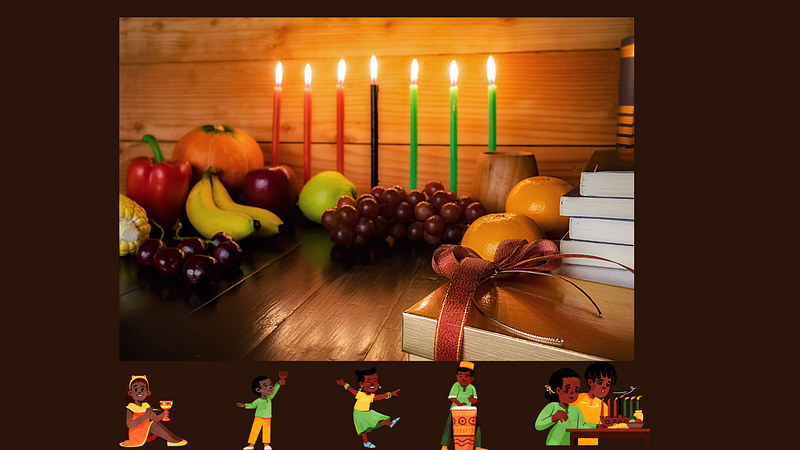
I typically spend Kwanzaa in a state of reflection. I engage myself, my family, and my community. However, I will be re-reading part II of this book to see how I will personally apply this section to myself and my small corner of the world.
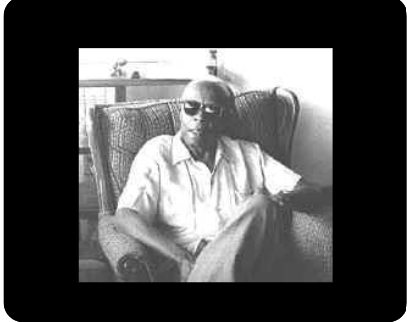
Fam, please give Dr. Chancellor Williams his flowers for gifting us with The Destruction of Black Civilization. It is up to us as a community how we make good on the gift.
These are my Thoughts,
Shanté
© 2022 Shante Nixon. All rights reserved.
Resource and Sources
Williams, Chancellor. 1971. The destruction of the black civilization. BN publishing.
Pre Historic Nations by John D. Baldwin, New York: Harper & Brothers, 1869, pg. 192)


