
So, You Have Heard About Lorraine Hansberry, But Do You Know Who Her Uncle Leo Is?
We have all heard of, read, or watched Raisin In The Sun by Lorraine Hansberry. If you have been in a high school literature class, it was required reading, due to Lorraine being the first African American written play performed on Broadway. If you have the faintest interest in diaspora art that was birth due to the impact of the Harlem Renaissance, You are aware that Raisin In The Sun is inspired by the 3rd stanza of Harlem (Often referred to as Dream Deferred )by Langston Hughes. My question to you, dear reader is, do you know who her uncle is??
Many times, we miss the interconnection between the various civil rights movements because we do not know how the different individual players are connected. Lorraine Hansberry worked with Civil Rights leaders such as W.E.B Du Bois and Paul Robeson. So now that I have done some name-dropping on some notable figures in history, my question is, do you know who Lorraine’s uncle Leo is? The unsung hero, William Leo Hansberry, is one of the bridges that links the civil rights movements of the early 1900s, 1930s, and 1950s–60s all together for me. He empowered the movers and shakers of the sixties with the tools they needed to transform diaspora lives.
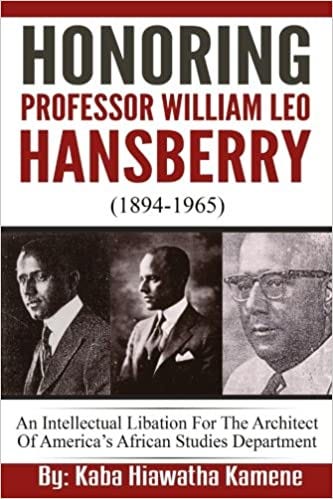
Uncle Leo is the architect of the African History Department at Howard University. All other Black history departments and African Studies departments that you encounter on the university level are birth from the very framework that William Leo Hansberry constructed.
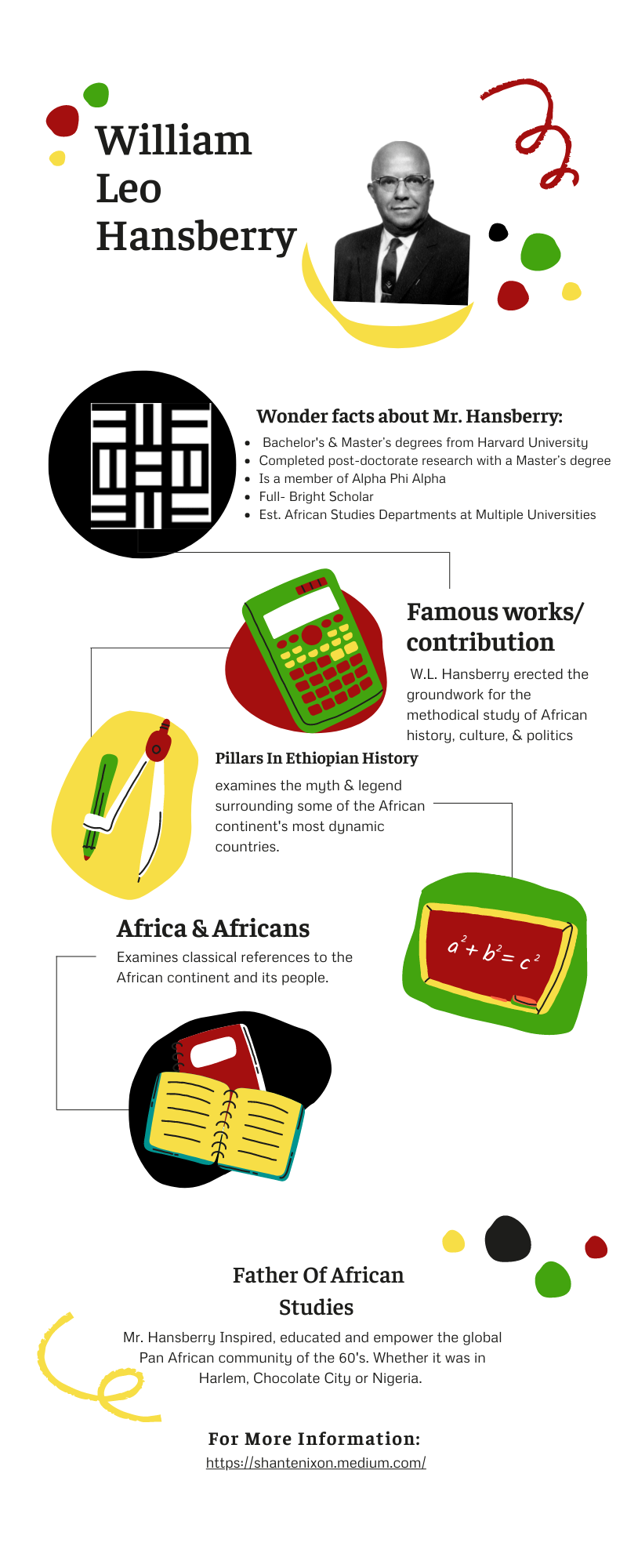
Key Facts:
· W.L. Hansberry started college at Atlanta University (Now known as Clark Atlanta University) but left to attend Harvard University.
· Bachelor’s and Master’s degrees from Harvard University. Unfortunately, was never able to receive his doctorate in African Studies as there were no programs offering the degree in his time.
· Taught at Chicago University, Oxford University, University of Nigeria and Cairo University.
· Is a member of Alpha Phi Alpha fraternity (interesting history: W.E.B Du Bois and Paul Robeson are both Alphas as well)
· The University Nigeria named the college for African Studies After him. Hansberry Institute of African Studies in 1964.
· Winner of the first annual awards of the Haile Selassie Prize Trust for African research
· Full- Bright Scholar: “Hansberry’s interdisciplinary approach was so pioneering, in fact, that in 1953 he won a Fulbright award to Egypt and traveled to the Sudan and Ethiopia.” He spent his time researching and teaching. He also built relationship with figures would become key figures in the fight against colonial rule in Africa.
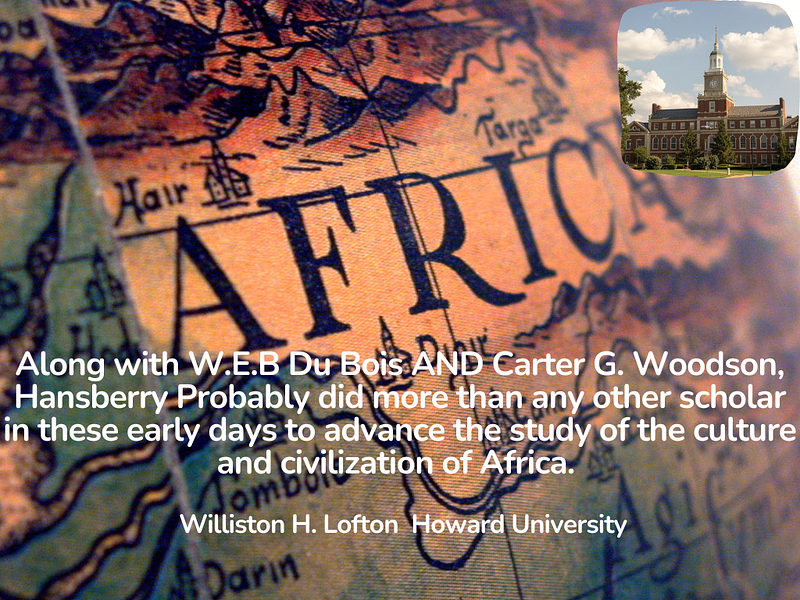
Uncle Leo, better known as William Leo Hansberry, is the father of “African History Studies” for colleges. WEB Du Bois states that the research of William Leo Hansberry was of the greatest assistance to him, in writing his book the World and Africa. Dr. W.E.B. Du Bois is a founding father of American Sociology, NAACP, as well as a founding father of the Pan-African movement as we know it today.
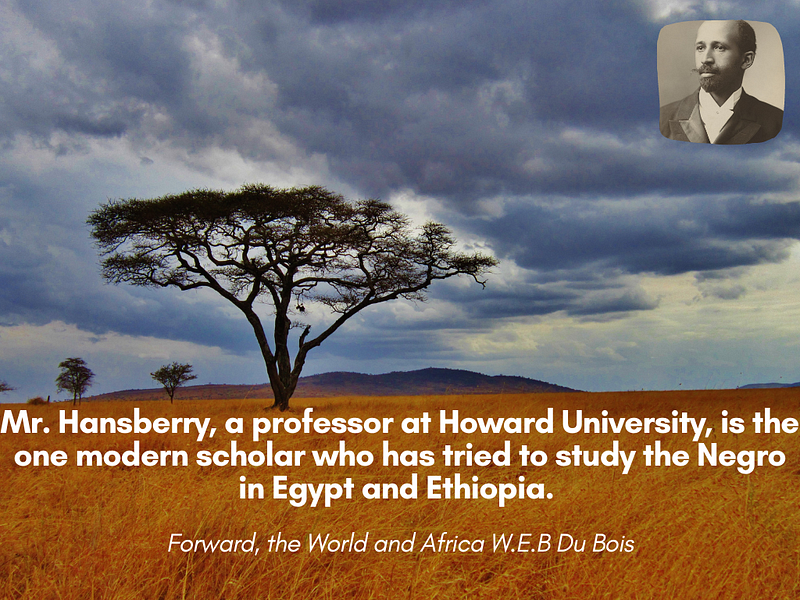
However, it was WEB Du Bois’s publication of Negro that lead William Leo Hansberry to leave Atlanta University to go and study at Harvard University. He wanted to read EVERY book that WEB Du Bois recommend as he devoured knowledge about Africa. What amazes me is that it was W.E.B Du Bois’s greatest regret W. L. did not get more of his research published, because he considered the younger man finding so insightful.
The Research:
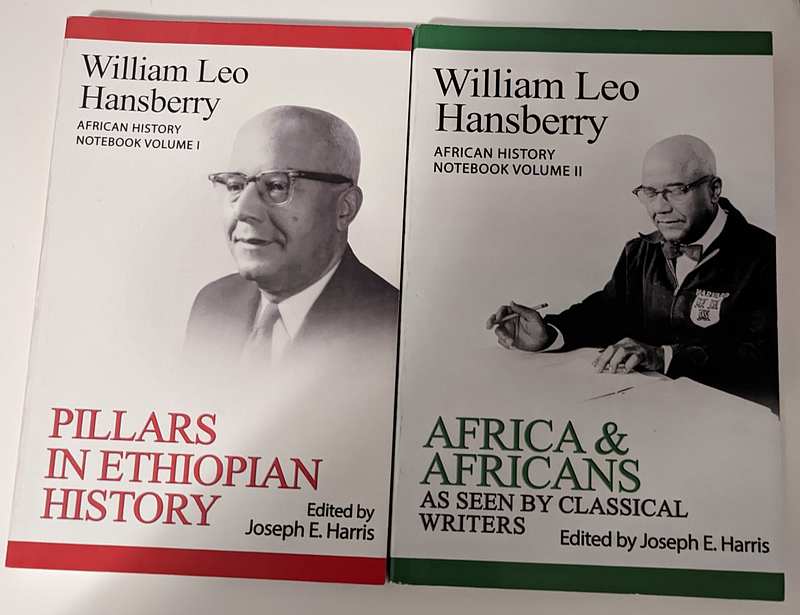
What kind of knowledge was W.L. putting down, that would lead to a movement?
W.L. Hansberry is know for the erection of the groundwork for the methodical study of African history, culture, and politics.
William Leo Hansberry examines the myth and legend surrounding some of the African continent’s most dynamic countries in Pillars In Ethiopian History. Hansberry delves into Ethiopian history ,the Queen of Sheba legend, the origin and development of Ethiopian Christianity, medieval international relations, and the Prester John legend.
In Africa and Africans he examines classical references to the African continent and its people. The writings of Homer, Pliny, Ovid, Virgil, Herodotus, and others are discussed and picked apart.
His Legacy, Notable Figures in History That He Influenced:
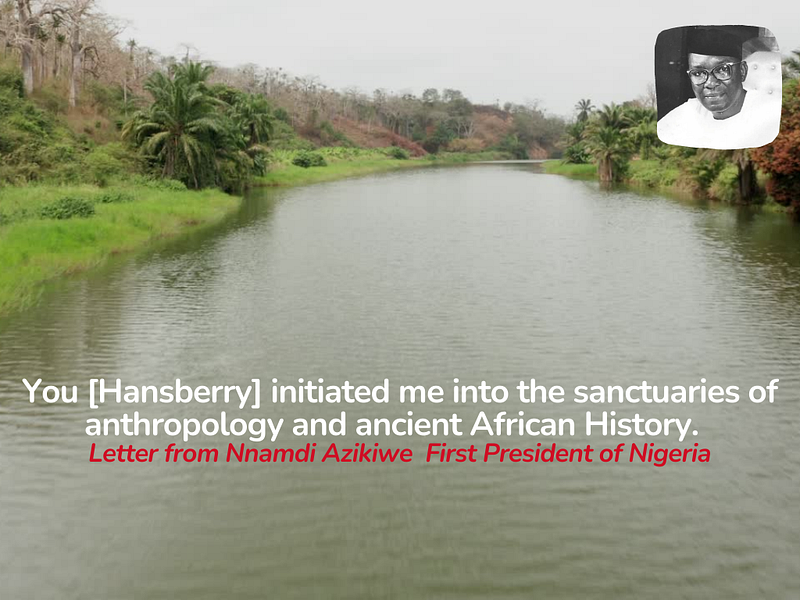
“During his tenure at Howard University from 1922–1959 and beyond , He taught key and notable African leaders and future Pan-African leaders:
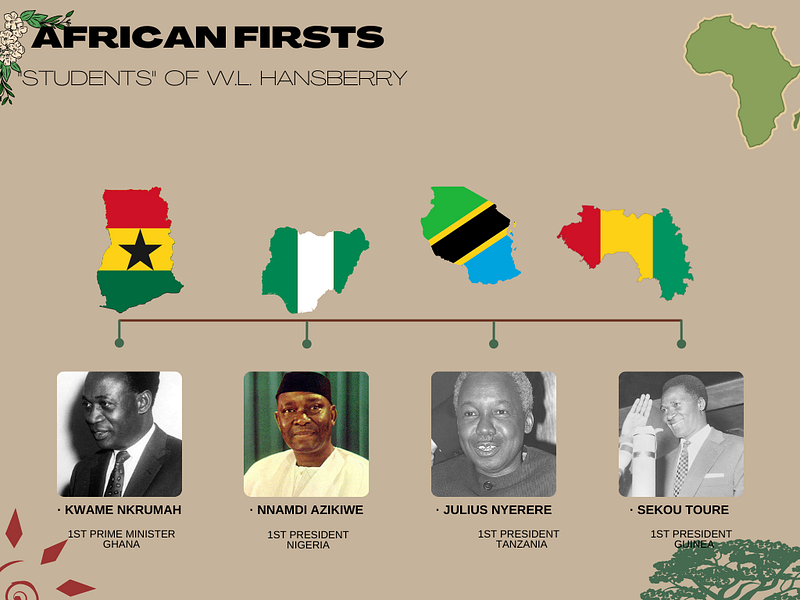
· Nnamdi Azikiwe, 1st President of Nigeria, West Africa, Hansberry’s student from the 1920s.
· Kwame Nkrumah, 1st Prime Minister Ghana, West Africa, Hansberry’s student from the 1940s.
· Sekou Toure 1st president of Guinea, West Africa Hansberry’s student from the 1950s.
· Julius Nyerere 1st president of Tanzania, East Africa, Hansberry’s student from the 1950s.
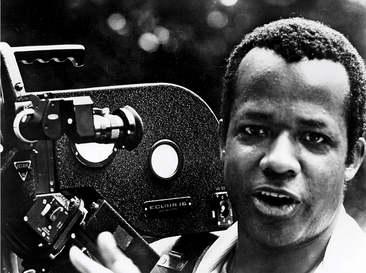
Throughout the 1950s-1960s, Hansberry, at the requests of former African American students, acclaimed filmmaker William Greaves and historian John Henrik Clarke, delivered several lecture series at the Charles Seifert Historical Research Library (known as the Seifert Center) and at the New School for Social Research in New York, N.Y.”
Is there any wonder that a robust black enlightenment revolution took place in the sixties? Bumpyjonas has a great piece on wokeness and the 1960s and How DC was the birthplace of it. W.L. Hansberry had been sharing the knowledge of who we truly are about the civilizations of Africa. With those students who attended Howard and beyond for over 35 years!! This is the impact of educating the community.
**Authors Note:
I am re-reading The Destruction of Black Civilization by another Howard University student & professor, Chancellor Williams, who heavily cites William Leo Hansberry’s research and his systematic research techniques as the foundation of his publication. The sources for Hansberry’s research is the same sources that Cheikh Anta Diop utilized. The reason why this is key is that Cheikh Anta Diop is a key contributor to volume 3 of the African History Encyclopedias produced by UNESCO. As you already know, I find books and invaluable resources on my personal journey of knowing myself.
Chancellor Williams was a “rejected scholar” with the committee stating that his finding was “controversial” for the same research sources and citations (I am going to let that one sit with you guys for a while). I will be reviewing this book with Erica J in conjunction who has also read this book. I ask that you Check out the articles she has already written about this book.
Fam, take some time out and give William Leo Hansberry his flowers!
However, these are just my thoughts.
Shanté
Resources and Sources
https://www.aaihs.org/solidarity-and-excellence-w-e-b-du-bois-and-william-leo-hansberry
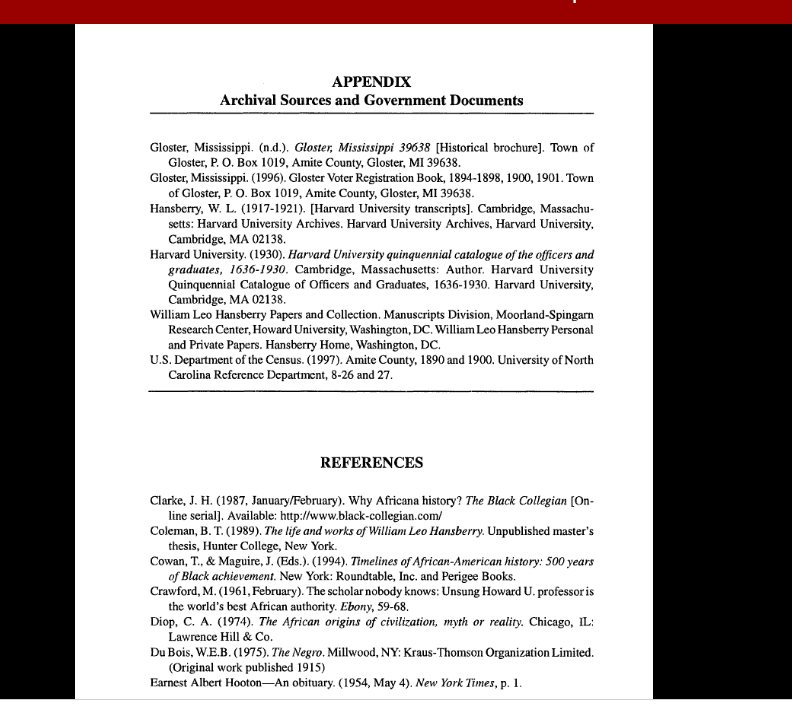
https://www.proquest.com/docview/200865309
https://journals.sagepub.com/doi/abs/10.1177/002193470003000301
https://www.blackpast.org/global-african-history/pan-african-congresses-1900-1945/
HLS-whole-report_FINAL_2022–04–25FINAL-ua.pdf
https://www.blackpast.org/african-american-history/hansberry-william-leo-1894-1965
https://www.researchgate.net/publication/232280888_Two_faces_of_Earnest_A_Hooton
https://www.blackpast.org/global-african-history/pan-african-congresses-1900-1945/