The Damage We Do to Ourselves When We Try to Function Like Computers
Multitasking doesn’t work for humans like it does for machines
When autonomous technologies appear to be calling all the shots, it’s only logical for humans to conclude that if we can’t beat them, we may as well join them. Whenever people are captivated — be they excited or enslaved — by a new technology, it becomes their new role model, too.
In the Industrial Age, as mechanical clocks dictated human time and factory machines outpaced human workers, we began to think of ourselves in very mechanical terms. We described ourselves as living in a “clockwork universe,” in which the human body was one of the machines. Our language slowly became invested with mechanical metaphors: We needed to grease the wheels, crank up the business, dig deeper, or turn a company into a well-oiled machine. Even everyday phrases, such as “fueling up” for eating lunch or “he has a screw loose” for thinking illogically, conveyed the acceptance of humans as mechanical devices.
As a society, we took on the machine’s values of efficiency, productivity, and power as our own. We sought to operate faster, with higher outputs and greater uniformity.
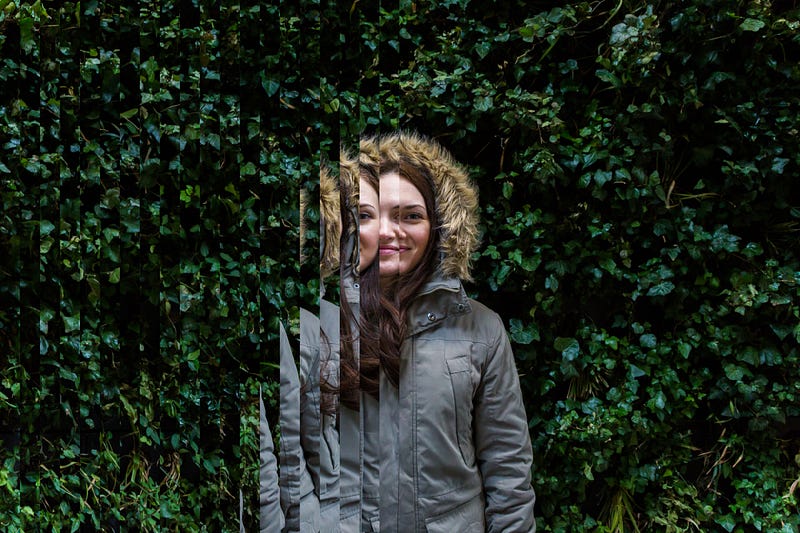
In the digital age, we think of our world as computational. Everything is data, and humans are processors. That logic does not compute. She multitasks so well she’s capable of interfacing with more than one person in her network at a time. How about leveling up with some new life hacks?
The language alone suggests a new way for human beings to function in the digital media environment. Projecting human qualities onto machines — like seeing a car grille as a face or talking to a smartphone A.I. like a person — is called anthropomorphism. But this is the opposite: We are projecting machine qualities onto humans. Seeing a human being as a machine or computer is called mechanomorphism. It’s not just treating machines as living humans; it’s treating humans as machines.
Having accepted our roles as processors in an information age, we strive to function as the very best computers we can be.
We multitask, assuming that — like our computers — we can do more than one thing at a time. Study after study has shown that human beings cannot multitask. When we try to do more than one thing at a time, we invariably get less done, less accurately, with less depth and less understanding. This is true even when we believe we have accomplished more. That’s because, unlike computers, human beings do not have parallel processors. We have a single, holistic brain with two complementary hemispheres.
Computers have several sections of memory, working separately but in parallel. When a computer chip gets a problem, it breaks down the problem into steps and distributes those steps to its processors. Each processor produces an answer, and the answers are then reassembled. Human beings can’t do that. We can imitate this process by switching really fast between one task and another — such as driving a car and sending a text message — but we can’t actually do both simultaneously. We can only pretend, and often at our peril.
Drone pilots, for just one example, who monitor and neutralize people by remote control from thousands of miles away, experience higher rates of post-traumatic stress disorder than “real” pilots. This was unexpected by the military, which feared that remote bombing might desensitize cyberpilots to killing. One explanation for their higher rates of distress is that, unlike regular pilots, drone pilots often observe their targets for weeks before killing them. But the stress rates remain disproportionately high even for missions in which the pilots had no prior contact with the victims.
The more likely reason for the psychic damage is that the soldiers are trying to exist in more than one location at a time. They are in a facility in, say, Nevada, operating a lethal weapon system deployed on the other side of the planet. After dropping ordnance and killing a few dozen people, the pilots don’t land their planes, climb out, and return to the mess hall to debrief over beers with their fellow pilots. They simply log out, get into their cars, and drive home to the suburbs for dinner with their families. It’s like being two different people in different places in the same day.
Except none of us is two people or can be in more than one place. Unlike a computer program, which can be copied and run from several different machines simultaneously, human beings only have one “instance” of themselves running at a time.
We may want to be like the machines of our era, but we can never be as good at being digital devices as the digital devices themselves. This is a good thing, and maybe the only way to remember that by aspiring to imitate our machines, we leave something even more important behind: our humanity.
This is sections 37 and 38 of the new book Team Human by Douglas Rushkoff, which is being serialized weekly on Medium. Read the previous section here and the following section here.