On the Internet of Things, We People Are the Things
Plants bind energy. Humans bind time. Networked algorithms bind us.
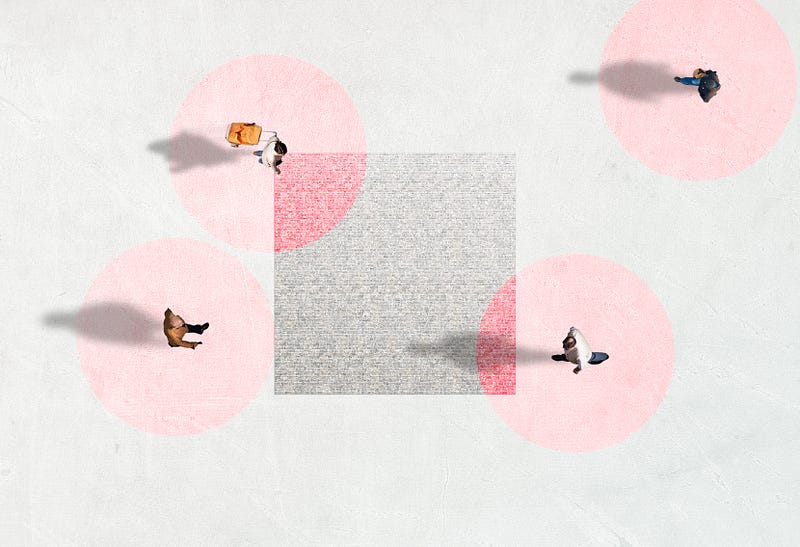
While Team Human may be compromised in the digital environment, team algorithm is empowered.
As our more resonant communication pathways fail us, it becomes harder to check in with one another, operate in a coordinated fashion, and express or even experience empathy. We lose all the self-reinforcing feedback loops of rapport: the mirror neurons and oxytocin that reward us for socializing. Surprisingly, the inability to establish trust in digital environments doesn’t deter us from using them, but spurs more consumption of digital media. We become addicted to digital media precisely because we are so desperate to make sense of the neuromechanical experience we’re having there. We are compelled to figure it out, calibrate our sensory systems, and forge high- touch relationships in a landscape that won’t permit any of these things. We instead become highly individuated, alienated, and suspicious of one another.
Engagement through digital media is just a new way of being alone. Except we’re not really alone out there — the space is inhabited by the algorithms and bots that seek to draw us into purchases, entertainment, and behaviors that benefit the companies that have programmed them. They outnumber us, like “non-player characters” in a video game. We are as likely, or more likely, to be engaging with a bot on the internet than we are to be engaging with another person. And the experience is likely to feel more rewarding as well.
Unlike the humans, the A.I.s online are increasingly connected to one another. Companies regularly and instantaneously sell data to one another. This is how products you may have looked at on one website magically show up as advertisements on the next. And that’s just a primitive, obvious example of what’s going on behind the scenes. The A.I.s are in constant communication, sharing with one another what they have learned by interacting with us. They are networked and learning.
The internet of things, or IOT as its proponents like to call it, is a name for the physical objects in this tremendous network of chips and algorithms seeking to understand and manipulate us. While a networked thermostat or baby monitor may have certain advantages for the consumer, its primary value is for the network to learn about our behaviors or simply extract data from them in order to place us in ever more granular statistical categories.
The algorithms directing these bots and chips patiently try one technique after another to manipulate our behavior until they get the results they have been programmed to deliver. These techniques haven’t all been prewritten by coders. Rather, the algorithms randomly try new combinations of colors, pitches, tones, and phraseology until one works. They then share this information with the other bots on the network for them to try on other humans. Each one of us is not just up against whichever algorithm is attempting to control us, but up against them all.
If plants bind energy, animals bind space, and humans bind time, then what do networked algorithms bind? They bind us. On the internet of things, we the people are the things.
Human ideals such as autonomy, social contact, and learning are again written out of the equation, as the algorithms’ programming steers everyone and everything toward instrumental ends. While human beings in a digital environment become more like machines, entities composed of digital materials — the algorithms — become more like living entities. They act as if they are our evolutionary successors.
No wonder we ape their behavior.
This is section 36 of the new book Team Human by Douglas Rushkoff, which is being serialized weekly on Medium. Read the previous section here and the following section here.