
The Chinese Communist Party is Trying to Recreate the British Empire
Strangely, the Chinese Communist Party is trying to recreate the British Empire for the 21st century.
Three attributes allowed the British to build the largest empire in human history. Those attributes were the world’s financial center (the City of London), the world’s largest naval force (the Royal Navy), and the workshop (the Industrial Revolution).

The British became the world’s leaders in finance, technology, and industry which gave them the means to build the world’s most powerful military. During the heyday of the British Empire in the mid-19th century, the Royal Navy had a fleet of 1660 ships.*
Similarly, a London-based business, the British East India Company, had one of the world’s largest armies. In the early 19th century, John Company could field a fighting force of 250,000 men, larger than His Majesty’s Army. Interestingly, the East India Company had forces powerful enough to wage war on the Chinese Empire, the richest nation on Earth, in the 1830s, and win.
How the Chinese are recreating the British Empire
Economist Percy Greaves notes the 19th century United Kingdom “operated largely as a factory, importing raw materials and exporting finished goods.”*
Britain became the world’s most powerful nation because it was the world’s largest and most efficient factory. Using new technologies, such as steam engines, British factories could church out far more goods at lower prices.
Britain became the world’s most powerful nation because it was the world’s largest and most efficient factory. Using new technologies, such as steam engines, British factories could church out far more goods at lower prices.
Consequently, British entrepreneurs could flood markets with enormous amounts of cheap goods. Competitors who relied on hand-production could not survive.
For example, in 1750 India, produced around 25% of the world’s textiles. By the 1870s, India was producing just 3% of the world’s textiles.* Hence, the British annihilated India’s textile industry in 120 years.
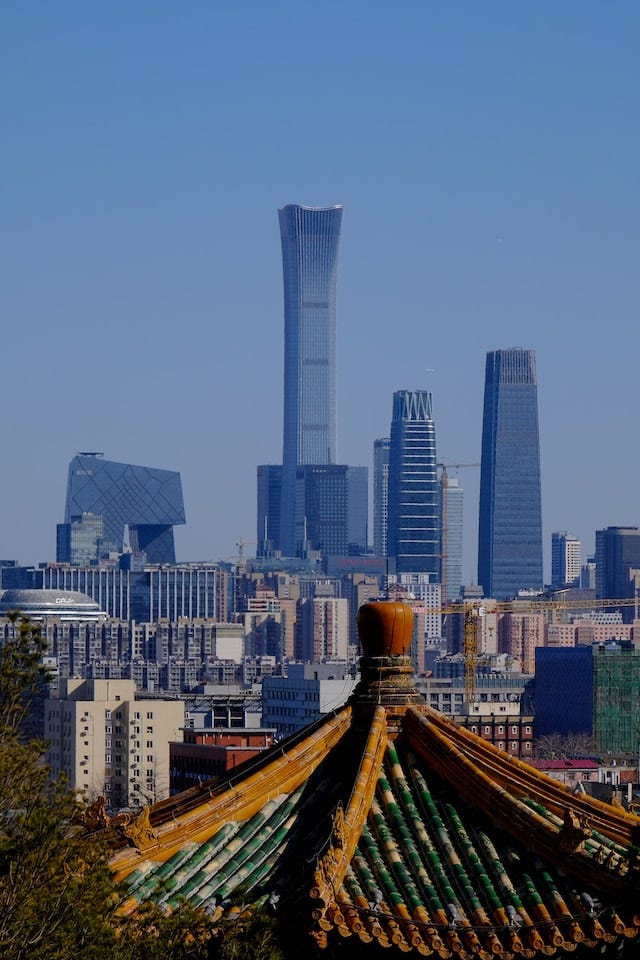
Today, China has a similar level of industrial dominance. For example, Chinese industry now accounts for 28.4% of global manufacturing in 2021. Its closest competitor had 16.6%, the United States, of global manufacturing.
Hence, China has a level of industrial dominance that rivals the 19th century British Empire. This dominance is no coincidence. The Chinese government has a deliberate policy of building industry.
Notably, the Chinese government spends heavily on industrial development. Tax breaks, credits, and other industrial subsidies equaled 1.73% of China’s gross domestic product (GDP) in 2019, the Center for Strategic and International Studies estimates. In contrast, US industrial subsidies equaled 0.39% of GDP in 2019. Some experts think Chinese industrial subsidies are much larger, equaling 4.9% of China’s GDP. *
One indirect industrial subsidy is infrastructure spending. Bloomberg estimates the Chinese government is budgeting $1.8 trillion for infrastructure construction in 2023.* Infrastructure spending supports industry with contracts, purchases of equipment and materials, and new transportation facilities. In contrast, the USA had a $.2588 trillion infrastructure GAP in 2021, the American Society of Civil Engineers (ASCE) estimates.
Thus, industrial development is a key focus of the Chinese government. This focus is paying off.
Industry Alone is not Enough
However, industrial dominance alone is not enough to create a global empire.
During the 18th century, both India and China far out produced European nations and the United States. For example, China and India were the world’s first and second largest economies as late as 1820.
The Chinese Empire had a gross domestic product (GDP) of around $360 billion in 1820. India, then under the rule of the British East India Company, had a GDP of around $170 billion in 1820. The United Kingdom was a distant third with a GDP of around $60 billion. Although the British Empire had a GDP of around $230 billion if you combine the British and Indian GDPs.*

Notably, no country surpassed China in GDP until the United States in 1890. Although Britain and India’s combined 1890 GDP of around $500 billion easily surpassed the USA’s $345 billion. Legally, Britain and India were one country in 1890, Queen Victoria was also the Empress of India. Thus, the British Empire had the world’s largest economy in 1890.
Interestingly, the United Kingdom alone was never in the top three nations for GDP. Yet the United Kingdom assembled history’s largest empire of 13.71 million square miles (22.064 million square kilometers).*
Finance is the key to Empire
Britain needed two other additional ingredients to assemble its empire: finance and military power. Strangely, finance was the key ingredient in Britain’s recipe for empire.
Britain’s climb to empire began with the Glorious Revolution in 1688 when Dutch monarch William of Orange overthrew Stuart King James II. One result of the Glorious Revolution was the importation of the Dutch financial system to London.
The Dutch Financial system included a central bank that issued a fiat currency (paper money) and financed government operations with debt. This was the Bank of England. The Bank of England allowed the British government to finance wars without outside borrowing or large tax increases.
Hence, His Majesty’s government could always pay its armies and the Royal Navy. This enabled the United Kingdom to fight several major wars without a financial crisis during the 18th century. In particular, the British won the conflict Winston S. Churchill labels the actual first world war the Seven Years War.
Between 1700 and 1815, the British fought the War of the Spanish Succession, three Anglo-Spanish Wars, several wars in India, the Seven Years War, the American Revolution, an Anglo-Dutch War, the Wars of the French Revolution, and the Napoleonic Wars. Yet Britain did not go bankrupt. Instead, the Bank of England could finance all their conflicts.
In contrast, Britain’s larger and richer rival, France, was in a continuous financial crisis throughout the late 18th century. That crisis spawned the French Revolution when a bankrupt King Louis XVI called a meeting of the Estates General (France’s long dormant parliament) to raise taxes and fix France’s finances.
One result of all the warfare was the destruction of Amsterdam’s financial markets, the Dutch Republic and Europe’s reserve currency, the guilder, in the Anglo Dutch War of 1780–1784 and the Dutch Patriot Revolution of 1786–1787. Once consequence of those conflicts was that Europe’s principal financial market moved to London.
Another consequence was that the Pound Sterling became Europe’s and then the world’s reserve currency. The reserve currency is the fiat currency that financial institutions and big business use for cross-border transactions. Hence, the world was doing business with British money.
Consequently, the City of London gave British entrepreneurs the money and credit they needed to build a network of canals and the world’s first railroad system. Moreover, entrepreneurs had the money and credit to finance industrialization.
Finance and Empire
During the 20th century, the British Empire faced four rivals for global dominance. The United States, the German Empire/Nazi Germany, the Japanese Empire, and the Union of Soviet Socialist Republics (USSR).
Only one of those rivals, the United States, had Britain’s combination of financial, industrial, and military power. Tellingly, in 1945, the United States succeeded Britain as the world’s leading nation. Furthermore, only one of those rivals survived the 20th century intact, the United States.
Germany had an impressive amount of military and industrial power. Yet the Germans never mastered finance. Notably, Germany’s economy collapsed into inflation during World War I. During World War II, Adolph Hitler was reduced to seizing other nations’ resources at gunpoint and bartering for resources with the Soviet Union.
Meanwhile, when Britain ran out of money in 1940. His Majesty’s Government borrowed the money it needed to continue the war from the United States. Likewise, the US financed the Soviet war effort after 1941.
The Japanese Empire had impressive military but not industrial power. During World War II, Japanese forces were superior to American, British, Indian, and Soviet troops. However, the Allies could overwhelm the Japanese with superior numbers and greater firepower supplied by American industry.
The Soviets had impressive industrial and military resources. Plus, the Soviets made some impressive achievements in science and technology. The first satellite, the first man in space, and the world’s largest nuclear arsenal, for example. Yet, the Soviet economy was incapable of bearing the cost of the military occupation of Eastern Europe.
The Soviet economy was so primitive, the Kremlin was financing its military by selling natural resources for cash. Ironically, they used part of that cash to pay for American grain to feed the Soviet people. Hence, the Soviets were helping pay for the American Cold War effort.
The United States could easily finance military operations and wars all over the world. Yet, the Soviets could not pay for a military occupation in Eastern Europe just a few hundred miles from their border. This financial exhaustion led to the total collapse of the Soviet Union in 1991.
Chinese Financial Machinations
I think Chinese leaders have studied financial history because they are trying to boost China’s financial power.
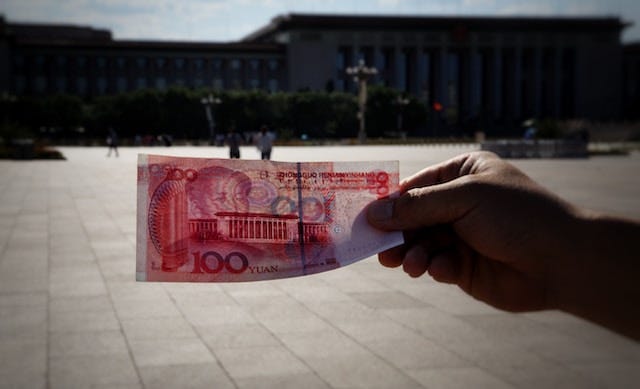
For example, the People’s Bank of China (PBOC), the nation’s central bank, is encouraging other countries to use the yuan for cross-border transactions. The yuan, also known as renminbi, China’s fiat currency.
For example, Bolivia’s economics minister Marcelo Montenegro is encouraging Bolivian companies to accept yuan in payment for natural resources, Global Times reports. Yuan transactions comprised 10% of Bolivia’s financial operations between May and July 2023, Montenegro claims.

Yuan payment is a great deal for Chinese importers because the renminbi is worth less than the US dollar. For example, the yuan was trading at 14¥ CNY to $1.00 USD. Hence, Chinese importers pay less for more. To elaborate, Chinese companies can use the Bolivian raw materials to make goods they can sell for dollars.
Conversely, it is a terrible deal for Bolivian importers. It is a good deal for Chinese manufacturers, because Bolivians could be forced to use the yuan to buy Chinese goods. To explain, the yuan is not widely accepted because the US dollar is the world’s reserve currency.
However, central banks in at least nine countries support yuan transactions. In addition to Bolivia, Russian, Saudi Arabian, Argentine, Brazilian, Bangladeshi, Pakistani, Iraqi, Afghan, and Thai companies can accept yuan payments, The South China Morning Post claims.*
Additionally, central banks in China, Malaysia, Indonesia, Hong Kong, Singapore, and Chile are participating in the Renminbi Liquidity Arrangement (RMBLA). The RMBLA is a pool that will support emergency cross-border yuan transactions the Bank of International Settlements (BIS) is organizing. The BIS is a bank for central banks that supports cross-border transactions.*
I don’t think the yuan will replace the dollar as the global reserve currency in the foreseeable future. Yet, some central bankers and the BIS’s leaders think the yuan supplanting the US dollar is a possibility.
History, however, shows the reserve currency can change. For example, the world switched from the Dutch guilder to the Pound Sterling in a decade (1780–1790). The switch occurred because of the total collapse of the Dutch Republic in the Second Anglo-Dutch War and the Dutch Patriots’ Revolt.
I think some central bankers fear a dollar collapse because of growing civil Unrest in the United States. For the 6 January 2021 US Capitol Riot, the 2020 George Floyd Riots, and rumors of a coup attempt by followers of former President Donald J. Trump Sr. (R-Florida).
Another exercise of financial power is the deliberate use of loans, which Chatham House Fellow Timothy Ash calls “China’s Debt Imperialism.” Ash estimates China’s banks have lent $1.5 trillion to 150 countries, making China the world’s largest creditor nation. This lending is a deliberate debt trap built to addict countries to cheap Chinese credit, Ash charges.
Notably, the United States became the world’s largest creditor during World War I, replacing the United Kingdom.
Can China Become the World’s Financial Center?
I think the PBOC and the Chinese Communist Party have a deliberate policy of making China the world’s financial center. Data shows this policy is working.
For example, the world’s four largest banks are in China. Moreover, both banks with assets over $5 trillion and all the banks with more than $4 trillion in assets are Chinese.
Notably, the largest US bank, JPM Morgan Chase (JPM), had assets of $3.67 trillion in the fourth quarter of 2022. In contrast, the largest Chinese bank, the Industrial and Commercial Bank of China, had assets of $5.47 trillion in the fourth quarter of 2022.
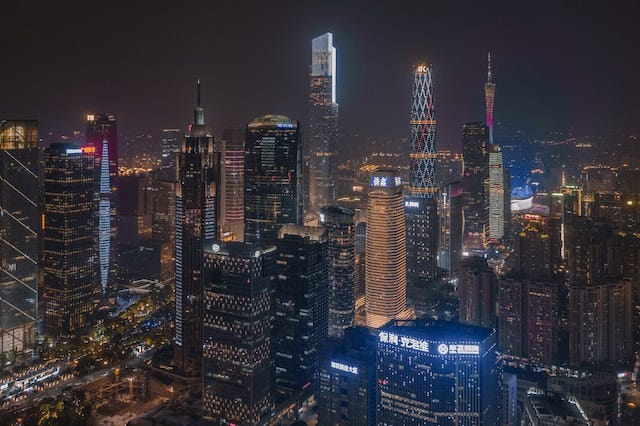
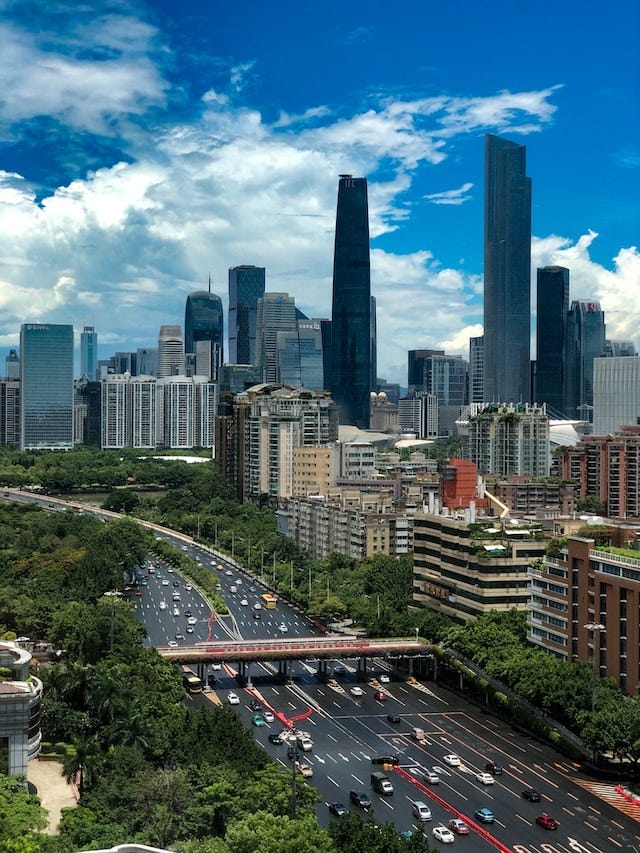
Similarly, four of the world’s top 15 financial centers are in China. In contrast, five of the world’s 15 largest financial centers are in the United States. Conversely, New York City is still the world’s top financial, and London is the world’s second largest financial center. However, the world’s third largest financial center is in Hong Kong, which is now part of China.

However, China will need one last attribute to become the world’s financial center: military power. Notably, London became Europe’s financial center in the late 18th century when Britain replaced France as Europe’s premier military. Similarly, New York replaced London as the world’s financial center after Nazi victories in 1940, exposed Britain as a second-rate power.
Moreover, the US dollar became the world’s reserve currency after the Fall of France and the Battle of Britain showed the British Empire was incapable of defeating the Nazis without American help. Consequently, I think China will need to become the world’s premier military power.
Will China Become a Major Military Power?
I see no evidence, the Chinese People’s Liberation Army (PLA) is more powerful than the US military. Although the People’s Liberation Army Navy PLAN) is larger than the US Navy. The PLAN has an active fleet of around 340 warships while the US Navy has an active fleet of around 305 ships.* However, US ships are more powerful. For example, the PLAN has just two aircraft carriers while the US Navy has 43.
Moreover, the PLA has just one base outside of Chinese territory in Dubai. In contrast, the US military controls at least 750 bases in 80 countries worldwide, Al Jazeera estimates. Plus, there are around 173,000 US military personnel deployed in 159 countries.*
Plus, the US Congress spent $778 billion on the US military in 2020. In contrast, the Chinese government spent $252 billion on the PLA in 2021.* Hence, US military resources are far greater than China’s, but Chinese resources are growing.
For example, the PLAN’s new aircraft carrier Shandong is operating in formations similar to a US Navy carrier strike group, Warrior Maven claims. The Shandong is part of the PLAN’s strategy to operate worldwide. Moreover, there are allegations the PLA is using German and American pilots to train its fighter pilots.*
Thus, the Chinese government has a deliberate strategy of making China the world’s financial, industrial, and military power. This strategy is unprecedented. The rise of the past two dominant world powers, the United States and the British Empire, was accidental. Yet the Chinese rise is quite deliberate. Plus, the strategy seems to be working (for now).
Nobody knows if this strategy will succeed, but it bears watching. It also raises interesting questions for US leaders. For example, should the US accept the Chinese rise, try to thwart it, or cooperate? There are advantages and disadvantages to all three strategies.
When it comes to responding to China’s rise. There are no straightforward answers. Only troublesome questions that will raise more questions.
*See Understanding the Dollar Crisis by Pearcey Greaves.
*https://www.geeksforgeeks.org/decline-of-indian-textiles/
*https://www.csis.org/analysis/china-wrong-industrial-policy-model-united-states
*https://www.newgeography.com/content/005050-500-years-gdp-a-tale-two-countries#:~:text=The%20available%20data%20shows%20China,and%20Japan%20(Figure%204).
*https://www.globaltimes.cn/page/202307/1295267.shtml
*https://www.bis.org/press/p220625.htm
*https://cepa.org/article/punishing-the-poor-chinas-debt-imperialism/
*https://www.military.com/navy/us-navy-ships.html
*https://www.cnn.com/2023/01/16/asia/china-navy-fleet-size-history-victory-intl-hnk-ml/index.html
https://warriormaven.com/china/chinas-2nd-carrier-shandong-operates-as-us-like-carrier-strike-group