
How the British East India Company Invented the International Drug Trade
Strangely, an English corporation, the British East India Company, launched the international drug trade in the late 18th century.
The British East India Company began as a trading venture. Queen Elizabeth I chartered the company on 31 December 1600. The original business plan was to import spices from Indonesia. However, the powerful Dutch East India Company (VOC) seized control of the Spice Islands.
Consequently, the Company shifted its operations to India where it had access to ports. During the 17th century, the company built a lucrative trade in tea, cotton, and spices. Cotton cloth, which was more versatile and comfortable than wool, became the Company’s most popular product.
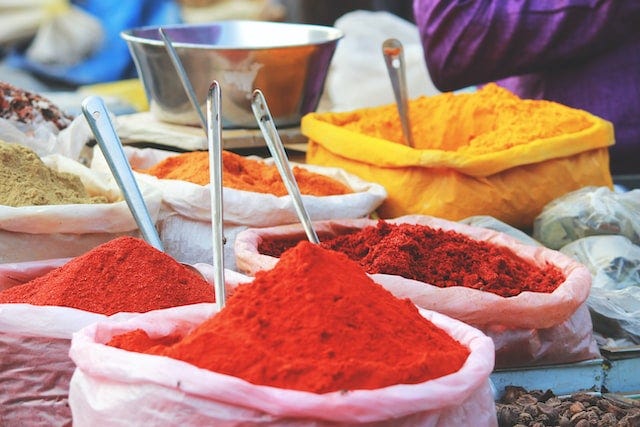
In the 17th and 18th centuries, the British East India Company became an attractive investment. Historians estimate shareholders could receive returns of up to 30% in the 18th century.
A Corporate Empire
Two developments transformed the British East India Company into a corporate empire and the first international drug cartel.
First, India’s Mughal Empire began collapsing, creating chaos. To protect its assets, the Company began hiring sepoys (Indian mercenaries) and forming private armies. It imported British officers and soldiers to train and command the private armies.
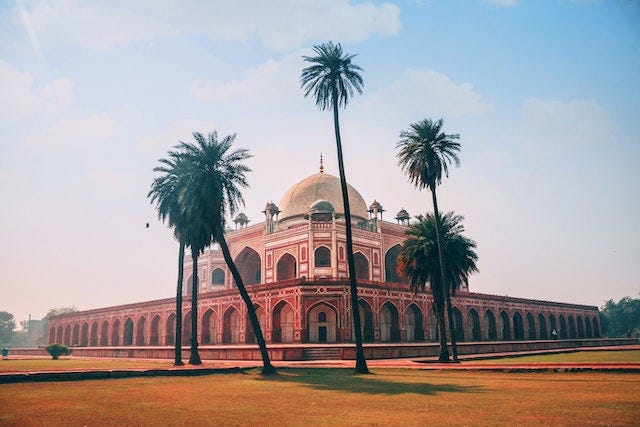
Those armies fought both Indian warlords, and rival Sepoy armies organized by French officers. During the Seven Years War, the Company’s notorious general Sir Robert Clive inflicted decisive defeats on the French and their ally the Nawab of Bengal. When the war ended, the company was in control of large swathes of India.
Like many conquerors, the Company found that empire was expensive. The sepoys only fought for gold or silver. To finance its army, the company began taxing Indians and seeking additional sources of revenue.
The First International Drug Cartel
One source of revenue was tea, which the Company bought in China and sold in Europe and America. The tea trade was lucrative, but it created a problem.
In the 18th and 19th centuries, China was the only source of tea. Chinese traders only took one kind of payment for tea: silver. Interestingly, there was no market for any British goods in 18th century China. This was problematic because the company needed silver to pay the sepoys.
In 1780, the first British Governor General of India, Warren Hastings, proposed a solution: opium. There was an enormous market for opium, a highly addictive drug, in China. However, opium was technically illegal in China.
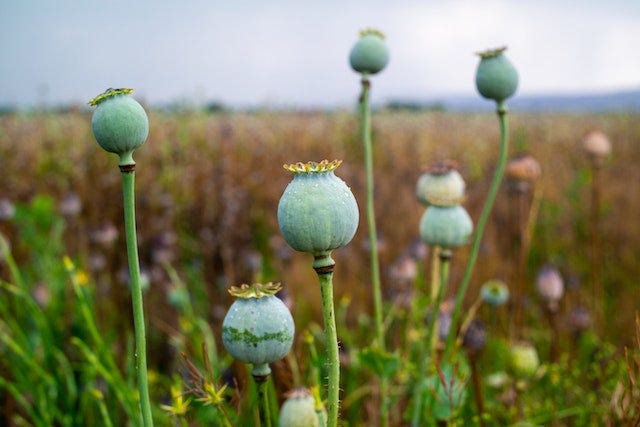
Under Hastings’ administration, the British East India Company began exporting opium from the Bengal Presidency to China. Company agents began trading tea for opium, which reduced silver expenditures.
Opium became an important revenue source for the company because its cotton exports were falling. To explain, Eli Whitney’s invention of the cotton gin made the American South into the world’s largest cotton growing area. America became the world’s largest cotton exporter, making the Company dependent on opium because it needed more revenue than ever.
By the early 19th century, the British East India Company had the world’s largest army with 250,000 men, twice as large as the Regular British Army. Opium financed that army.
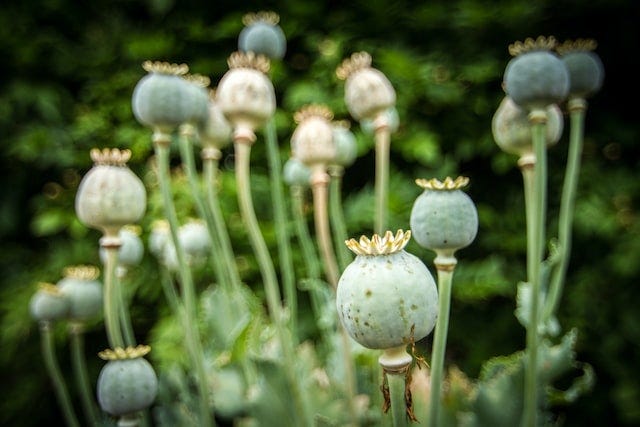
To get the opium, the Company had 2,500 clerks working in 100 offices of its Opium Agency. Company thugs forced Indian peasants to grow opium poppies at a substantial loss, Rolf Bauer alleges. This impoverished the farmers, who ended up in debt to the company. Hence, the Company was using debt peonage to make the farmers into sharecroppers. Bauer, a professor of economic and social history at the University of Vienna, studies the opium trade.
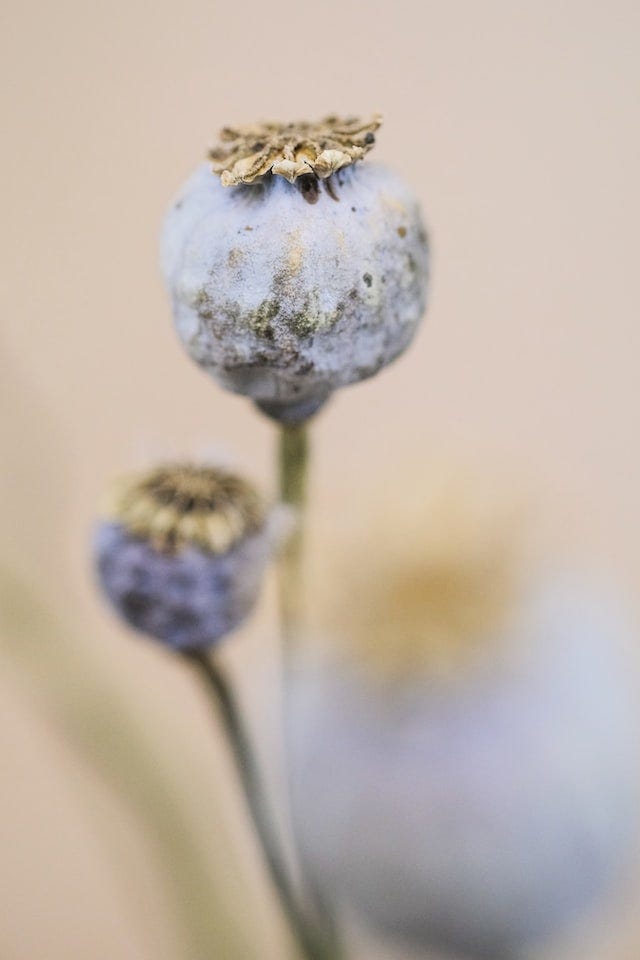
Thus, the Company invented the international drug trade. The Opium Agency collected raw opium from 1.3 million peasant farms and processed the crop in two factories on the Ganges River before shipping it to China.
For the first time in human history, addictive drugs were being manufactured and exported on an industrial scale. Frighteningly, the British Crown was behind the first international drug cartel.
Pitt’s India Act of 1784 gave Parliament control of the East India Company. In particular, the Act gave the Prime Minister the power to appoint India’s Governor General. The Act gave the Company access to British military, resources including Regular Army officers and soldiers. Hence, His Majesty’s Government organized and backed the world’s first international drug cartel.
An Empire Built on Opium
By 1839, opium was so important to the British East India Company that Britain went to war to preserve the drug trade.
By the 1830s, the Company’s opium had created the world’s first drug problem in China. Millions of people became addicted, leading to crime and other problems. In response, the Chinese government declared war on drugs. Chinese authorities seized and burned opium and expelled British and American opium traders.
By the 1830s, American clipper ships were carrying large amounts of opium to China. Those ships’ owners included the wealthy Delano and Roosevelt families. The ancestors of U.S. presidents Theodore Roosevelt (R-New York) and Franklin Delano Roosevelt (D-New York). Hence, Teddy Roosevelt and FDR were free to enter politics because of the money their families made in the opium trade.

In November 1839, the Royal Navy struck back by attacking Chinese ships. In June 1840, a large force of Royal Navy ships carrying East India Company troops arrived off Macao. On 5 July 1840, British forces bombarded and occupied the Chinese port of Chushan. The Opium Wars had begun.
Chinese forces were no match for British military technology. By 1841, British General Sir Hugh Gough captured Canton, China’s most important port. In 1842, fearing the loss of Nanjing, Chinese imperial forces surrendered.
The British forced the Chinese government to sign the Treaty of Nanking, which gave British subjects the right to sell opium anywhere in China. The Treaty forced the imperial government to cede Hong Kong to Britain as a permanent military base on Chinese soil. It also opened four treaty ports, Guangzhou, Amoy, Foochow, Shanghai, and Ningpo, for any trader.
Opium financed the British Empire
Opium was the basis of Britain’s 19th century Indian Empire. The opium trade kept growing after the British government took direct control of India after the Indian War of Independence in 1859.
The Crown disbanded the East India Company, but the trade continued. After 1859, the Indian government administered the opium trade. The Opium Agency was part of the government. After 1877, Queen Victoria became head of the opium-financed Indian state in her role as Empress of India.
Indian opium exports grew from 4,000 chests a year in the early 19th century to 60,000 chests a year in the 1880s, Bauer estimates. Opium was the Indian government’s second largest revenue source in the 19th century. Opium production was so important the government made interest-free loans to peasants who grew it. Many farmers went deeply in debt to meet the Opium Agency’s high production quotas.
By the 1880s, the largest opium port, Shanghai, became China’s fastest growing city and an important international trading center. They built the city around opium hulks, old sailing ships, used as floating opium warehouses in the Yangtze River.
The End of Opium
Officially, the British government ended the opium trade in 1915 to get Chinese support in World War I. In reality, the opium trade continued under private companies and Chinese organized crime.
The most powerful Chinese syndicate, the Green Gang, ran Shanghai and controlled the opium trade in the 20th century. Writer Sterling Seagrave alleges Green Gang leader Huang Jinrong was chief of detectives in Shanghai’s French Concession.* The Green Gang distributed opium the French grew in their Indochina colonies in China.

The Green Gang was a major supporter of Nationalist, or Kuomintang, leader Chiang Kai-shek, who became China’s dictator in the 1930s. Seagrave alleges Chiang was a Green Gang member in his book The Soong Dynasty.* Chiang became an important US ally during World War II and the founder of the Chinese Nationalist republic on Taiwan.
British involvement in the opium trade ended with Indian independence in 1947. The Chinese Communist Party ended the opium trade by driving out foreign merchants, and suppressing the Green Gang and other syndicates after winning the Civil War in 1949.
The Drug Trade Continues
However, the drug trade continued with the United States as its principal market. With China closed, organized crime began shipping opium to the US to sell on the streets as heroin. During the 1980s, cocaine joined heroin as a street drug.
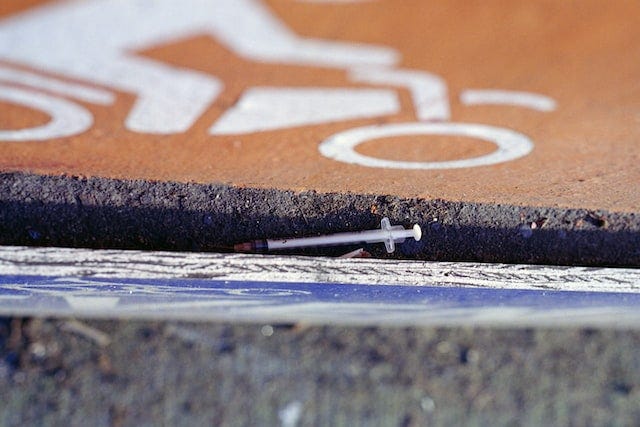
Ironically, some critics allege Chinese manufacturers are running a 21st drug trade with eerie similarities to the British East India Company’s opium business. To elaborate, the critics allege Chinese companies manufacture fentanyl, a powerful synthetic opioid (opium-type drug) and sell it to Mexican cartels who smuggle the drug into the United States.
“99% of the fentanyl is coming from precursor drugs from China, and then it’s manufactured by two cartels, the Jalisco and Sinaloa Cartels, and they’re the ones that are bringing it across the border,” US Representative David Trone (D-Maryland) alleges.
Tellingly, popular American street names for fentanyl include “China White,” “China Town,” and “China Girl,” the US Drug Enforcement Administration (DEA) reports. The number of US drug overdose deaths rose from 70,630 in 2019 to 106,699 in 2021, the National Institute on Drug Abuse estimates. Observers blame fentanyl, which is 50 to 100 times stronger than morphine, for the increase.
The British East India Company is long gone. Parliament dissolved the company on 1 June 1874. However, the Company’s deadly legacy of an organized international drug trade that monetizes addiction plagues the world to this day.
*See The Soong Dynasty by Sterling Seagrave for details of Chiang’s entanglements with the Green Gang and the Opium Trade.


