
The Dark History of Nutmeg: How the Dutch East India Company Waged War for Profit
The dark history of the nutmeg trade: how the VOC committed atrocities in pursuit of profit on the Banda Islands.
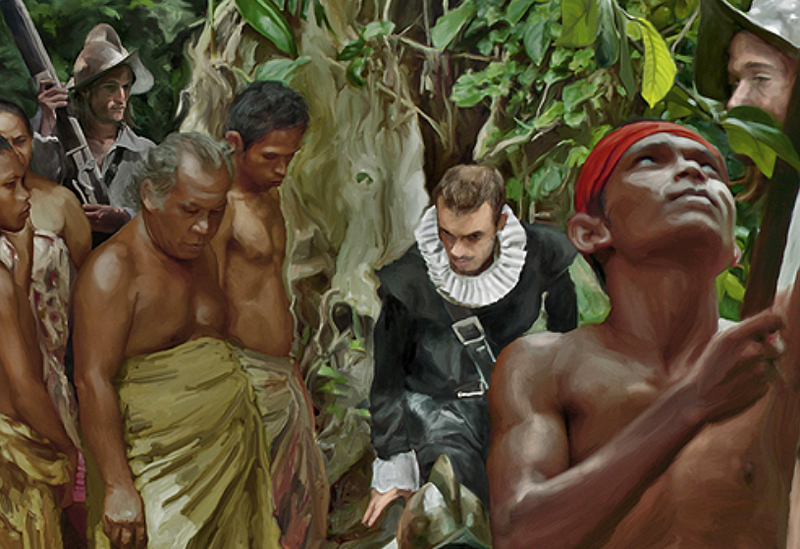
Once upon a time, in the 17th century, nutmeg was the spice that ruled the world. This exotic spice, native to the Banda Islands, had captured the world’s imagination. The Dutch East India Company (VOC) saw an opportunity to capitalize on the spice and unleashed the full force of their economic power to take control of the nutmeg trade.
Unleashing the Power of Nutmeg
The VOC had a well-oiled machine in place to extract the maximum value from their monopoly on the spice. They used their military might to control the production of nutmeg and ensured that the price of the spice remained high. They even went as far as burning nutmeg trees on nearby islands to limit the spice supply.
The VOC was one of the most profitable companies in history, and their control over nutmeg was a significant reason for their success. However, their monopoly came at a devastating cost.
The Dark Side of Unchecked Economic Power
The Banda Islands, nestled in the eastern part of the Indonesian archipelago, were once the center of the nutmeg trade. The fragrant spice had long been coveted for its medicinal and culinary properties and was highly sought after in Europe.
In the early 17th century, the Dutch East India Company (VOC) arrived on the Banda Islands, seeking to establish a monopoly on nutmeg. The VOC saw the potential for vast profits in controlling the nutmeg trade, and they were determined to eliminate any competition.
The local population of the Banda Islands had been growing nutmeg for generations. They were deeply connected to the land and relied on the nutmeg trade for their livelihood. However, the VOC saw them as a potential threat to their monopoly.
The VOC’s first order of business was to forcibly remove as many people as possible from the island. Families were torn apart, and people were forced onto ships, taken to other parts of Indonesia, or sold into slavery. Those who remained were subjected to unspeakable atrocities.
The VOC began a brutal campaign of violence against the local population. They killed thousands of innocent people, leaving the island littered with bodies. They even went as far as to enslave the people of the Banda Islands and use them to produce nutmeg.
The enslaved population was forced to work in nutmeg plantations under inhumane conditions. They were subjected to long hours of hard labor, often without adequate food or water. As a result, many died from exhaustion or disease, and those who survived were left with physical and emotional scars that would last a lifetime.
The VOC’s actions were nothing short of barbaric. They were driven by their desire for profit and power and were willing to do whatever it took to achieve their goals. They showed a complete disregard for human life and the suffering of the local population.
The VOC’s ruthless pursuit of profit had devastating consequences for the Banda Islands. The local people were forced to endure unspeakable atrocities, leaving them traumatized and their communities devastated.
The Legacy of the VOC
The story of the Dutch East India Company and its monopoly on nutmeg is a horrifying reminder of the dark side of unchecked economic power. The VOC’s pursuit of profit led to the commission of unspeakable atrocities, and their legacy is one of devastation and loss.
The VOC’s actions may seem like a distant memory, but the lessons from history are still relevant today. Pursuing profit and power can lead to terrible acts, and it’s essential to be aware of the consequences of our actions.
It wasn’t until the mid-19th century that the Dutch government abolished the VOC’s monopoly on nutmeg, and the local population finally regained control of their land and livelihoods.
Today, the Banda Islands are a popular tourist destination, and nutmeg remains an integral part of their economy. However, the scars of the VOC’s brutality still linger, and it’s a reminder of the legacy of colonialism and unchecked economic power that continues to affect many parts of the world today.
References & Further Reading:
- Giles Milton, Nathaniel’s Nutmeg: How One Man’s Courage Changed the Course of History (New York: Penguin Books, 2000).
- Willard A. Hanna, Indonesian Banda: Colonialism and Its Aftermath in the Nutmeg Islands (Yale University Press, 1991).
- Heather Dalton, “The Dutch East India Company and the Violence of Natural Monopoly in the Banda Islands,” Journal of World History 24, no. 1 (2013): 1–24.
- Ian Burnet, Spice Islands: The History, Romance and Adventure of the Spice Trade over 2000 Years (Melbourne: Rosenberg Publishing, 2011).
- Timothy Brook, Vermeer’s Hat: The Seventeenth Century and the Dawn of the Global World (New York: Bloomsbury Press, 2008).


