
The Brexit Impact: Football Edition

Right, so Brexit has finally happened, over three years after the referendum on whether the United Kingdom should remain in the European Union showed 52 per cent of voters wanted the UK to leave. There is so much debate even today about the benefits and costs of Brexit. But why do you want to talk about the effects of the same on football?
Well, I thought it would be interesting to see how something as major as Brexit affects something that not many would think of. Even sports is not free from the overarching changes that Brexit would bring.
Okay then, tell me about it.
Let us rewind back a decade. Yours truly was a cricket fanatic, often using the limited internet back in the late 2000’s to scour the depths of Cricinfo for obscure facts. This was the time when the Fab Four (Tendulkar-Dravid-Ganguly-Laxman) were slowly making way for the swashbuckling youth, led by Mahendra Singh Dhoni who showed that Indian cricket was more than just the Mumbai cricketing circuit. One fine day in 2010, my dad bought me a black T-Shirt with ‘Fly Emirates’ on the back and with the name ‘Henry’ printed on the back of it. Of course, I had no idea what it was, nor did my dad.
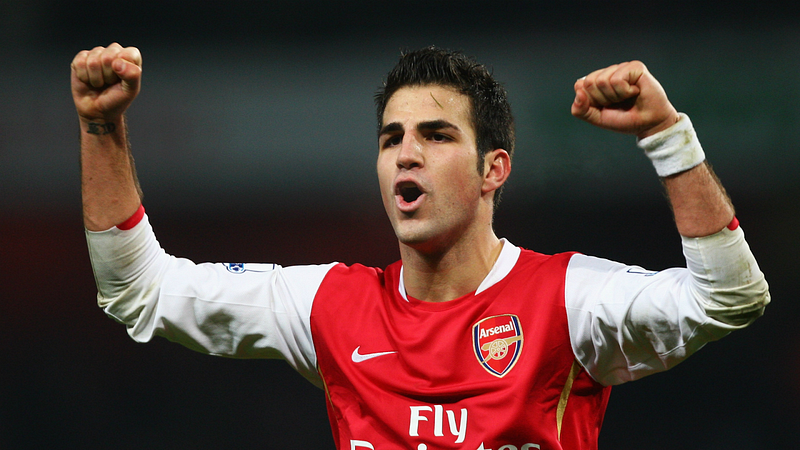
But 2010 was the year of South Africa’s biggest spectacle they got to host, the FIFA World Cup. With great matchups, goals, vuvuzelas reverberating across the globe, everyone was in the football spirit, and Kerala was no different. That whole month in school was filled with fun activities, posters, prediction games and discussions during recess, all making me love the beautiful game. After Spain lifted their first World Cup, I knew I needed more of this game, but I didn’t know who to support. But one day, I noticed that on my ‘T-Shirt’, there was a badge which had a cannon, and the word ‘Arsenal’. After a few searches on Google and some pondering, I picked Arsenal FC as the team I would support.
There was a lot of love about the team. The manager then (Arsene Wenger) was the embodiment of class, staying classy as a club whilst playing attractive, easy on the eye football. The orchestrator of some amazing footballing moments back then? Cesc Fabregas. While I only got to see him in action for one season, he was one of the most mesmerizing players I would have the pleasure of watching.
So what is the point of telling you all this? Why are you making it about yourself? Isn’t this about Brexit and it’s effect on football amongst other areas of British society?
My bad…I just wanted to keep you hooked onto the actual matter at hand!
Well, the English Football Association recently introduced a new set of rules, which would prevent a future Cesc Fabregas from ever happening, along with Brexit rules that would not allow European footballers to freely join English teams.
Excuse me, I don’t know anything about football. What exactly are you talking about?
Cesc Fabregas is a Spanish footballer, who was signed at the age of 16 by Arsenal (based in London, England) from his hometown club FC Barcelona (Barcelona, Spain) in 2004.
Wait, that club with the Messi guy?
Yes, and in fact he also could have joined Arsenal at that age. Back then, the United Kingdom was still in the European Union, and one of the major aims of the EU was to allow mobility of citizens across Europe to work where they want to do so, allowing for exchange of ideas and information. We see this in the great advancement of various fields, including the sciences (remember CERN and the Large Hadron Collider?). But it also equally applies to sport, and this gave Fabregas the chance to showcase his skills in a top club that would give him the opportunity to do so.
Right, so what do you mean when you say another Fabregas cannot happen?
As I mentioned, with Britain’s exit from the EU confirmed, they have decided to tighten regulations with regards to bringing players from across the world, and at various age levels as well. You need to keep in mind that the Premier League (English football’s top league) is known for multiculturalism with 113 nations having been represented in the world’s most watched football league over the last 30 years. The PL established it as a force to reckon with globally, due to strong viewership across the world, even in countries like China and India who have had limited presence in terms of players. (India has yet to have a player play in the PL, although the legendary Bhaichung Bhutia turned up for a lower league team, Bury FC).

Now, to buy a player out of their contract with another team or sign them on a new contract, said player must fulfill various criteria to ply their trade in England. To explain it with some examples, if you are from a lower ranked country (as per FIFA), even if you are the star player you aren’t guaranteed a permit to play in England. So India’s captain Sunil Chettri would not really fulfill the criteria despite having scored 70 plus goals for India (in fact, his application to join Queens Park Rangers was rejected in 2009).
Now, if you don’t have an international appearance and pledge your allegiance to top nations like Spain and Brazil, where talented footballers are present in abundance, you still have to be playing in a ‘top league’ for a ‘top team’. Based on the points you accumulate based on your previous club and your nation, you will need to clear a threshold to be allowed to play in England.
But what’s the problem? Isn’t it a good thing that they only allow the best to play for their clubs??
The problem is we try to bring in objective criteria to decide a player’s talent. We know that we can’t fulfill everything in the box yet we can still be good. I bring to you the example of a French footballer called N’golo Kante, amongst many others.
He was signed by Leicester City in 2015, from a lower French team by the name of Caen. He had no appearances for his national team, and was coming from a league which would not get him many points if he was to apply today. Yet he delivered one of the most fantastic seasons from midfield, turning Leicester from a team which would finish in the lower part of a table with 20 teams, to the best team in England in 2016, beating famous and world renowned teams like Liverpool and Manchester United.
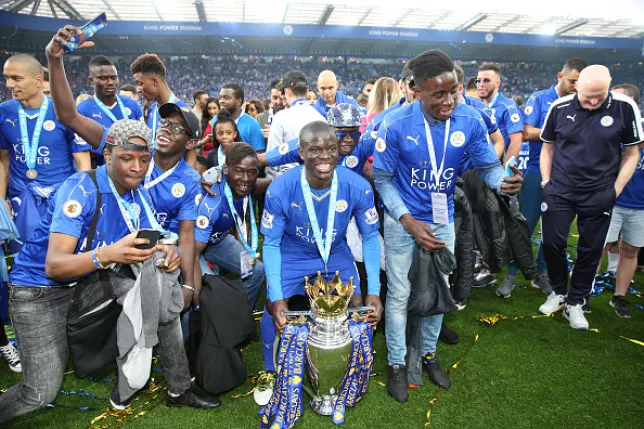
He also went on to achieve great things when he joined the reputed Chelsea FC and won the World Cup with France in 2018. This would never have happened if he stayed in France, and a team in England had not recognized what he was truly capable of.
Wait, where does Fabregas come in this? And why should the English bother about someone from France or any other country?
Oh yes, I forgot to mention. Now clubs in England can only sign up to six players from ages 18–21 and cannot buy anyone if they are below 18. (The latter would not apply to European players in the EU). You would recall Fabregas was 16 when he started playing for Arsenal - that does not happen now.
And yes, you might think that - what is in it for an English team to invest in French talent. But that’s not how it works for football clubs - yes, they would want locals who represent their club values to play regularly for them. But the football system is cruel to clubs participating - if you play badly in one year, you are kicked out of a higher league to a lower league. This is not the IPL where you can finish last every year and still come the next year to lose again (talking about you, Royal Challengers Bangalore).
If you don’t manage your club well, you could go deep into the footballing pyramid - there are hundreds of football clubs across England who dream to be in the top twenty of the Premier League. And to do that, you need the best players you can get. When you are at that stage, you don’t care where they come from as long as they get the job done. At times, it is less expensive to sign foreign players of the same talent or in some cases, more talent than their English counterpart - lending teams like Leicester City an advantage by smartly scouting good talent on the cheap before they hit their form and become out of their price range.
So shouldn’t they just develop their own players? Look at how Indian sports teams have to play our own mandatorily!
Well, good argument but there is some context missing. Let me fill in the gaps.
Yes, the top Indian T20 cricket league, Indian Premier League, enforces the rule of 7 Indians on the field during matches. This ensures Indians get to play with some of the best in the country, and across the world. Yet, there is no restriction on selecting players for the franchise. Anyone who feels they are up for it can apply to be part of the auction, and if you are talented and lucky enough, you will get your chance. No eligibility criteria for foreigners, just that there is a limit on how many are there in the team and the squad.
And the IPL doesn’t ‘produce’ players in the same sense that football clubs have academies to hone the player’s skills. They rely on Indian cricket’s vast structure of bringing through players, of which the highest level is playing for your state in various competitions across the different formats of cricket.
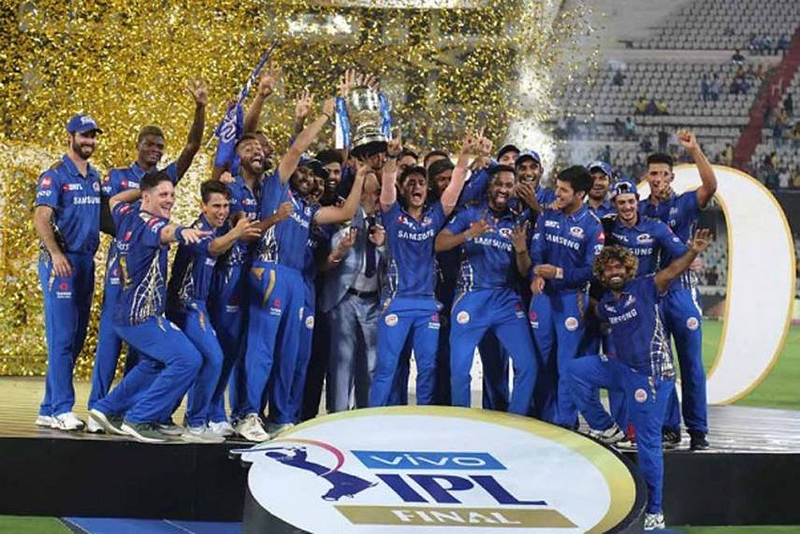
IPL teams, more often than not, send scouts to games to identify the raw talent, and while there is some development done whilst training with world class athletes, they don’t really rely on building a player’s skills in their formative years. With money on the line, IPL franchises focus on building a roster of players who can deliver in the moment and player development is not prioritized, due to alternative leagues and levels which provide the same for IPL teams as well as the Indian cricket team. Mumbai Indians are a good example, having scouted many quality players in India and across the world, without having to go after established, yet expensive stars. The Pandya brothers and Jasprit Bumrah come to mind, amongst other players.
Even for India’s newly crowned football top league, ISL (Indian Super League), the move to have 7 Indian footballers in the team lineup is partly induced by the Asian Football Confederation ensuring that local players do get their chance for the teams in their own countries.
Hold on, why doesn’t that apply to English football then? Shouldn’t English footballers get to play for their local teams?
The difference is that England already has a long and established footballing culture, while football is still not the major sport for most of Asia. To ensure popularity of the games amongst locals, as well as ensuring that aspiring footballers stick around and are able to have a viable career - there is a need for more local footballers. So that’s why Asian teams are supposed to have four foreigners, of which one must be from another Asian nation.
But there’s already concerns about whether this move is over-corrective in the sense the local players do not get to play at a high enough level, with most of the top Asian footballers often moving to Europe (higher standard plus better pay), so in the same vein, denying the best talents of England a chance to play with and against the best actually prevents the talented ones from fulfilling their potential.
Think of the liberalization of the Indian economy in 1991. Until that time, there was a strong government control over major industries, with the government dictating who can produce what, and in how many quantities, stifling innovation and leading to major corruption (famously referred to as ‘License Raj’). But after 1991, with the economy being freed up and bringing in foreign companies as competition, it led to the catalyst for many innovative businesses to take advantage of the relaxed rules and boost the Indian economy, raising the standards of living in India and bringing India’s growth on par with the major economies. So, if anything, competition is a catalyst to bring out the best within local talent.
But like you said with respect to Indian sport, shouldn’t English football players get a satisfying career?
Again, the Premier League isn’t the end and be all in England. There are leagues below which offer differing amounts of pay, but due to the rich culture of English football, there are many professional football clubs with history and culture reflecting that of their communities, so the money gained by the PL trickles down the lower leagues, enabling clubs to offer good enough pay to those who may not be the best but can make a career out of it. And of course, there is the option of moving to other countries…but of course now it’s harder since they cannot utilize the free movement within the EU to play in other top leagues in Spain, Germany and Italy.

In Spain and Italy, there are restrictions on non-EU players - with Spain only permitting three non European Union players in a 25 man squad. Many South Americans circumvent this rule by getting EU passports - Lionel Messi has a Spanish passport having stayed in Barcelona for many years, and Luis Suarez has an Italian passport through his wife, amongst others. But English players are less likely to have this, and this would impact the recent movement of English players out of England (Jadon Sancho playing in Germany being the most notable).
I still don’t get the idea that a country which literally invented football, should have enough people good at it…so why are there people complaining about it!
Another thing here which I have not mentioned is this - now that clubs cannot sign players from outside the country till they are 18, they will inevitably start looking from within the country, which seems like a good thing till you realize that the richest clubs in the country will have dibs on anyone with a remote chance of making it to the top. With the enticing money and opportunity to use the best facilities of the country, many youngsters will try their shot at the big club, leaving the less rich clubs with less talent to utilize.

A really good example here would be England forward Raheem Sterling. Now playing for Manchester City, he first made his claim for fame by rising through the academy of Liverpool FC and starring for the main team. But until the age of 15, he spent his formative years learning the basics of football at London based Queen’s Park Rangers. Liverpool were able to entice him to join them and QPR got 450,000 pounds in compensation for letting him join Liverpool. He went on to join Manchester City after playing a starring role for Liverpool, with the team netting 44 million pounds, almost 100 times what QPR got for him.
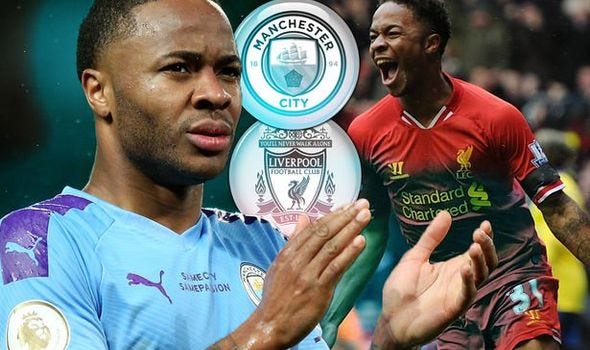
The key point here is that for Liverpool, the amount they initially paid for Sterling (yes, not euro or pounds) is a low risk investment for someone who may or may not prove to be worth spending on. Many smaller clubs cannot afford to spend that amount on paying players competitive wages and the big clubs hover up the best talent available, leaving the rest with scraps to feed off. And with Brexit not allowing them to look elsewhere, rest assured the big boys will go after anyone in the British Isles who could be good enough - and the smaller teams who have smart scouts cannot find talent outside of Britain to bring in.
And of course, the big clubs don’t use the talents they have, looking for ready made players in a bid to achieve their goals and bring in revenue - so many of them who could have developed faster at a smaller club, stagnate and do not reach their level - or worse, fall out of the game for alternative careers. For every Raheem Sterling, there are dozens of players hyped to be the next big thing but could not make it to the big leagues. For them, maybe going to a lower level team and getting exposure would be better than chasing the big pay-day Man United and Liverpool would offer.
So, in a way, the proposed changes for the ‘betterment of English football’ might not work out the way it was intended to.
Right…so it is clear that the people who backed Brexit didn’t think things through…
Well, that is true for many aspects of English life that Brexit would have an impact on…but that’s a story for another day.
____________________
Addendum: It would be remiss not to mention another aspect of the new rules - it would actually prevent many young footballers from other nations to move to England. Whilst I have raised the example of Cesc Fabregas as someone from abroad who came in at a young age and succeeded, many other youngsters have come to England from other nations (most notably the Netherlands, who have witnessed a talent drain) and struggled to adapt to English football.
Many of them are driven by agents and parents who encourage their wards to take the financially prudent step (even young players get really good contracts with the rich clubs which could set them for life) instead of staying back and developing in their home country and have a more stable footballing career. So in a way, there is a bit of silver lining in some respect.
Read more
We are now on LinkedIn! Do follow us there!
Follow us on Medium for more for International events, news, MUN tips and tricks, and detailed analysis. Get in touch with us on Social media to stay in the loop -
Facebook| Instagram|Telegram Channel |YouTube|Twitter|LinkedIn.
We also invite guest writers to publish their material via this blog!
Interested in writing for MUNner’s Daily? Go right ahead and fill out this form. We will get back to you soon!