
Election Propaganda — The Art of People Manipulation
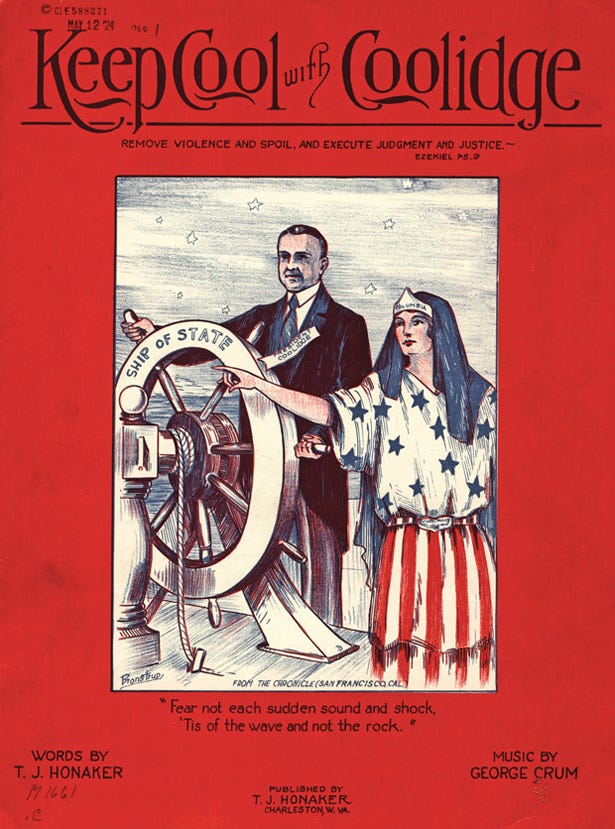
Election Propaganda
Every activity has a strategy, planning on how to move forward. Sometimes it is not always the skill or goodness that matters, it is the amount of perfection of the generated plan. Every election campaign has its agenda and politics has now shifted its definition from people service to people manipulation. Election propaganda can be used to enhance the truth as well as to hide the truth. Let us see how a few leaders using their power of expression and experience convinces billions of people to vote for (or against) them.
What is propaganda?
Propaganda is such a manipulative word. It can be used in different contexts, but in political situations, all the meanings will lead to a simple conclusion, ‘to convince people’. Whether to convince them about the right or the wrong, that is up to the politicians.
“Propaganda is communication that is primarily used to influence an audience and further an agenda, which may not be objective and may be selectively presenting facts to encourage a particular synthesis or perception, or using loaded language to produce an emotional rather than a rational response to the information that is being presented.”
History
The evidence of propaganda in politics dates back to ages. The Behistun Inscription (c. 515 BC) detailing the rise of Darius I to the Persian throne is one of the early examples of propaganda. Another example during ancient history is the last Roman civil wars (44–30 BC) during which Octavian and Mark Antony blamed each other for obscure and degrading origins, cruelty, cowardice, oratorical and literary incompetence, debaucheries, luxury, drunkenness, and other slanders. This defamation took the form of uituperatio (Roman rhetorical genre of the invective) which was decisive for shaping the Roman public opinion at this time. Another early example of propaganda was from Genghis Khan. The emperor would send some of his men ahead of his army to spread rumors to the enemy. In most cases, his army was smaller than some of his opponents.
Goebbels technique
Nothing better than the theory of Dr. Joseph Goebbels (propaganda minister of Hitler’s Third Reich) to understand the impact of mouth to mouth communication in a society. He was recognized as a master of propaganda, as his work was studied after WWII. Goebbels did not survive to enjoy the recognition; he and his wife committed suicide on 1 May 1945, a week before the final collapse of the Third Reich of Hitler.
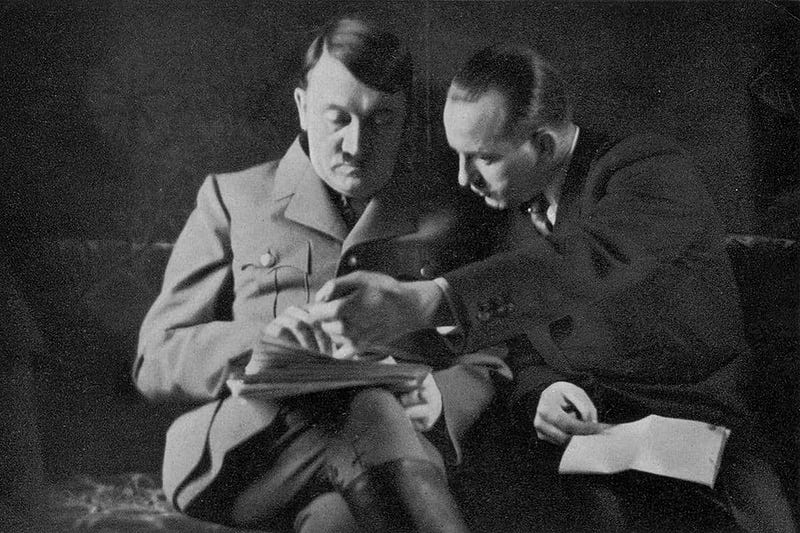
Goebbels mentions propaganda as a way to see through the masses. Symbols are used towards propaganda such as justice, liberty, and one’s devotion to one country. World War II saw continued use of propaganda as a weapon of war, building on the experience of WWI, by Goebbels and the British Political Warfare Executive, as well as the United States Office of War Information.
Goebbel’s Principles of Propaganda are:
- Propagandists must have access to intelligence concerning events and public opinion.
- Propaganda must be planned and executed by only one authority.
- The Propaganda consequences of an action must be considered in planning that action.
- Propaganda must affect the enemy’s policy and actions.
- Declassified, operational information must be available to implement a propaganda campaign.
- To be perceived, propaganda must evoke the interest of an audience and must be transmitted through an attention-getting medium.
- Credibility alone must determine whether propaganda output should be true or false.
- The purpose, content, and effectiveness of enemy propaganda; the strength and effects of an expose’; and the nature of current propaganda campaigns determine whether enemy propaganda should be ignored or refuted.
- Credibility, intelligence, and the possible effects of communicating determine whether propaganda materials should be censored.
- Material from enemy propaganda may be utilized in operations when it helps diminish that enemy’s prestige or lends support to the propagandist’s objective.
- Black rather than white propaganda must be employed when the latter is less credible or produces undesirable effects.
- Propaganda may be facilitated by leaders with prestige.
- Propaganda must be carefully timed.
- Propaganda must label events and people with distinctive phrases or slogans.
- Propaganda to the home front must prevent the raising of false hopes which can be blasted by future events.
- Propaganda to the home front must create an optimum anxiety level.
- Propaganda to the home front must diminish the impact of frustration.
- Propaganda must facilitate the displacement of aggression by specifying the targets for hatred.
- Propaganda cannot immediately affect strong counter-tendencies; instead, it must offer some form of action or diversion or both.
That was a pretty long list, but note, these strategies were applied during the time of war and involves issues that will not be raised otherwise.
Election Campaign Propaganda
Campaigns have changed over time through various forms. Digitalization proved to be a boon in reaching out to people through social media platforms. Before going further into the digitalized election propaganda, let us see some major types of propaganda used by politicians.
- Stack the deck
The idiom usually means arranging a particular situation in your favor or someone uses it against your favor. In politics, the technique uses all the information in favor of a candidate hiding everything negative about him/her.
The campaign video released by Barack Obama mentioning all his accomplishments of the reign leaving out every negative aspect.
2. Testimonials and endorsements
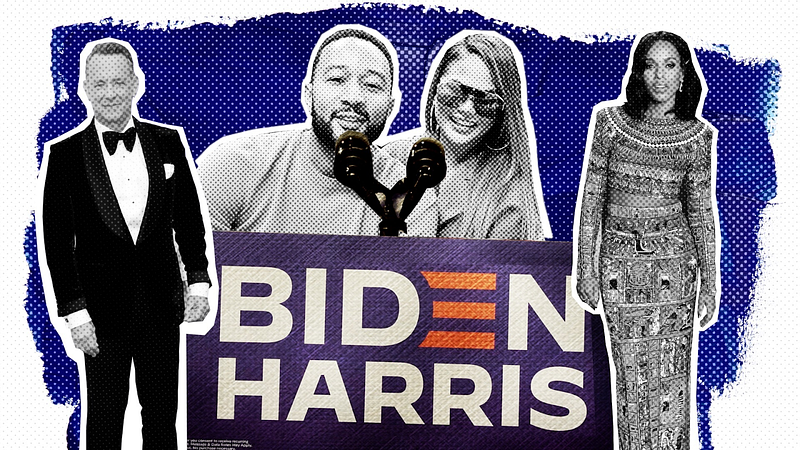
It is the process where a well-known person supports the candidate and his ideologies. Celebrity political endorsements are always a good idea for advertisements.
In the final days of the US presidential elections, many of the country’s most famous voters lined up to support President-elect Joe Biden and his Vice President-elect Kamala Harris. Taylor Swift, Madonna, Cardi B, Tom Hanks, and George Clooney, all threw their support behind the Democratic ticket.
3. Plain Folks
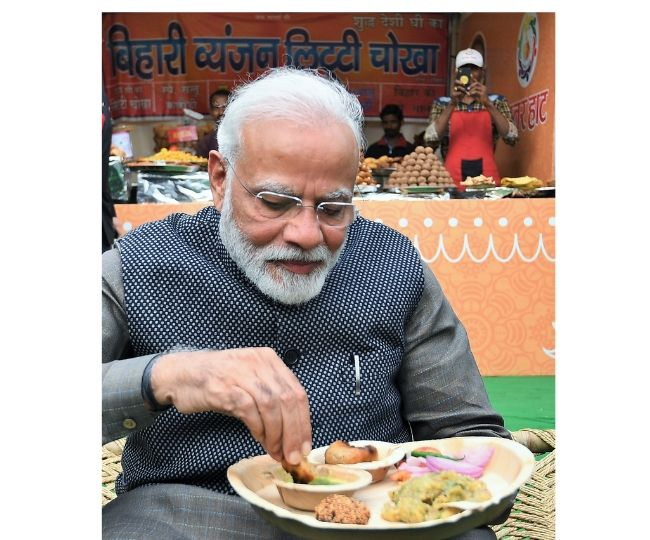
By using the plain-folks technique, the candidates attempt to convince their people that they, and their ideas, are “of the people.” They present themselves as common citizens and do common things like eating from a roadside pani puri vendor.
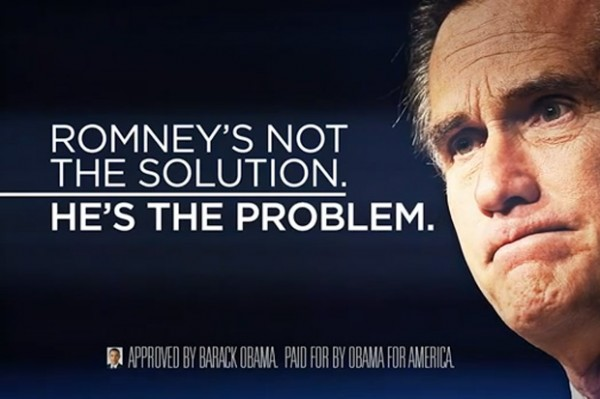
4. Negative attack ads
An attack ad is an advertisement whose message is designed to wage a personal attack against an opposing candidate or political party to gain support for the attacking candidate and attract voters. Attack ads often form part of negative campaigning or smear campaigns, and in large or well-financed campaigns, maybe disseminated via mass media.
5. Glittering Generalities
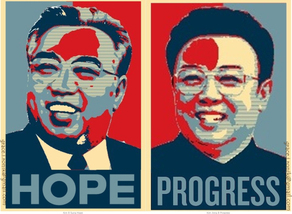
A glittering generality (also called glowing generality) is an emotionally appealing phrase so closely associated with highly valued concepts and beliefs that it carries conviction without supporting information or reason. Such highly valued concepts attract general approval and acclaim.
6. Guilt by association or coat-tailing
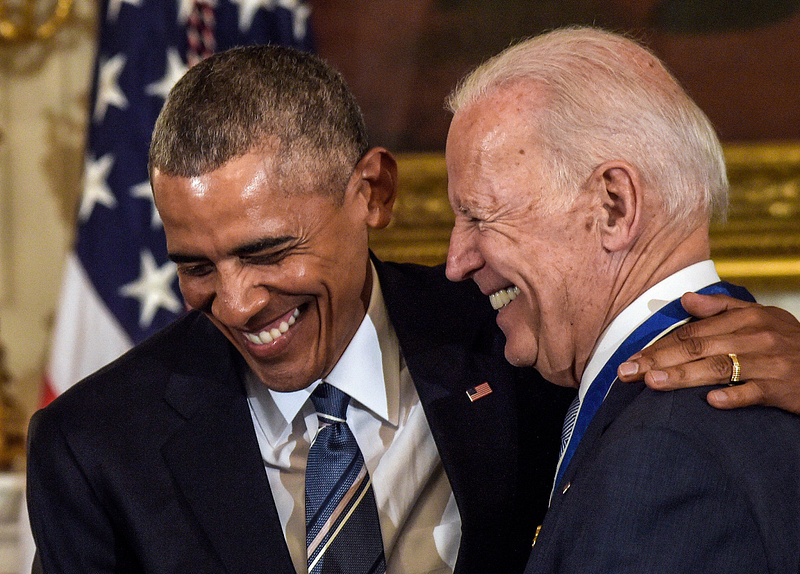
Guilt by association fallacy occurs when someone connects an opponent to a demonized group of people or a bad person to discredit his or her argument. The idea is that the person is “guilty” by simply being similar to this “bad” group and, therefore, should not be listened to about anything.
Coat-tailing is associating oneself with a popular person, event, or idea to look good.
Social Media Campaigning
All the above-said strategies can be applied through just one medium - that is social media, and it is the most effective and widely applicable. Sometimes a controversial tweet can influence a wider audience than an hours-long speech. If elaborated, the entire social media activation will amount to a full article. So let us brush up an outline here.
Fake News and Cyber Propaganda
Fake news is not always about the internet, as we have seen earlier, the manipulation techniques through glittering verses date back to ages and the internet is just a new method of doing that. New research by the Oxford Internet Institute has found that social media manipulation is getting worse, with rising numbers of governments and political parties making cynical use of social media algorithms, automation, and big data to manipulate public opinion at scale — with hugely worrying implications for democracy.
The report found that computational propaganda and social media manipulation have proliferated massively in recent years — now prevalent in more than double the number of countries (70) vs two years ago (28), an increase of 150%.
Fake news requires three different items to succeed. These collectively represent the Fake News Triangle: without any one of these factors, it is unable to spread and reach its target audience.
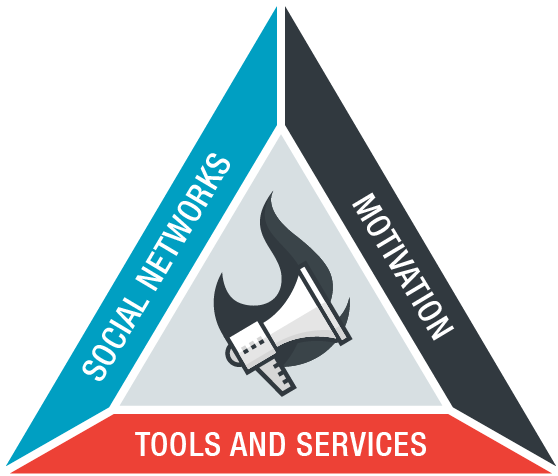
Tools and services for manipulating and spreading the message across relevant social media networks, many of which are sold in various online communities from across the globe. A wide variety of tools and services are available; some are relatively simple (paid likes/followers, etc.), while some are more unusual — some services promise to stuff online polls, while some force site owners to take down stories.
For these tools to be of any use, social networks have to exist as a platform for spreading propaganda. With people spending more time on these sites as a way to get the latest news and information, their importance in spreading fake news cannot be underestimated.
Propaganda campaigns always come with the question: why. We discuss the motivations behind fake news: sometimes it’s simply a desire for monetary gain via advertising. In other cases, the goals can vary from the criminal to the political. Regardless of the motive, the success of any propaganda campaign will ultimately be based on how much it affects the real world.
Every platform and ideology can be used for both good and bad. It is up to the politicians to decide what to show and what to hide from the people. As responsible citizens, it is our duty to remember that ‘all that glitters is not gold’. Dig deeper and find the truth about what you see, remember, the truth is not always what you see.
Read more
We are now on LinkedIn! Do follow us there!
Follow us on Medium for more for International events, news, MUN tips and tricks, and detailed analysis. Get in touch with us on Social media to stay in the loop -
Facebook| Instagram|Telegram Channel |YouTube|Twitter|LinkedIn.
We also invite guest writers to publish their material via this blog!