avatarPanos Grigorakakis

Free AI web copilot to create summaries, insights and extended knowledge, download it at here

3402

Abstract

amp;key=a19fcc184b9711e1b4764040d3dc5c07&type=text%2Fhtml&schema=giphy" allowfullscreen="" frameborder="0" height="229" width="435"> </div> </div> </figure></iframe></div></div></figure><blockquote id="4d29"><p>To find out more paleontological inaccuracies from the famous movie, check the article below:</p></blockquote><div id="06e6" class="link-block"> <a href="https://readmedium.com/top-things-jurassic-park-got-wrong-about-dinosaurs-96fe5c1bdd95"> <div> <div> <h2>Top Things Jurassic Park Got Wrong About Dinosaurs</h2> <div><h3>No way T. rex could have chased down that jeep if it was going at highway speeds…</h3></div> <div><p>medium.com</p></div> </div> <div> <div style="background-image: url(https://miro.readmedium.com/v2/resize:fit:320/1*idQBcdVMfhG9Aoaeu2K12Q.jpeg)"></div> </div> </div> </a> </div><h1 id="ae90">A powerful predator</h1><p id="fb02">Rather than a small dinosaur that relied on gimmicks to subdue its prey, Dilophosaurus was among the largest terrestrial predators to roam the planet 193 million years ago.</p><p id="114d">With an estimated length of 7m (23 ft) -about half the size of a full-grown T. rex -and a weight of over three-quarters of a ton, this carnivore was the apex predator of its ecosystem. Its jawbones show evidence of serving as scaffolding for powerful muscles, suggesting that<i> </i>Dilophosaurus would have been capable of taking down large prey.</p><p id="4d92">“Dilophosaurus is clearly built for being a big macropredator,” Marsh says. “It’s a large-bodied animal that was built for eating other animals.”</p><figure id="bbb6"><img src="https://cdn-images-1.readmedium.com/v2/resize:fit:800/1*OY2L32wRXQpL0i4HrovGuQ.jpeg"><figcaption>Dilophosaurus would have been capable of preying upon the massospondylian Sarahsaurus, a 4-meter-long (13 ft) sauropodomorph also known from the Kayenta Formation (chart by author, 2020).</figcaption></figure><h1 id="9c3b">What about the crest?</h1><p id="42dc">The most striking feature of Dilophosaurus is undoubtedly its crest. Despite being built of thin bone, it was reinforced with a honeycomb of air pockets that made it stronger.</p><p id="c2bb">Many birds today have thin air-filled bony crests connected to their sinuses. Their crests are covered in keratin, the same durable material that makes up their beaks. The keratinous covering may grow to any color and significantly enlarges the size of the animal’s crest in life.</p><figure id="0f2d"><img src="https://cdn-images-1.readmedium.com/v2/resize:fit:800/1*i8Nlo_fdMoE0oPcIg86h_A.jpeg"><figcaption>Dilophosaurus skull, Royal Tyrrell Museum. / Sebastian Bergmann / <a href="https://commons.wikimedia.org/wiki/File:Dilophosaurus_skull.jpg">Wikimedia Commons</a>.</figcaption></figure><p id="30b3">Birds use their crests for a variety of purposes, from interspecies communication and display to thermoregulation. The intricate array of air pockets and ducts that extend from Dilophosaurus’s sinus cavity into its crest suggest that the dinosaur may have been able to perform similar functions with its headgear.</p><figure id="5e3a"><img src="https://cdn-images-1.readmedium.com/v2/resize:fit:800/1*X-T_389lEQjG3ro0gbjigQ.jpeg"><figca

Options

ption>The impressive keratin crest of Rhinoceros hornbill. / Tom Murphy VII / <a href="https://commons.wikimedia.org/wiki/File:Rhinoceros_hornbill_national_aviary.jpg">Wikimedia Commons.</a></figcaption></figure><h1 id="05d4">A failed experiment?</h1><p id="9338">The Triassic-Jurassic mass extinction event that took place roughly <a href="https://readmedium.com/did-global-warming-trigger-the-evolution-of-giant-dinosaurs-2aaccabe0cdb">200 million years ago </a>wiped out most of the non-dinosaurian archosaurs, which until then assumed the apex predator role in their ecosystems.</p><p id="4f3a">Dilophosaurus together with other crested theropods such as Cryolophosaurus from Antarctica and Sinosaurus from China evolved right in the aftermath of the extinction event and quickly became the first truly large-sized predatory dinosaurs.</p><p id="840b">These species represent “a sudden increase in body size across the Triassic-Jurassic boundary, thought to coincide with the disappearance of large crocodile-line [predators],” says Peter Makovicky, a paleontologist at the University of Minnesota.</p><p id="e45f">“That top predator niche is up for grabs, and these crested dinosaurs seem to jump into it very quickly.”</p><p id="3f34">Yet, the reign of the crested theropods was brief in evolutionary terms — a few tens of millions of years. By the Middle Jurassic Period, they all had been replaced by more derived carnivorous dinosaurs.</p><p id="7f67">Head crests become much less common in later predatory dinosaurs, and perhaps there was a good reason behind it: theropods eventually developed feathers, which would have been more effective displays and less biologically expensive than bony crests.</p><figure id="ae55"><img src="https://cdn-images-1.readmedium.com/v2/resize:fit:800/1*mZGs8ZwJqvzhPgM8UITO3g.jpeg"><figcaption>Cryolophosaurus ellioti, an Early Jurassic crested theropod. / Hello!mrsax/<a href="https://commons.wikimedia.org/wiki/File:Cryolophosaurus_ellioti.png"> Wikimedia Commons</a>.</figcaption></figure><h1 id="2cd4">Epilogue</h1><p id="a272">Far from being the small, venomous creature we are familiar with in popular culture, Dilophosaurus was a powerful predator and one of the largest land animals living in North America 193 million years ago.</p><p id="f109">For paleontologists, this remarkable animal is a keystone species for their understanding of the evolution of theropods during the Early Jurassic Period.</p><h1 id="aba5">References</h1><p id="c917"><i>Adam D. Marsh & Timothy B. Rowe. 2020. A comprehensive anatomical and phylogenetic evaluation of Dilophosaurus wetherilli (Dinosauria, Theropoda) with descriptions of new specimens from the Kayenta Formation of northern Arizona. Journal of Paleontology 94, supplement S78: 1–103; doi: 10.1017/jpa.2020.14</i></p><p id="7c64"><i>Famous Jurassic Park Dinosaur Was More Powerful than Previously Thought, (Jul. 2020), Scinews, <b>Link:</b> <a href="http://www.sci-news.com/paleontology/dilophosaurus-wetherilli-08620.html">http://www.sci-news.com/paleontology/dilophosaurus-wetherilli-08620.html</a></i></p><p id="2346"><i>Brian Engh Paleoart (Sep. 2020), A Modern Look at Dilophosaurus, Youtube, <b>Link:</b> <a href="https://www.youtube.com/watch?v=y7jSOp2mr2s&amp;ab_channel=BRIANENGHPALEOART">https://www.youtube.com/watch?v=y7jSOp2mr2s&amp;ab_channel=BRIANENGHPALEOART</a></i></p></article></body>

The Best, Worst-Known Dinosaur of Pop Culture

Dilophosaurus made a memorable appearance in Jurassic Park. Unfortunately, it was a really inaccurate one…
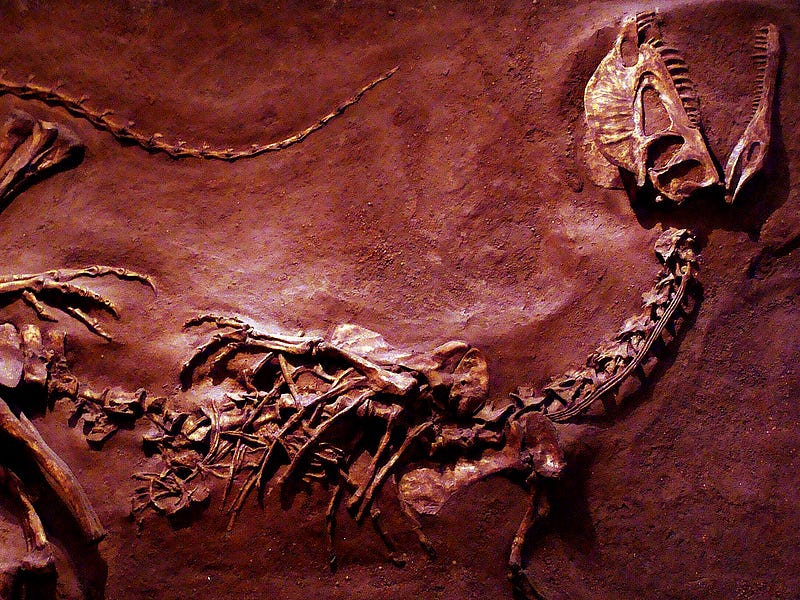
Dilophosaurus on display at the Royal Ontario Museum by Eduard Solà / Wikimedia Commons.

Its presence in the 1993 movie Jurassic Park cemented Dilophosaurus as a pop culture icon. Despite its memorable appearance in the film though, major aspects of this dinosaur’s anatomy and evolutionary relationships were until recently unknown.

New fossil discoveries and the most detailed study ever performed on Dilophosaurus yet produced the first clear picture of what the crested dinosaur actually looked like. Spoiler alert: it was nothing like the creature featured in the famous blockbuster.

“It’s pretty much the best, worst-known dinosaur. Until this study, nobody knew what Dilophosaurus wetherilli looked like or how it evolved,” said lead study author Dr. Adam Marsh, a paleontologist in the Jackson School of Geosciences at the University of Texas and Petrified Forest National Park.

An inaccurate portrayal

Paleontologists discovered the first Dilophosaurus remains in the Early Jurassic rocks of the Kayenta Formation in northern Arizona. Early scientific papers described it as having a fragile crest and weak jaws, traits that influenced the dinosaur’s depiction in popular culture. The animal was featured in Michael Crichton’s novel Jurassic Park (1990) and in the novel’s film adaptation by Steven Spielberg (1993).

To portray Dilophosaurus as a menacing predator despite its seemingly weak jaws, Crichton invented the dinosaur’s ability to spit venom. Spielberg was quick to incorporate this fictional trait into his movie adaption. The animal also sported a cowl folded against its neck that expanded and vibrated as the creature prepared to attack. To avoid confusion with the film’s Velociraptor, the makers of the movie portrayed Dilophosaurus as only 1.2 meters (4 ft) tall, a lot smaller than its actual size.

The movie’s Dilophosaurus was acknowledged as the “only serious departure from scientific veracity” in the Jurassic Park making-of book, and as the “most fictionalized” of the movie’s dinosaurs in a book about Stan Winston Studios, which created the animatronics effects.

To find out more paleontological inaccuracies from the famous movie, check the article below:

A powerful predator

Rather than a small dinosaur that relied on gimmicks to subdue its prey, Dilophosaurus was among the largest terrestrial predators to roam the planet 193 million years ago.

With an estimated length of 7m (23 ft) -about half the size of a full-grown T. rex -and a weight of over three-quarters of a ton, this carnivore was the apex predator of its ecosystem. Its jawbones show evidence of serving as scaffolding for powerful muscles, suggesting that Dilophosaurus would have been capable of taking down large prey.

“Dilophosaurus is clearly built for being a big macropredator,” Marsh says. “It’s a large-bodied animal that was built for eating other animals.”
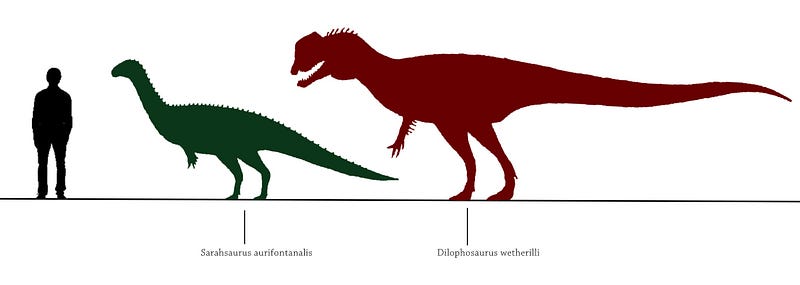
Dilophosaurus would have been capable of preying upon the massospondylian Sarahsaurus, a 4-meter-long (13 ft) sauropodomorph also known from the Kayenta Formation (chart by author, 2020).

What about the crest?

The most striking feature of Dilophosaurus is undoubtedly its crest. Despite being built of thin bone, it was reinforced with a honeycomb of air pockets that made it stronger.

Many birds today have thin air-filled bony crests connected to their sinuses. Their crests are covered in keratin, the same durable material that makes up their beaks. The keratinous covering may grow to any color and significantly enlarges the size of the animal’s crest in life.
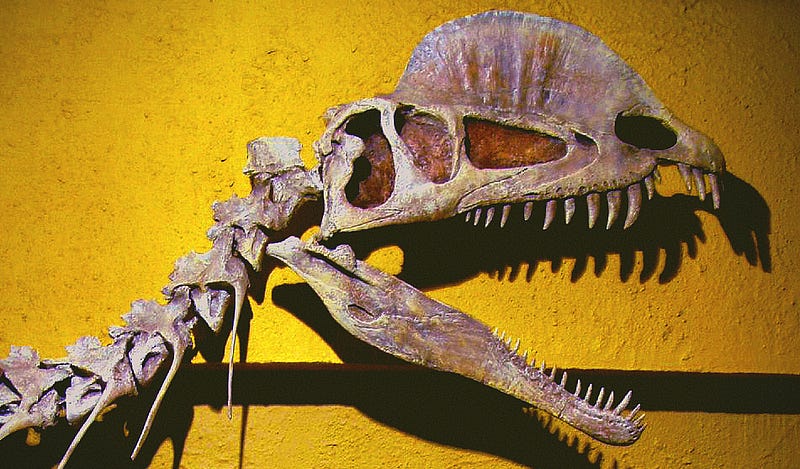
Dilophosaurus skull, Royal Tyrrell Museum. / Sebastian Bergmann / Wikimedia Commons.

Birds use their crests for a variety of purposes, from interspecies communication and display to thermoregulation. The intricate array of air pockets and ducts that extend from Dilophosaurus’s sinus cavity into its crest suggest that the dinosaur may have been able to perform similar functions with its headgear.
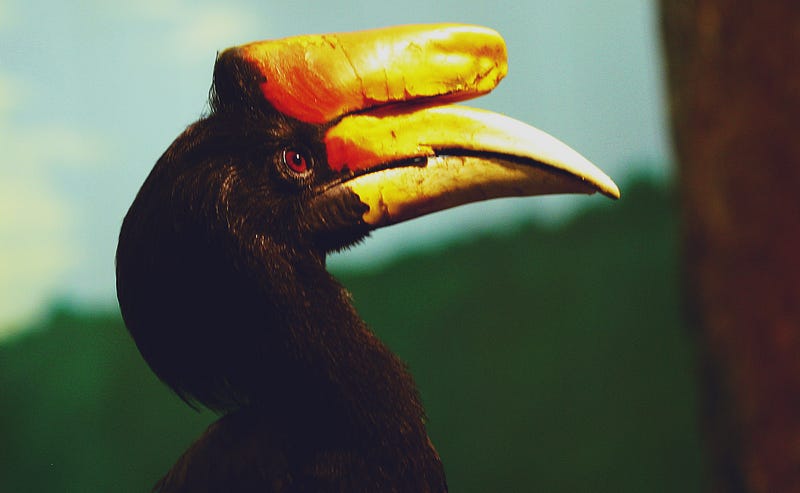
The impressive keratin crest of Rhinoceros hornbill. / Tom Murphy VII / Wikimedia Commons.

A failed experiment?

The Triassic-Jurassic mass extinction event that took place roughly 200 million years ago wiped out most of the non-dinosaurian archosaurs, which until then assumed the apex predator role in their ecosystems.

Dilophosaurus together with other crested theropods such as Cryolophosaurus from Antarctica and Sinosaurus from China evolved right in the aftermath of the extinction event and quickly became the first truly large-sized predatory dinosaurs.

These species represent “a sudden increase in body size across the Triassic-Jurassic boundary, thought to coincide with the disappearance of large crocodile-line [predators],” says Peter Makovicky, a paleontologist at the University of Minnesota.

“That top predator niche is up for grabs, and these crested dinosaurs seem to jump into it very quickly.”

Yet, the reign of the crested theropods was brief in evolutionary terms — a few tens of millions of years. By the Middle Jurassic Period, they all had been replaced by more derived carnivorous dinosaurs.

Head crests become much less common in later predatory dinosaurs, and perhaps there was a good reason behind it: theropods eventually developed feathers, which would have been more effective displays and less biologically expensive than bony crests.
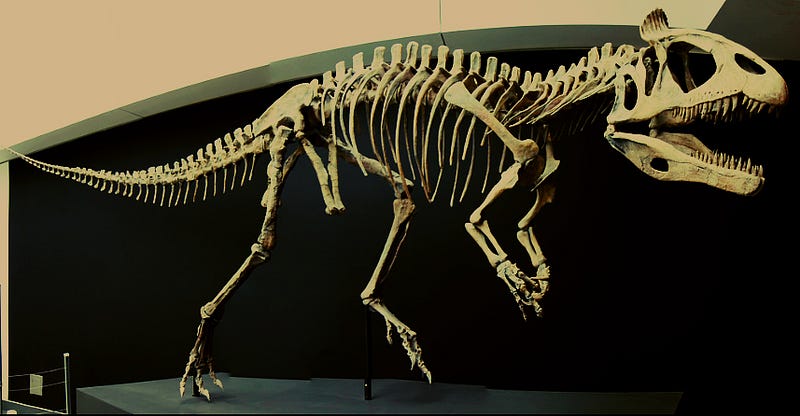
Cryolophosaurus ellioti, an Early Jurassic crested theropod. / Hello!mrsax/ Wikimedia Commons.

Epilogue

Far from being the small, venomous creature we are familiar with in popular culture, Dilophosaurus was a powerful predator and one of the largest land animals living in North America 193 million years ago.

For paleontologists, this remarkable animal is a keystone species for their understanding of the evolution of theropods during the Early Jurassic Period.

References

Adam D. Marsh & Timothy B. Rowe. 2020. A comprehensive anatomical and phylogenetic evaluation of Dilophosaurus wetherilli (Dinosauria, Theropoda) with descriptions of new specimens from the Kayenta Formation of northern Arizona. Journal of Paleontology 94, supplement S78: 1–103; doi: 10.1017/jpa.2020.14

Famous Jurassic Park Dinosaur Was More Powerful than Previously Thought, (Jul. 2020), Scinews, Link: http://www.sci-news.com/paleontology/dilophosaurus-wetherilli-08620.html

Brian Engh Paleoart (Sep. 2020), A Modern Look at Dilophosaurus, Youtube, Link: https://www.youtube.com/watch?v=y7jSOp2mr2s&ab_channel=BRIANENGHPALEOART

Jurassic Park
Dinosaurs
Paleontology
Pop Culture
Science
Recommended from ReadMedium