avatarKristin Wilson

Free AI web copilot to create summaries, insights and extended knowledge, download it at here

3446

Abstract

out of metropolitan areas due to high taxes and housing prices. Therefore, it’s no surprise that many of <a href="https://youtu.be/iaOyoMdj9is?t=131">the best cities</a> in Neighborhoods’ report landed in the income-tax-free states of Washington, Florida, Nevada, and Texas. As a location-independent digital nomad myself, I can live anywhere in the world. Yet I, too, have chosen to make Florida my home base — for its ideal climate, low cost-of-living, tax benefits, and to be near family.</p><h2 id="4a44">10 Best Cities for Freelancers</h2><ol><li>Spokane, WA</li><li>Vancouver, WA</li><li>Ft. Lauderdale, FL</li><li>Tempe, AZ</li><li>Scottsdale, AZ</li><li>Orlando, FL</li><li>Las Vegas, NV</li><li>San Antonio, TX</li><li>Hialeah, FL</li><li>Tampa, FL</li></ol><p id="5025">In the loser category, nearly half of the worst ranking cities turned up in California — a notoriously expensive and high-tax state.</p><h2 id="43b4">10 Worst Cities for Freelancers</h2><ol><li>Lexington, KY</li><li>Palmdale, CA</li><li>Port St. Lucie, FL</li><li>Jackson, MS</li><li>Memphis, TN</li><li>Corona, CA</li><li>Oceanside, CA</li><li>Worcester, MA</li><li>Santa Clarita, CA</li><li>Lincoln, NE</li></ol><h1 id="2b33">Where Do the Majority of U.S. Freelancers and Remote Workers Reside Today?</h1> <figure id="ec19"> <div> <div> <img class="ratio" src="http://placehold.it/16x9"> <iframe class="" src="https://cdn.embedly.com/widgets/media.html?src=https%3A%2F%2Fwww.youtube.com%2Fembed%2Fz2sKXQzHWbI%3Ffeature%3Doembed&amp;display_name=YouTube&amp;url=https%3A%2F%2Fwww.youtube.com%2Fwatch%3Fv%3Dz2sKXQzHWbI&amp;image=https%3A%2F%2Fi.ytimg.com%2Fvi%2Fz2sKXQzHWbI%2Fhqdefault.jpg&amp;key=a19fcc184b9711e1b4764040d3dc5c07&amp;type=text%2Fhtml&amp;schema=youtube" allowfullscreen="" frameborder="0" height="480" width="854"> </div> </div> </figure></iframe></div></div></figure><p id="b877">Using the same publicly-available Census data as Neighborhoods.com, Volusion researchers analyzed where the majority of America’s 8 million remote workers live. These are the <a href="https://www.volusion.com/blog/cities-with-the-most-remote-workers/">most popular small, medium, and large cities</a> in America with the highest concentrations of remote workers:</p><ul><li><b>Atlanta, Georgia, </b>is the most popular large city (defined as >350k people) for remote workers, with a remote population of <b>9.6%</b>.</li><li><b>Frisco, Texas, </b>is the most popular midsize city (population 150–350k) for remote workers, with a remote population of <b>14.7%</b>.</li><li><b>Highland Ranch, Colorado, </b>is the most popular small city (population 100–150k) for remote workers, with a remote population of <b>15.2%</b>.</li></ul><p id="5c88">The results from these studies are both enlightening and contrasting. However, we need more data. Fortunately, with growing international attention on the socio-economic implications of remote work, we should see a significant increase in both the volume and scope of such research in 2020 and beyond. It will be interesting to see what trends emerge regarding the lifestyles and habits of independent and remote workers, as well as remote employers.</p><p id="881c">What else is next for freelancers?</p><h1 id="509e">The Future of Freelancing</h1><p id="f7e8">Freelancers are set to outnumber salaried employees by 2027

Options

— upwards of 90 million people, according to <a href="https://www.upwork.com/press/2017/10/17/freelancing-in-america-2017/">Upwork</a>. As such, the competition to attract independent workers is heating up. At least three cities and states now offer <a href="https://youtu.be/7aTbViTWq30">10,000 incentive</a>s through their remote worker grant programs: Vermont, Oklahoma, and Nebraska.</p><div id="2a37" class="link-block"> <a href="https://readmedium.com/can-remote-work-programs-save-the-economy-749eaab7eb4b"> <div> <div> <h2>Can Remote Work Programs Save the Economy?</h2> <div><h3>A possible antidote to the “Amazon Effect” on U.S. job creation</h3></div> <div><p>medium.com</p></div> </div> <div> <div style="background-image: url(https://miro.readmedium.com/v2/resize:fit:320/0*lL1schgAFrP_Zvkc)"></div> </div> </div> </a> </div><p id="8b95">Likewise, in the race to retain top talent, expect an increasing number of companies to offer remote work incentives. In one example, <a href="https://readmedium.com/530c4c926670">Zapier’s</a> <a href="https://readmedium.com/should-tech-companies-offer-employee-de-location-packages-a4f2b3b3e27f">10,000 de-location policy</a> pays employees to move wherever they want.</p><p id="ef44">A company called <a href="https://workonmainstreet.com/">MainStreet</a> is also capitalizing on the widespread adoption of flexible work. In 2019, they announced a program to <a href="https://youtu.be/7aTbViTWq30">match skilled workers with remote job</a>s across the country — plus pay them a $10,000 bonus after the first year.</p><h1 id="ca66">The Big Takeaway Here</h1><p id="c383">What this all means is, the members of the youngest workforce demographic have <i>skills</i> and <i>leverage:</i></p><ul><li>Embrace this reality in your remote job search or in setting your freelance rates.</li><li>Don’t settle for less than you’re worth. Negotiate your terms with confidence.</li><li>Rather than struggle to convince an employer or client of your value, go where it’s already recognized. Oh yeah, and, live wherever you want.</li></ul><h1 id="635d">Relocation Resources</h1><p id="68b2">The Neighborhoods and Volusion studies make a good starting point for anyone thinking about relocating. But, before deciding to move somewhere, you’ll also want to consider factors like climate, lifestyle preferences, family needs, industry, client locations, co-working space availability, local community, and market opportunities.</p><p id="703e">If you’re one of the millions of independent or remote workers out there, here are some resources for researching the cost-of-living and quality-of-life in cities across the nation:</p><ul><li><a href="https://www.expatistan.com/cost-of-living/index/north-america">Expatistan North America Cost of Living Map</a></li><li><a href="https://www.numbeo.com/quality-of-life/rankings.jsp">Numbeo City Quality of Life Index</a></li><li><a href="https://www.nestpick.com/neighbourhood-price-index-usa-2019/">NestPick Neighborhood Price Index</a></li><li><a href="https://nomadlist.com/search/united-states">NomadList City Rankings & Analysis</a></li></ul><p id="88cd">Are you a flexible worker planning to move in 2020? Where would you go and why? Let us know in the comments.</p></article></body>

The Best Cities for Freelancers in 2020

Where you should go, and why
Kristin Wilson, Amsterdam.

No longer just a side hustle, freelancing is now a long-term way of life for more than 53% of GenZ workers and 40% of Millennials. And, out of the 57 million freelancers in America, more than half say they’ll never trade their freedom for a traditional job again — regardless of salary potential. It comes as no surprise, then, that — with complete control over where and when they work — 7 in 10 freelancers want to move somewhere new.

With the ability to work online from anywhere these days, if moving to a tech hub to pay $5,000/month in rent seems crazy to you — it’s because it is. But, while flying to Cambodia to live on $800/month might look good on paper, living abroad isn’t realistic for everyone. The good news is, a lower cost of living and higher quality of life are available throughout the good ‘ol U.S. of A.

So, where should you go? Although the number of freelancers and remote workers across the U.S. is exploding, there’s still scant data on who and where they are — leading private organizations to conduct their own independent research.

Neighborhoods.com is one such example, coming up with a list of the ten best and worst cities in America for workers in the gig economy. In a separate study, an Austin-based eCommerce startup, Volusion, uncovered the most popular large, midsize, and small cities throughout the country with the biggest populations of remote workers. Here are the results:
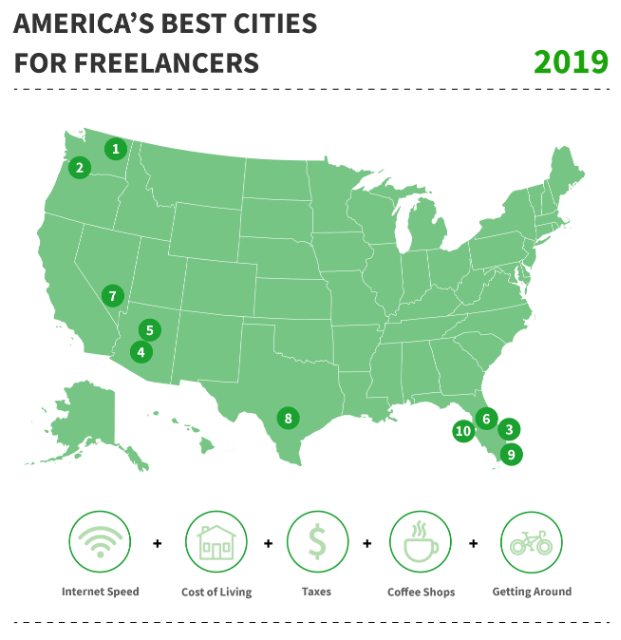
Image Source

Using U.S. Census data, Neighborhoods analyzed more than 150 cities on five metrics important to independent workers. Categories included rent prices, internet speeds, coffee shop density (my personal favorite ☕), income tax rates, and ease of transportation and mobility. Each metric was valued at 20 points on a 100-point scale, then the cities were scored and ranked.

The Best and Worst Cities for Freelancers
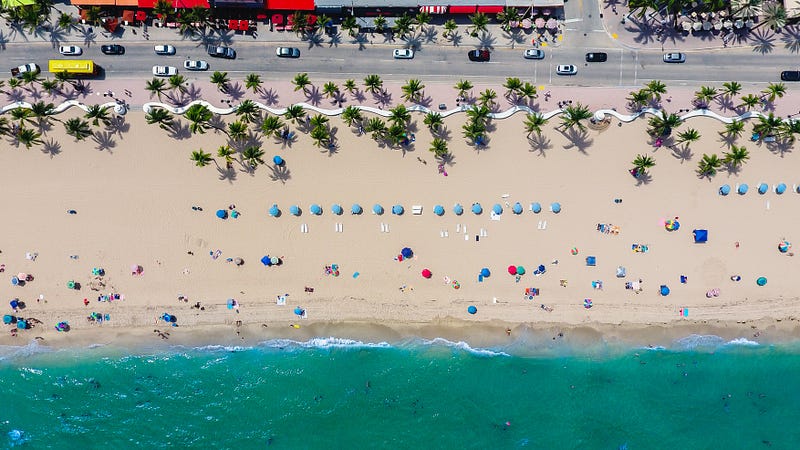
In third place, Ft. Lauderdale, FL. 🏆 Photo by Lance Asper on Unsplash

In recent years, millions of New York and California residents have moved out of metropolitan areas due to high taxes and housing prices. Therefore, it’s no surprise that many of the best cities in Neighborhoods’ report landed in the income-tax-free states of Washington, Florida, Nevada, and Texas. As a location-independent digital nomad myself, I can live anywhere in the world. Yet I, too, have chosen to make Florida my home base — for its ideal climate, low cost-of-living, tax benefits, and to be near family.

10 Best Cities for Freelancers

  1. Spokane, WA
  2. Vancouver, WA
  3. Ft. Lauderdale, FL
  4. Tempe, AZ
  5. Scottsdale, AZ
  6. Orlando, FL
  7. Las Vegas, NV
  8. San Antonio, TX
  9. Hialeah, FL
  10. Tampa, FL

In the loser category, nearly half of the worst ranking cities turned up in California — a notoriously expensive and high-tax state.

10 Worst Cities for Freelancers

  1. Lexington, KY
  2. Palmdale, CA
  3. Port St. Lucie, FL
  4. Jackson, MS
  5. Memphis, TN
  6. Corona, CA
  7. Oceanside, CA
  8. Worcester, MA
  9. Santa Clarita, CA
  10. Lincoln, NE

Where Do the Majority of U.S. Freelancers and Remote Workers Reside Today?

Using the same publicly-available Census data as Neighborhoods.com, Volusion researchers analyzed where the majority of America’s 8 million remote workers live. These are the most popular small, medium, and large cities in America with the highest concentrations of remote workers:

  • Atlanta, Georgia, is the most popular large city (defined as >350k people) for remote workers, with a remote population of 9.6%.
  • Frisco, Texas, is the most popular midsize city (population 150–350k) for remote workers, with a remote population of 14.7%.
  • Highland Ranch, Colorado, is the most popular small city (population 100–150k) for remote workers, with a remote population of 15.2%.

The results from these studies are both enlightening and contrasting. However, we need more data. Fortunately, with growing international attention on the socio-economic implications of remote work, we should see a significant increase in both the volume and scope of such research in 2020 and beyond. It will be interesting to see what trends emerge regarding the lifestyles and habits of independent and remote workers, as well as remote employers.

What else is next for freelancers?

The Future of Freelancing

Freelancers are set to outnumber salaried employees by 2027 — upwards of 90 million people, according to Upwork. As such, the competition to attract independent workers is heating up. At least three cities and states now offer $10,000 incentives through their remote worker grant programs: Vermont, Oklahoma, and Nebraska.

Likewise, in the race to retain top talent, expect an increasing number of companies to offer remote work incentives. In one example, Zapier’s $10,000 de-location policy pays employees to move wherever they want.

A company called MainStreet is also capitalizing on the widespread adoption of flexible work. In 2019, they announced a program to match skilled workers with remote jobs across the country — plus pay them a $10,000 bonus after the first year.

The Big Takeaway Here

What this all means is, the members of the youngest workforce demographic have skills and leverage:

  • Embrace this reality in your remote job search or in setting your freelance rates.
  • Don’t settle for less than you’re worth. Negotiate your terms with confidence.
  • Rather than struggle to convince an employer or client of your value, go where it’s already recognized. Oh yeah, and, live wherever you want.

Relocation Resources

The Neighborhoods and Volusion studies make a good starting point for anyone thinking about relocating. But, before deciding to move somewhere, you’ll also want to consider factors like climate, lifestyle preferences, family needs, industry, client locations, co-working space availability, local community, and market opportunities.

If you’re one of the millions of independent or remote workers out there, here are some resources for researching the cost-of-living and quality-of-life in cities across the nation:

Are you a flexible worker planning to move in 2020? Where would you go and why? Let us know in the comments.

Work
Life
Society
Freelancing
Economy
Recommended from ReadMedium