avatarKristin Wilson

Free AI web copilot to create summaries, insights and extended knowledge, download it at here

3179

Abstract

="7">“Many of us love the Bay Area; the reality is that it’s just incredibly expensive to live here. And it doesn’t necessarily suit most people’s lifestyle.”</p><h1 id="d22b">It’s Low Maintenance</h1><p id="e0fa">As a <a href="https://www.orbisrelocation.com/our-story">Relocation Consultant</a> of ten years, I know what it takes to move people around the world. Relocations are costly, complicated, and time-consuming for companies to execute. They involve salary adjustments, housing allowances, moving expenses, real estate commissions, orientation programs, family and spousal support, and more.</p><p id="fe9b">In contrast, a de-location package is the opposite. All companies have to do is write a check and let the employee handle the rest.</p><h1 id="b8da">It Makes Financial Sense for Everyone</h1><p id="be07">A de-location incentive of 10,000 is 10–50% the cost of a typical relocation package. HR Departments could de-locate ten employees for the price of one relocation, and they’d probably have a higher success rate.</p><p id="cf4b">But the savings don’t stop there. Remote teams decrease real estate, managerial, and overhead expenses. They cost less even when adding technology equipment, co-working memberships, and travel expenses to remote compensation packages.</p><p id="d987">From an employee perspective, leaving Silicon Valley or New York could shave thousands of dollars off their monthly housing costs. Many tech workers would be open to relocating if it didn’t compromise their salary or career prospects. The recent success of remote work incentive programs across rural America hint at the possibilities.</p><p id="1334" type="7">Tech workers would be open to relocating if it didn’t compromise their salary or career prospects.</p><h1 id="a3a0">There’s Proof of Concept</h1><figure id="1975"><img src="https://cdn-images-1.readmedium.com/v2/resize:fit:800/1*5szxow-2uyXeQKX_cC_FBg.png"><figcaption></figcaption></figure><p id="d426">State and local governments aren’t typically known for having innovative business practices, but here’s an exception. In 2019, economic development councils throughout the U.S. tested new programs to attract remote workers. Details varied, but usually involved offering compensation in the form of a tax credit, housing allowance, cash payment, or relocation support.</p><p id="2950">The response by workers has been positive. When Tulsa, Oklahoma announced the launch of <a href="https://tulsaremote.com/">Tulsa Remote</a> in March, the news went viral. The program includes housing support, a co-working allowance, and 10,000 in cash. Vermont’s legislators followed suit, offering $5,000 to prospective residents through a <a href="https://www.thinkvermont.com/remote-worker-grant-program/">Remote Worker Grant.</a> The program received thousands of applicants and promptly sold out.</p><p id="df83">The success of these beta programs indicates that remote employees and freelancers are eager to relocate if the conditions are right.</p><h1 id="cfce">It’s a Good Way to Attract and Retain Top Talent</h1><p id="dde1">There may be nothing more critical to the long-term success of a company than its ability to

Options

attract, hire, and retain good people. Flexible work policies are known to reduce turnover. However, offering employees an <i>additional</i> incentive to be able to move wherever they want has an unlimited upside with a minimal up-front cost. If a de-location benefit makes the difference between keeping or losing a valued employee, the answer is simple.</p><p id="f416" type="7">In the age of remote work, companies with workplace flexibility will attract the best employees in the world and keep them.</p><h1 id="6c53">There’s a Housing Crisis in Tech Hubs</h1><figure id="44bb"><img src="https://cdn-images-1.readmedium.com/v2/resize:fit:800/1*cqL70JtLGNwpfKo2aj-wJA.jpeg"><figcaption>Photo by <a href="https://unsplash.com/@pixeldan?utm_source=unsplash&amp;utm_medium=referral&amp;utm_content=creditCopyText">Daniel Abadia</a> on <a href="https://unsplash.com/search/photos/san-francisco?utm_source=unsplash&amp;utm_medium=referral&amp;utm_content=creditCopyText">Unsplash</a></figcaption></figure><p id="5eae">It’s no secret that Silicon Valley has driven Bay Area housing prices through the roof. As a result, there’s been an influx of tech workers into low-cost, no-tax states like Nevada and Texas. As the concept of location independence becomes more mainstream, domestic and international migration patterns should continue to shift. Regions with a lower cost-of-living and a smaller (or zero percent) tax rate will become increasingly attractive. It doesn’t make sense for engineers to spend <a href="https://finance.yahoo.com/news/even-senior-engineers-t-afford-110033984.html">50% of their take-home pay on rent</a> to live near their San Francisco offices. A de-location option can give workers the freedom to do what they would do anyway.</p><p id="ab5e" type="7">De-location packages are a sign of things to come.</p><h1 id="64e5">De-Location is a Win-Win</h1><figure id="0918"><img src="https://cdn-images-1.readmedium.com/v2/resize:fit:800/1*wzSC-It1Ti_i0-RgCSaJ0Q.jpeg"><figcaption>Photo by <a href="https://unsplash.com/@good_citizen?utm_source=unsplash&amp;utm_medium=referral&amp;utm_content=creditCopyText">Humphrey Muleba</a> on <a href="https://unsplash.com/search/photos/home-office?utm_source=unsplash&amp;utm_medium=referral&amp;utm_content=creditCopyText">Unsplash</a></figcaption></figure><p id="f52c">De-location incentives can complement pre-existing flexible work policies while helping companies reduce overhead and compete for talent. They also have the potential to improve employee retention and satisfaction.</p><p id="8c96">Meanwhile, quality-of-life for workers increases when they can choose where they live. Employees who work from home are reportedly <a href="https://www.flexjobs.com/blog/post/people-who-work-from-home-are-87-more-likely-to-love-their-job/">87% more likely to love their jobs</a>.</p><p id="926b">Instead of begrudgingly allowing employees to work remotely on occasion, organizations should encourage the practice. Offering a de-location incentive is an affordable, mutually-beneficial way to do so.</p><h2 id="c2d3">Kristin Wilson is a Remote Work Advocate and Consultant. Keep in touch here.</h2></article></body>

Why Companies Should Offer Employee “De-Location” Packages

Include this in your remote work policy

Photo by Brandon Nelson on Unsplash

Up to 99% of U.S. Human Resources Executives believe that “leveraging global mobility” helps businesses grow and attract more talent. Likewise, almost 100% of U.S. companies offer relocation packages that cost upwards of $25,000–100,000 per employee. But what about de-location packages? In other words, paying employees to move away from their offices?

In the age of remote work, companies with workplace flexibility will attract the best employees in the world and keep them. They’ll also save money. Nearly half of the companies polled in a recent remote work study reported that offering remote work helps them lower their operating costs and scale their workforce. Flexibility is in such high demand that Entrepreneur decided it shouldn’t be labeled as a “job perk” anymore.

It’s time for companies to revive outdated HR policies and end ineffective employee retention schemes. De-location packages are a sign of things to come. Here’s why.

Some Background

Photo by Francisco De Legarreta C. on Unsplash

In 2017, Zapier’s CEO, Wade Foster, made headlines when he announced a $10,000 “de-location” incentive for remote employees that wanted to leave the San Francisco Bay area. He explained, “Don’t get us wrong, we absolutely love the Bay Area (I live here), but the cost of living is just outrageous for so many.”

Few other companies seem to have followed suit, but they should. En masse. Offering de-location is an easy win for organizations that already have flexible and remote work policies but want to gain a further competitive edge. How?

“Many of us love the Bay Area; the reality is that it’s just incredibly expensive to live here. And it doesn’t necessarily suit most people’s lifestyle.”

It’s Low Maintenance

As a Relocation Consultant of ten years, I know what it takes to move people around the world. Relocations are costly, complicated, and time-consuming for companies to execute. They involve salary adjustments, housing allowances, moving expenses, real estate commissions, orientation programs, family and spousal support, and more.

In contrast, a de-location package is the opposite. All companies have to do is write a check and let the employee handle the rest.

It Makes Financial Sense for Everyone

A de-location incentive of $10,000 is 10–50% the cost of a typical relocation package. HR Departments could de-locate ten employees for the price of one relocation, and they’d probably have a higher success rate.

But the savings don’t stop there. Remote teams decrease real estate, managerial, and overhead expenses. They cost less even when adding technology equipment, co-working memberships, and travel expenses to remote compensation packages.

From an employee perspective, leaving Silicon Valley or New York could shave thousands of dollars off their monthly housing costs. Many tech workers would be open to relocating if it didn’t compromise their salary or career prospects. The recent success of remote work incentive programs across rural America hint at the possibilities.

Tech workers would be open to relocating if it didn’t compromise their salary or career prospects.

There’s Proof of Concept
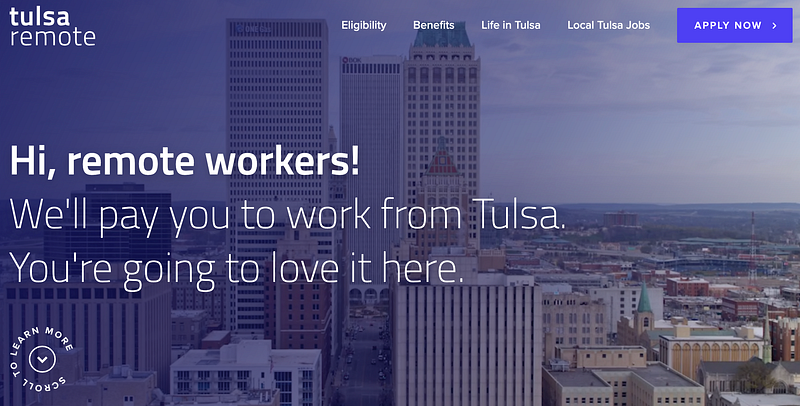
State and local governments aren’t typically known for having innovative business practices, but here’s an exception. In 2019, economic development councils throughout the U.S. tested new programs to attract remote workers. Details varied, but usually involved offering compensation in the form of a tax credit, housing allowance, cash payment, or relocation support.

The response by workers has been positive. When Tulsa, Oklahoma announced the launch of Tulsa Remote in March, the news went viral. The program includes housing support, a co-working allowance, and $10,000 in cash. Vermont’s legislators followed suit, offering $5,000 to prospective residents through a Remote Worker Grant. The program received thousands of applicants and promptly sold out.

The success of these beta programs indicates that remote employees and freelancers are eager to relocate if the conditions are right.

It’s a Good Way to Attract and Retain Top Talent

There may be nothing more critical to the long-term success of a company than its ability to attract, hire, and retain good people. Flexible work policies are known to reduce turnover. However, offering employees an additional incentive to be able to move wherever they want has an unlimited upside with a minimal up-front cost. If a de-location benefit makes the difference between keeping or losing a valued employee, the answer is simple.

In the age of remote work, companies with workplace flexibility will attract the best employees in the world and keep them.

There’s a Housing Crisis in Tech Hubs

Photo by Daniel Abadia on Unsplash

It’s no secret that Silicon Valley has driven Bay Area housing prices through the roof. As a result, there’s been an influx of tech workers into low-cost, no-tax states like Nevada and Texas. As the concept of location independence becomes more mainstream, domestic and international migration patterns should continue to shift. Regions with a lower cost-of-living and a smaller (or zero percent) tax rate will become increasingly attractive. It doesn’t make sense for engineers to spend 50% of their take-home pay on rent to live near their San Francisco offices. A de-location option can give workers the freedom to do what they would do anyway.

De-location packages are a sign of things to come.

De-Location is a Win-Win

Photo by Humphrey Muleba on Unsplash

De-location incentives can complement pre-existing flexible work policies while helping companies reduce overhead and compete for talent. They also have the potential to improve employee retention and satisfaction.

Meanwhile, quality-of-life for workers increases when they can choose where they live. Employees who work from home are reportedly 87% more likely to love their jobs.

Instead of begrudgingly allowing employees to work remotely on occasion, organizations should encourage the practice. Offering a de-location incentive is an affordable, mutually-beneficial way to do so.

Kristin Wilson is a Remote Work Advocate and Consultant. Keep in touch here.

Remote Working
Tech
Remote Companies
Employee Retention
Silicon Valley
Recommended from ReadMedium