
Can Remote Work Programs Save the Economy?
A possible antidote to the “Amazon Effect” on U.S. job creation
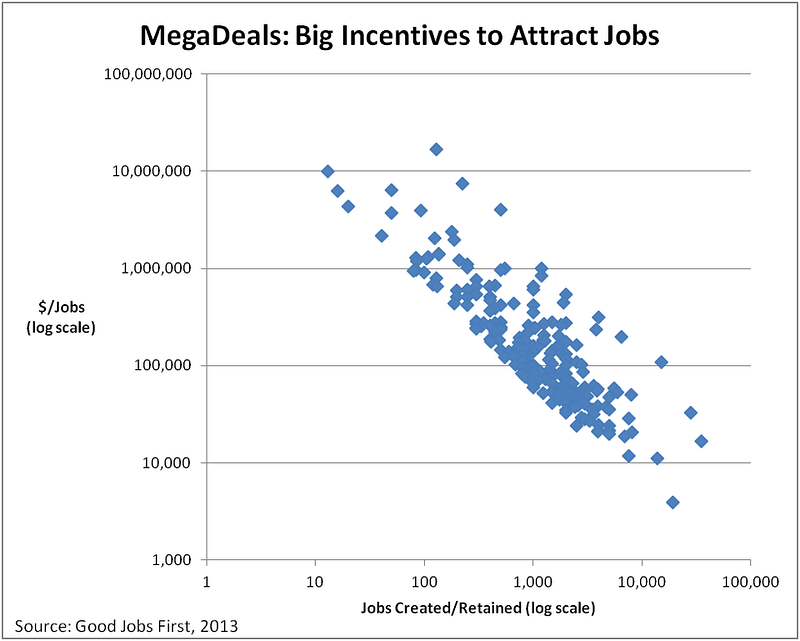
Each year, city and state governments across the U.S. spend nearly $100 billion on corporate incentives and subsidy packages under the guise of creating or saving U.S. jobs. The problem is, each of these “megadeals” can cost taxpayers an average of $450,000-$1,000,000 per job. Unsurprisingly, paying one company billions of dollars to attract or salvage jobs rarely pays off.
In 2018, upwards of 238 cities competed to become the site of Amazon’s new headquarters — even though the “Amazon Effect” may end up hurting a local economy more than it helps. For example, although Amazon’s HQ2 expansion is forecast to create 50,000 jobs on paper, many of those will come from outside the local region, while others will be temporary positions.
One study calculated that, by 2016, Amazon had eliminated 150,000 more jobs than it created while raking in $760 billion in subsidies and wiping out over 135 million square feet of competitors’ retail space. Amazon’s presence in Seattle has reportedly increased housing prices, traffic congestion, and economic inequality. One year after Arlington, Virginia won the Amazon bid, housing prices there are also on the rise.
But this article isn’t to hate on Amazon. All megadeals are a threat to the U.S. economy, political system, and societal structure. They need regulation. But in the meantime, there are better, more affordable, and effective ways for local governments and economic development councils to stimulate job creation. One option is through remote work programs, which can benefit both job-seekers and creators.
Remote work programs can create jobs at a scant 1% of the cost of a megadeal. They also provide flexibility for workers seeking to leave cities in exchange for a lower cost-of-living or higher quality-of-life.
From an employer perspective, remote work programs can help companies retain their best employees, expand their hiring pool, and attract qualified talent at a lower cost compared to tech hubs.
Simply put, old economic development strategies are no longer adequate. Meanwhile, flexible work is quickly becoming a top requirement for the global workforce.
Read on to learn how remote work programs can benefit individuals, companies, and governments alike. Plus, how to become an early adopter of this new trend.
Why Remote Work Programs Work

Remote jobs are subject to less friction than traditional jobs. More people can hold remote jobs regardless of age, race, location, disability, or access to transportation. Thus, remote work programs can increase high-quality, high-paying job opportunities without any geographical restriction.
Remote work programs may include elements such as:
- Cash incentives and bonuses.
- Housing allowances and assistance.
- Technology credits.
- Co-working memberships.
- Tax credits for companies and individuals.
- Community support.
Overall, remote programs support and complement the changing nature of jobs. They are also a tool for helping companies and public officials face challenges stemming from outsourcing, automation, and a lack of qualified talent.
Here are a few ways that city, state, and federal governments are using remote work programs to stimulate their economies. And, how the private sector is using them to save money while filling jobs.
Local Remote Work Programs

The first states to launch remote work programs in the U.S. include Nebraska, Vermont, and Oklahoma.
Vermont’s Remote Worker Grant Program reimburses employees up to $10,000 in relocation expenses, technology equipment, and co-working memberships.
Tulsa, Oklahoma offers workers a cash incentive of $10,000, plus co-working access and a “welcoming community” for added support.
North Platte, Nebraska’s WorkNP program helps employers create attractive remote work incentives by compensating them up to $5,000 per new position. The funds help offset relocation expenses, housing deposits, employee training, and more.
Private Sector Programs & Incentives

Many companies now allow employees to work remotely at least some of the time. Others, like GitLab, operate as fully-distributed enterprises that have never had a physical office. But we are still in the early adoption phase of remote work. There is plenty of potential for creativity and innovation when it comes to job creation and preservation in the private sector.
For example, in 2017, Zapier’s CEO set a new Silicon Valley precedent when he began offering employees a $10,000 de-location incentive to move away from the Bay Area and work remotely.
In November of 2019, a tech startup called MainStreet announced their plan to create more jobs in rural and suburban America. MainStreet will train new remote workers, match them with tech jobs, and pay them a $10,000 bonus after the first year of employment. The company also has a contingency plan in place to compensate employees up to $5,000 per month (plus healthcare benefits) in case the job doesn’t work out. Their business model has since gone viral.
Private sector remote work programs are a classic win-win. Companies can save money and attract better talent if they offer remote work incentives. At the same time, employees benefit from more job flexibility, less commuting, and a potentially lower cost-of-living.
International Remote Indicators

Remote work programs also make sense at a federal level. In 2014, Estonia became the first country to offer an e-Residency program for digital entrepreneurs. E-Residency status allows foreigners to start and manage an EU-based company online — without ever traveling to Estonia. While this scheme differs slightly from U.S.-based remote work programs and corporate giveaways, the intent is similar. Just like Tulsa, Vermont, and Amazon’s many suitors, Estonia wants to:
- Attract new residents.
- Raise tax revenue.
- Create jobs.
- Stimulate economic growth.
Following the success of Estonia’s program, Lithuania announced an e-Residency bill in July of 2019. The amendment will allow foreigners to obtain legal e-resident status and start online businesses, making the Baltic State more attractive to skilled tech workers and digital freelancers. Meanwhile, at least fifteen countries, including Canada, the Netherlands, and Japan, have developed similar startup visa programs for foreign entrepreneurs.
The Road Ahead

Corporate tax cuts and subsidies can create jobs — at a cost. But whether cities are competing for Amazon warehouses or NFL stadiums, bidding wars are losing bets for taxpayers. In contrast, remote work and small business incentives are more logical and affordable ways to stimulate growth and benefit more than just politicians and shareholders.
The federal government has always played a role in shaping the U.S. economy — especially in the post-industrial era. But relying on macroeconomic policy to create jobs is risky and expensive. Job creation efforts are more effective, affordable, and measurable at a local level.
There are many ways for state and local governments to stimulate lasting job growth. Restricting and regulating megadeals is a good start. Other possibilities include:
- Ensuring free and open access to the Internet.
- Investing in local infrastructure.
- Re-allocating corporate subsidies to projects that support individual workers and small businesses.
- Creating new tax categories and write-offs for remote employees, freelancers, and self-employed workers.
- Offering utility credits to residents who work from home.
- Increasing spending on training and educational programs for remote job skills.
- Modernizing school curriculums.
- Installing more WiFi networks in public places.
- Building public co-working spaces, startup incubators, and business community centers.
- Investing in affordable housing development.
- Offering paid or government-mandated family and medical leave to freelance and remote workers.
- Providing more affordable healthcare options to gig workers.
- Designing new remote work programs.
While public policy takes time to implement, businesses are more agile. Organizations should begin implementing flexible work policies and offering incentives without delay.
Individuals can take advantage of current opportunities by applying to existing remote programs or lobbying their local officials and employers to create similar initiatives.
Finally, job creation can also start with students. The municipality of St. Clair, Michigan, offers a “come home award” of $15,000 to STEM graduates who commit to moving back after college.
Remote work programs have shown promising results at all levels of government and across industries. The global workforce is ready for flexible work and technology supports it. Now, it’s time for the public and private sectors to invest in solutions that will stimulate economic growth and create jobs for decades to come.
Kristin Wilson is a remote work consultant, advocate, and content creator. Connect with her on LinkedIn.


