
The Beauty of Montana’s Hidden Technicolor Rainforest
Would you rather have April flowers or frozen ferns?
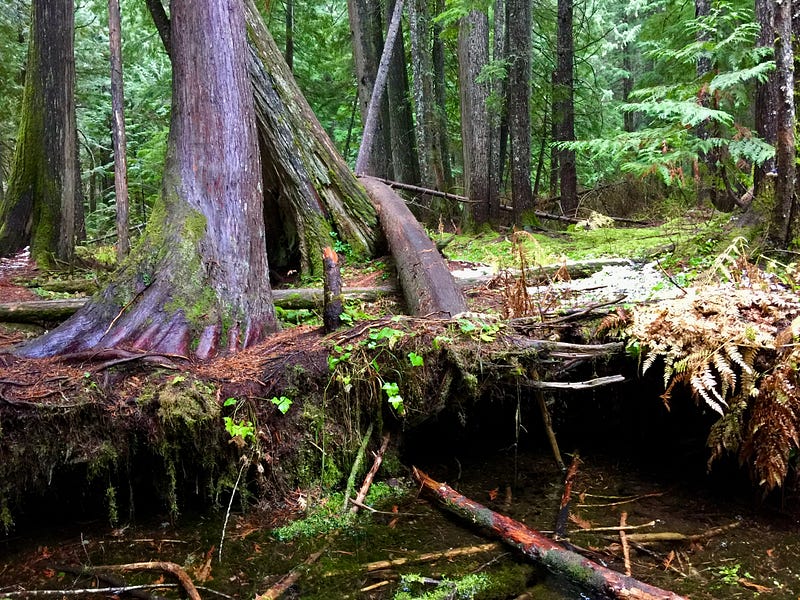
For at least ten years, I’d been wanting to visit Ross Creek Cedars, a unique rainforest ecosystem tucked away in a hidden corner of northwest Montana — a mere hour and a half away from my home.
I first heard about the cedars from a high school acquaintance as she bagged my purchases at our town’s tiny grocery store. “Any plans for New Year’s?” I asked her.
“My family and I are hiking at Ross Creek Cedars!” she said. “We’ve been going there since I was a little girl. It’s my favorite place in the world. And so convenient, that it’s not far from here.”
“Right, of course,” I said vaguely, having no idea what she was talking about, and jealous that I’d missed out on having years of memories with my own family at some magical spot.
I looked up Ross Creek Cedars when I got home, and was startled to find that it was a rainforest with cedar trees a thousand years old, up to eight feet in diameter. And I had never heard of it?
Managed by the U.S. Forest Service and located off Montana Highway 26 between the small towns of Troy and Noxon, Ross Creek Cedars is a 100-acre scenic area with a 0.9-mile loop trail, easily walkable, that offers interpretive signs about the history and ecology of the grove. Delightfully, dogs are allowed on the trail if they are leashed.
When I finally persuaded my parents to pack up our two dogs and a picnic lunch for a day trip to the rainforest, I wasn’t sure if it would live up to the glorious vision I’d built up over the past decade.
Spring is cold in Montana — I’d woken up to snow just two days before — and the air was dense with fog. Still, I didn’t want to wait another ten years to persuade my family to visit the cedars, so we went.
That picture I had in my mind? The real version was much more spectacular.
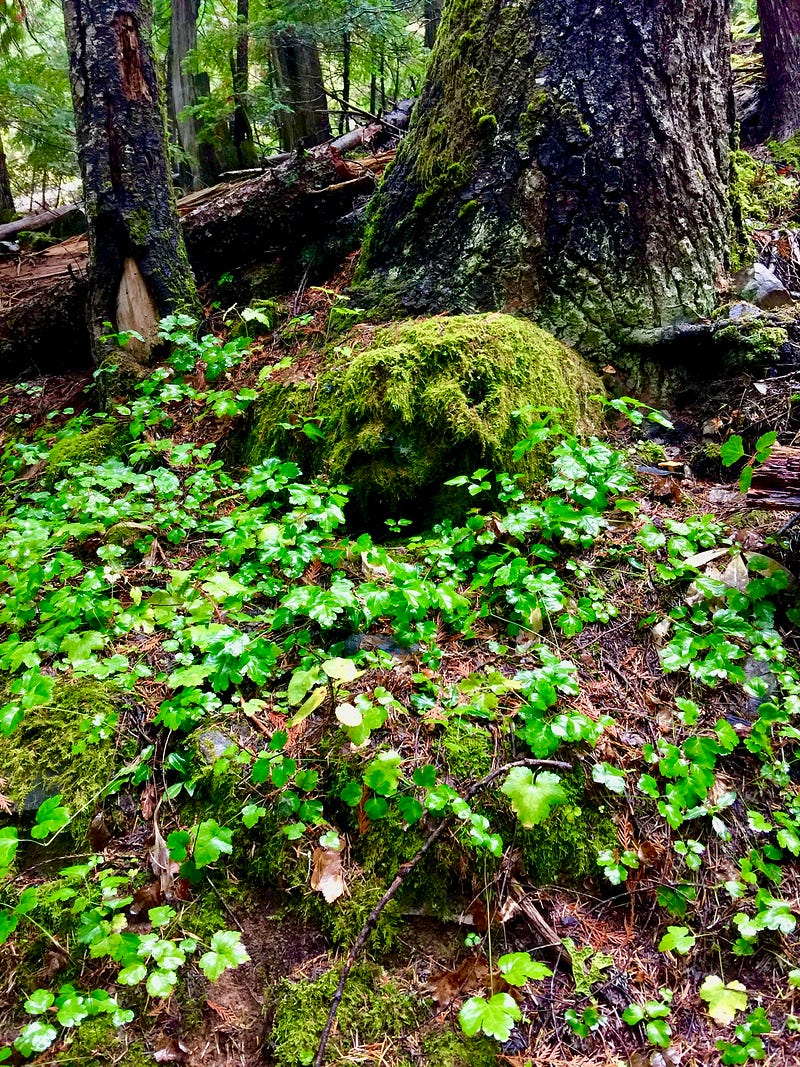
I had barely stepped onto the trail when I found moss in abundance, colonizing every surface — trees, rocks, earth — in its eagerness to soak up the moisture that blesses this forest.
And the green! Even though I had to bundle up in my winter jacket, hat, scarf, and gloves, leaves shot across the ground in merry delight.
Were it not for my frozen cheeks and the frigid cloud of my breath fogging up my glasses, I could have mistaken them for the hill of clover in Ireland where I once took a nap on a lazy April afternoon.
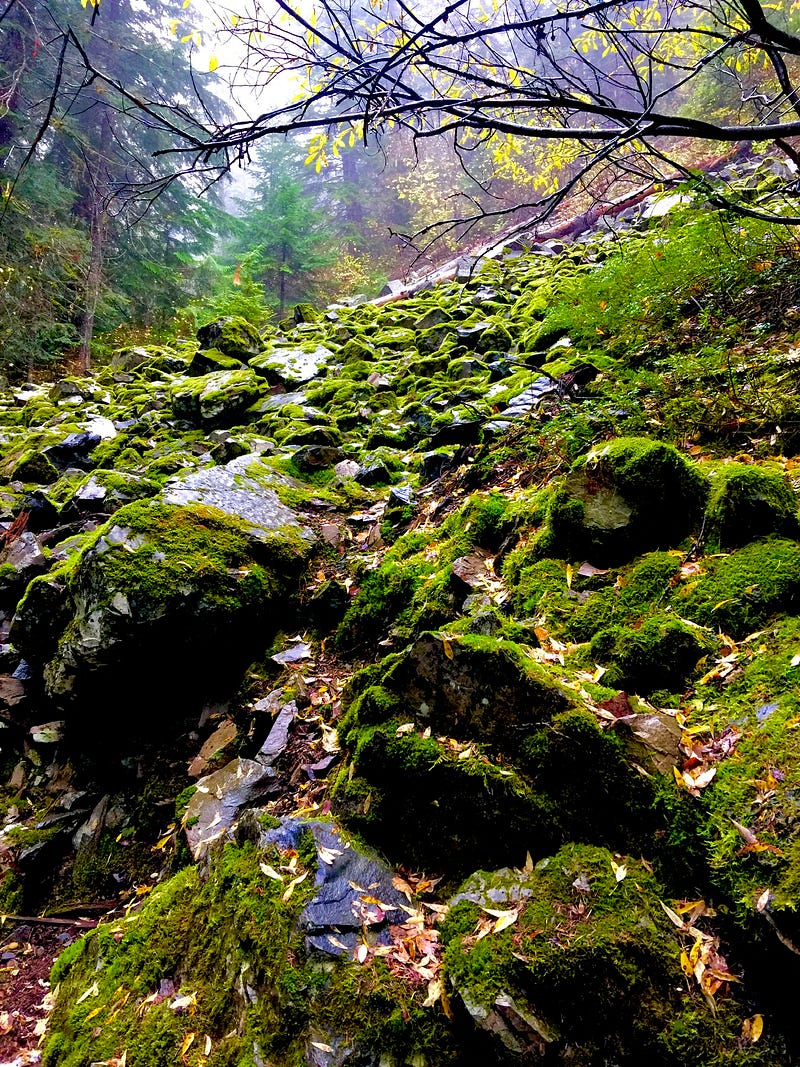
What’s this, a raging waterfall sweeping away greenery and everything else in its path? That’s what I thought as I was going through my Ross Creek photos, even though, silly me, I took the picture.
Actually, it’s a shale escarpment in a rare section without a forest canopy. Here the sun is free to reflect off the rocks, making them shine like water tumbling down a slope.
Moss buries the shale boulders, as it does everything else in the rainforest, and the fog at the top of the slope in the background lends the scene an aura of enchantment and mystique.
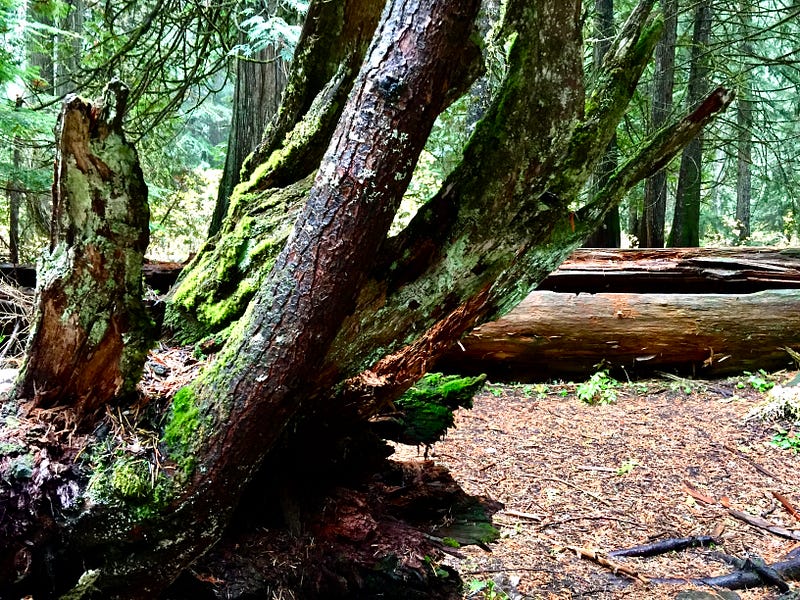
I found a dragon in the rainforest — a great beast of a cedar wrenched out by its roots in a mighty storm, or come crashing down when the decay brought on by endless centuries of wetness finally defeated it.
As I walk Montana’s mountain trails, I’ve gotten in the habit of looking for shapes in the trees, stones, and flowers that could come alive as characters in my fantasy stories.
In these fallen cedar roots, I could see the gaping mouth of the moss dragon Silvernail, who speaks so loudly and deeply that human characters must slap their hands over their ears. He is disinclined to befriend them, but saves the world in the end.
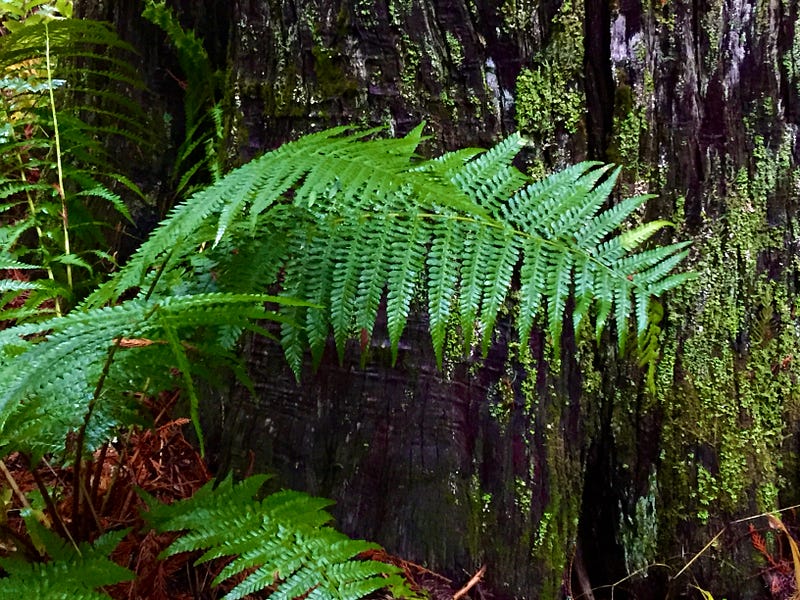
At this point, I was freezing my hands off from constantly removing my gloves to tap the camera button on my iPhone. Still, I had to snap a photo of the ferns that pop up everywhere at Ross Creek Cedars.
The plants have always mesmerized me. With their drooping, elongated stems and thousands of little teeth, they seem so foreign, as if belonging to another world — which really, they do.
The first ferns appeared at least 359 million years ago, long, long before the first dinosaurs evolved at around 230 million years ago. Ferns are so ancient that seeds and flowers didn’t exist yet, so they had to reproduce via spores.
Fun fact: People in the Middle Ages believed that ferns did have seeds, but the seeds were invisible. They thought that if they could somehow collect the seeds, they’d become invisible themselves.
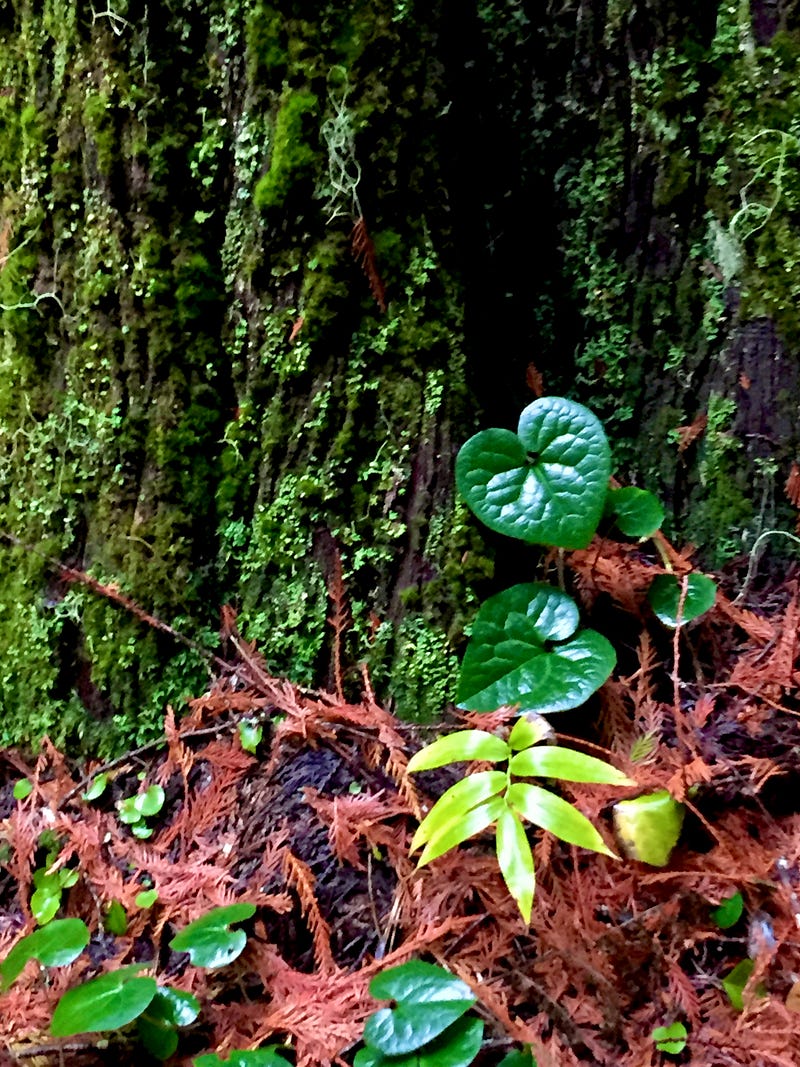
Would a rose by any other name smell as sweet? I don’t know what these heart-shaped leaves are — some kind of ground vine? — but they are sending us a charming late April Valentine.
The various colors in this photo complement each other perfectly. The green shades of the leaves and the moss on the tree trunk (I can count at least four distinct textures and hues in the moss alone) look lovely against the russet of last year’s pine needles. Underneath, the older organic material decaying into soil adds a deep, rich brown.
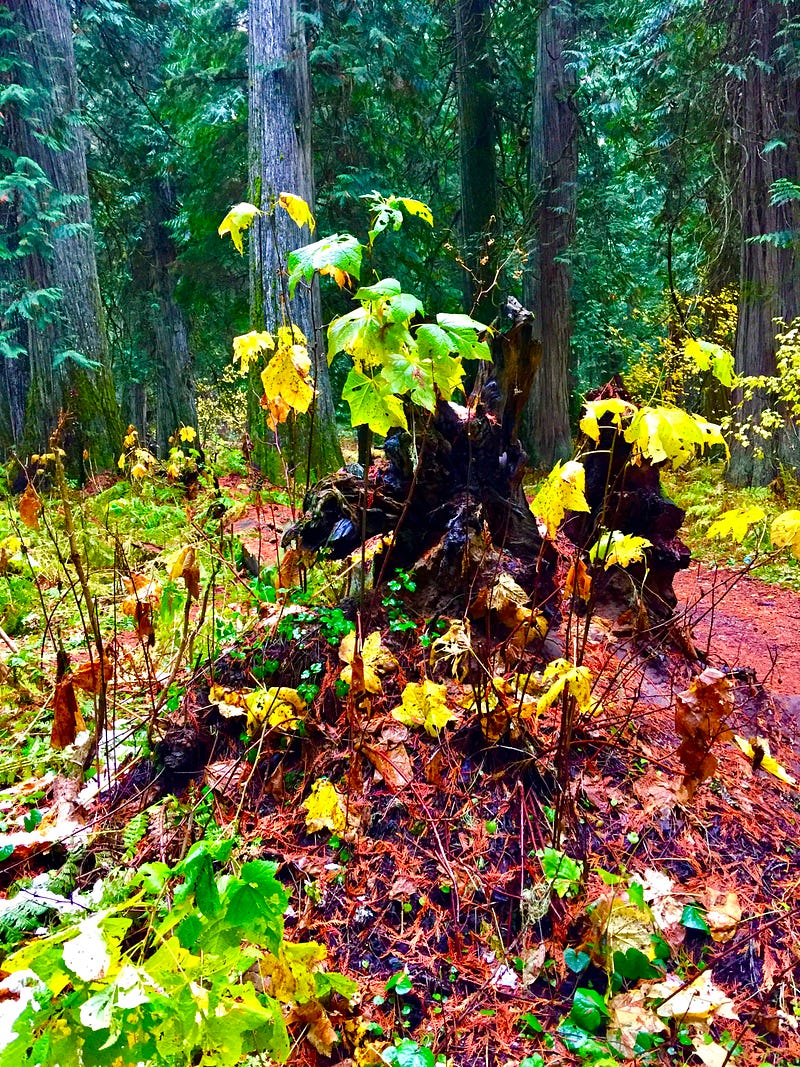
A riot of colors! The same colors as in the last photo, actually, with one addition. What a difference yellow makes.
Going from the perspective of the previous picture to this one is like being in a crowd and taking a picture of someone’s shoe in one moment, appreciating the colors and textures of the fabric set against the different shades of pebbles in the sidewalk’s concrete. Then in the next moment, you zoom way out and capture the whole city block in its pulsing, noisy, breathing chaos.
My brain thinks I’m looking at two seasons at once, spring and autumn. If I went to Ross Creek in both April and September and stood in this same spot, I’ll bet I’d get the same photo. That’s how weird it is. It’s a clash for the eyes, a defiance of logic. This is no soft, sweet, obedient forest scene that a quaint artist would come to paint.
The more I gaze at this photo, I don’t even know what it is, or how it makes me feel. Excited? Confused? Disoriented? You be the judge.
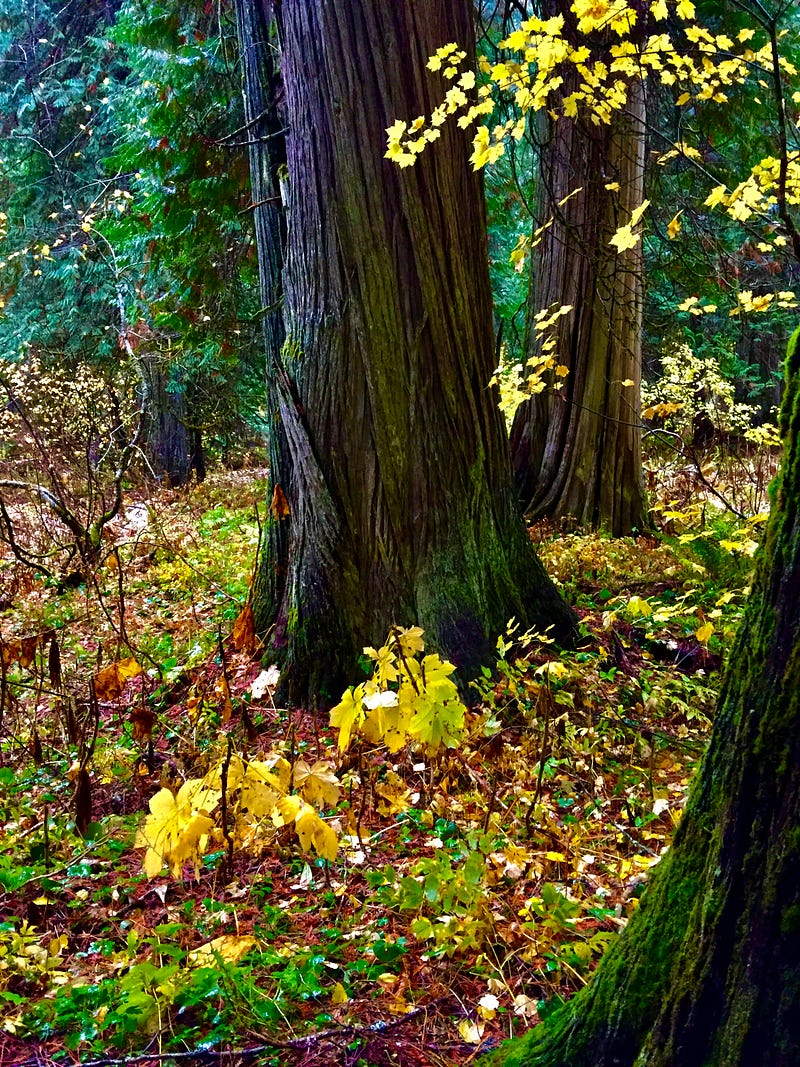
Not many steps away is a scene with more muted yellows that our quaint landscape artist might indeed like to paint.
If Ross Creek Cedars is a micro-ecosystem within the dry ponderosa pine forests and grassy river valleys of northwestern Montana, then the small areas you find within it, so different from each other, you might as well call micro-micro-ecosystems.
Snap a picture, then look eagerly up the trail a few dozen paces, for you never know what you’ll find next.
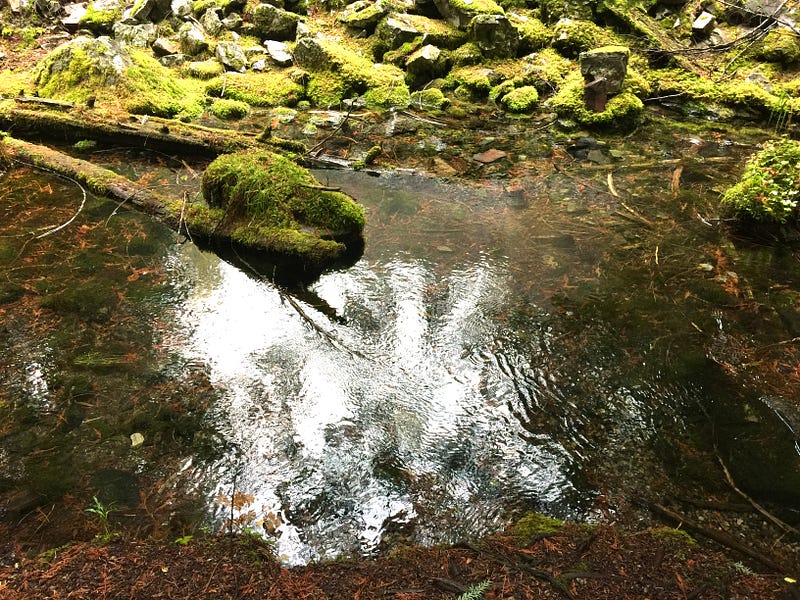
Case in point: here is another new wonder. In a rainforest, water is never far away. This quiet little stream later becomes the wider, swifter Ross Creek.
With the green moss and bright reflection off the water, the spot reminded me of mystical scenes from the medieval romances I’d studied in grad school, where the lady finds a pool in the forest and must wade into it to collect the magic jewels.
At Ross Creek Cedars, the rainforest itself is the greatest jewel.
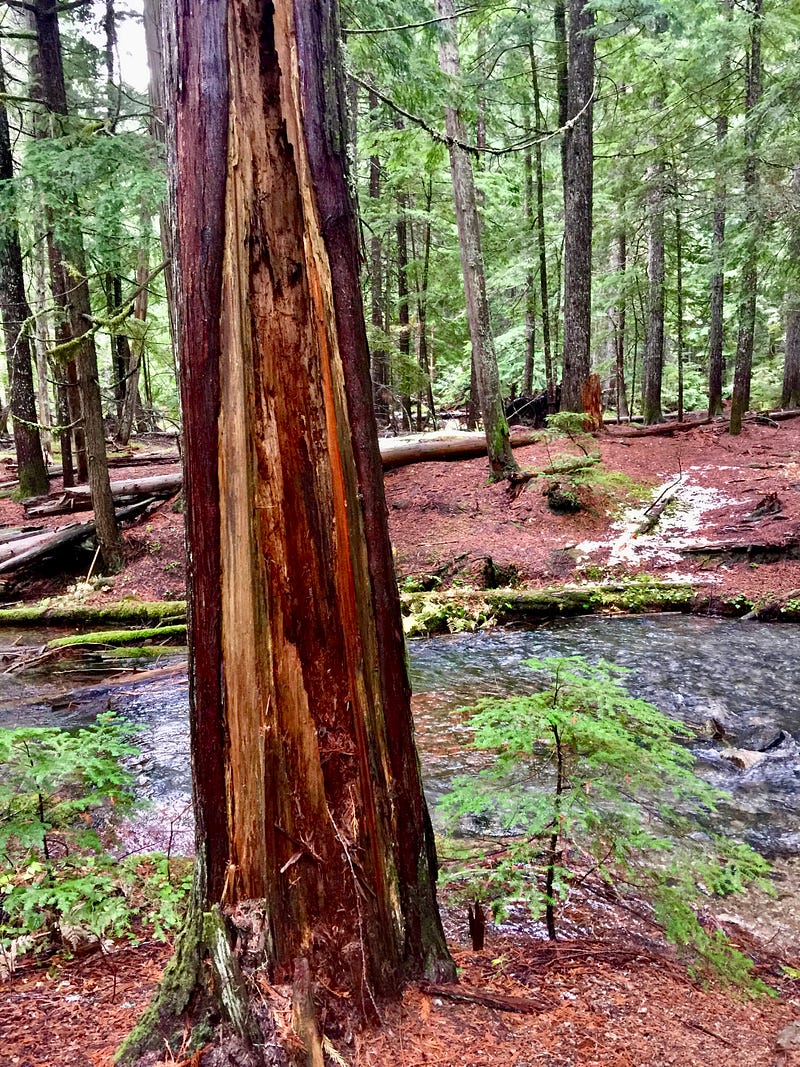
Walking along Ross Creek, I came upon a cedar with half its bark stripped away, revealing the rich red of its heart. Even the trees display colors fit for kings in this strange mountain rainforest.
Usually, when I see stripped bark, I assume that a deer has scraped it away to get food in the dead of winter, or that a bear has clawed the bark to suck at the sweet sap underneath.
But here a good half of the tree is gone; that’s one gargantuan critter. I wonder if the tree is in the process of decay like all the mighty giants that have fallen around it. Perhaps its missing half has already collapsed into the creek and been swept away.
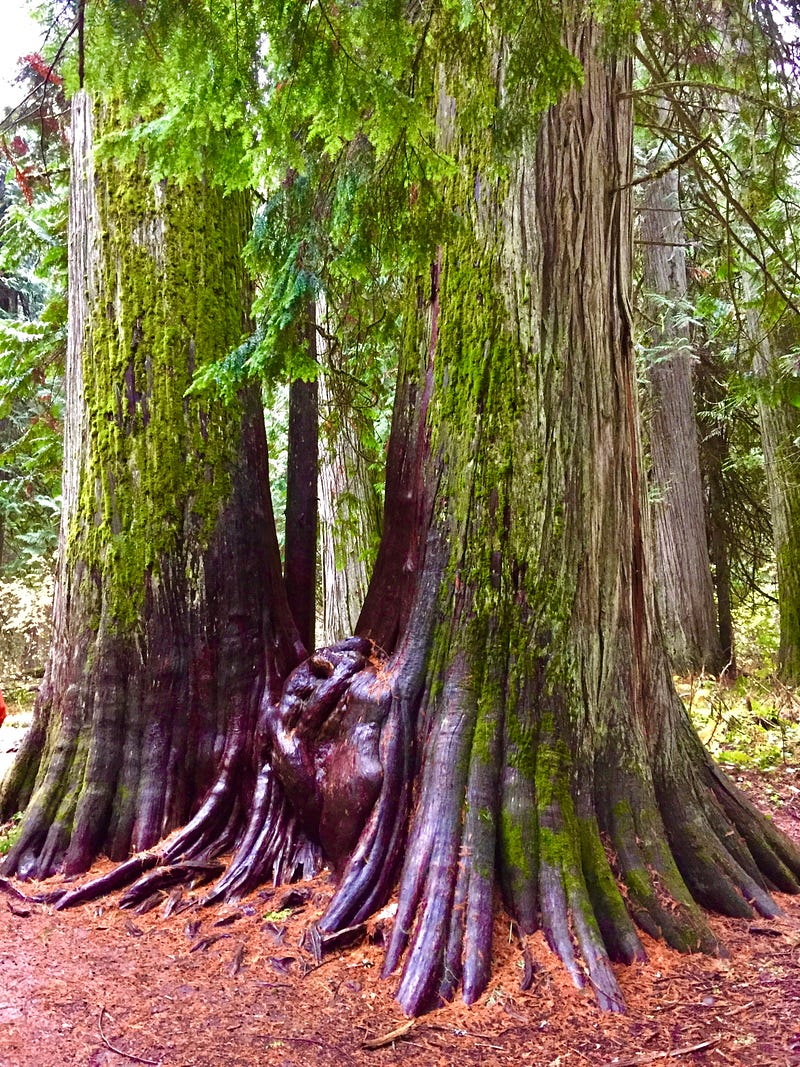
Near the end of the mile-long trail, I came upon two ancient trees married for all eternity, joined by that massive bulbous growth between them. The hanging canopy of pine needles drooping down from above is their bridal bower.
People like to climb up between the trees and stand on the bulb for photo ops, a good six feet above the ground.
Must we go to such lengths for Instagram?
These trees are centuries old, worn down by rain and rot, and the weight of the next footstep might cause that beautiful bulb between them to crumble. You can see already where it is scuffed and chipped on the bottom left and top right.
Let the trees alone, please. As they say, when you venture into nature, leave no trace.
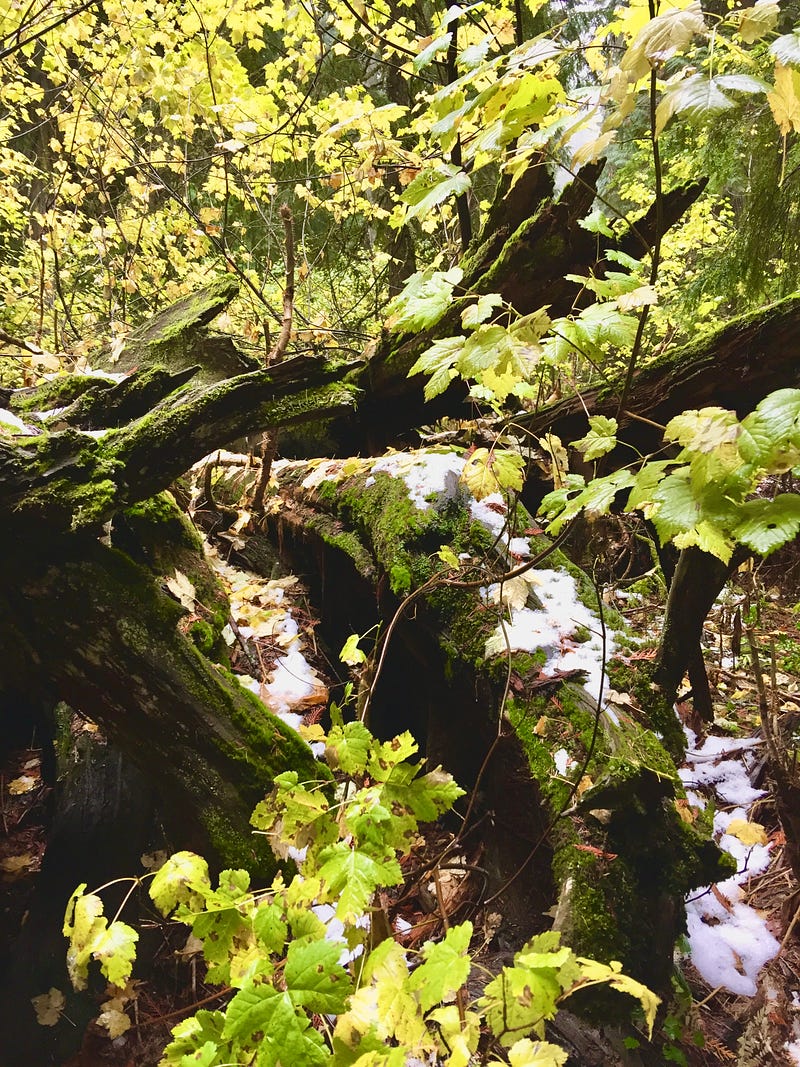
Fittingly, snow makes an appearance in my final picture. After all, the highlights of the hike were the vibrant colors of leaves and moss, giant cedars, my general awe — and the cold that dug deep into my bones.
I vowed to return to Ross Creek Cedars one day, hopefully to see the glory of the place in summer’s warm shade. For now, I rushed to the shelter of the car, where we ate our picnic lunch still in our winter coats and hats, cheeks burning pink, bodies slowly warming.
Thank you to the editors at Globetrotters! This is my favorite travel publication on Medium and I encourage you to check out their stories.
I have enjoyed reading so many articles recently. Keith Kelley wrote an essay about the Alhambra that includes mesmerizing photos and equally enchanting text.
Tim Ward, Mature Flâneur completely changed my mental picture of Madeira. I thought it was flat. It is not. You really have to see his spectacular photographs!
Thanks for reading! — Erie Astin


