avatarKeith Kelley

Free AI web copilot to create summaries, insights and extended knowledge, download it at here

4646

Abstract

edges, and fruit trees. These are intermingled and form separate, though related rooms, with surprises around corners.</p><figure id="8356"><img src="https://cdn-images-1.readmedium.com/v2/resize:fit:800/1*9g3RmXqeNrBLMFmtPPbXuw.jpeg"><figcaption>A garden room — photos by Keith Kelley and Shahla Emadi, used with permission.</figcaption></figure><p id="738b">There are multiple viewing areas with vistas across the ravine to the other structures as well as to the city of Granada and the valley below. In the distance, loom the peaks of the Sierra Nevada Mountains.</p><figure id="d2fe"><img src="https://cdn-images-1.readmedium.com/v2/resize:fit:800/1*8oRga5o49W9TQUoiGk12hQ.jpeg"><figcaption>Generalife Gardens and Views towards the Fortress and other palaces — photos by Keith Kelley and Shahla Emadi, used with permission.</figcaption></figure><p id="c99d">There was a serene ambience and beauty. It is more subtle than the other buildings, but its simplicity lends supreme charm. It was a place of respite and peace for the Emirati family.</p><h2 id="b4fa">The Nasrid Palace</h2><p id="e837">The Nasrid Palace interior leaves one in awe from the first. You gasp at the elegance, beauty, and voluptuousness and struggle for superlatives to describe what is seen.</p><p id="1c25">The building exterior is unprepossessing with a low profile. After entering, it is a feast for the eyes for the two hours it takes to explore the structure. Each room or alcove is spectacular but is exceeded by the next.</p><figure id="685a"><img src="https://cdn-images-1.readmedium.com/v2/resize:fit:800/1*26C3kT74Af_J_BtHnjm6Uw.jpeg"><figcaption>Entry alcove to Nasrid Palace — photos by Keith Kelley and Shahla Emadi, used with permission.</figcaption></figure><p id="304d">One of the largest and most impressive rooms was the Hall of the Ambassadors, where the Emir sat in state and met subjects and supplicants.</p><figure id="cc30"><img src="https://cdn-images-1.readmedium.com/v2/resize:fit:800/1*n-41Sd5YbvWOnCpRvC_6Mw.jpeg"><figcaption>Hall of the Ambassadors, Nasrid Palace — photos by Keith Kelley and Shahla Emadi, used with permission.</figcaption></figure><p id="ec16">Every inch of surface area seemed to be decorated, from floor to ceiling. The ceiling decoration represented the heavens. The lower surfaces were embellished with calligraphy of religious and poetic verses and with floral and plant arabesques (arabesque refers to decorative designs or inscriptions with intricate flowing lines).</p><figure id="59e9"><img src="https://cdn-images-1.readmedium.com/v2/resize:fit:800/1*8tgufcIGC_6AjH8BriEf7A.jpeg"><figcaption>Entry portico to the Hall of the Ambassadors, Nasrid Palace — photos by Keith Kelley and Shahla Emadi, used with permission.</figcaption></figure><p id="41a7">My eyes were ravished by the room; I had to be torn away. We declined a tour so we could roam and linger at our own pace.</p><p id="afb9">The beauty of Islamic art stems in part from the belief that only God can truly represent nature and reality, especially as applied to humans or animals. Decorations became vehicles for testifying to the divine and are permeated with spirituality. Most decorations are stylized renderings of non-human subjects, particularly flowers and plants, along with calligraphy. At the Alhambra, the designs are supremely creative with intricate flowing lines. Gardens were also ways of encountering paradise. Structure and nature are entwined and manifest the divine.</p><p id="5541">Toward the end of the tour, we reached the Court of the Lions. It may have served as the royal residence or entertainment area. It has a courtyard with a fountain with lion heads gushing water, but the highlights are the surrounding porticos and adjacent rooms. Overall, it is sometimes described as the apogee of Islamic art.</p><figure id="77bb"><img src="https://cdn-images-1.readmedium.com/v2/resize:fit:800/1*vuD-d-X6RFntco7BuqBcTg.jpeg"><figcaption>Court of the Lions (note fountain in the center), Nasrid Palace — photos by Keith Kelley and Shahla Emadi, used with permission.</figcaption></figure><p id="cd5b">Two rooms off the courtyard are justly famous. One was closed, but the other, the Hall of the Two Sisters, was staggeringly beautiful.</p><figure id="7d9f"><img src="https://cdn-images-1.readmedium.com/v2/resize:fit:800/1*h_ti18GsuoCuxcARjB7rNw.jpeg"><figcaption>Hall of the Two Sisters, Nasrid Palace — photos by Keith Kelley and Shahla Emadi, used with permission.</figcaption></figure><p id="63f2">The ceiling represents the seven heavens of the Muslim cosmos (source, Wikipedia). It has a unique stalactite-like stonework call

Options

ed muqarnas. Lacey, snowy, and floral in appearance, it crowns the room as an exquisite headdress.</p><h2 id="295e">Night Visit</h2><blockquote id="4bb2"><p><b>“Who can do justice to a moonlight night in such a climate and place?…the effect is like enchantment.” — Tales of The Alhambra</b></p></blockquote><p id="b29f">I sensed in advance that a single encounter with the Alhambra would not be sufficient, and booking a second visit at night seemed like the perfect climax.</p><p id="e304">I half hoped I would meet one of the legendary ghosts, especially if guided to lost treasure. It didn’t happen, but there was plenty of magic afoot.</p><figure id="6d8b"><img src="https://cdn-images-1.readmedium.com/v2/resize:fit:800/1*647XpHwYN9CKY-O-i1V3-Q.jpeg"><figcaption>Moon over the fortress, the Alhambra — photo by Keith Kelley</figcaption></figure><p id="d8ae">The floodlight fortress with the moon above set the mood.</p><figure id="8071"><img src="https://cdn-images-1.readmedium.com/v2/resize:fit:800/1*ghkDe9HgmSJMmPsQQcTlHA.jpeg"><figcaption>Ceiling and wall detail at night, Nasrid Palace — photo by Keith Kelley</figcaption></figure><p id="b103">Some others ventured forth, but it was less crowded than during the day. Ceilings had special significance since they were illuminated from below.</p><p id="4cb6">After a full day, my night visit was short; I felt I had absorbed as much beauty as possible. However, I left sensing the magic hanging over the complex.</p><figure id="02e1"><img src="https://cdn-images-1.readmedium.com/v2/resize:fit:800/1*81z8yIj5s87BFEESgyaq-g.jpeg"><figcaption>Night view of the Court of the Lions with Muqarnas, stalactite decoration — photo by Keith Kelley</figcaption></figure><h2 id="132f">Summary</h2><p id="4ca3">How can one sum up the magnificent, awe-inspiring, and highest expression of craftsmanship and beauty?</p><p id="a247">Language didn’t fail, because exclamations and descriptions of awe were plentiful.</p><p id="35fe">At one’s core, though, there is empathy and awe — awe at the beauty of the creations and empathy for how the creators proclaimed the divine. At the Alhambra, the flowers and plants are manifested in nature and in decoration and together testify to the divine.</p><h2 id="3417">End Notes</h2><p id="5add">A visit to the Alhambra is facilitated by staying at the Parador de Granada, which is a lovely hotel on the grounds of the complex. We visited in early June, just before the weather became very hot.</p><p id="f47a">*The term lyrical was suggested in the article,<i> <b>‘Alhambra. Architecture with Poetry and Arabesque’</b></i>, which can be found at <b>Spainthenandnow.com</b>.</p><p id="8550">The floral challenge was obviously inspiring to me. The incredible beauty of flowers was brilliantly captured in the following articles:</p><p id="2228"><a href="undefined">JoAnn Ryan</a>’s sensational photos of flowers are captured in what she promises is Part One. I can’t wait for Part Two!</p><div id="c2c8" class="link-block"> <a href="https://readmedium.com/flower-power-the-floral-beauty-of-trinidad-tobago-part-one-30b58fc25a78"> <div> <div> <h2>Flower Power: The Floral Beauty of Trinidad & Tobago, Part One</h2> <div><h3>Globetrotters April Monthly Challenge — “Floral Beauty Around the World”</h3></div> <div><p>medium.com</p></div> </div> <div> <div style="background-image: url(https://miro.readmedium.com/v2/resize:fit:320/1*t_deqqBEBTwWBKo6xc_tcw.jpeg)"></div> </div> </div> </a> </div><p id="edf5">I loved the “explosion of color” documented by <a href="undefined">Michael Rhodes</a> in his photos and words. What a lovely place to visit!</p><div id="add9" class="link-block"> <a href="https://readmedium.com/the-beautiful-flower-fields-of-carlsbad-5769f6590973"> <div> <div> <h2>The Beautiful Flower Fields of Carlsbad</h2> <div><h3>Globetrotters April Monthly Challenge — “Floral Beauty Around the World”</h3></div> <div><p>medium.com</p></div> </div> <div> <div style="background-image: url(https://miro.readmedium.com/v2/resize:fit:320/1*oo_822UFWzwU9Ek8cyrWtg.jpeg)"></div> </div> </div> </a> </div><p id="8d62">As always, thanks to the Globetrotters editors for their wonderful ideas for articles and to all of the interesting and profoundly kind Globetrotters readers and writers.</p></article></body>

The Floral Enchantment of the Alhambra

Where nature and decoration become one.
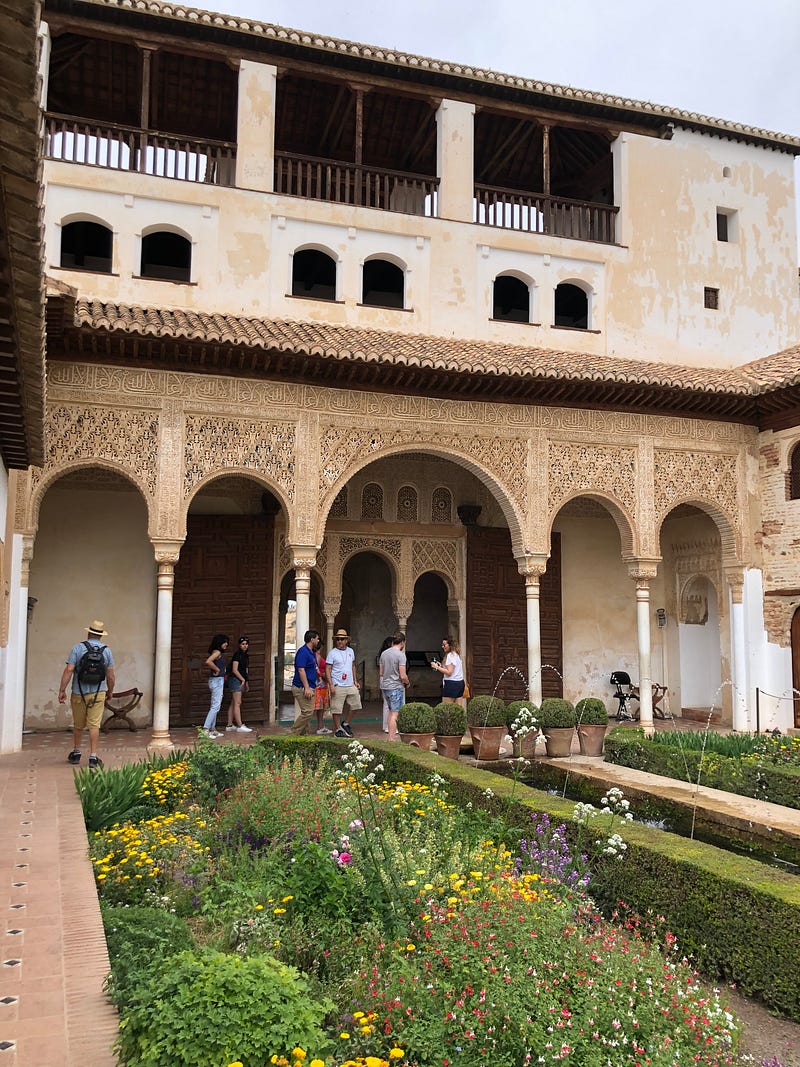
Generalife Palace, The Alhambra — Photos by Keith Kelley and Shahla Emadi, used with permission

“The Sabika hill sits like a garland on Granada’s brow,

In which the stars would be entwined,

And the Alhambra (God preserve it),

Is the ruby set above that garland.”

-Ibn Zamrak — 1300s

This month’s floral challenge suggested to me the beautiful gardens of the Alhambra in Granada, Spain. They alone would be fitting for the endeavor. But the gardens form a theme with the buildings, which mirror nature by incorporating floral and plant designs into the decoration. The interweaving of nature and decoration creates a sublime harmony. The Alhambra is lyrical in displaying Islamic poetry in decorative calligraphy, but also lyrical in its beauty and symmetry.*
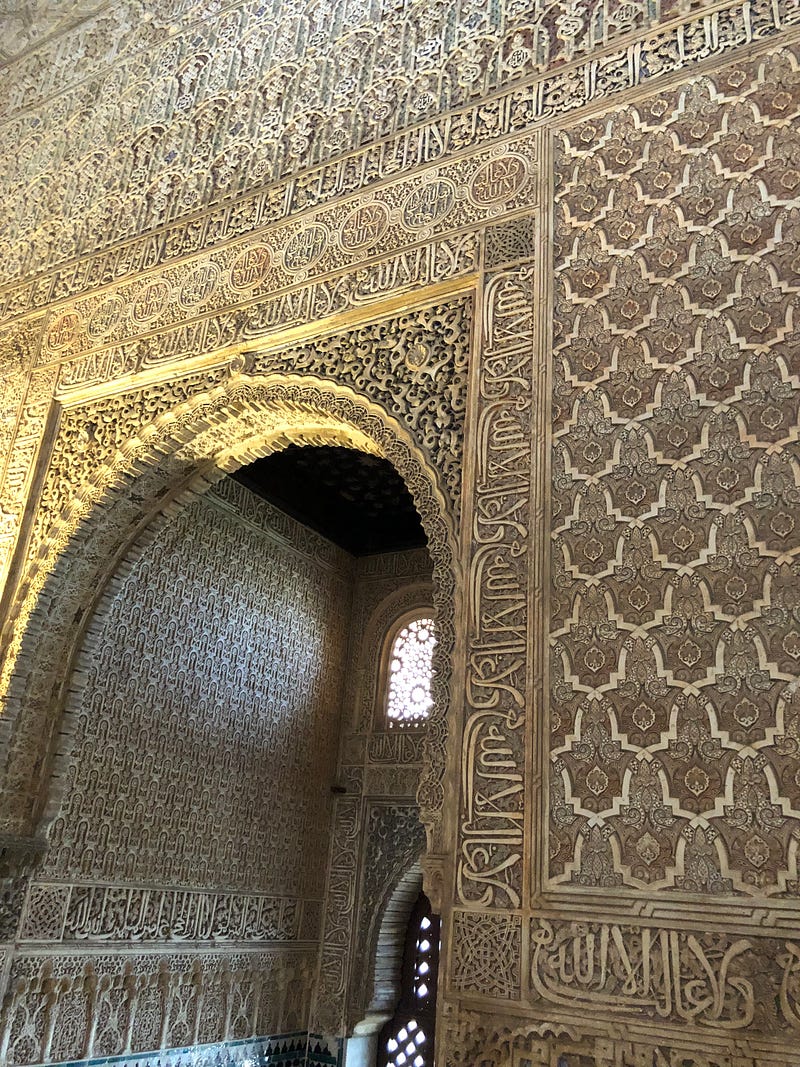
Wall and arch details, with calligraphy and floral and plant arabesques — photos by Keith Kelley and Shahla Emadi, used with permission.

The Alhambra

Of all places we’ve visited, I prepared the most for our trip to the Alhambra. Even with that concentration, it exceeded every expectation.

Washington Irving’s Tales of The Alhambra was an inspiring introductory study. (He also authored the horror classic, The Legend of Sleepy Hollow). In it, he relates the rich history and fascinating occupants of the Alhambra, narrates his encounters with its wonders, and recounts legends of magic, lost treasure, unlucky maidens and nobles, and warriors who mysteriously vanished. It painted a tantalizing picture.

The Alhambra is a complex of several palaces, a fortress, and imposing gates, which made it a self-contained city separate from Granada. Moorish architecture predominates, though an incongruous unfinished palace in the Renaissance style sits adjacent. The first buildings were begun in 1238 by the founder of the Nasrid Emirate of Granada. The Emirate ended abruptly in 1492 when it was conquered by the Spanish sovereigns Ferdinand and Isabella. Their joy at the conquest led them to recall Columbus to the fallen city and to fund his journey to the New World.

The Renaissance palace was begun in 1526 by Charles V. “With all the massive grandeur…we regarded it as an arrogant intruder…passing by it with a feeling almost of scorn.” Tales of The Alhambra, by Washington Irving. We concurred and focused on the two major Moorish palaces, the Nasrid and the Generalife.

The Generalife Palace
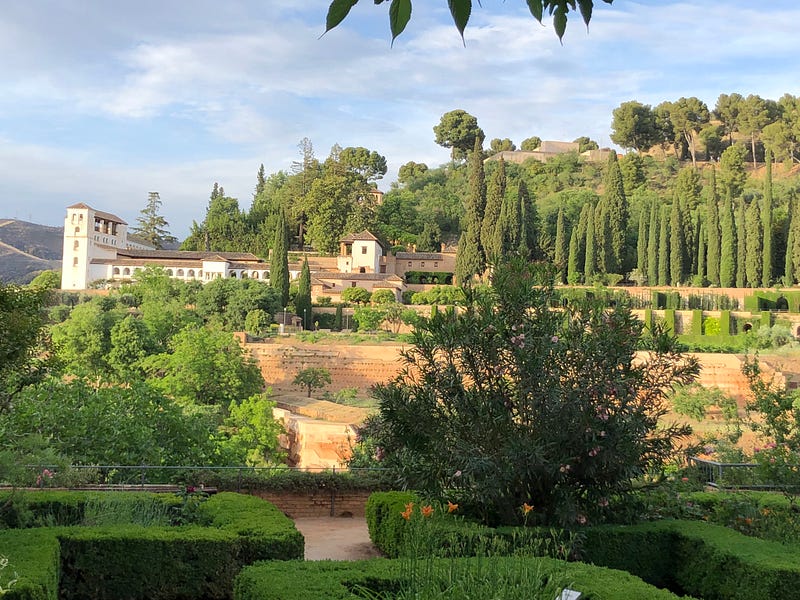
Generalife Palace viewed from across the ravine — photos by Keith Kelley and Shahla Emadi, used with permission.

“How beauteous is this garden, where the flowers of the earth vie with the stars of heaven” — Poem inscribed in The Alhambra
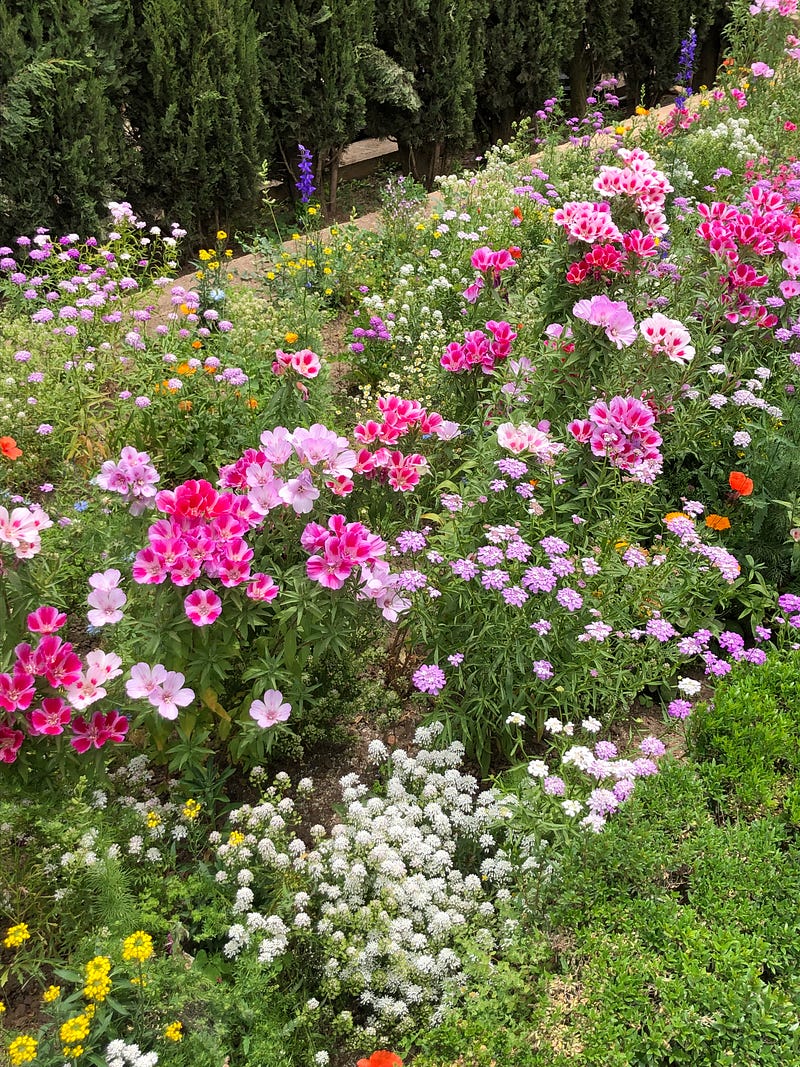
Sublime Natural Beauty — photos by Keith Kelley and Shahla Emadi, used with permission.

Intended as a summer residence, the Generalife Palace is surrounded by gardens, stately trees, and fruit orchards. It emulated a vision of paradise, with the natural bounty interlaced with fountains and waters. Separated by a ravine from the fortress and other palaces, it was an airy and less congested oasis during summer’s heat.

It is reached through a colonnade of shaped hedges, which mimic the arches of the buildings.
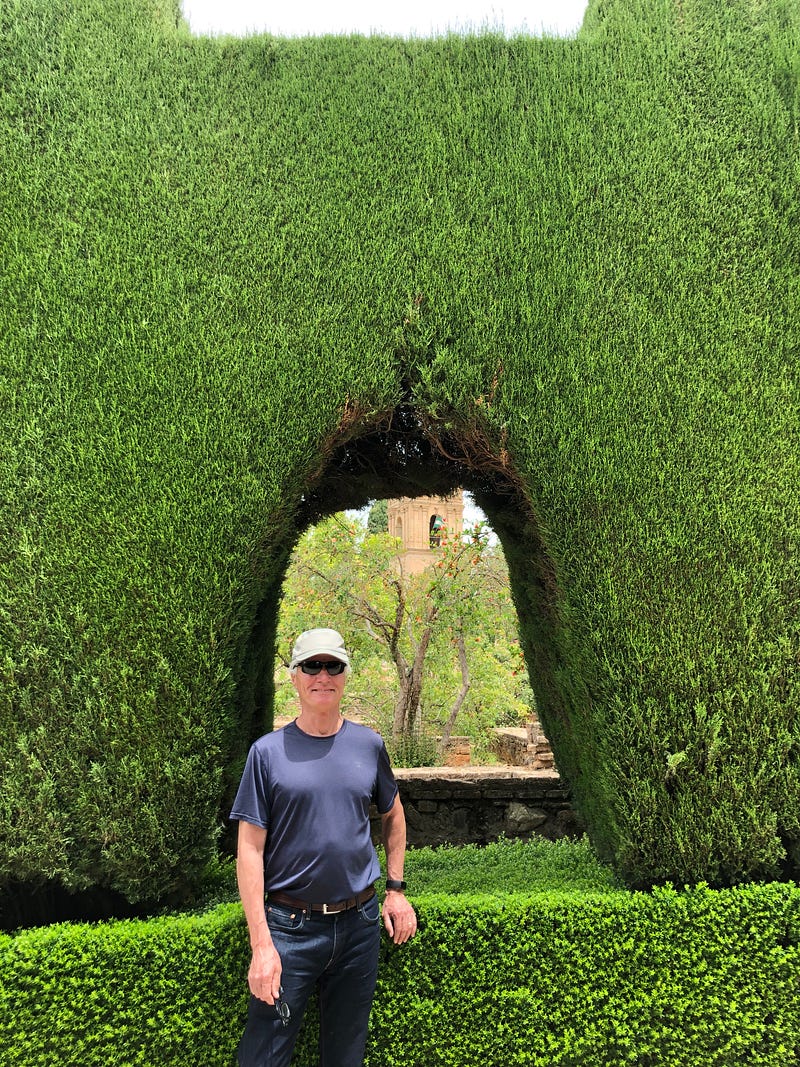
Hedges shaped to mimic structures -photo by Shahla Emadi, used with permission

The palace approach is through gardens composed of flowers, hedges, and fruit trees. These are intermingled and form separate, though related rooms, with surprises around corners.
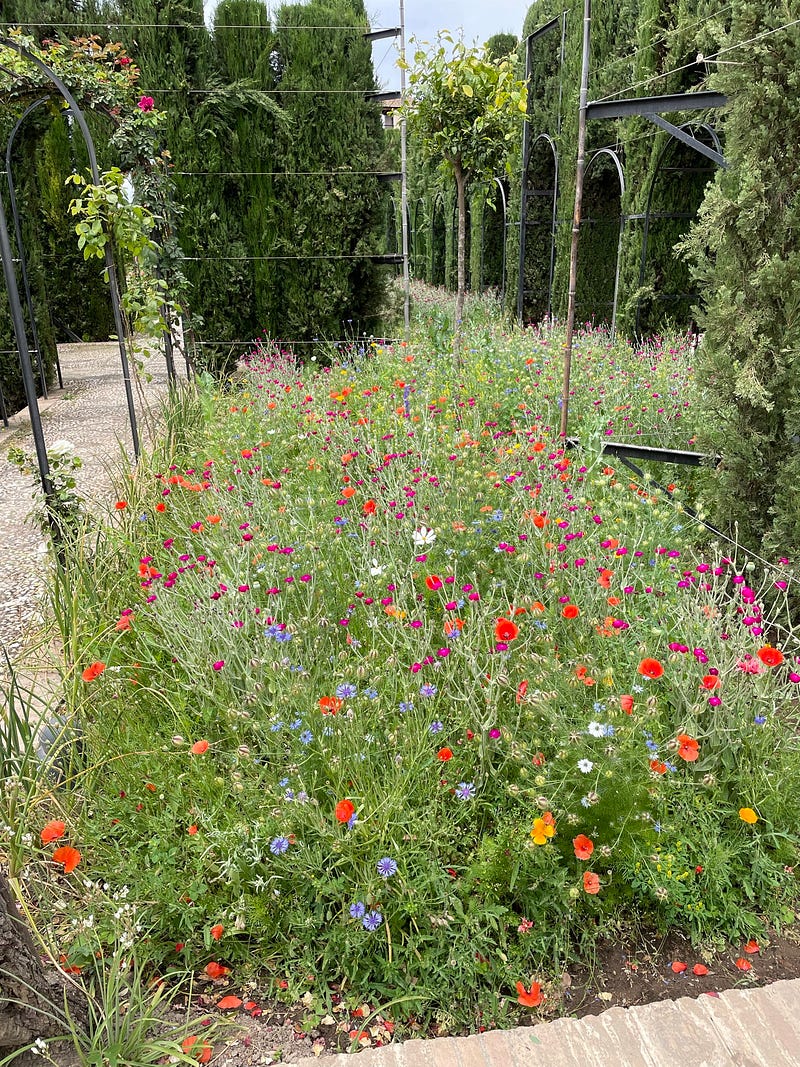
A garden room — photos by Keith Kelley and Shahla Emadi, used with permission.

There are multiple viewing areas with vistas across the ravine to the other structures as well as to the city of Granada and the valley below. In the distance, loom the peaks of the Sierra Nevada Mountains.
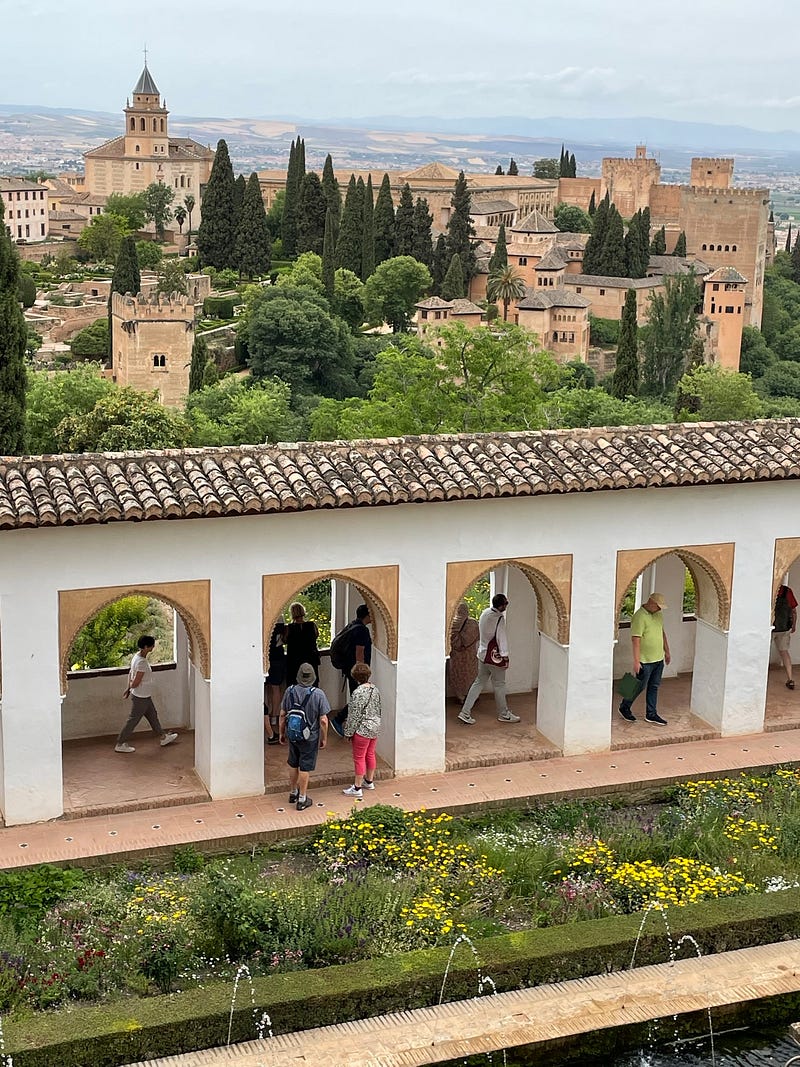
Generalife Gardens and Views towards the Fortress and other palaces — photos by Keith Kelley and Shahla Emadi, used with permission.

There was a serene ambience and beauty. It is more subtle than the other buildings, but its simplicity lends supreme charm. It was a place of respite and peace for the Emirati family.

The Nasrid Palace

The Nasrid Palace interior leaves one in awe from the first. You gasp at the elegance, beauty, and voluptuousness and struggle for superlatives to describe what is seen.

The building exterior is unprepossessing with a low profile. After entering, it is a feast for the eyes for the two hours it takes to explore the structure. Each room or alcove is spectacular but is exceeded by the next.
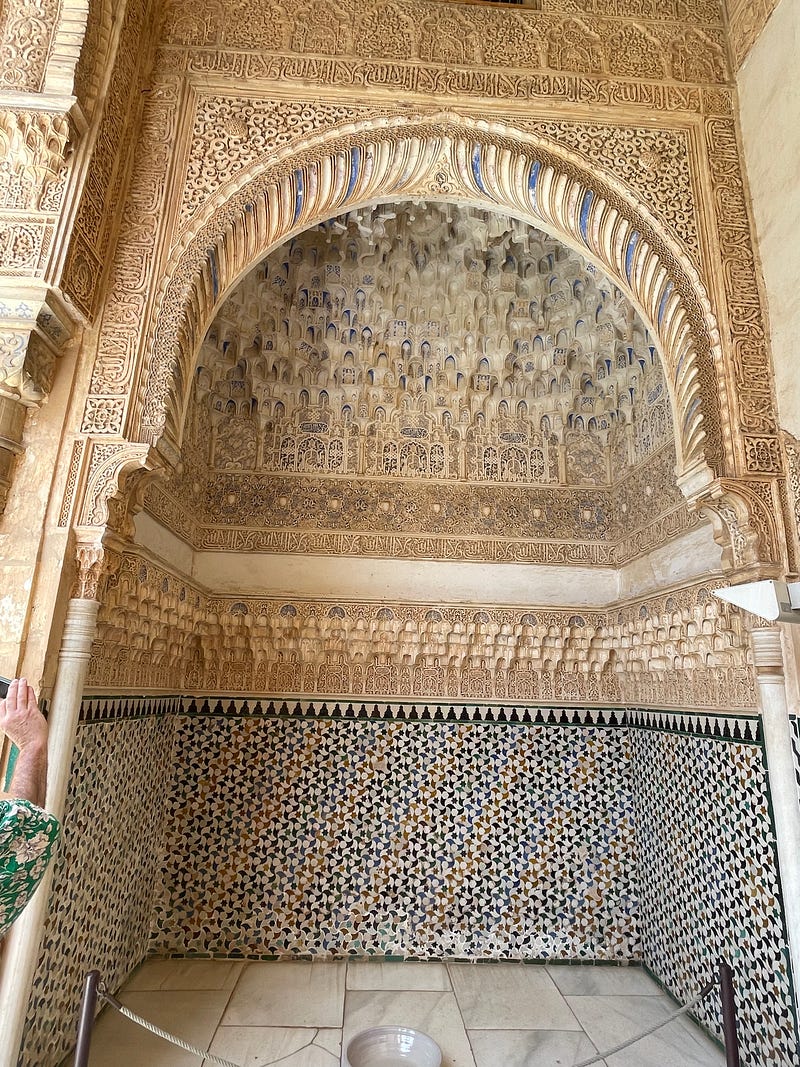
Entry alcove to Nasrid Palace — photos by Keith Kelley and Shahla Emadi, used with permission.

One of the largest and most impressive rooms was the Hall of the Ambassadors, where the Emir sat in state and met subjects and supplicants.
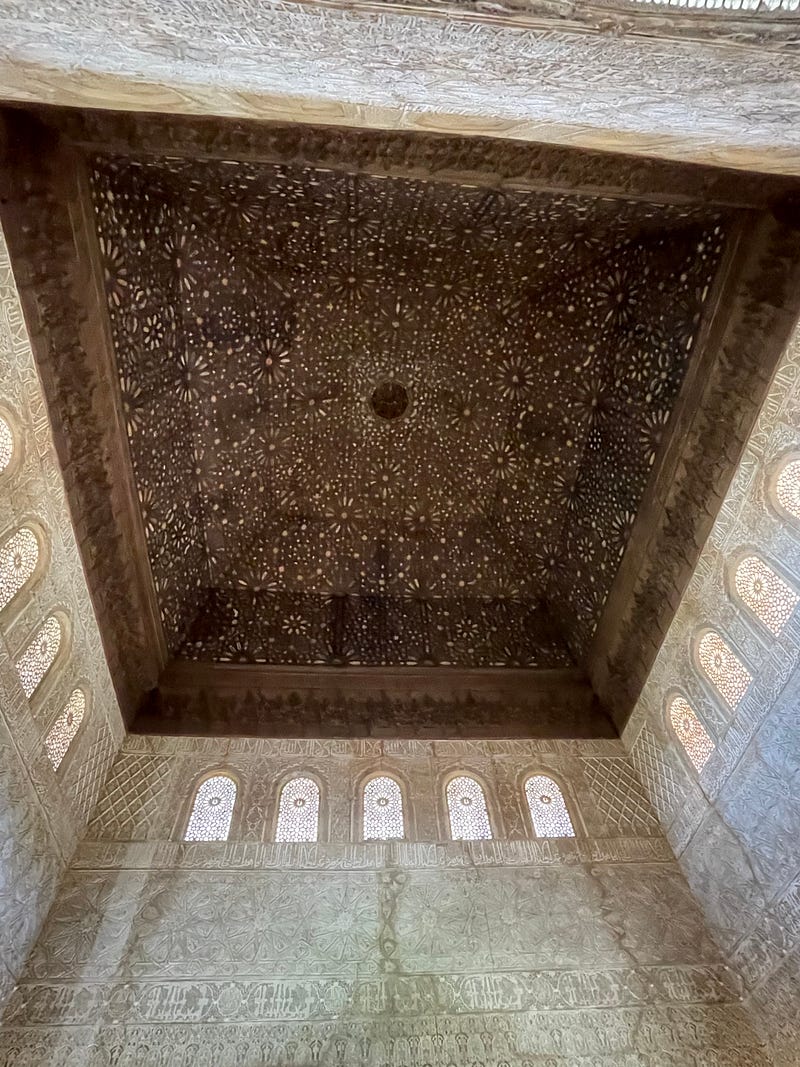
Hall of the Ambassadors, Nasrid Palace — photos by Keith Kelley and Shahla Emadi, used with permission.

Every inch of surface area seemed to be decorated, from floor to ceiling. The ceiling decoration represented the heavens. The lower surfaces were embellished with calligraphy of religious and poetic verses and with floral and plant arabesques (arabesque refers to decorative designs or inscriptions with intricate flowing lines).
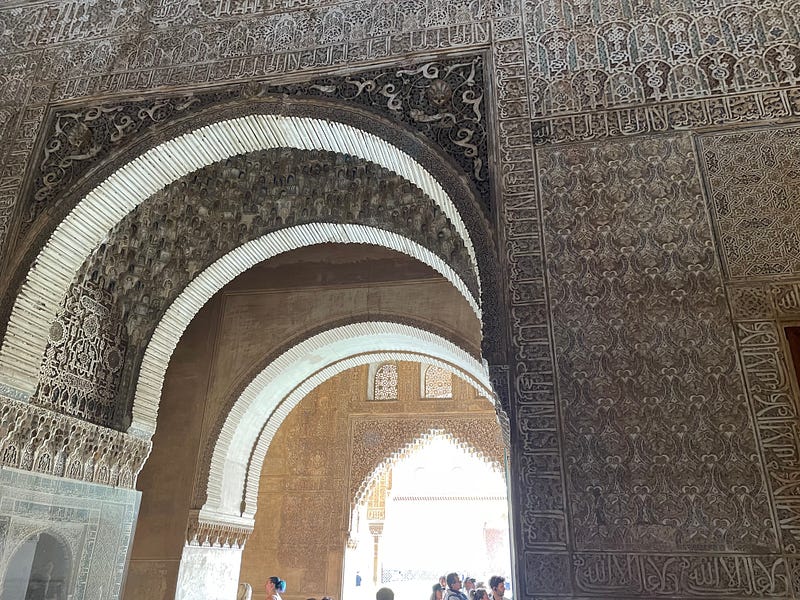
Entry portico to the Hall of the Ambassadors, Nasrid Palace — photos by Keith Kelley and Shahla Emadi, used with permission.

My eyes were ravished by the room; I had to be torn away. We declined a tour so we could roam and linger at our own pace.

The beauty of Islamic art stems in part from the belief that only God can truly represent nature and reality, especially as applied to humans or animals. Decorations became vehicles for testifying to the divine and are permeated with spirituality. Most decorations are stylized renderings of non-human subjects, particularly flowers and plants, along with calligraphy. At the Alhambra, the designs are supremely creative with intricate flowing lines. Gardens were also ways of encountering paradise. Structure and nature are entwined and manifest the divine.

Toward the end of the tour, we reached the Court of the Lions. It may have served as the royal residence or entertainment area. It has a courtyard with a fountain with lion heads gushing water, but the highlights are the surrounding porticos and adjacent rooms. Overall, it is sometimes described as the apogee of Islamic art.
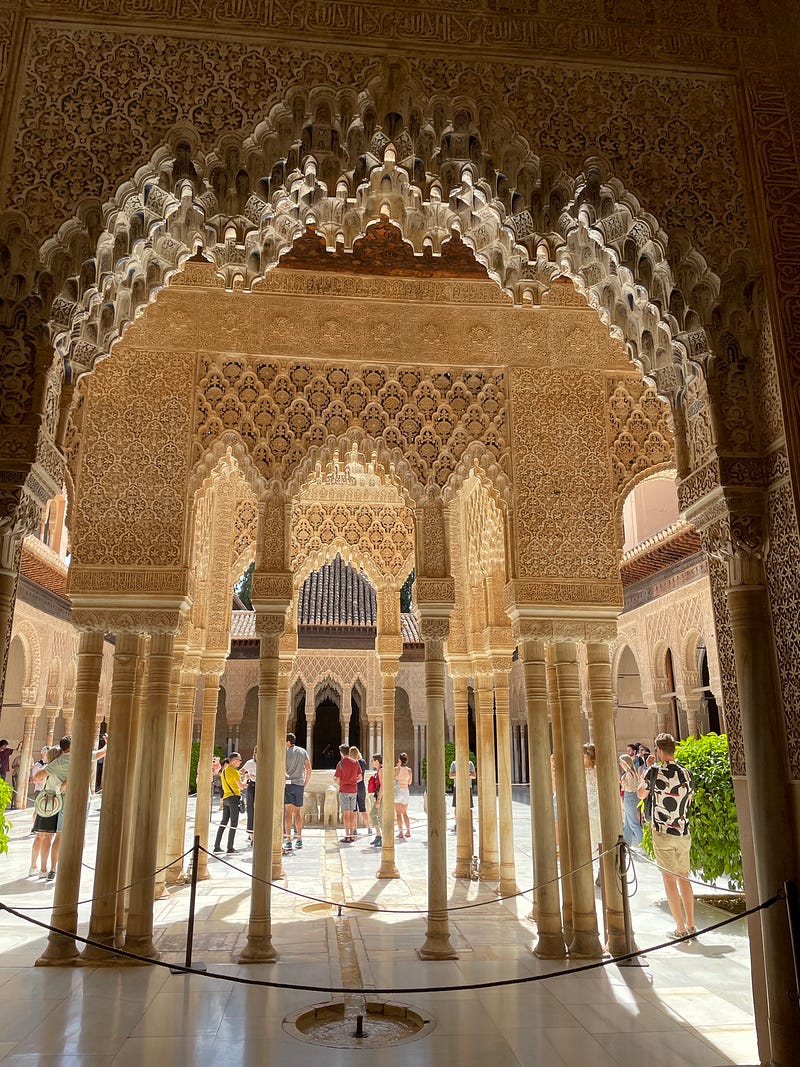
Court of the Lions (note fountain in the center), Nasrid Palace — photos by Keith Kelley and Shahla Emadi, used with permission.

Two rooms off the courtyard are justly famous. One was closed, but the other, the Hall of the Two Sisters, was staggeringly beautiful.
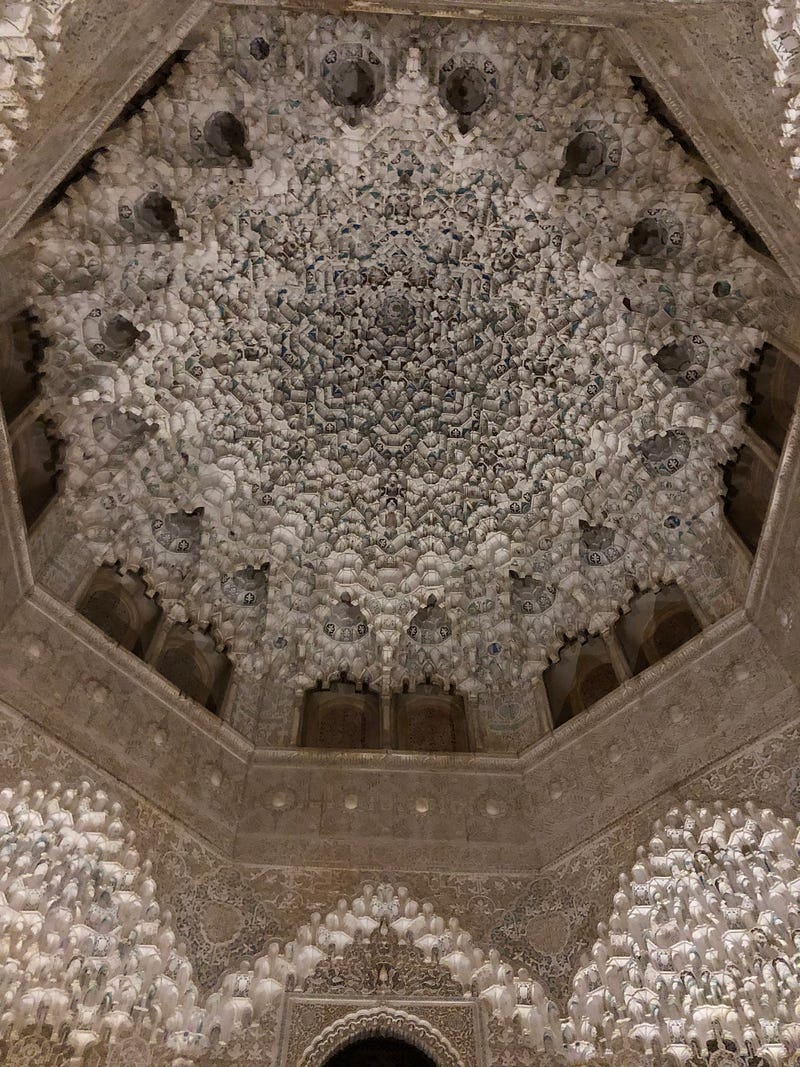
Hall of the Two Sisters, Nasrid Palace — photos by Keith Kelley and Shahla Emadi, used with permission.

The ceiling represents the seven heavens of the Muslim cosmos (source, Wikipedia). It has a unique stalactite-like stonework called muqarnas. Lacey, snowy, and floral in appearance, it crowns the room as an exquisite headdress.

Night Visit

“Who can do justice to a moonlight night in such a climate and place?…the effect is like enchantment.” — Tales of The Alhambra

I sensed in advance that a single encounter with the Alhambra would not be sufficient, and booking a second visit at night seemed like the perfect climax.

I half hoped I would meet one of the legendary ghosts, especially if guided to lost treasure. It didn’t happen, but there was plenty of magic afoot.
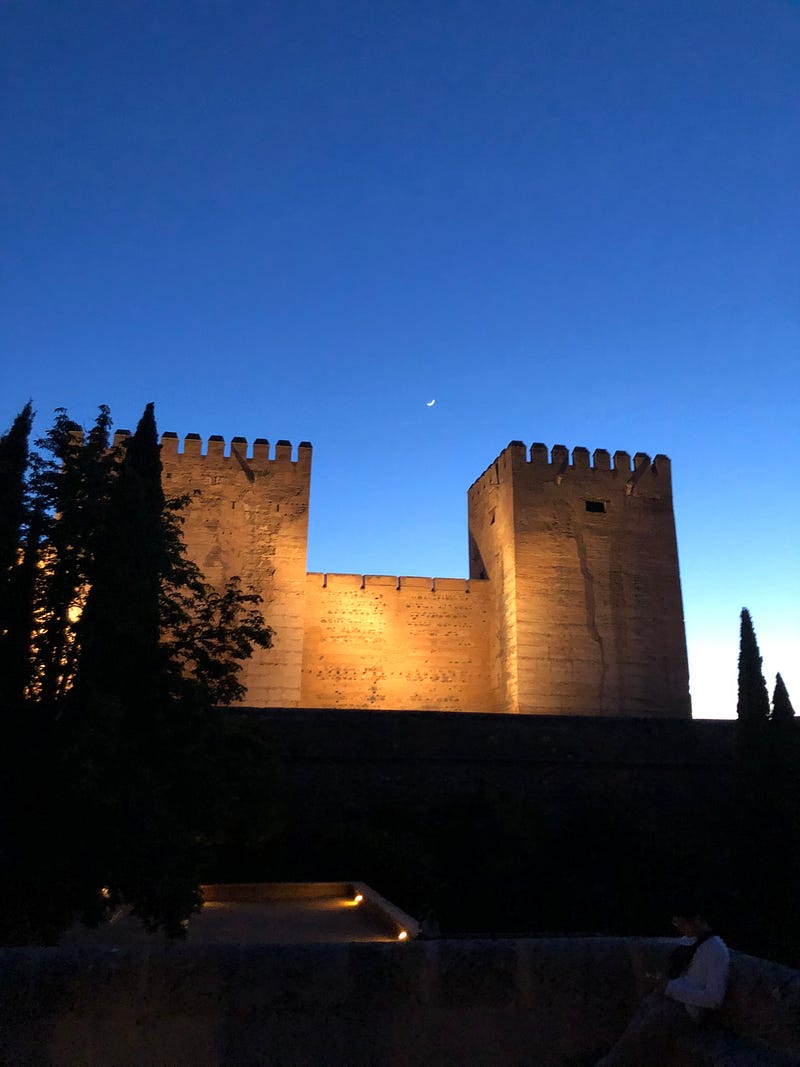
Moon over the fortress, the Alhambra — photo by Keith Kelley

The floodlight fortress with the moon above set the mood.
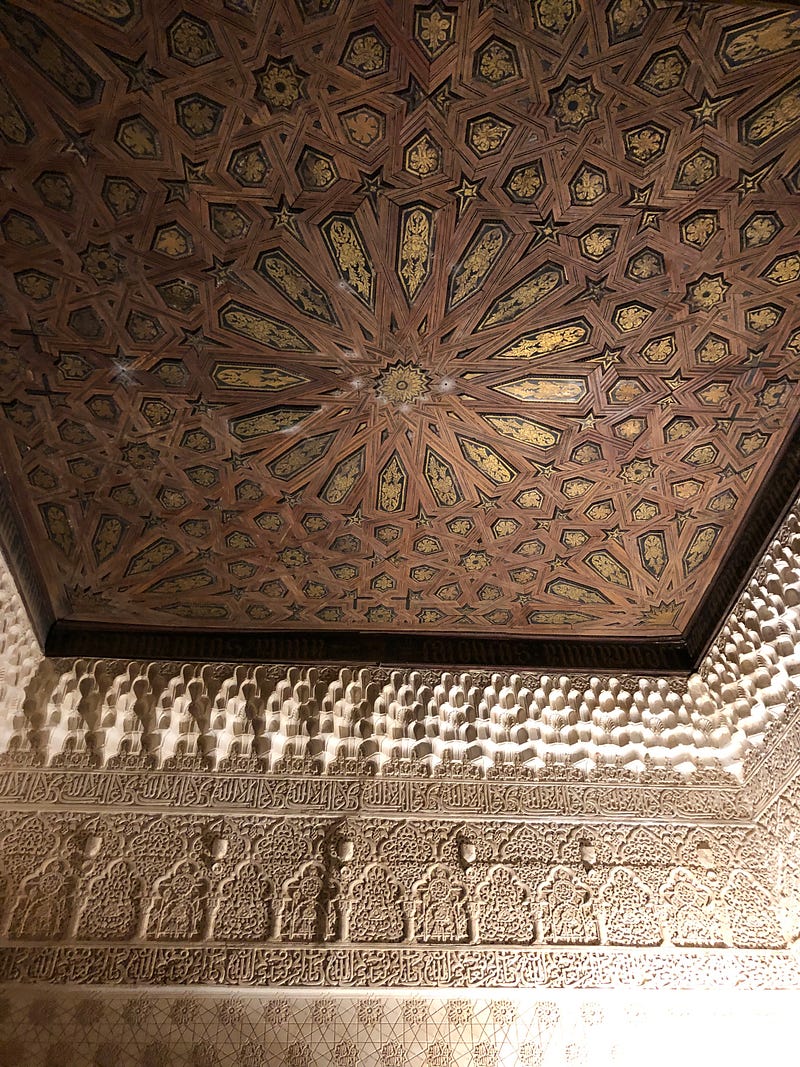
Ceiling and wall detail at night, Nasrid Palace — photo by Keith Kelley

Some others ventured forth, but it was less crowded than during the day. Ceilings had special significance since they were illuminated from below.

After a full day, my night visit was short; I felt I had absorbed as much beauty as possible. However, I left sensing the magic hanging over the complex.
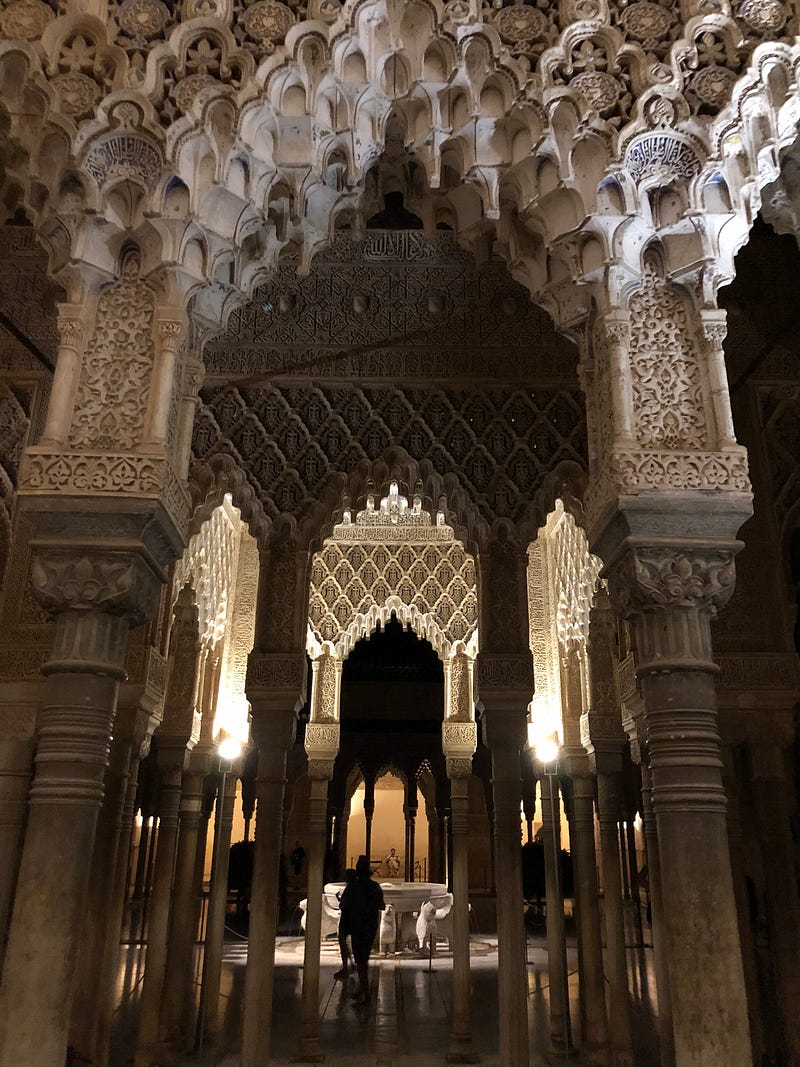
Night view of the Court of the Lions with Muqarnas, stalactite decoration — photo by Keith Kelley

Summary

How can one sum up the magnificent, awe-inspiring, and highest expression of craftsmanship and beauty?

Language didn’t fail, because exclamations and descriptions of awe were plentiful.

At one’s core, though, there is empathy and awe — awe at the beauty of the creations and empathy for how the creators proclaimed the divine. At the Alhambra, the flowers and plants are manifested in nature and in decoration and together testify to the divine.

End Notes

A visit to the Alhambra is facilitated by staying at the Parador de Granada, which is a lovely hotel on the grounds of the complex. We visited in early June, just before the weather became very hot.

*The term lyrical was suggested in the article, ‘Alhambra. Architecture with Poetry and Arabesque’, which can be found at Spainthenandnow.com.

The floral challenge was obviously inspiring to me. The incredible beauty of flowers was brilliantly captured in the following articles:

JoAnn Ryan’s sensational photos of flowers are captured in what she promises is Part One. I can’t wait for Part Two!

I loved the “explosion of color” documented by Michael Rhodes in his photos and words. What a lovely place to visit!

As always, thanks to the Globetrotters editors for their wonderful ideas for articles and to all of the interesting and profoundly kind Globetrotters readers and writers.

Monthly Challenge
Travel
Beauty
Flowers
Spain
Recommended from ReadMedium