
The Ascent of Civilisation
When humans built the first temples and towns, they filled them with art that expressed their values and intangible ideals…
People of Göbekli Tepe and their Many Stone Circles (c.10,000 BCE)
Göbekli Tepe, near the Euphrates in South Eastern Turkey, is an extensive complex of megalithic stone circles. These are possibly the first temples ever built. The culture responsible for their construction also initiated agriculture and the domestication of animals, apparently to feed the workforce engaged in building these temples and then the worshippers who came to use them.
This is the beginning of what we would call civilization, and once again, art appears to be the primary driving force. Just as with the earliest known art, it seems that the art of Göbekli Tepe is representing ideas and concepts that are otherwise intangible and related to belief in ‘something more’ — some historians think this is where the very first ‘organised religion’ began. The artistic representations of this culture’s valued ideals were revered enough to be shared and preserved as shrines to those concepts.
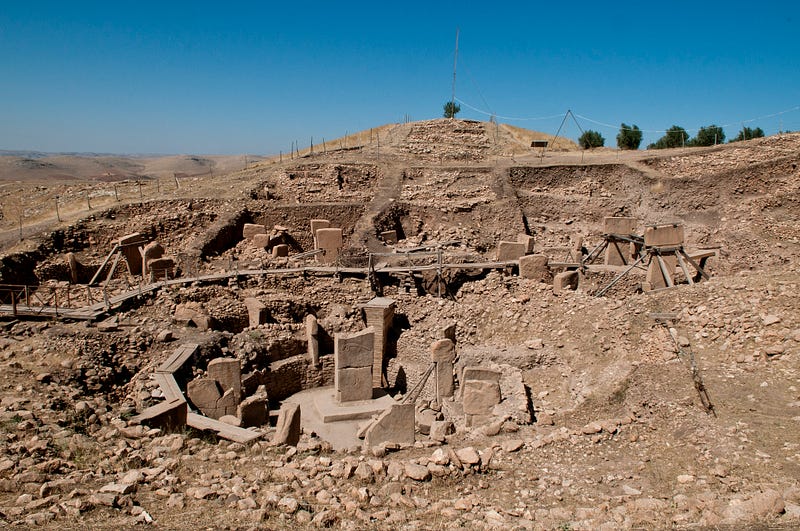
The site at Göbekli Tepe is still being excavated. Evidence of a settlement was noted as long ago as 1963, but the discovery of the site’s remarkable extent is attributed, perhaps somewhat romantically, to a man herding goats in 1994. Apparently, he chanced upon a circular pattern of great stone slabs and drew them to the attention of archaeologist Klaus Schmidt who recognised them as artificial, prehistoric structures.
The slabs turned out to be the flat tops of huge ‘T’ shaped megaliths arranged in circular formations that were constructed between 13,000 and 12,000 years ago. This predates Stonehenge by up to seven millennia. It’s also a time before many landmark inventions such as the wheel, fired pottery and metalwork.
It’s been estimated that it would’ve required a labour force of 500 to excavate, transport and carve each of the many pillars used in the circular temples. So far, four standing stone circles have been dug out and it estimated that there are 20 more similar structures yet to be unearthed. The circles vary in diameter between 10 and 30 metres, incorporating around 200 of the large pillars, many as tall as 6 metres.
The surfaces of the huge stone megaliths are decorated with sophisticated deep reliefs and sculptured forms, mainly of animals including boar, big cats, foxes, horses, insects, reptiles and birds. This indicates an understanding of, and profound respect for, the interrelated network of life — what we now call ecology.
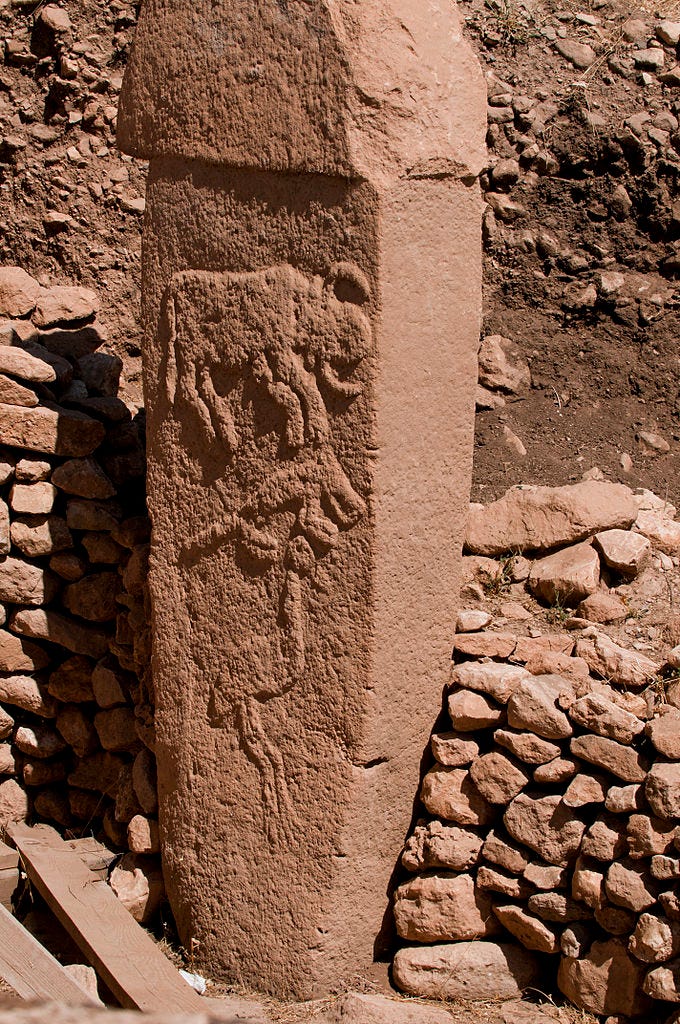
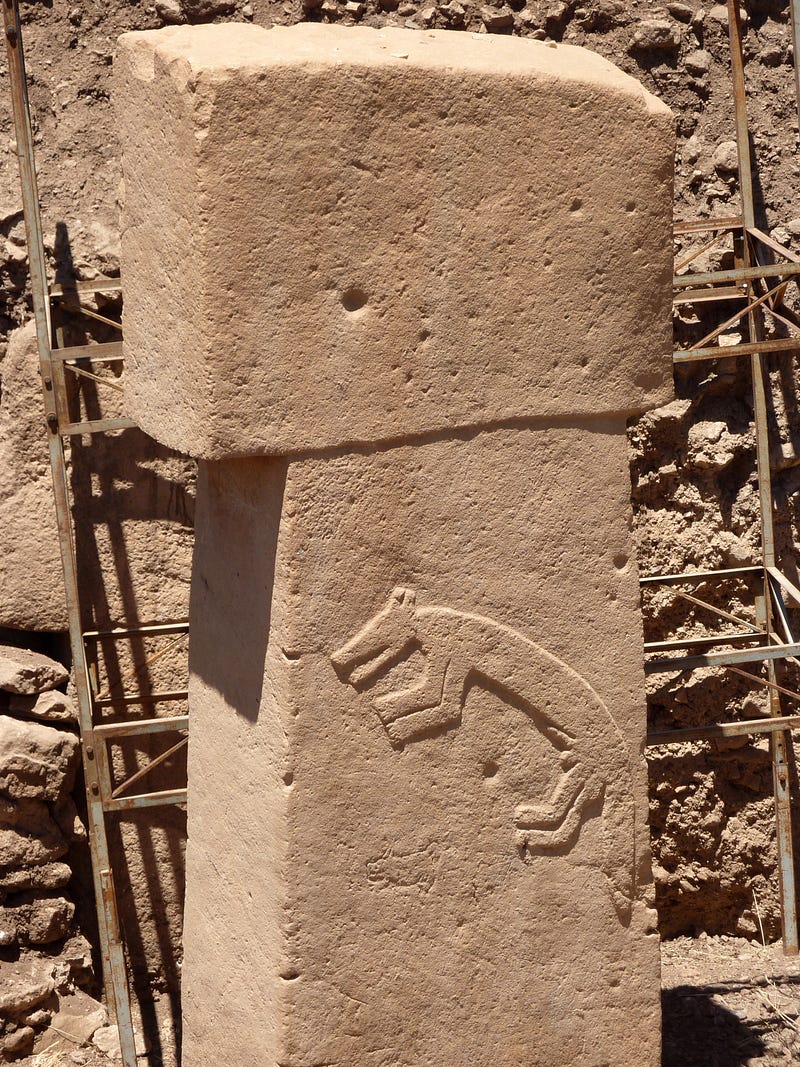
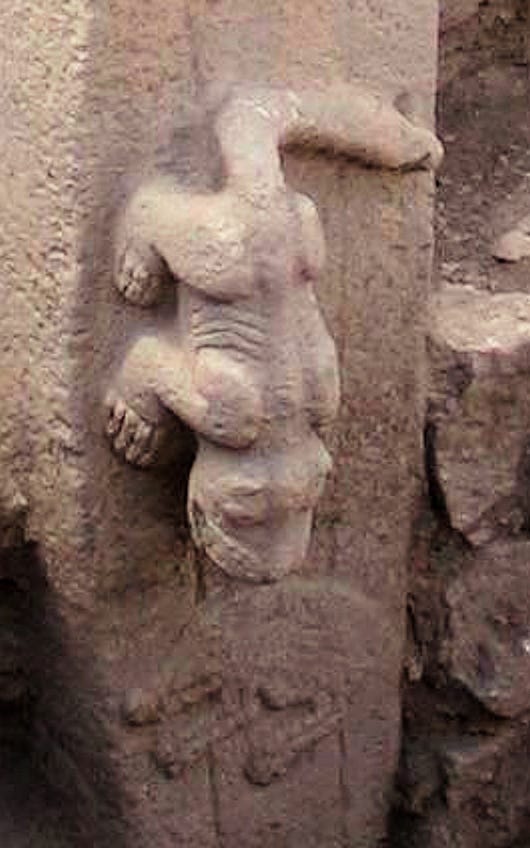
There are some stylised human figures and abstract symbols that can also be found in cave art, hinting that this is a continuous culture, developing from earlier neolithic cave dwelling antecedents. It is thought that each stone circle was at least part walled with random stone and probably had a roof. The evidence still being uncovered there challenges many established ideas about human history and the development of early civilization.
People of Çatalhöyük and their Shrines to the Mother and the Cow (c.7,000 BCE)
Çatalhöyük is also in Turkey, and is the site of the earliest known town at the hub of the first complex civilisation that we have evidence of. Archaeologists believe that it functioned as a trading centre for nomadic hunter-gatherers as well as a residential town for a population of around 6,000.
At the time when Çatalhöyük was established, the world human population had increased into the millions and agriculture had begun to develop as a result. The DNA of most commercial grain used to this day can be tracked back to semi-wild grasses grown in this area. The nomadic, hunter-gatherer lifestyle was not suited to agriculture and so camps began to become settlements.
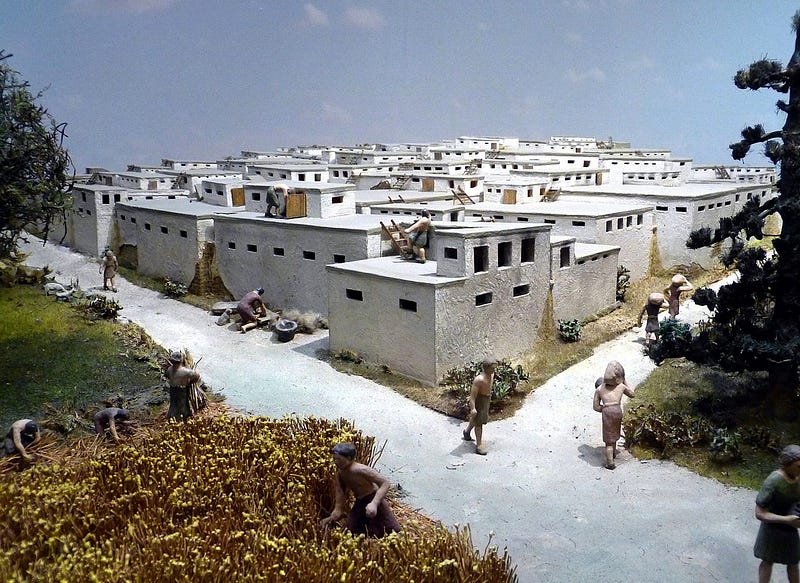
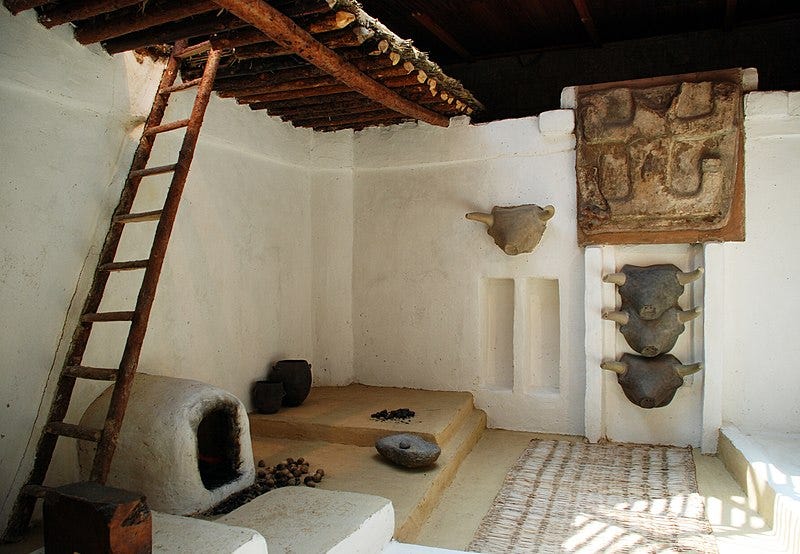
Apart from houses, there were other buildings with specific purposes such as grain stores, animal enclosures, markets, workshops, and shrines. There is also evidence that the earliest known economy developed here, based around trading in livestock, particularly cattle, and an early form of writing was developed to keep track of the ownership of cattle and other property.
The depiction of cattle is prevalent throughout ancient art and had been a repeated feature of cave paintings. It appears that to the people of Çatalhöyük, cows were holy. Here again, we also have the obese female figure being worshipped, this time in a purpose-built temple, probably as a mother goddess of fertility and abundance. There is a symbolic similarity with the earliest known goddess statuettes commonly referred to as ‘the three venuses’.
Some of the goddess figures found here are depicted in the process of giving birth, and share their shrines with stylised carvings of cows and the horned heads of cattle. This leads some commentators to believe that the people saw a correlation of the two, mother and cow, as essential elements for survival.
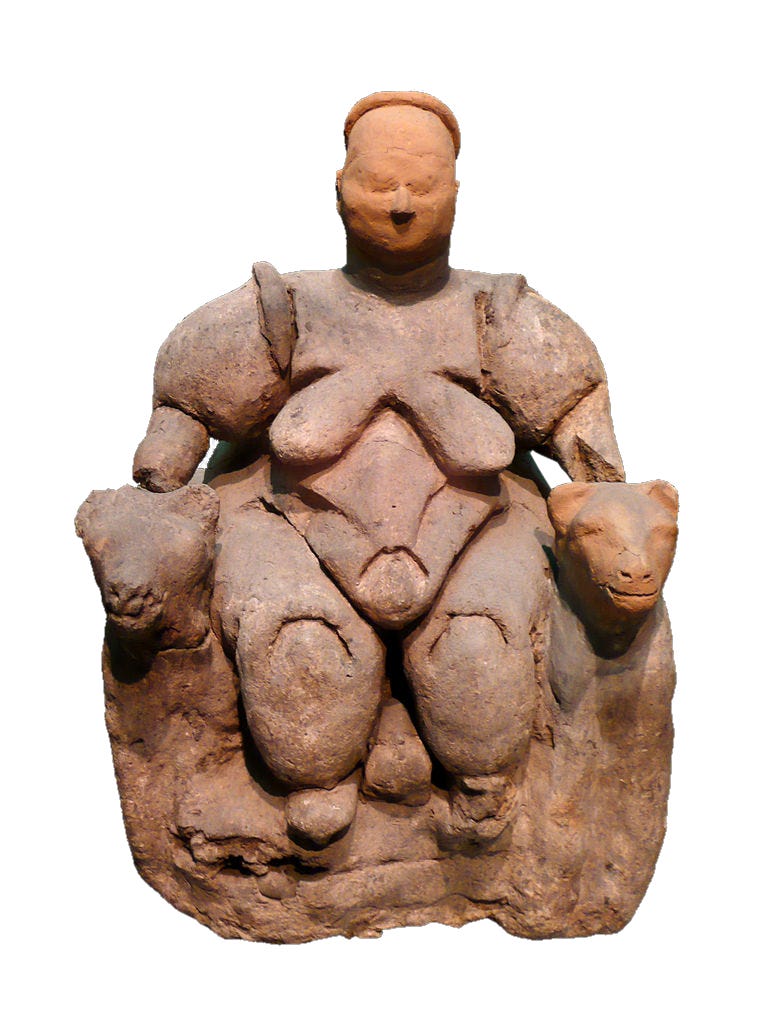
The mother figure is very obviously required for the continuation of the human race. Even with no knowledge of biology, it’s quite clear where the baby is physically produced! It is theorised that this observation would lead to a belief that all, or most, acts of creation were from the feminine principle. It is the female of the species that literally births the next generation, be that human, goat, bird, or cattle.
This would lead to a general understanding that the feminine principle is more dynamic than the masculine, and so fertility and creativity became associated with, and attributed to, the mother figure. As a result, all known prehistoric religions had a matriarchal focus, with the worship of goddesses as a central feature.
The reverence for cows would have stemmed from this general belief system, but the cow would also have been seen as an essential survival tool for other obvious reasons. A hunted cow could render up meat, leather, horn, bone and so on, but if you have access to a domesticated cow, you have a source of milk, manure, warmth and of course more cows. These cattle were predominantly the great aurochs, still revered and worshipped by the Minoan civilisation four millennia later, and now extinct...
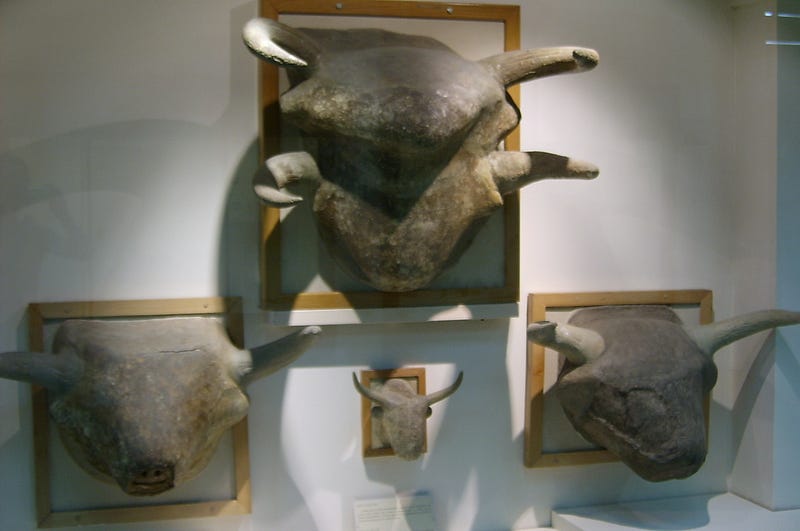
A cow can eat grass and straw, which are indigestible to a human, but turn these into milk, which is nutritious and could well make the difference between surviving through lean periods or not. In cold weather, the cow would also provide heat for your dwelling. If you have cows to spare, you can have meat, or trade calves for other food, goods and labour…
Anyone with ‘cattle to spare’, would’ve been considered rich.
Originally published at https://dean-evolution.blogspot.com.


