
The Art of War
An exploration of beauty forged from our darkest instincts…
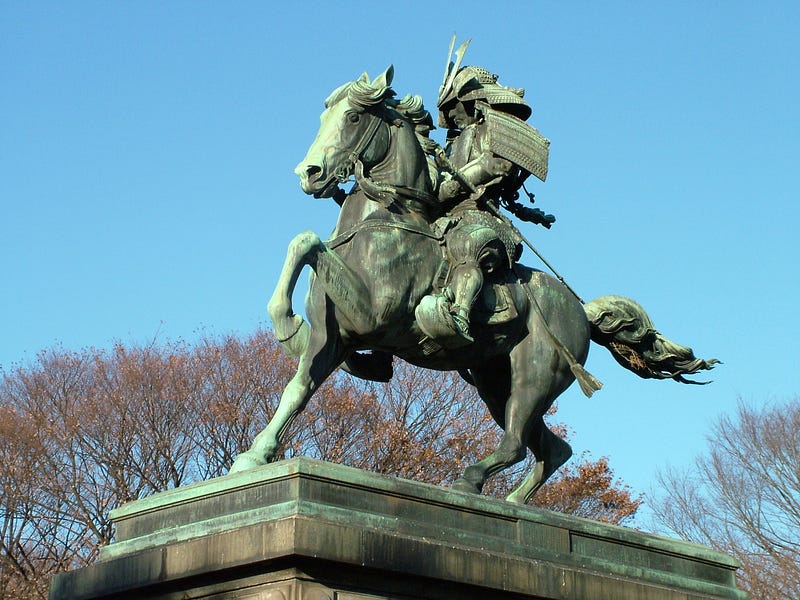
War was always an ugly business. Men wrestled like maggots infesting a muddy wound in the earth. The air darkened with guttural grunts and screams, sounds of bodies being torn asunder and ground into the trench-scarred fields. And unmoved above the fray, astride an armored beast of war, sat the grim warrior-general surveying the scene with satisfaction.
This might have been Alexander atop Bucephalus, a beautiful black stallion no one could tame but the thirteen-year-old future-king and conqueror.
Alexander’s father, King Philip II of Macedonia, refused to pay the thirteen talents of silver demanded for the horse, who reared up when anyone approached. Even the horse’s breeder, Philoneicus the Thessalian, could not manage him for the king. Philip, disgusted, ordered the horse removed.
But young Alexander challenged the throng who watched as the horse was led away. Was no one bold enough to manage such an excellent horse? He offered to pay the full price if he could not tame it himself. Everyone laughed including his father. But Philip grudgingly accepted Alexander’s offer and let him try to tame the horse.
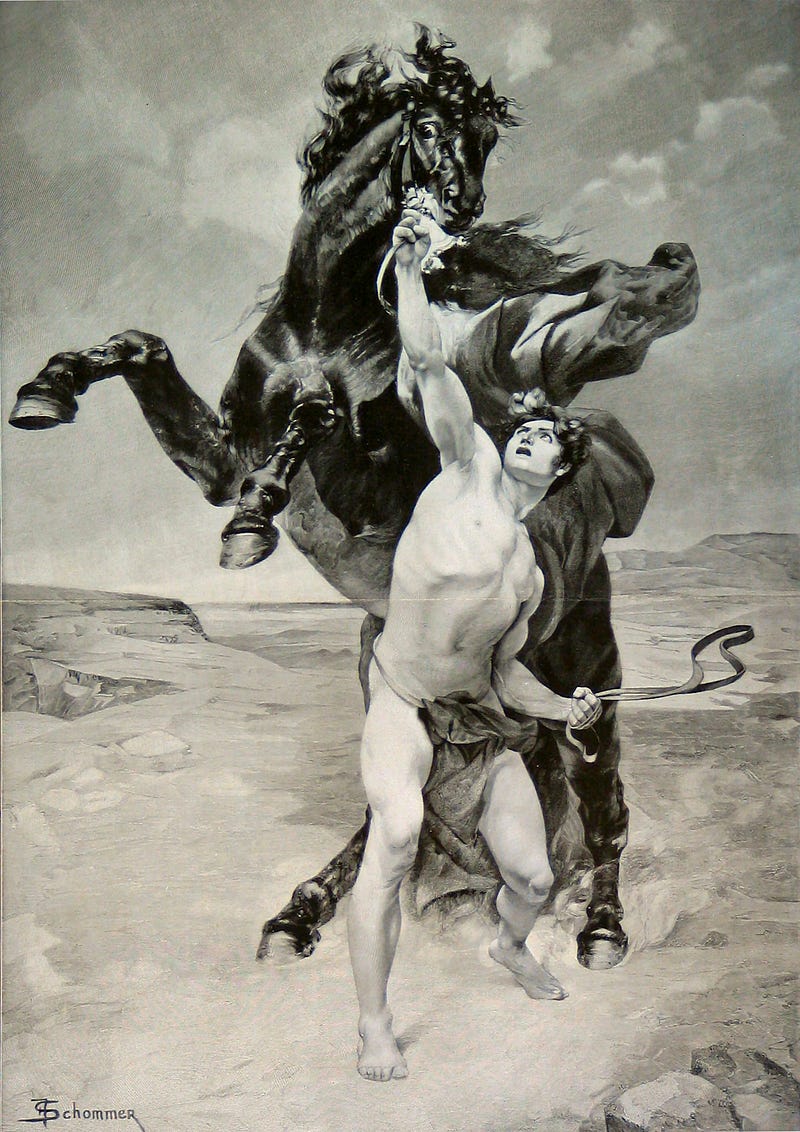
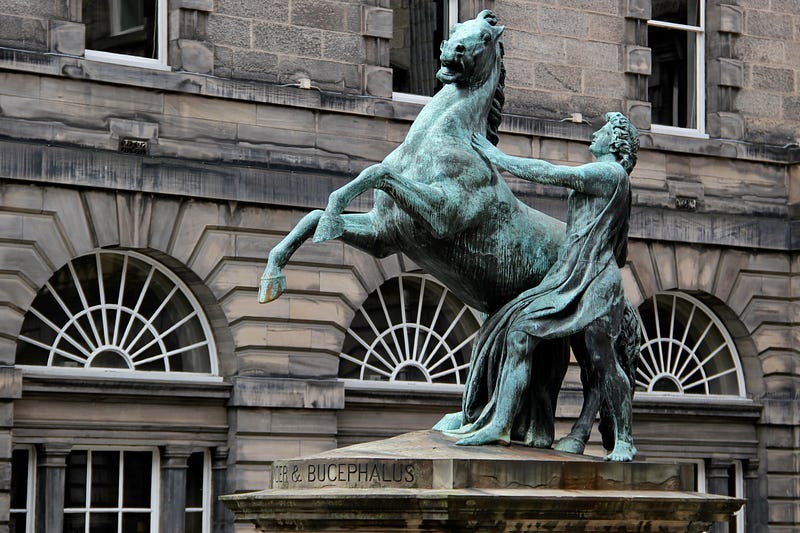
Surely the young Alexander was partly inspired by the raw beauty of the horse, and the two have in turn inspired artists over the millenia. Two barely tamed beasts of war, known for their beauty and ferocity and success in battle.
Alexander took the bridle and led the animal to face the sun, having noticed that he was skittish of his own shadow. He showed the horse that there was nothing to fear, slowly moving him about, stroking and shushing him gently, removing his cloak since it fluttered and startled the beast. Then as the horse calmed to his new friend, Alexander in one smooth leap mounted him and slowly drew in the bridle and controlled him gently.
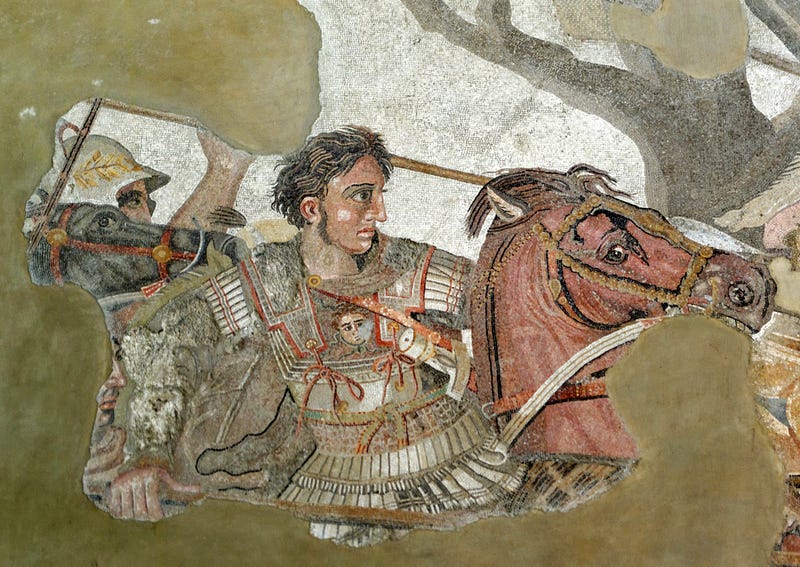
Alexander urged Bucephalus, as he named the horse, to gallop full speed out and back to demonstrate his control and returned to the crowd’s full applause and tears of joy.
Philip, according to Plutarch, said to Alexander:
“O my son, look thee out a kingdom equal to and worthy of thyself, for Macedonia is too little for thee.”
There is much to say about a still-young king who fears his own son’s demonstrated brilliance and ambition. Whether Philip’s reported words were real or not, the fear in Philip’s breast sears to this day. Alexander and his mother Olympias were thick as thieves and a few years after Bucephalus’s debut, Philip was assassinated, many thought at the direction of his wife.
Alexander and Bucephalus rode together into history, fighting from Greece all the way into modern day Pakistan, where some say Bucephalus died of his wounds at the Battle of Hydaspes where Alexander’s armies defeated King Porus. Alexander founded a city on the west bank of the Hydaspes river, called Bucephala after his beloved horse, now known as Jhelum, Pakistan.
Or perhaps the warrior-general may have been a samurai like Kusunoki Masashige, memorialized in bronze outside the Tokyo Imperial Palace. At his side rested one the legends of the samurai, his sword (katana or the older tachi). A whisper-curved sliver of razor-honed folded steel embodying the soul of the swordsmith, themselves as legendary as the samurai who wielded their blades.
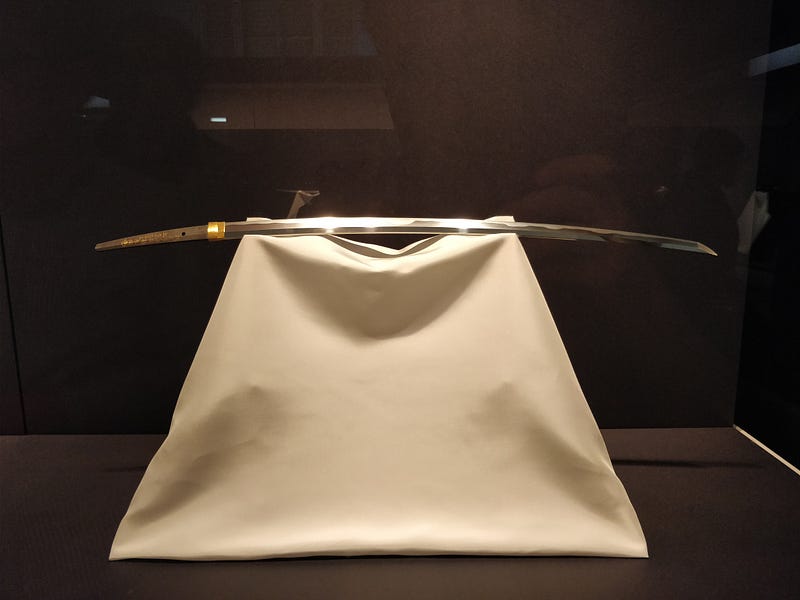
Goro Nyudo Masamune was a priest and Japan’s greatest swordsmith. Legend has it that Masamune was challenged by a rival swordsmith, his student Muramasa, to see who could make the finest blade.
They both worked tirelessly and completed their masterpieces. Then they met and decided on a test to determine who made the better blade. The contest was to suspend the sword, cutting edge facing upstream into the current, and see which cut the river’s offerings best. The upstart challenger Muramasa went first, and put his sword, named Juuchi Yosamu (10,000 Cold Nights), into the stream. Everything that passed its way, fish, leaves, even the air, was cleaved as it touched the razor edge. The master, Masamune, was impressed by his student’s work.
Then Masamune placed his blade, called Yawarakai (Tender Hands), in the water. Everything that came its way, leaves, fish, and the air itself, gently passed around Masamune’s blade without being cut.
Muramasa mocked and heckled his teacher, that he could not make a sword that cut a single thing.
But meanwhile a monk had been nearby watching the contest, approached the two master swordsmiths, and interpreted what he saw:
“The first of the swords was by all accounts a fine sword, however it is a blood thirsty, evil blade, as it does not discriminate as to who or what it will cut. It may just as well be cutting down butterflies as severing heads. The second was by far the finer of the two, as it does not needlessly cut that which is innocent and undeserving.”
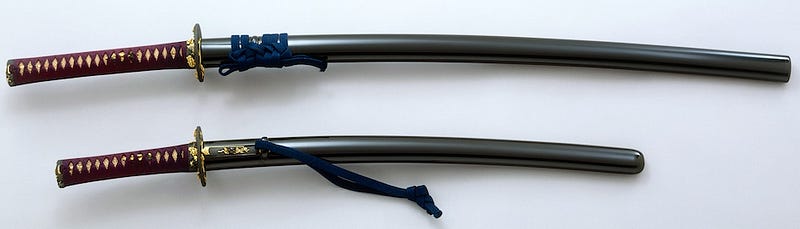
The scabbard (saya) and hilt or handle (tsuka) were made of wood. The ironies of wood in war are many. The first weapons by the earliest humans, and likely long before, were probably wooden clubs. Now, these beautiful, polished and lacquered wooden saya represented the lethal blade sheathed and at peace. Separated from the saya by the ornate metal hand guard (tsuba), the wooden tsuka was the means to wield death.
The graceful, slender curves of the saya reflected and matched the grace of the blade hidden within. Those curves were not merely ornamental. They represented the cold optimization of force and speed, mass and concentrated impulse at a razor edge. This was not a bludgeoning weapon, a baseball bat hammering a ball across a hundred of yards of open field. The katana’s curve represented the raptor’s arcing velocity, slicing through the air and armor, flesh and bone.
The grace of the raptor isn’t limited to antique weapons crafted by inspired artists like Masamune. Today, we know the amplified lethality of a single pilot in a fighter plane like the F-16 Fighting Falcon. We have watched the pinpoint accuracy of these planes dropping munitions or video-guided missiles onto enemies on the ground, so it is hard to focus on the singular beauty of the lines this death machine embodies.
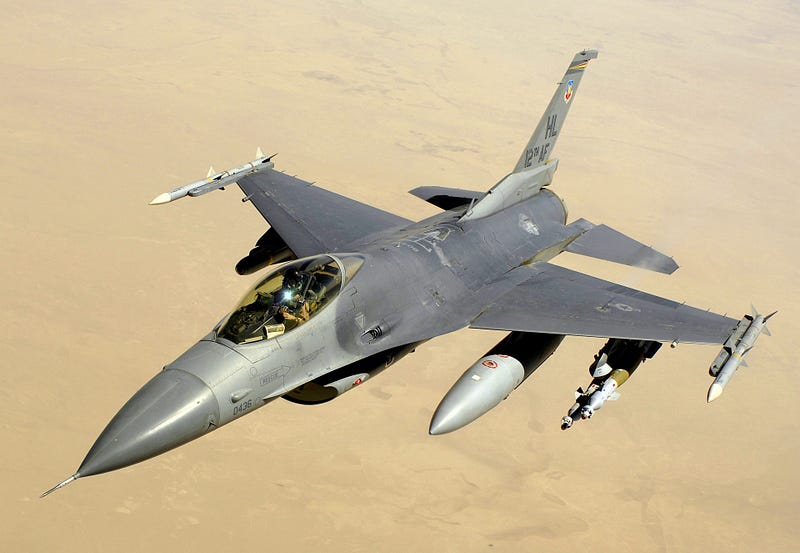
But look again, you can see the grace of the plane’s profile traces the lines of the katana. It seems clear that the harsh requirements of warfare, of optimization and efficiency, the engineering of death through aerodynamics, for speed and range and maneuverability, unexpectedly and ironically yield lines of celestial beauty.
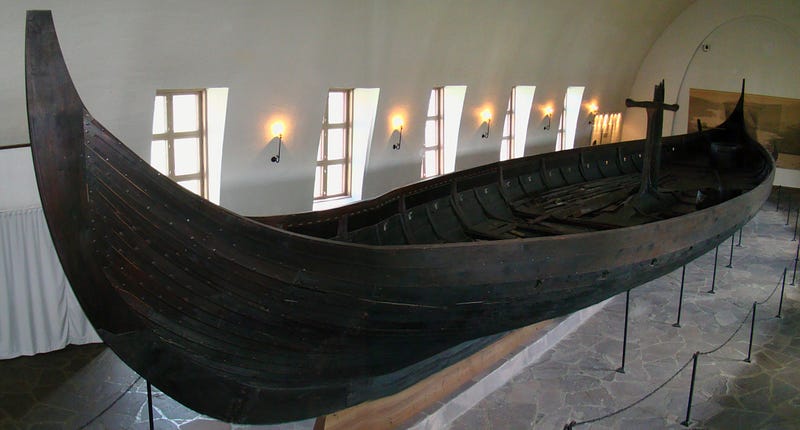
Look at the gorgeous lines of oaken planks wrought by Viking shipwrights a thousand years ago, optimized for speed and durability on the cold North Atlantic Ocean. Ships bred by war to cut across the stormy seas and then stealthily wriggle up estuaries and rivers far upstream into the heart of their victim’s homelands, rich with plunder and slaves.
Gentle, graceful curves reflect through time and space, like infinite reflections in two facing mirrors, in the Viking longship, in the katana, in a modern fighter plane…
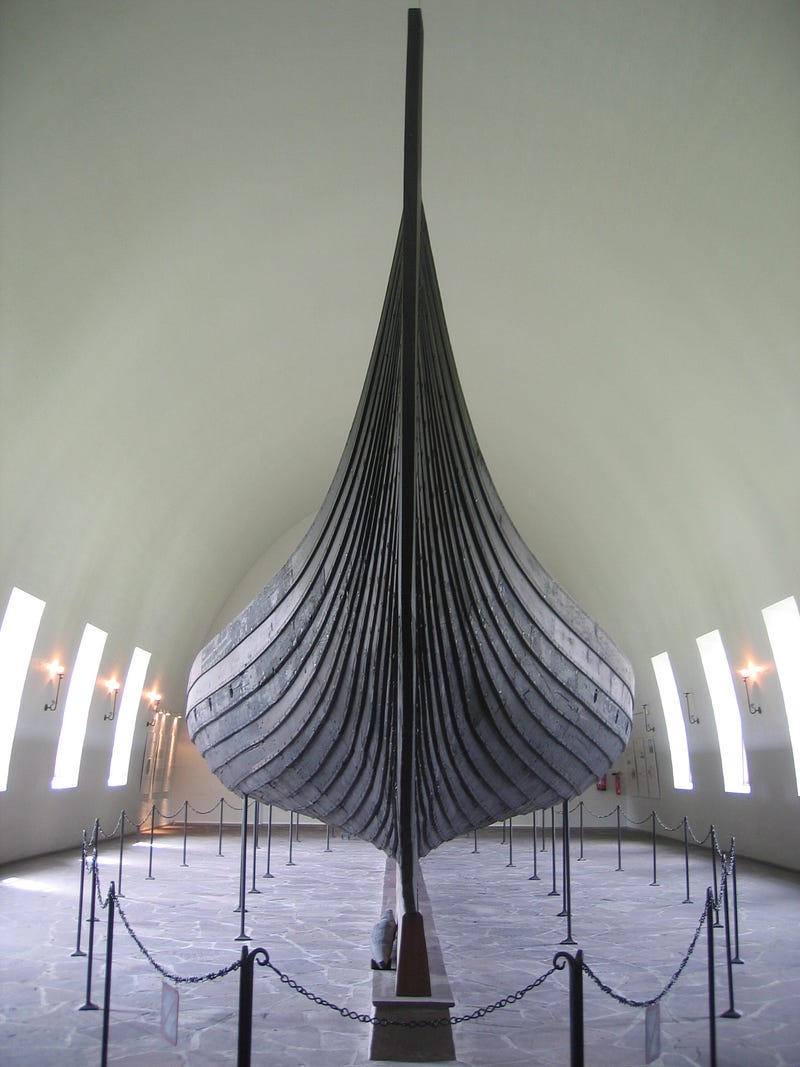
Unfortunately, art and war are inextricably linked. Historically, those who could afford the best armor and weapons also hired the best craftsmen to personalize and beautify their investments.
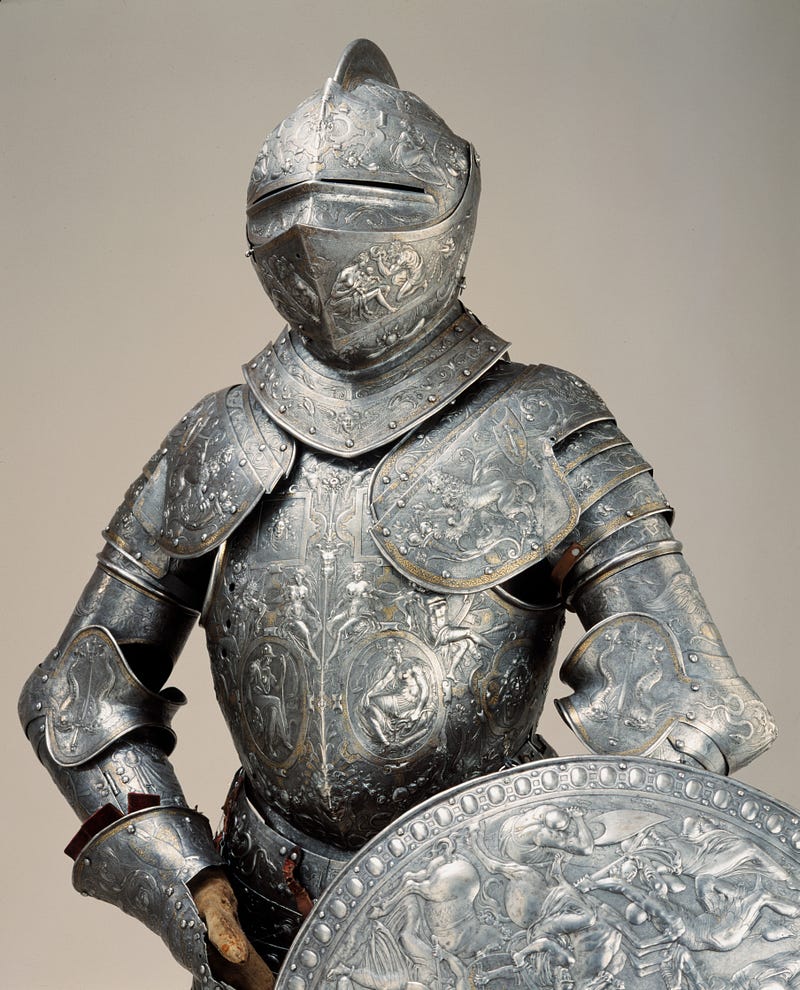
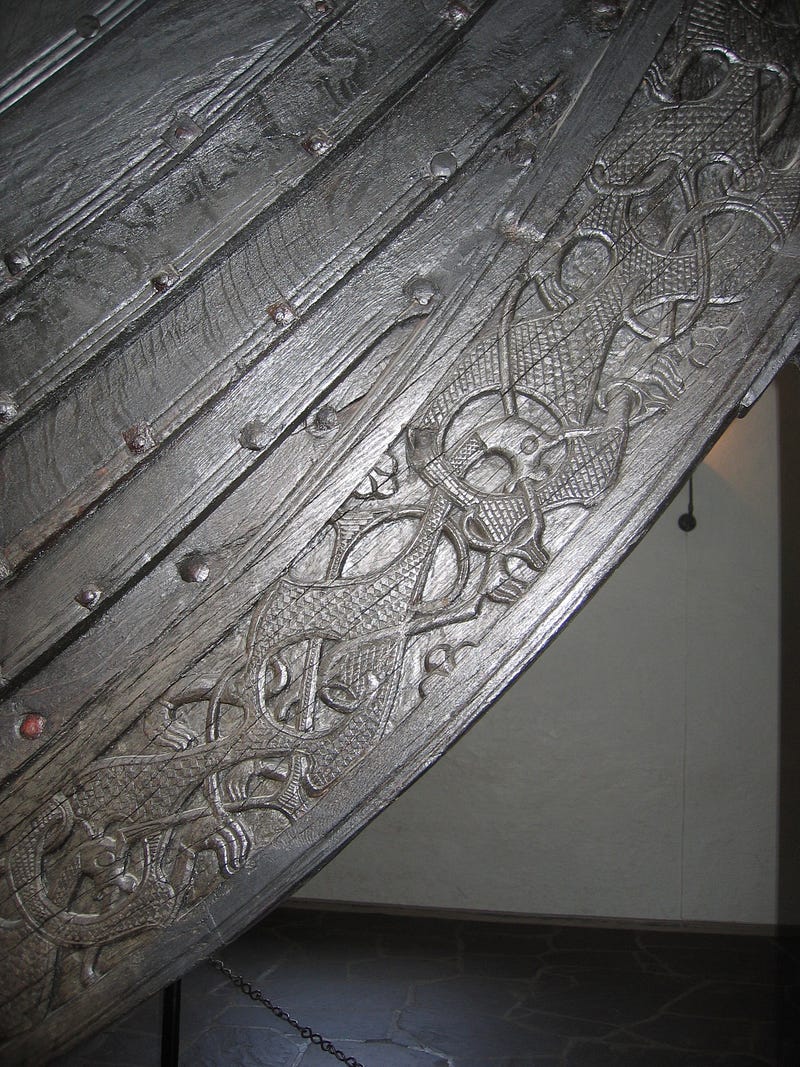
Are we glorifying, rationalizing, and enabling war when we admire the handiwork of armorers from past millenia, displayed proudly in art museums around the world?
I don’t know.
What I know is that beauty is a reflection of nature, and it seems at times that war is in our nature. And like a flower that persists and breaks through the concrete in a war-torn city street, beauty persists even in our darkest nature.
I think this is one reason I find particular pleasure in exploring the ugliest pieces of wood, to see if I can find the beauty even in a rotten, worm-eaten scrap, like here:
Some of the themes here come from an earlier article:
Thanks again for reading, and please share.
Follow this publication: https://medium.com/woodworkers-of-the-world-unite
Twitter at https://twitter.com/DuuudeScience
Facebook at https://www.facebook.com/sciences.duude.1/
Email at [email protected]