avatarScienceDuuude

Free AI web copilot to create summaries, insights and extended knowledge, download it at here

2610

Abstract

itCopyText">Unsplash</a></figcaption></figure><p id="b472">I find that the bones of boats are every bit as musical as those of a whale and soar just as high, tacking across the percussive waves of high cirrus clouds.</p><figure id="206e"><img src="https://cdn-images-1.readmedium.com/v2/resize:fit:800/1*cQzQFE8P6Hykhe1ZE9DJVA.jpeg"><figcaption>Windward Calm by David Robinson (Photo by SageMacG, <a href="https://commons.wikimedia.org/w/index.php?curid=87435515">Wikimedia Commons</a>)</figcaption></figure><p id="8bf4">Watching boat-builders at work is like watching God build a whale.</p><p id="28da">Leviathan ribs ripple across space-time in wooden harmony, framing the fluid-future trajectory of phosphorescent seas, galaxies of bioluminescent stars splashing against the once-and-future prow.</p><p id="d7e1">Ribs slowly extend from the spine of the boat, the lowest and principal timber running from bow to stern, the keel, <a href="https://www.etymonline.com/word/keel">an ancient word</a> that comes from the Middle English kele, and <a href="https://en.wikipedia.org/wiki/Keel">Old English</a> ceol, which in turn comes from the Old Norse word kjolr, Danish kjol, and Swedish kol, those deriving from the Proto-Germanic gwele, and ultimately from the <a href="https://en.wiktionary.org/wiki/keel#Etymology_1">Proto-Indo-European</a> gewlos.</p><figure id="c473"><img src="https://cdn-images-1.readmedium.com/v2/resize:fit:800/1*IDVFTPb_phrrITKxgIO1SA.jpeg"><figcaption>Smithsonian Folklife Festival — Basque culture — shipbuilder (Wikimedia Commons)</figcaption></figure><p id="bc9a">The very first written English word was keel (spelled cyulae), recorded by the 6th century British cleric St. Gildas. Gildas wrote <a href="http://www.tertullian.org/fathers/gildas_02_ruin_of_britain.htm">The Ruin of Britain</a> (De Excidio et Conquestu Britanniae) in Latin, and described the Saxon invasion, landing on British shores in three ships:</p><blockquote id="f08e"><p>“Then there breaks forth a brood of whelps from the lair of the savage lioness, in three cyulae (keels), as it is expressed in their language, but in ours, in ships of war under full sail, with omens and divinations.”</p></blockquote><p id="9fa2">Terror rode the waves for centuries, in boats built from wood that traced celestial lines. Boats bred by blood and war for speed, thus gaining the grace and beauty of dolphins shearing the water.</p><figure id="8f7b"><img src="https://cdn-images-1.readmedium.com/v2/resize:fit:800/1*5iUZUrcg4amoFqKw22IIyg.jpeg"><figcaption>The Gokstad ship, on display at the <a href="https://en.wikipedia

Options

.org/wiki/Viking_Ship_Museum_in_Oslo">Viking Ship Museum in Oslo</a>, Norway (Wikimedia Commons)</figcaption></figure><p id="41e3">Tell me the Viking shipwrights weren’t touched by heavenly voices, laying down melodic planks that thrill and ease the eyes and waves? That they weren’t inspired to build angels on the water, before launching them into the cold and cadaverous gray North Sea loaded with their murderous brethren beating the waters with synchronous groans?</p><p id="4753">Look, just look at these jewels of the sea! Buried for a thousand years, yet still bearing that smooth skin aching for a long caress along the nerve-ridden sides, and the ticklish joints between the planks. Sleek, slender, symmetrical, promising a youthful and joyous ride across the waters and over the fog-bound horizon.</p><p id="cc49">I am as godless as the Vikings, yet both they and I willingly relinquish our unbelief for just the few moments it takes for our eyes to follow the tapered curves of these oaken planks. This, say the Vikings, is what your heaven feels like? Yes, I say. I think so.</p><figure id="2a8d"><img src="https://cdn-images-1.readmedium.com/v2/resize:fit:800/1*Hc5U2U1gysBXs_tqgP4OBA.jpeg"><figcaption>The Gokstad ship, on display at the <a href="https://en.wikipedia.org/wiki/Viking_Ship_Museum_in_Oslo">Viking Ship Museum in Oslo</a>, Norway (Wikimedia Commons)</figcaption></figure><figure id="cd3b"><img src="https://cdn-images-1.readmedium.com/v2/resize:fit:800/1*kkOnLD6CFeeJQ9c6paN65w.jpeg"><figcaption>The Oseberg ship, Viking Ship Museum, Norway. (Wikimedia Commons)</figcaption></figure><figure id="6aed"><img src="https://cdn-images-1.readmedium.com/v2/resize:fit:800/1*pPGNc-vwncCrKI9breHDdQ.jpeg"><figcaption>The Oseberg ship, Viking Ship Museum, Norway. (Wikimedia Commons)</figcaption></figure><figure id="9408"><img src="https://cdn-images-1.readmedium.com/v2/resize:fit:800/1*vcH6RZ-4QRAEDDHIfzKVVg.jpeg"><figcaption>Detail from the Oseberg ship, Viking Ship Museum, Norway. (Wikimedia Commons)</figcaption></figure><p id="d1be">Thanks again for reading, and please share.</p><p id="cfd5">Follow this publication: <a href="https://medium.com/woodworkers-of-the-world-unite">https://medium.com/woodworkers-of-the-world-unite</a></p><p id="71f5">Twitter at <a href="https://twitter.com/DuuudeScience">https://twitter.com/DuuudeScience</a></p><p id="c95a">Facebook at <a href="https://www.facebook.com/sciences.duude.1/">https://www.facebook.com/sciences.duude.1/</a></p><p id="294f">Email at <a href="mailto:[email protected]">[email protected]</a></p></article></body>

The Beauty of Bones

Inspiration from simplicity and the skeletal scaffolding of wood and bone…

Photo by Mat Reding on Unsplash

When I was a youngster, I was both repelled and fascinated by skeletons and the remains of the dead. While bones will always retain a tinge of horror, anguish, revulsion, and all the associations of graveyards and slasher-movie screams, I also now find a beauty and magnetic charisma to their naked simplicity and inferred motion.

Fossils and trips to museums helped to pry skeletons away from the realm of night-terrors, towards a sedate landscape of appreciation and admiration for the rhythms of anatomy. Even today, the child in me wants to drag a stick across the ribs of a mammoth or a mastodon and hear the stony arpeggio ring across the vaulted room.
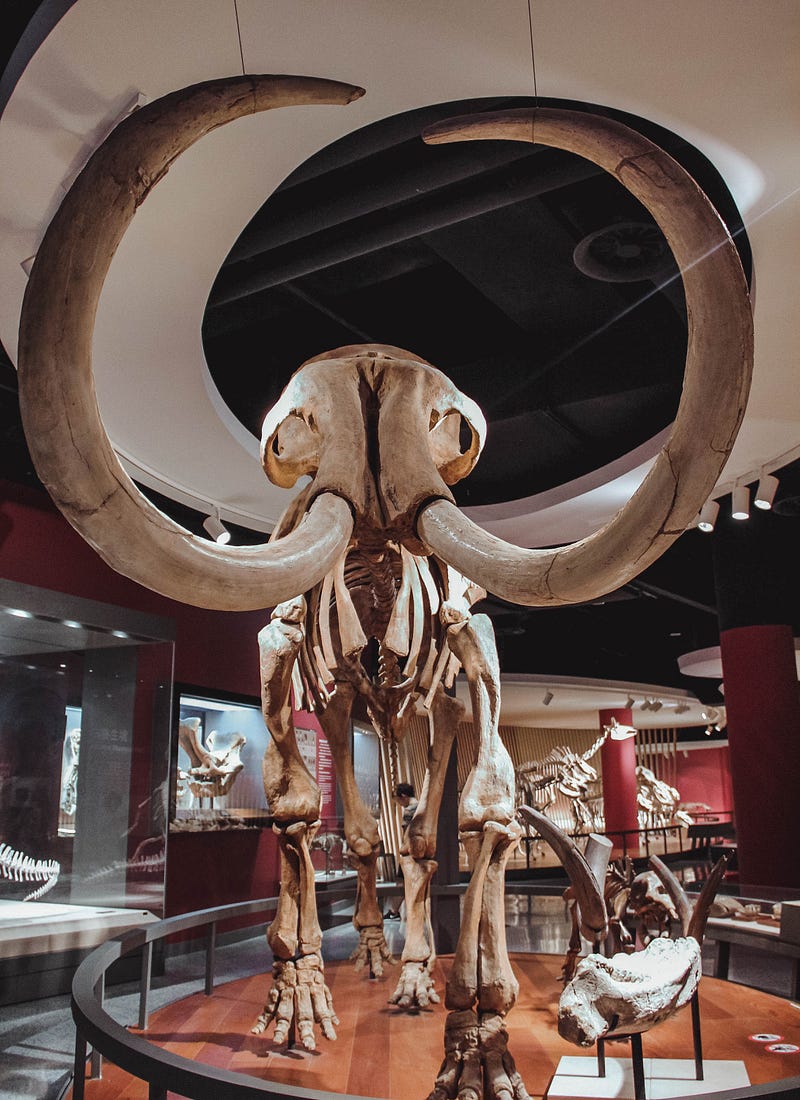
Photo by Maud on Unsplash

Who hasn’t looked in awe at the bones of a whale suspended as if in flight, and like a shipwright, planked the ribs and imagined a salty crew rowing the wooden beast across uncharted skies?

Haven’t you also looked across the whale’s backbone and wished you were a Tom Thumb pianist sprinting along its length slapping your hand against the vertebral vibrato, playing a glissando of immense spinal keys? But the whale’s bones remained far above your reach, and the music merely echoed within your ivory dome.
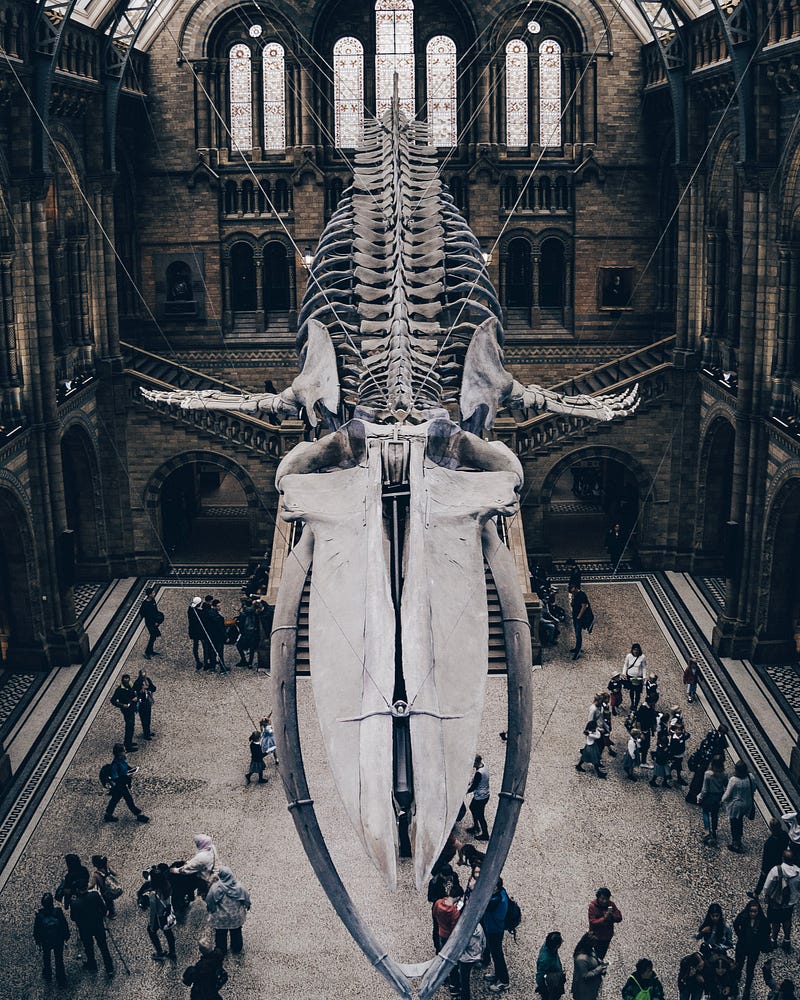
Photo by Jure Tufekcic on Unsplash

I find that the bones of boats are every bit as musical as those of a whale and soar just as high, tacking across the percussive waves of high cirrus clouds.
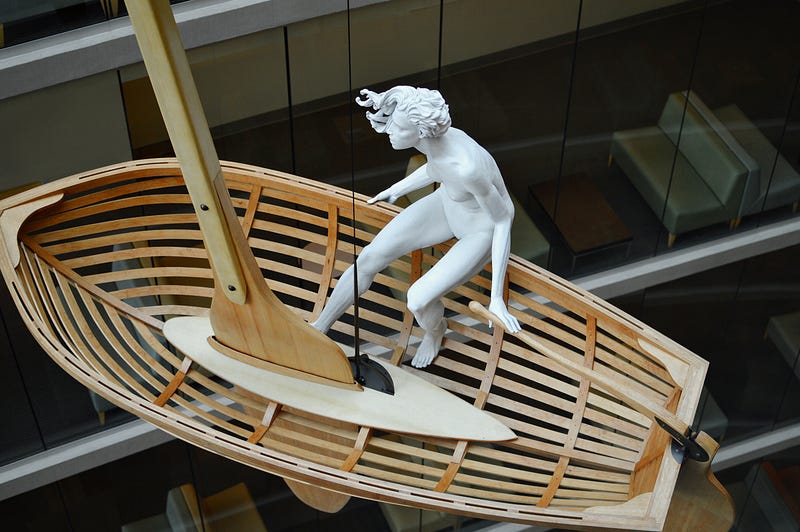
Windward Calm by David Robinson (Photo by SageMacG, Wikimedia Commons)

Watching boat-builders at work is like watching God build a whale.

Leviathan ribs ripple across space-time in wooden harmony, framing the fluid-future trajectory of phosphorescent seas, galaxies of bioluminescent stars splashing against the once-and-future prow.

Ribs slowly extend from the spine of the boat, the lowest and principal timber running from bow to stern, the keel, an ancient word that comes from the Middle English kele, and Old English ceol, which in turn comes from the Old Norse word kjolr, Danish kjol, and Swedish kol, those deriving from the Proto-Germanic gwele, and ultimately from the Proto-Indo-European gewlos.
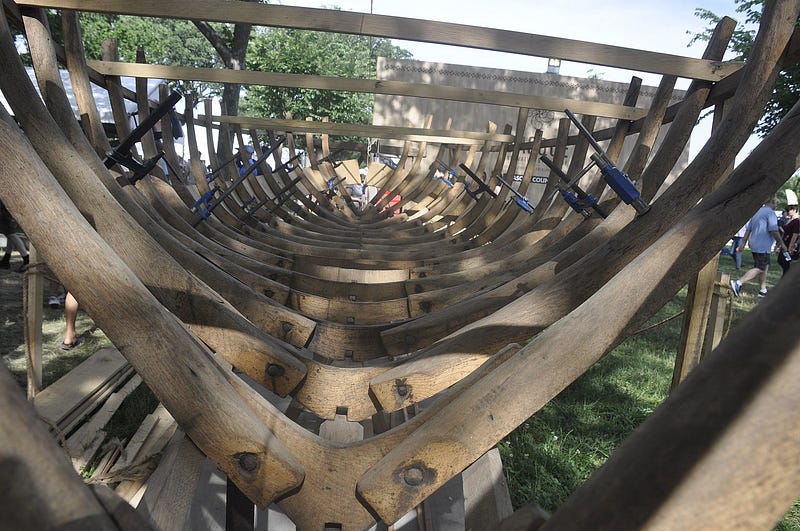
Smithsonian Folklife Festival — Basque culture — shipbuilder (Wikimedia Commons)

The very first written English word was keel (spelled cyulae), recorded by the 6th century British cleric St. Gildas. Gildas wrote The Ruin of Britain (De Excidio et Conquestu Britanniae) in Latin, and described the Saxon invasion, landing on British shores in three ships:

“Then there breaks forth a brood of whelps from the lair of the savage lioness, in three cyulae (keels), as it is expressed in their language, but in ours, in ships of war under full sail, with omens and divinations.”

Terror rode the waves for centuries, in boats built from wood that traced celestial lines. Boats bred by blood and war for speed, thus gaining the grace and beauty of dolphins shearing the water.
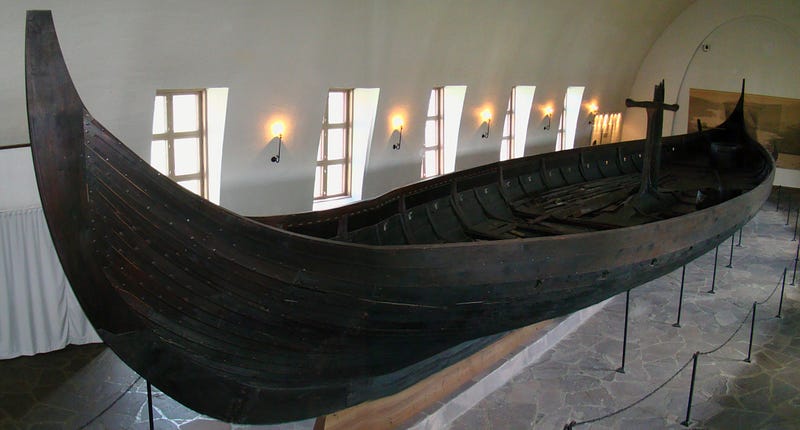
The Gokstad ship, on display at the Viking Ship Museum in Oslo, Norway (Wikimedia Commons)

Tell me the Viking shipwrights weren’t touched by heavenly voices, laying down melodic planks that thrill and ease the eyes and waves? That they weren’t inspired to build angels on the water, before launching them into the cold and cadaverous gray North Sea loaded with their murderous brethren beating the waters with synchronous groans?

Look, just look at these jewels of the sea! Buried for a thousand years, yet still bearing that smooth skin aching for a long caress along the nerve-ridden sides, and the ticklish joints between the planks. Sleek, slender, symmetrical, promising a youthful and joyous ride across the waters and over the fog-bound horizon.

I am as godless as the Vikings, yet both they and I willingly relinquish our unbelief for just the few moments it takes for our eyes to follow the tapered curves of these oaken planks. This, say the Vikings, is what your heaven feels like? Yes, I say. I think so.
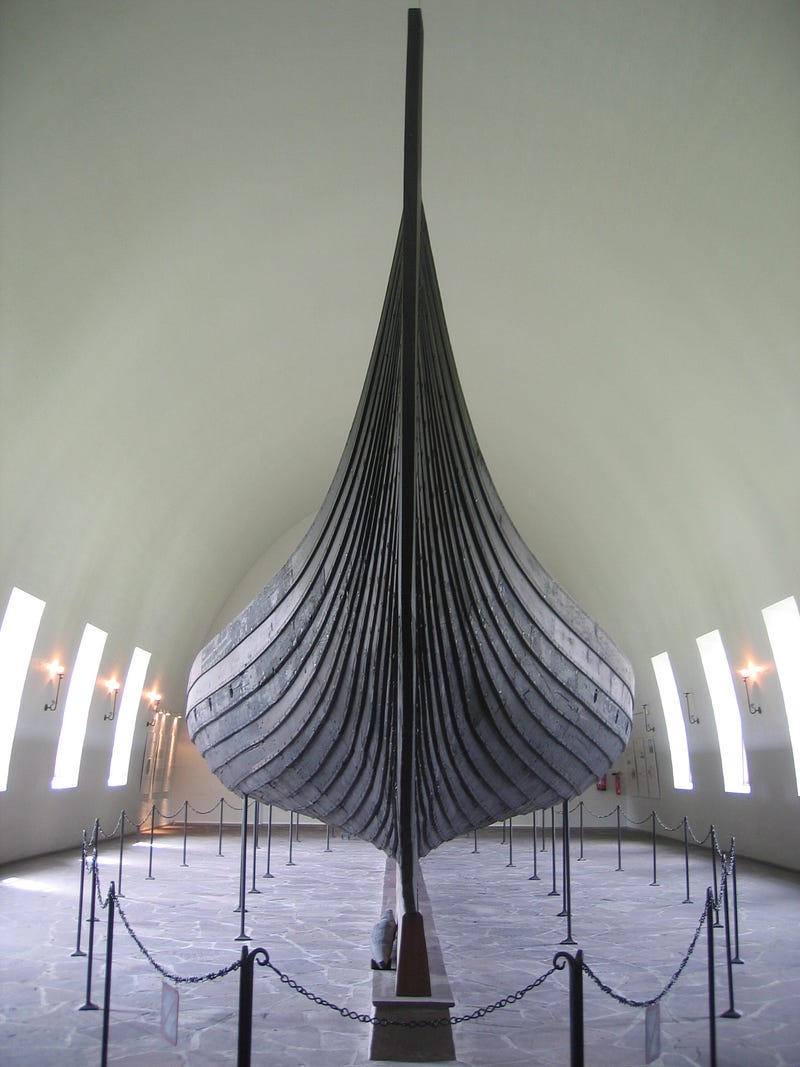
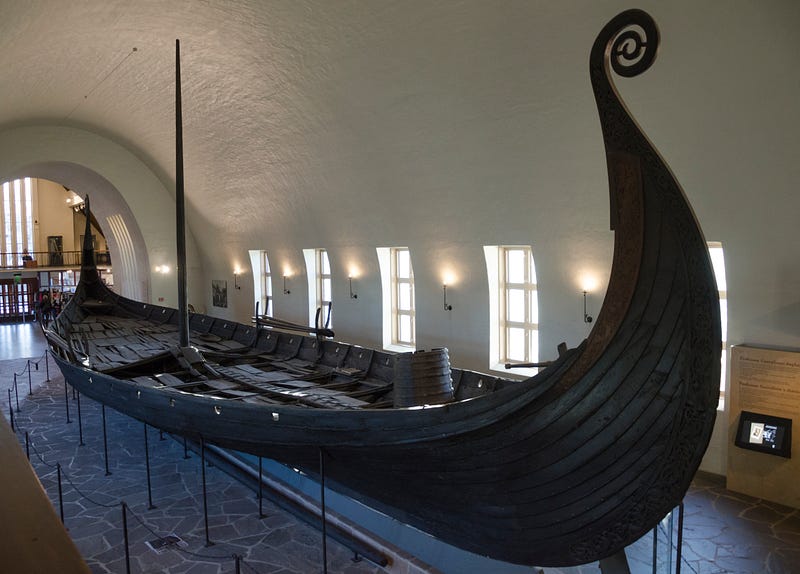
The Gokstad ship, on display at the Viking Ship Museum in Oslo, Norway (Wikimedia Commons)
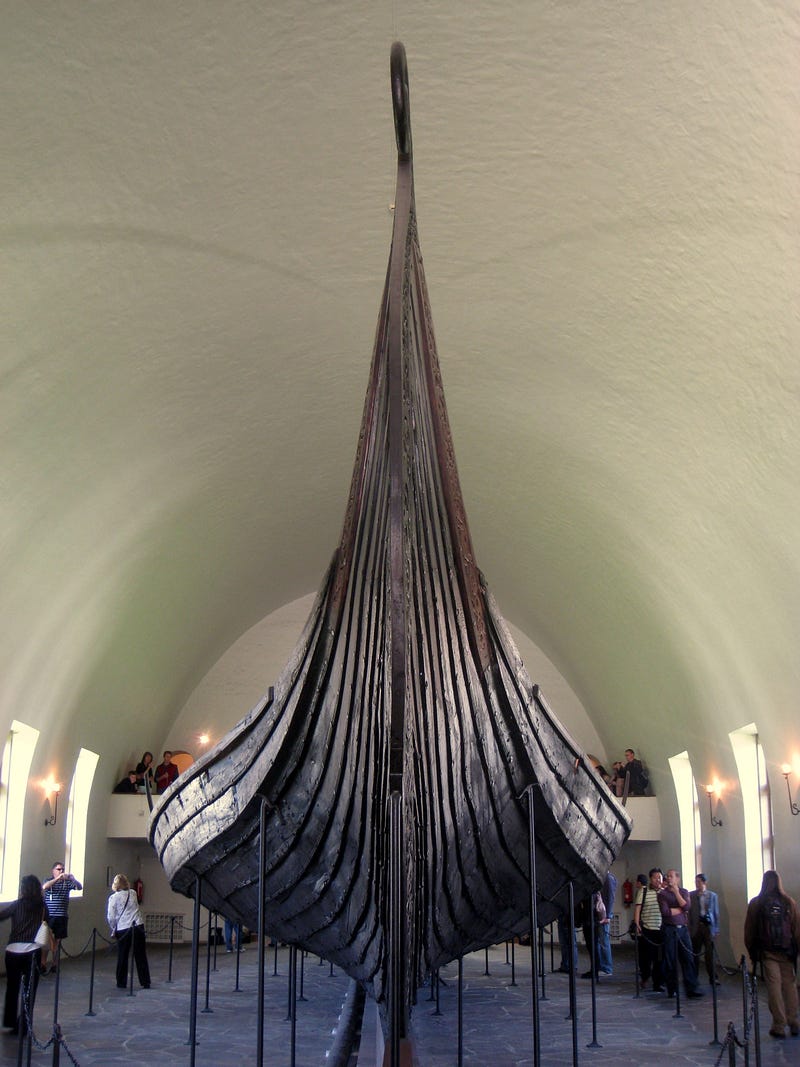
The Oseberg ship, Viking Ship Museum, Norway. (Wikimedia Commons)
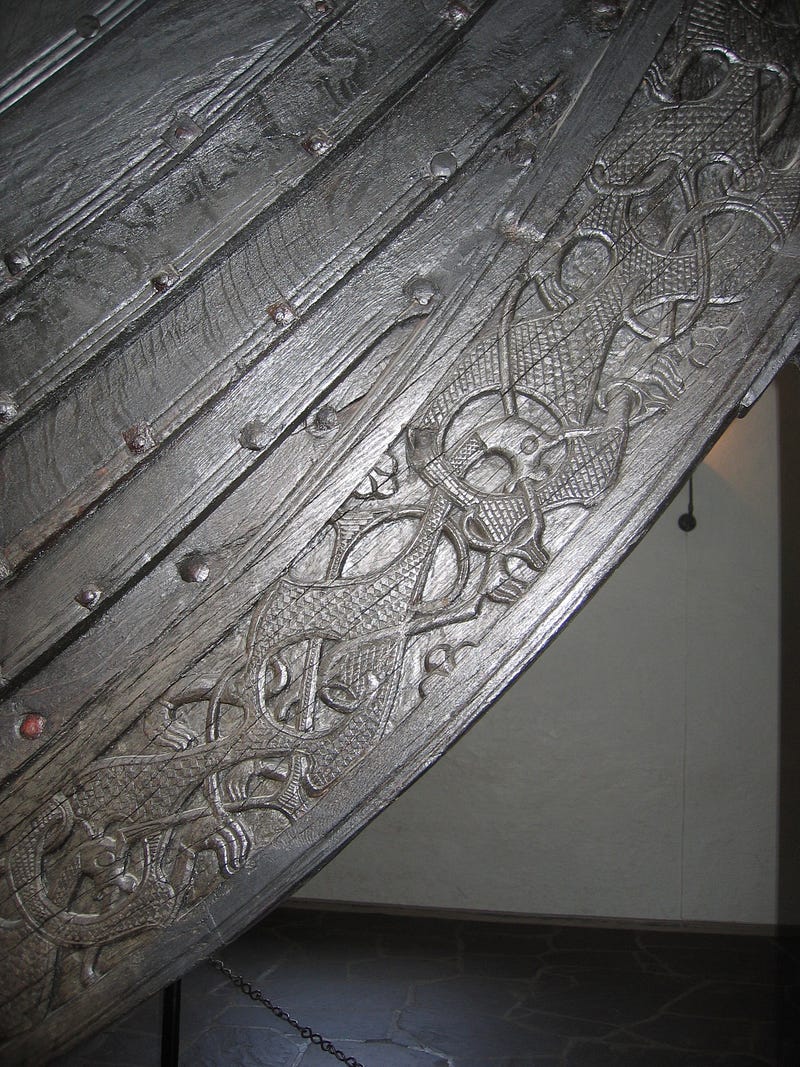
Detail from the Oseberg ship, Viking Ship Museum, Norway. (Wikimedia Commons)

Thanks again for reading, and please share.

Follow this publication: https://medium.com/woodworkers-of-the-world-unite

Twitter at https://twitter.com/DuuudeScience

Facebook at https://www.facebook.com/sciences.duude.1/

Email at [email protected]

Creativity
Poetry
Design
Makers
Woodworking
Recommended from ReadMedium