
The Action After Talk Project
I am founder of CALL (Creative Action Learning Lab) and a co-founder and Creative Director of Doowit.co which is a “challenge” platform.
At CALL, I focus on researching Creative Actions and Action-based Creativity. At Doowit, my job is designing and marketing a brand new “social action” platform which aims to enable people to take action in real life with a “challenge-response” format.
Today I am glad to announce the Action After Talk project presented by CALL. First, the project calles audiences of TED talks and other conference talks to take actions after watching talks. Second, I will publish and host Action After Talk challenges on its channel on Doowit. Third, I will serve the project as curator and host challenges. You are welcome to join me as co-curator or co-host of individual challenge.
If you are a member of the TED/TEDx community, you probably know a phrase Action After Talk (AAT) that means a big challenge for local TEDx curators: how to drive TED/TEDx talks’ audiences to take real actions in their real life. The Action After Talk project is inspired by the phrase. I was an active member of the global TED/TEDx community. In 2008, I co-founded the TEDtoChina project with a student in China while I was living in the US. The project grew from a translation blog to a hub for the Chinese TED/TEDx community and we supported local TEDx curators around the Greater China area and connected them together.
The Action After Tak project wants to bridge the gap of content and action, connect thinkers and doers, and transform micro actions as social innovations.
The CALL: http://medium.com/call4
Action After Talk at Doowit: https://doowit.co/profile/eL0leRMA
How to make Creative Actions happen?
At CALL, we have developed a systematic approach called Action-based Creativity for making Creative Actions happen. The approach is a four-step framework.
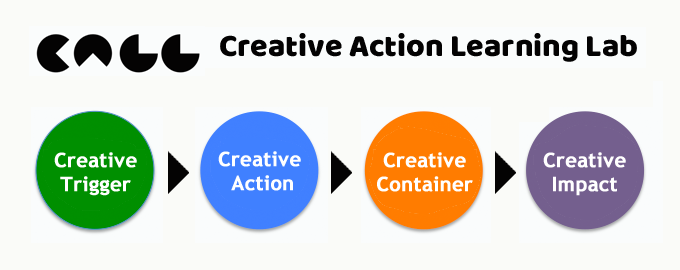
At first step, CALL focuses on design, development and curating Creative Triggers as resources for inspiring and guiding Action-based Creativity. At the second step, CALL moves to identifying, cutaring and naming Creative Actions as exemplars for actualizing Action-based Creativity. At the third step, CALL works with the creator of a brand new Creative Action to build a Creative Container for growing a community around the Creative Action.
CALL doesn’t want to make social impacts directly. Instead, CALL aims to achieve its goal by researching Action-based Creativity and curating Creative Actions. CALL is designed as both an incubator and accelerator of creative actions. We want to guide and educate the young generation of creators and curators and encourage them to join the movement.
Creative Triggers for Creative Actions
On Feb 25, 2020, we introduced the Pinwheel Framework as the first tool of the approach. According to the framework, the “Action After Talk” idea is categorized as a Creative Theme. Creative Themes change existing culture and impact people’s epistemic activity.The Action After Talk challenges channel on Doowit is categorized as a Creative Space. Creative Spaces can be physical environments such as a museum, digital environments such as a website or a group on a platform, and social environments such as a TEDx event or a competition program. Creative Spaces provide new opportunities that normal spaces don’t offer.
The Pinwheel Framework identifies many creative impact paths between Creative Trigger and Creative Action. The below schema shows a two-step simple impact path.
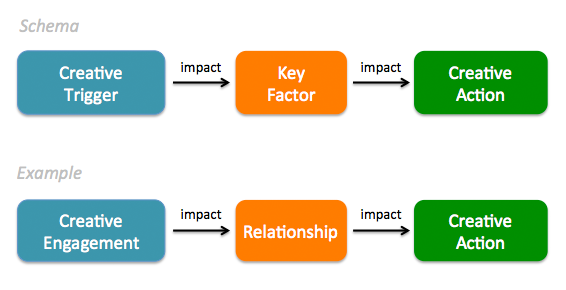
As a theme, the Action After Talk idea is abstract, it is not easy to adopt it for most people. In order to solve this problem, CALL developed another Creative Trigger called Content/Action Convertor.
The Content/Action Convertor
The AAT Content/Action Convertor looks like a card. It has three parts: the ATT logo and name, the Talk part and the Action part. The below card turns Matt Cutts’ TED talk Try Something New For 30 Days into an action proposal Start Your Own 30 Days Challenge.
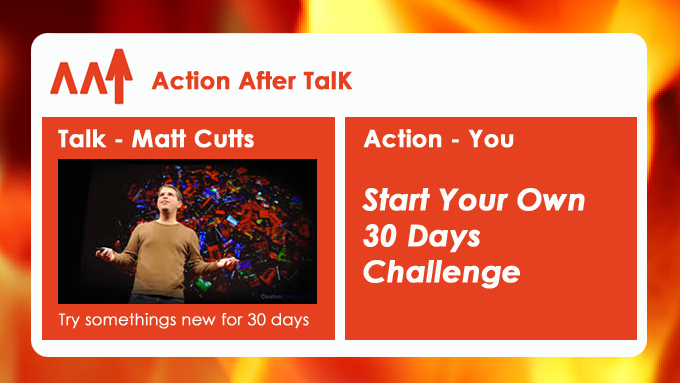
Based on my experiences of researching TED Talks and other conference video talks, I found there are two types of video talks. One is direct actionable talks and another is indirect actionable talks. It’s harder to transform the latter into action proposals than the former.
It requires creativity to turn indirect actionable talks into action proposals. The solution is also easy, don’t follow the original framework the speaker framed. You have to reframe the talk from the action perspective. You can turn secondary ideas into primary ideas. You can expand the range of the purpose. If you have a strong claim, you can reverse the original standpoint.
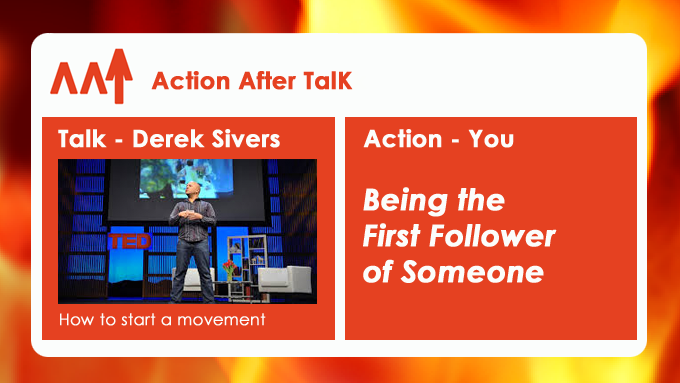
The above AAT card selects the “First Follower” clue from Derek Sivers’ TED talk How to Start a Movement and designs an action proposal Being the First Follower of Someone.
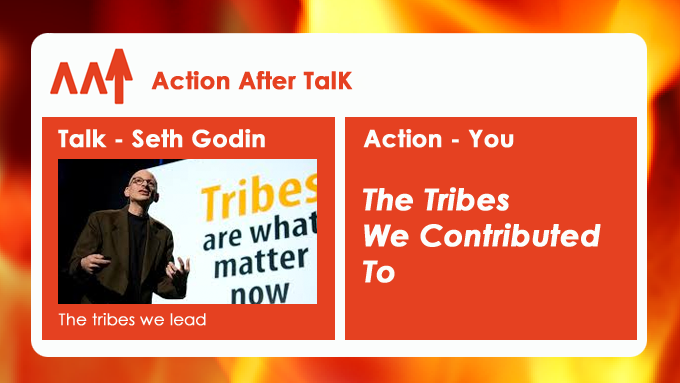
For the above AAT card, the original TED talk The Tribes We Lead was delivered by Seth Godin whose original perspective focuses on leaders. I switch from the perspective of leaders to the perspective of contributors and create an indirect but closed action proposal The Tribes We Contributed To.
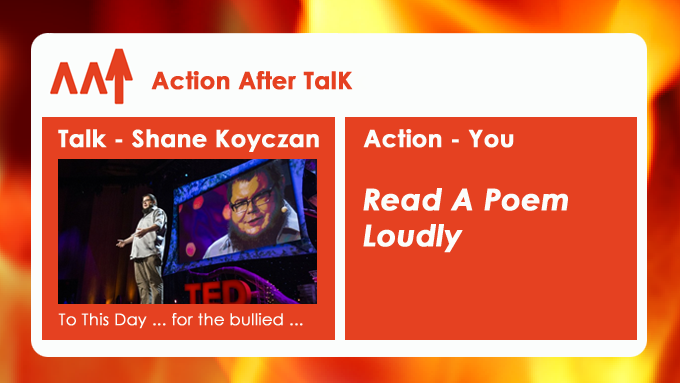
The purpose of Shane Koyczan’s original talk is stopping bullying. The above AAT card expands the range of the original purpose to peace, love, inspiration and more.
The Challenge Place as Creative Container
Once we have a certain creative action proposal. We need to find a space to publish it and provide a place for people to play with it. At CALL, we called these spaces and places as Creative Container.
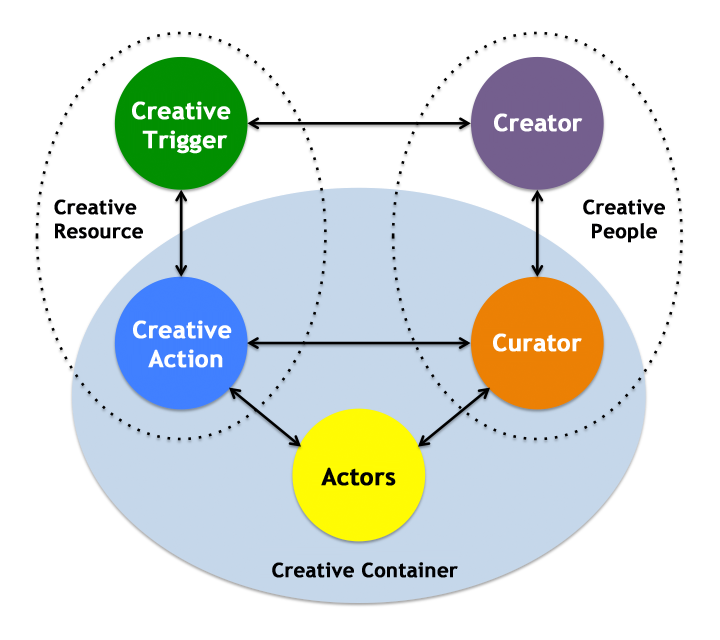
The blue area of the above diagram shows the structure of the Creative Container. We can see each Creative Container is a community around a Creative Action.
There are many ways to present a community on the Internet. For the Action After Talk project, CALL chooses Doowit.co as the platform to publish Creative Actions and host Creative Containers.
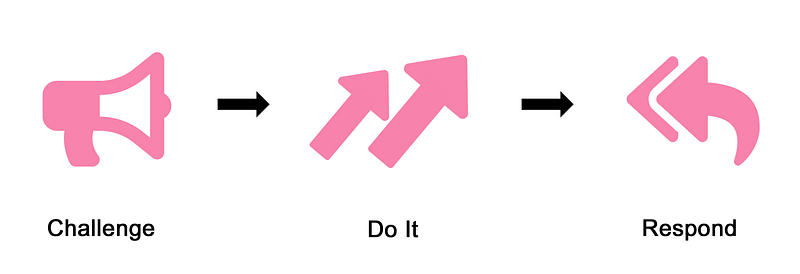
Doowit.co is a platform of challenges and actions. It was designed based on the above structure: “challenge — do it — respond”. This unique structure highly matches Action After Talk’s “action proposal — act — outcome” structure.
On Doowit, each Challenge can lead to many response pages. Each challenge is a small community where all responses gather and join forces to show corresponding actions. Each response is an independent entity that can be shared on other social media platforms.
This structure is ideal for CALL to manage the Action After Talk project and host as many Creative Action communities as possible. We don’t have to set up and manage many blog sites for many Creative Actions. We just need one Doowit channel to host several challenges.
CALL for Action
As I mentioned above, CALL is designed as both an incubator and accelerator of creative actions. CALL is open to all creators and curators. If you want to join this experiment with me, here are three things you can do.
1. Design a Creative Action based on a TED talk or other conference talks.
I have turned six TED talks into Action challenges. Check them out on the Action After Talk channel on Doowit. You can design your own ideas by using the Content/Action Convertor.
2. Co-host a Challenge on the Action After Talk channel.
Joscelin Yeung designed an Action Challenge called Joscelin Yeung: Just Draw It. She is co-hosting the challenge with me.
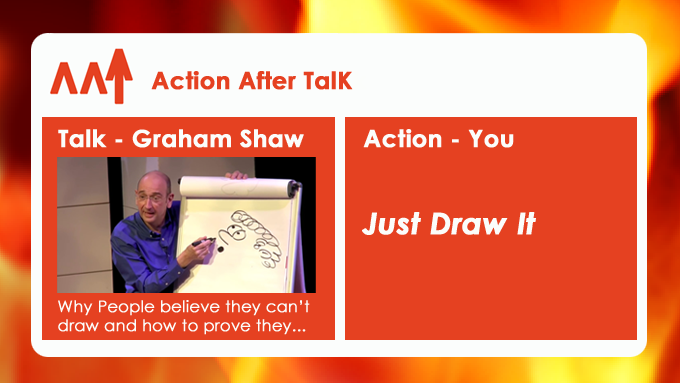
The co-hosted challenge will be named with the “ co-host + creative action proposal” format. I will design the picture of the AAT card for each challenge. Co-hosts don’t have to do the job.
3. Create your own Creative Container around a Creative Action.
If you want push your Creative Action further, I’d like to help you grow your own Creative Container. You can create your own channel on Doowit and publish more sub-challenges or set a social media matrix to grow your community.
I have over ten years of experience in curating online communities. In 2019, I even wrote a book about curation. I wish I could help you by sharing my knowledge, skills and creative insights.
The Internet is already full of all kinds of information. The world is in need of more real actions, big or small, to become a better place.
Let’s do it together. Let’s start from the Action After Talk project.
Originally published at https://www.linkedin.com.


