
The 93rd Academy Awards: Inspired Winners Can’t Save an Uninspired Show
Tonight, the 93rd Academy Awards were held live from Los Angeles.There were a couple of shocking upsets and a couple of touching speeches, but overall the ceremony was a dry and long-winded affair that fell short for reasons having virtually nothing to do with COVID. Thankfully, the awards that were handed out went to richly deserving recipients.
Notes on the Winners
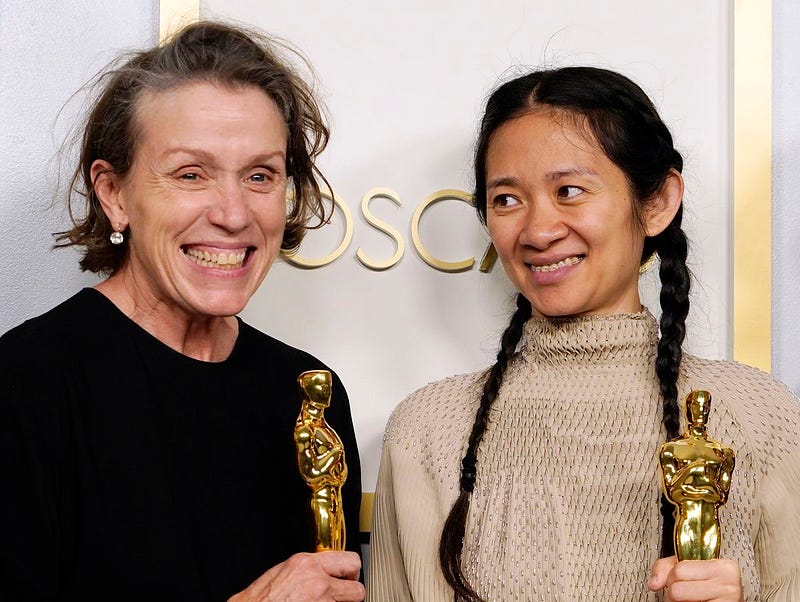
To the surprise of few, Nomadland picked up the Best Picture and Best Director Oscars. The film was the heavy favorite due to its dominance in those categories at prior ceremonies throughout this seemingly interminable awards season. Few, however, expected that it would lose Best Adapted Screenplay and Best Cinematography or that it would win a third Best Actress Oscar for Frances McDormand. I am delighted by its wins as I found the film to be a deeply compassionate, haunting, lyrical, and visually stunning ode to those Americans cast adrift during the Great Recession. It certainly isn’t the flashiest of the Best Picture winners, but it is a truly deserving one. (Click here to read my review and analysis of the film.)
In contrast to the awards for Best Picture and Best Director, the awards for Best Actress and Best Actor were genuine shockers. The Best Actress award was the most competitive it had been in decades this year, with the Best Actress awards going to a different nominee at each of the four major televised ceremonies leading up to the Oscars (Frances McDormand won the BAFTA, Andra Day won the Golden Globe, Viola Davis won the Screen Actors Guild Award, and Carey Mulligan won the Critics’ Choice Award). Most pundits were going with Davis or Mulligan, but McDormand swooped in and picked up her third Oscar in the category (and she added a fourth Oscar for producing Nomadland).
Throughout virtually all of awards season, Chadwick Boseman was seen as unbeatable for his universally praised turn in Ma Rainey’s Black Bottom, which tragically was his final film role before his death earlier this year. Only recently was there any hint that this race might be competitive. The Father was by far the latest of the eight Best Picture nominees to become available digitally and when it finally did at the end of February it began gaining intense buzz, particularly for Sir Anthony Hopkins’s harrowing performance. Then when Hopkins upset Boseman for the BAFTA for Best Actor, some suspected Boseman might not be such a lock after all. Interestingly, the chatter going around Hollywood in the final days of voting appeared to be “Everyone knows Chadwick Boseman is going to win, but I was blown away by Anthony Hopkins so I voted for him.” This may be one of those cases where being such a perceived lock for the win actually backfired. And it also may mean that these days we should be paying more attention to the BAFTA Awards than the SAG Awards for predicting acting winners.
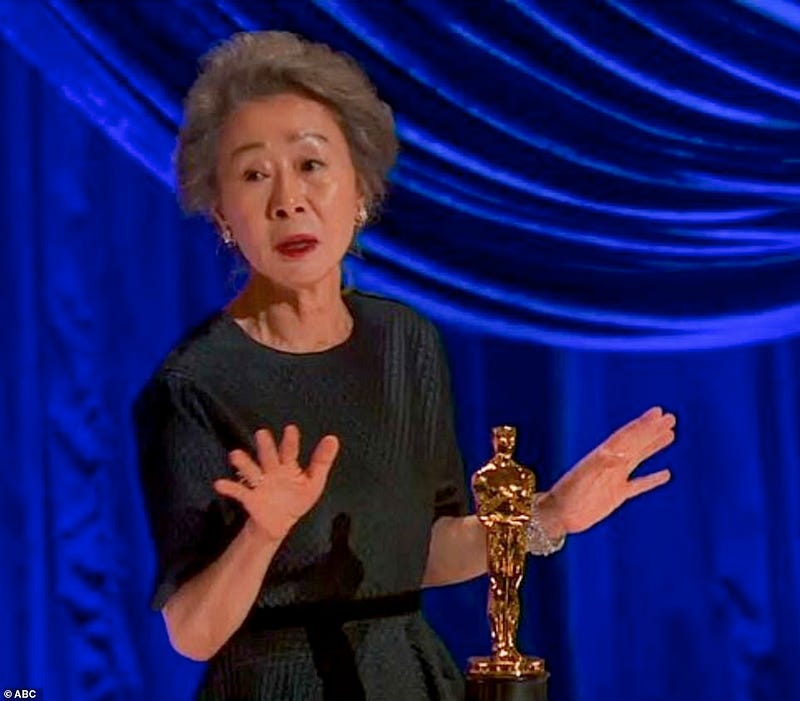
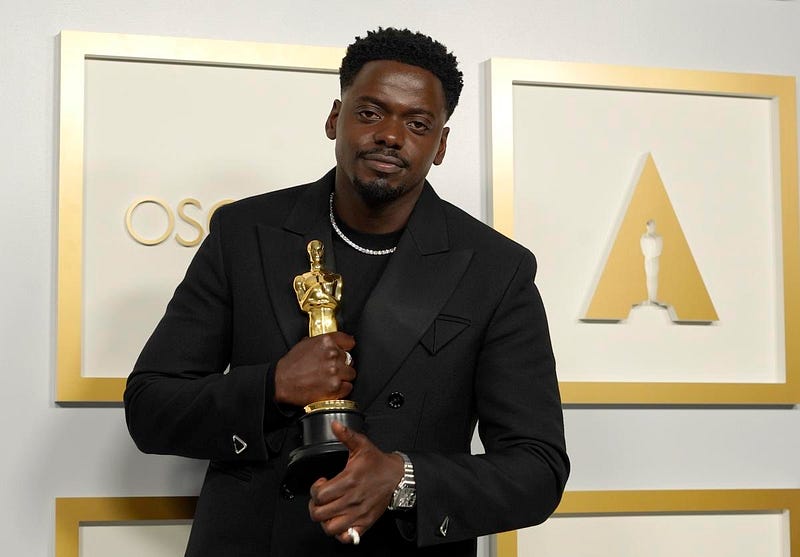
As expected, the Supporting Actress and Supporting Actor trophies went to Minari’s Yuh-jung Youn and Judas and the Black Messiah’s Daniel Kaluuya, respectively. They round out a quartet of acting winners that is one of the finest in recent memory. Each of the four of them giving a richly nuanced, intensely powerful, and flawless turn. Many will understandably be bitter that potentially historic wins for the brilliant performances by Chadwick Boseman and Viola Davis did not materialize, but don’t let this lead you to think that any undeserving actor took home on Oscar in their place this year.
The remaining awards went largely as expected. The existential Pixar film Soul took Best Animated Feature, the Danish midlife crisis drama Another Round took Best International Feature, and the nature documentary My Octopus Teacher won Best Documentary Feature. Sound of Metal won for its brilliant sound design and editing, Mank won for its stunning production design and cinematography, Ma Rainey’s Black Bottom triumphed for its elaborate and detailed costume design and makeup/hairstyling, Soul won a second trophy for its jazzy score, H.E.R. added to her Grammy for Song of the Year last month with an Oscar for her original song from Judas and the Black Messiah, and Christopher Nolan’s Tenet — the movie that was supposed to save theaters and the film industry as a whole — scored a win for Best Visual Effects.
I previously ranked and analyzed all of the nominees in this year’s acting races and writing, directing, and Best Picture races. I was delighted that five of the eight winners were my top choices in their respective categories (Zhao for Director, Hopkins for Actor, Kaluuya for Supporting Actor, Fennell for Original Screenplay, and Hampton and Zeller for Adapted Screenplay). I would have voted for Promising Young Woman for Picture, Carey Mulligan for Actress, and Olivia Colman for Supporting Actress, but none of the winners that triumphed over them were unworthy in the slightest.
As for the accuracy of my predictions, I correctly guessed 16 out of the 23 categories (70%). I missed both lead acting categories (I predicted Carey Mulligan and Chadwick Boseman to triumph), documentary short, cinematography, film editing, and song. This was a step down from the 19/24 (79%) I scored last year, but I won’t be too hard on myself given how unpredictable this race was.
Click here to read my preview of the ceremony and my predictions in all 23 categories.
13 Interesting Facts and Figures about the Winners (and non-winners)
- Nomadland became only the second film ever directed by a woman to win the Best Picture Oscar (after Kathryn Bigelow’s The Hurt Locker).
- Chloe Zhao became only the second female director (after Kathryn Bigelow) and third Asian director (after Ang Lee and Bong Joon-ho) to win the Best Director Oscar.
- Frances McDormand became only the second actress in history to triumph in this category three times, after Katharine Hepburn (who won four times in this category). Meryl Streep and Ingrid Bergman also have three acting Oscars, but each were awarded two lead and one supporting trophies.
- Frances McDormand became the first woman to win the Best Picture Oscar as a producer and an acting Oscar.
- At age 83, Anthony Hopkins becomes the oldest Oscar winner ever in an acting category.
- Anthony Hopkins became the 10th actor to triumph in this category more than once and he has the longest stretch ever between wins in this category (he won for playing Dr. Hannibal Lecter in The Silence of the Lambs 29 years ago).
- Yuh-jung Youn is the second woman of Asian descent to win an acting Oscar. The previous was Miyoshi Umeki, who won in this category in 1957 for Sayonara. (Note: Some people consider Natalie Portman to be Asian due to her Israeli heritage; in this case, Youn would be the third.)
- Daniel Kaluuya became the sixth black man to win the Best Supporting Actor Oscar.
- Emerald Fennell became the first woman to win an Oscar in either screenplay category since Diablo Cody won in 2007 for Juno.
- Two women continued their epic losing streaks. Songwriter extraordinaire Dianne Warren lost her 12th bid in the Best Original Song category tonight while Glenn Close now ties Peter O’Toole for the most losses without a win in Oscar history (she has been nominated 8 times).
- 89-year-old costume designer Ann Roth tied Call Me By Your Name screenwriter James Ivory as the oldest winner in any category.
- Nomadland joins The Shape of Water as the only Best Picture winners since 1983’s Terms of Endearment to have a female lead but no male lead.
- Of the 8 Best Picture nominees, 7 won at least 1 Oscar — Nomadland won 3; The Father, Judas and the Black Messiah, Sound of Metal, and Mank won 2; Promising Young Woman and Minari won 1. Only The Trial of the Chicago 7 was completely shut out, going 0-for-6. This is especially interesting given that The Trial of the Chicago 7 was arguably the frontrunner earlier on in the season. The Academy has definitely trended toward spreading the wealth versus the clean sweeps that dominated in the 80s, 90s, and 00s.
Notes on the Show
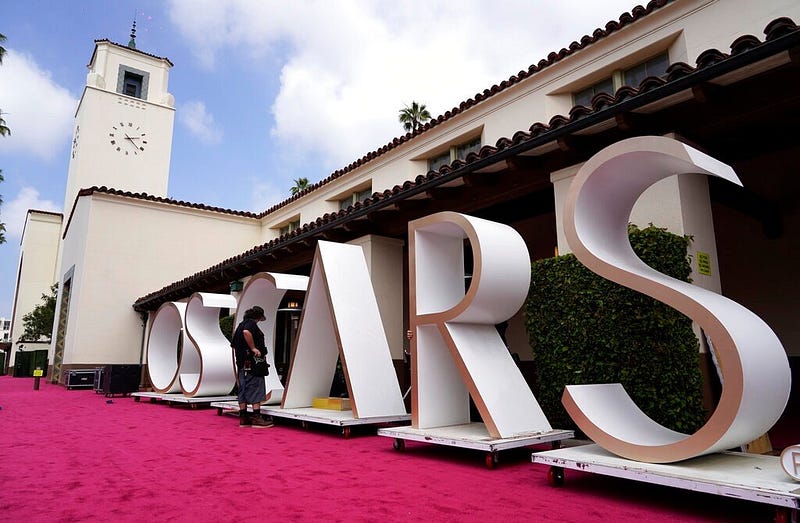
Let’s start with the positive aspects of the ceremony. First, the decision to not have people videoconference in but rather allow people to gather at an array of virtual sites around the club where they could accept their win from actually worked well. Second, the video and sound quality was superb throughout, even as the feed switched between venues and continents. Third, the Union Station set was gorgeously designed and cleverly constructed. Fourth, there was the … ummm … oh wait! … no ….
In my opinion, this is the worst Oscar telecast I have seen since I started watching over a quarter century ago. But it must be said, repeatedly and emphatically, that it was not bad due to COVID-related restrictions. It could have and should have been better. The Grammys and Emmys put on perfectly entertaining and elegant telecasts with even more restrictions in place at the time they were held. The ceremony was bad because every single thing the producers changed either because of a desire to experiment or a desire to fix longstanding complaints about the ceremony just did not work. See a list of everything that decidedly didn’t work below.
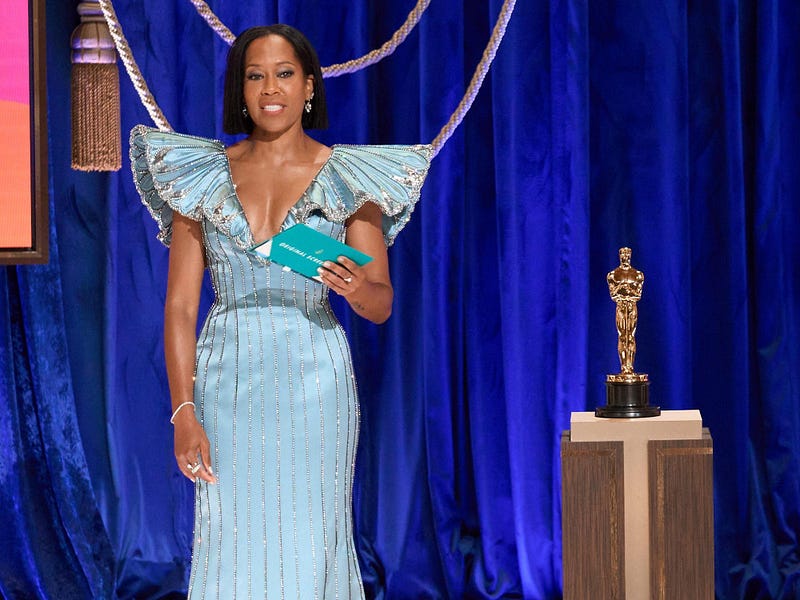
The lackluster opening. I don’t need a stand-up comedy special or an elaborate musical number to kick off every Oscars telecast but I do need more than an actress stumbling onto the stage, saying a few words about COVID and racial justice, and then present an award. I love Regina King and she was perfect as always, but for a ceremony that was supposed to be so nontraditional it lacked any elements of surprise or excitement. It played like a transitional speech from much later in another awards ceremony, not the welcoming to Hollywood’s biggest night.
The stoic and mostly humorless presenters. Just as I understand why the producers wanted to do away with the traditional opening, I understand why they wanted to do away with the awkward banter between often mismatched presenters. However, instead they just had a bunch of well-regarded (but not particularly spirited or funny) actors give often elegant but dry and long-winded discussions about the categories and its nominees. None of them were especially bad, but none were memorable either. The only one that really grabbed my attention in any meaningful way was Harrison’s Ford bit about Blade Runner when presenting Best Film Editing.
The return of the Honorary Oscars to the telecast. Given all the elements they cut from the telecast it is unclear to me why they decided to showcase the Honorary Oscars during the telecast after years of awarding them off-screen and then briefly acknowledging them on the telecast. Both were deserving winners, but the reason for its return was confusing and the segments dragged a bit.
The speedy In Memoriam. The montage of film talent that have died in the past year has had many issues over the years, including distracting live musical performance occurring simultaneously, the applause from the audience being audible (making it a weird popularity context), and the omission of high-profile people. Although I was glad they turned the mic off so we couldn’t hear the applause, they played an oddly peppy tune and zipped through the images of the deceased at a breakneck pace. We lost so many icons this year; they deserved a better tribute.
The lack of memorable speeches. Yuh-jung Youn was as wonderfully charming and captivating as she has been all season. Daniel Kaluuya had some delightful off-the-cuff moments. Tyler Perry accepted his Humanitarian Award with a passionate call to overcome hate. And Thomas Vinterberg did a touching tribute to his deceased daughter. But, that’s about it in terms of speeches that were moving or memorable. Frances McDormand nonsensically rambled in her two speeches, but I guess at least she did so with remarkable charisma. She also howled like a wolf for reasons that it took time and effort to discern (it was a tribute to the film’s sound designer Michael Wolf Snyder who tragically died by suicide earlier this year). So at least she gave us something unexpected and intriguing, unlike most of the remaining winners. Oh, and Anthony Hopkins wasn’t there to accept the final award of the ceremony. Speaking of which…
The reordering of the awards. I’m all for a creative mixup of the categories to keep things fresh and lively, but there are certain rules that shouldn’t be broken. One of those rules is that Best Picture is always presented last. There are reasons for this. It is the Academy’s biggest award and for decades it has been the way the ceremony came to a close. This time it was presented third to last, before the lead acting awards. When Rita Moreno (who looks astonishingly vibrant at 89-years-old) came out for Best Picture I wasn’t sure whether something was screwed up on my TV or she was making an epic Oscar gaffe by saying the wrong category name. It never occurred to me that the producers would have deliberately made that choice.
But far worse than the fact that they made that choice is why they made that choice. It seems quite clear to me that the Academy knew that Nomadland was a slam-dunk and that it wouldn’t rouse a lot of passion in people. So, instead of putting it last they opted to put the two most exciting awards last. This is arguably insulting to all involved with Nomadland, but I would be willing to overlook that had it not played out the way it did.
Best Actress was more competitive than it has been in many years and Best Actor seemed sure to go to Chadwick Boseman. The producers clearly predicted that Best Actress would be a fun shocker and then Best Actor would go to Boseman, whose widow would have accepted on his behalf and ended the evening on a soaring emotional high note (she has been brilliant and heartbreaking in every single one of her speeches on behalf of her late husband). So when Best Actress went to the woman who had just given a speech a few minutes earlier as part of the team accepting Best Picture and Best Actor did not go to Boseman things got awkward. Really awkward.
If Hopkins had been allowed to accept his award by videoconference (the 83-year-old actor understandably didn’t feel comfortable traveling to one of the satellite ceremony locations during a pandemic) or they had allowed his costar Olivia Colman to accept it on his behalf, there presumably still would have been a touching tribute to Boseman to close out the night. However,what ended up happening is that when Joaquin Phoenix announced Hopkins is the winner he mumbled that the Academy accepts the award on his behalf and the camera just awkwardly cut away to the DJ and then the credits. It wasn’t just awkwardly anticlimactic, it was cringe-inducing and insulting to all involved.
The lack of music, skits, and clip packages. This year, the Academy did away with two of the ceremony components that typically garner the most criticism — the live musical performances and the excessive clip packages. However, they replaced them not with fun, new elements or a mercifully shorter airtime, but rather with a DJ spinning tracks largely at random, seemingly doing away with the time limit on acceptance speeches, and lots of anecdotes about each of the nominees. I would have taken the live performance of a forgettable power ballad or a montage of great superhero movies over what we got in its place.
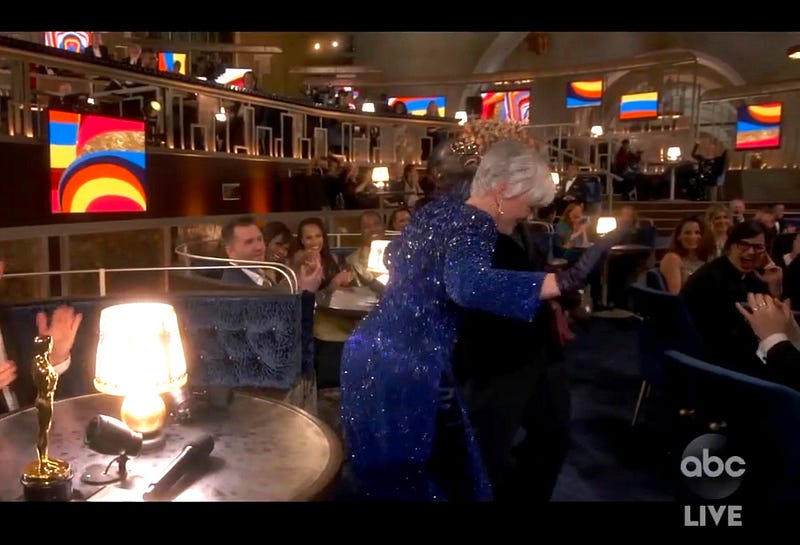
And the show thankfully avoided comedy skits for the first 2.5 hours, until a horribly random and excessively long bit where Andra Day, Daniel Kaluuya, and Glenn Close had to figure out whether the song QuestLove was playing a clip from won an Oscar, was nominated for an Oscar, or was snubbed by Oscar. It basically involved a lot of bashing that this category has a problematic history and 74-year-old Glenn Close doing some sort of booty dance that appears to be a relative of the twerking phenomenon. The only way this bit could have been forgivable is if it was a desperate attempt to fill time because the show was running short. However…
Despite all the elements that were excised, the show still ran over three hours. The show had no host, no presenter banter, no musical numbers, no clip packages, and one less category to present. So why on earth was it still 3 hours and 15 minutes?
Final Thoughts. The trio of producers promised that this year the Oscars were meant to feel like a movie. It is unclear to me what was supposed to feel like a movie outside of a couple of clever camera tricks. The producers also said they wanted people to leave snark at the door and embrace their love for movies. Well, the result is that people also seem to have left their humor and spontaneity at the door. Honestly, I would have preferred a spectacular misfire that swung for the fences and struck out over the dry and long-winded dud that they gave us.
Thankfully, for me the Oscars are far more about the nominees and winners than the manner in which those prizes are handed out. And the prizes they did hand out went to wonderfully deserving winners. So, I’ll be back next year…although I may need a lot more wine to get through it.
The Winners:
The Specialty Film Categories:
- Best Animated Feature: Soul
- Best International Film: Another Round
- Best Documentary Feature: My Octopus Teacher
- Best Documentary Short Subject: Colette
- Best Animated Short Film: If Anything Happens I Love You
- Best Live Action Short Film: Two Distant Strangers
The Technical/Craft Categories:
- Best Original Score: Soul
- Best Original Song: “Fight for You,” Judas and the Black Messiah
- Best Cinematography: Mank
- Best Costume Design: Ma Rainey’s Black Bottom
- Best Sound Design: Sound of Metal
- Best Production Design: Mank
- Best Film Editing: Sound of Metal
- Best Makeup and Hairstyling: Ma Rainey’s Black Bottom
- Best Visual Effects: Tenet
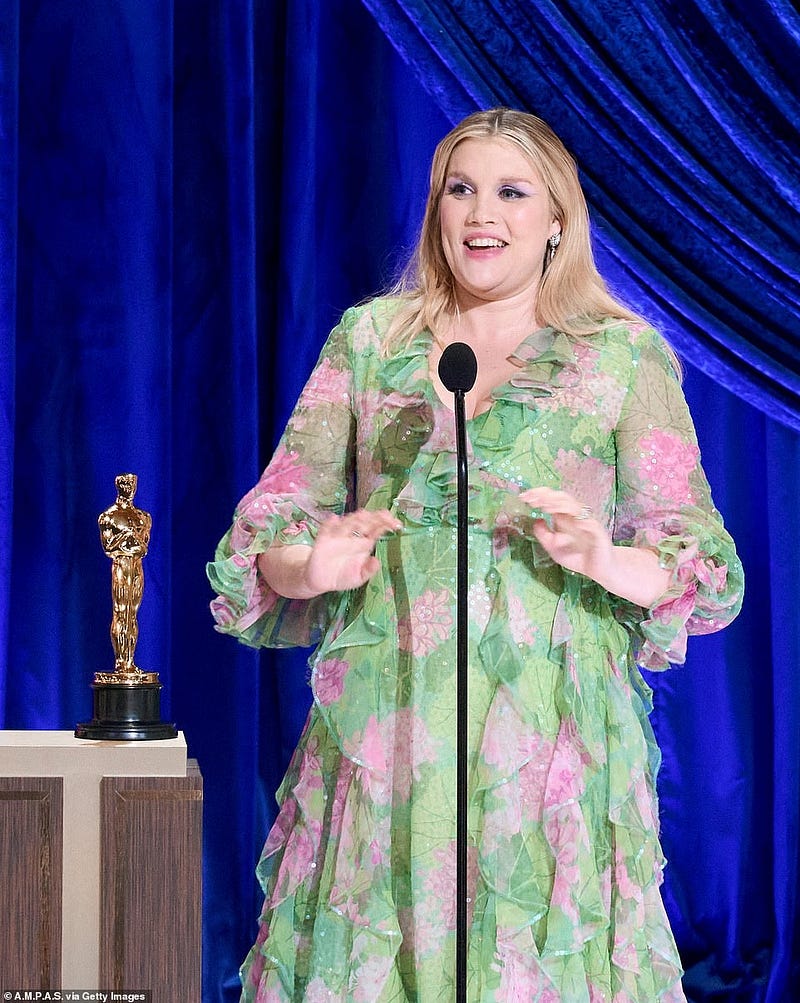
The Top 8:
- Best Adapted Screenplay: Christopher Hamptom and Florian Zeller, The Father
- Best Original Screenplay: Emerald Fennell, Promising Young Woman
- Best Supporting Actor: Daniel Kaluuya, Judas and the Black Messiah
- Best Supporting Actress: Yuh-jung Youn, Minari
- Best Actor: Anthony Hopkins, The Father
- Best Actress: Frances McDormand, Nomadland
- Best Director: Chloe Zhao, Nomadland
- Best Picture: Nomadland
Follow the author on Medium and Twitter.
Check out the authors recent articles about awards season:
- “Promising Young Woman” and “Nomadland” Boldly Confront Toxic American Beliefs
- The 27th Annual Screen Actors Guild Awards: Five Key Takeaways
- The Highs and Lows of the Utterly Chaotic 78th Golden Globe Awards
- Spare Me Your Rage Regarding the Academy’s Inclusivity Initiatives
- “The Silence of the Lambs”: A Timeless Masterpiece Turns 25


