
The 13th District of Paris
Finding art in the ‘hood
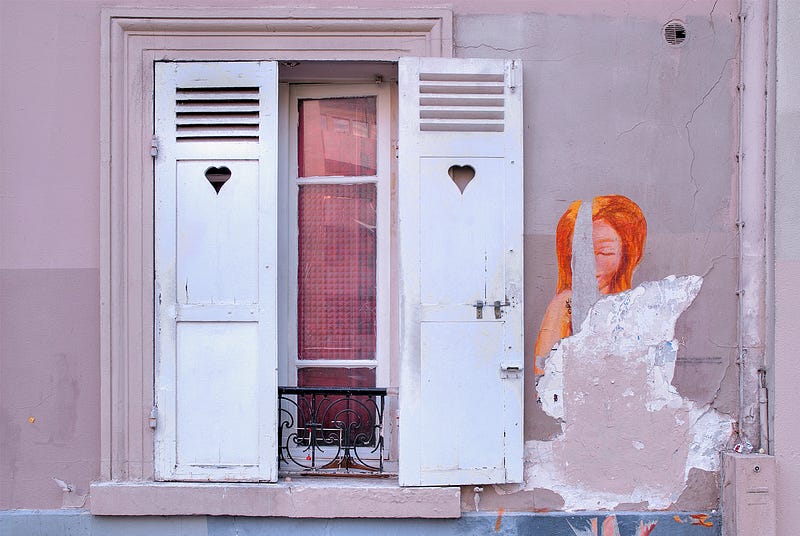
I stepped out of the hotel lobby to bathe in the warm evening light. The neighborhood simmered with after-work activity. Parents collected children from daycare centers, shoppers picked up baguettes from local bakeries, and college students sipped beer at crowded bars.
There was palpable energy created by gregarious people as they abandoned the work day and entered their private lives. The austerity and focus of the workday had receded. You could feel the energy change.
THE 13TH DISTRICT OF CENTRAL PARIS IS PRIMARILY A RESIDENTIAL DISTRICT in the southeastern part of the French capital. The area has a vibrant Asian community and it neighbors the bustling Latin Quarter.
The International Film School of Paris and the National Library are located there. They give a youthful and artsy feel to the place. The thriving new entertainment and art scene along the Seine is impressive.
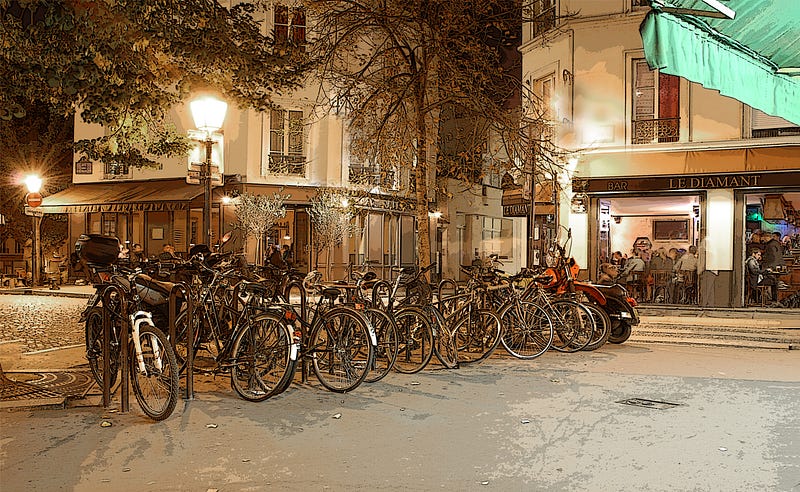
The area is not what you would call a tourist mecca, and that was exactly what attracted me to the place. I wanted to feel the pace of Parisian life from the point of view of the local residents.
I wanted to line up at the local bakery surrounded by workers picking up their morning coffee and pastry on their way to work. I wanted to eat dinner at a low-key eatery filled with art students. I wanted an authentic French experience, not one fabricated for tourists.
As I walked the neighborhood I felt as though I was the only visitor there.
I felt at ease even though my activities resembled a concealed voyeur peering into the daily lives of the local residents.
The original purpose for this evening walk was to photograph some of the local architectural features in the soft fading light.
I had not expected to encounter so much activity. My attention was unexpectedly diverted. I was tempted to photograph the plentiful cliché scenes of sidewalk cafes and bars that surrounded me, but it felt wrong. “Don’t be the annoying tourist, respect people’s space” I said to myself.
I backed away and moved on.
I TURNED ONTO A NARROW RESIDENTIAL STREET which took me away from the activity and allowed me to concentrate on the aging structures now bathed in diffused light.
The corner building displayed the only commercial frontage on that street. A vacant, dilapidated space with a large storefront window. It contained a large red vinyl shape and a mirrored door backed by a white curtain.
It looked like an open wound.
The red tones in the traffic sign, the window, and the car rear light reflected in the mirror guided the eye through the scene. It added order to the chaos.
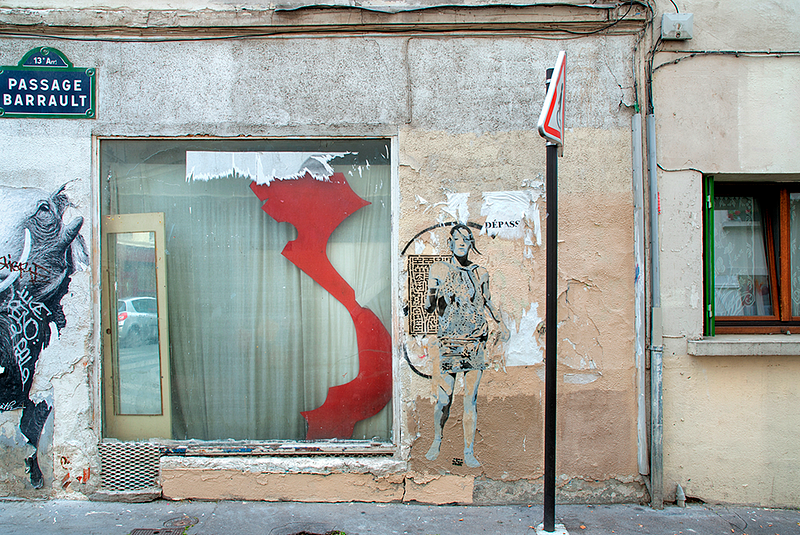
Stenciled and graffiti art flanked the window. Signage, posters, poles and other elements transformed the scene into a Robert Rauschenberg “combine” painting. The famed American artist claimed that “the object itself was changed by its context and therefore it became a new thing.” Facing that image I connected to that concept.
You may have seen that image in my story Windows of the Soul. Now you know its backstory.
WHILE I WAS SHOOTING THAT SCENE A COUPLE OF PEOPLE PASSED BY AND PAUSED to see what I was doing. There is something about a camera on a tripod that drives people to approach you and ask questions. Tripods seem to be an invitation to a conversation.
Some of the passersby spoke in broken English wanting to know why I was photographing such an ugly building — as if the image would misrepresent their beautiful city. This was no Eiffel Tower, Louvre, or Arc de Triomphe after all.
I struggled to explain what it was that attracted me to that seemingly dilapidated scene. I don’t speak French, so explaining the thin line between the window and Robert Rauschenberg was out of the question.
“I like the warm evening light” I sheepishly mentioned.
Everyone understood.

Interesting stories from Reciprocal writers: