
Outing John Weaver
An ugly Republican story
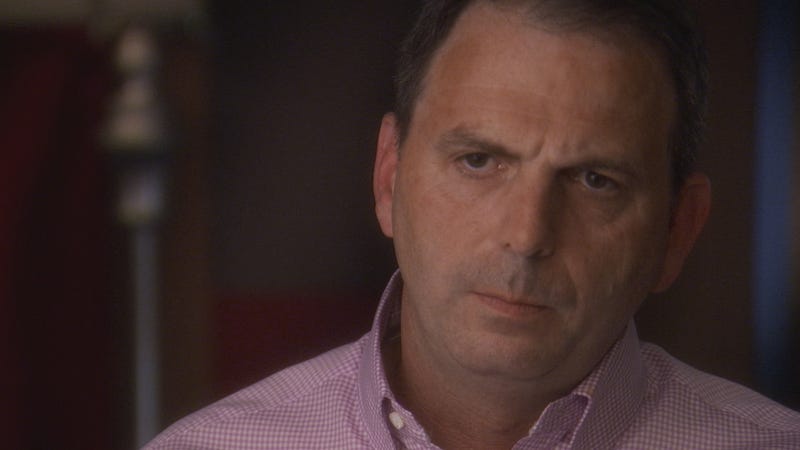
In the fallout from the Trump presidency, many dark truths were coming in view. A right-leaning journalist named Ryan Girdusky got a tip that a famous Republican strategist had a habit of propositioning young men for sex.
The way it’d go down, he was told, is that John Weaver would invite men to his hotel room with the idea of a job in Republican politics being discussed. On the spot, they’d have to decide whether to pay his price.
Getting sources on the record was tricky. But the Lincoln Project, a group of liberal Republicans of which Weaver was a member, was on the march against Trump supporters. In a bit of pique, Girdusky posted on Twitter:
“Maybe I should start talking about one of the founding members of the Lincoln Project offering jobs to young men in exchange for sex… his wife is probably interested”
Some of Weaver’s victims began to speak up.
One young man tweeted he’d been a target, then deleted his Tweet. Then a young journalist named Scott Stedman posted his experience with Weaver from around 2017, when he was around age 21.
Weaver had come across, he recalled, as a mentor, but then started with weird, flirty talk, calling Stedman “my boy.” They hadn’t been involved, but others had, and stories started to flow. One man added: “One of my friends has even shared with me that John Weaver raped him years ago.”
Girdusky went public with a story of Weaver as a “predator” — noting that “MANY prominent people” had known.
Indeed, this was a famously denied story.
Weaver rose to prominence in Texas Republican politics alongside Karl Rove. A 2004 profile of Rove in The Atlantic, details their antagonism:
“Both were emerging as leading consultants, but Weaver’s star seemed to be rising faster. The details vary slightly according to which insider tells the story, but the main point is always the same: after Weaver went into business for himself and lured away one of Rove’s top employees, Rove spread a rumor that Weaver had made a pass at a young man at a state Republican function.”
Weaver said Rove was making a malicious “smear.”
He had friends vouch for him, calling it a “lie.” The 2008 biography, Machiavelli’s Shadow: The Rise and Fall of Karl Rove by Paul Alexander, adds:
“The denials may have succeeded in killing the story, but the rumor — or the fact that Rove had started it — would not die. It remained alive in gossip channels in political circles for years.”
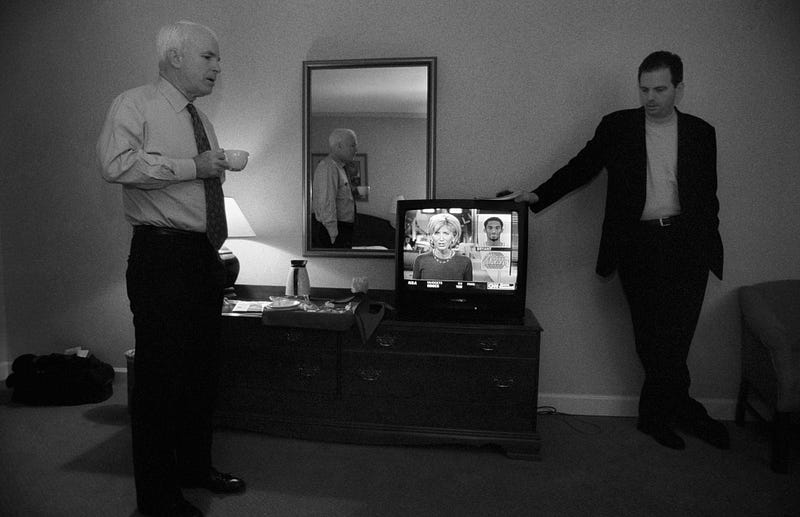
Karl Rove knew about the subject of closeted gays.
His father was one, until he’d gotten a divorce when Rove was a teenager. That didn’t seem to translate into any sympathy. In trying to out Weaver, Rove was out for blood.
But he was telling the truth, and it’s curious to look back at the gay Republican story that was in full view—protected by official denials. Weaver’s story started with Phil Gramm, the Republican stalwart from Texas, who noticed a college student at Texas A&M who had a way with words.
In 1978, as a profile of Weaver in Politico had noted, Gramm offered “a campaign job in exchange for $200 a month and free rent in the apartment above his garage.”
Weaver made a name as a campaign worker.
Along the way he got married—and divorced. When working for John McCain in 2007, he married his second wife, Angela Hession, a former Rudy Giuliani aide. In photos, she’d not be surprised to be read as lesbian.
As a consultant, John Weaver had a way of giving his candidates a heterosexual glow. When working for McCain, Weaver named the famous “Straight Talk Express” bus tour.
He was anti-gay. A 2007 report in Vanity Fair describes an event at an Iowa college when McCain is bumbling around the gay issue, not quite as hard-core on it as one might expect. “I think that gay marriage should be allowed, if there’s a ceremony kind of thing, if you want to call it that…”
Weaver steps over to whisper in McCain’s ear, and McCain clarifies: “I do not believe that gay marriages should be legal.”
Weaver liked the pose as the voice of sexual sanity.
When the New York Times interviewed him in 2012, he was bemoaning the bad record Republicans seemed to have on rape commentary. In 2020, Weaver headed up the “army of the decent” who’d take on Trump.
That didn’t mean Weaver was at all decent himself, evidently.
Which didn’t, as it turned out, mean Weaver was too decent himself? As Ryan Girdusky’s story was getting around, more journalists were reporting on Weaver’s pattern of predation. The journalist Yashar Ali updated:
“The number of gay men I know who have a ‘John Weaver DM’d me and made me uncomfortable’ story is astounding. An overwhelming number of men have been made to feel this way.”
With Weaver’s text messages circulating, there was a kind of memoir of a closeted man who seems perpetually bored, angry, sexually agitated and maybe an alcoholic.
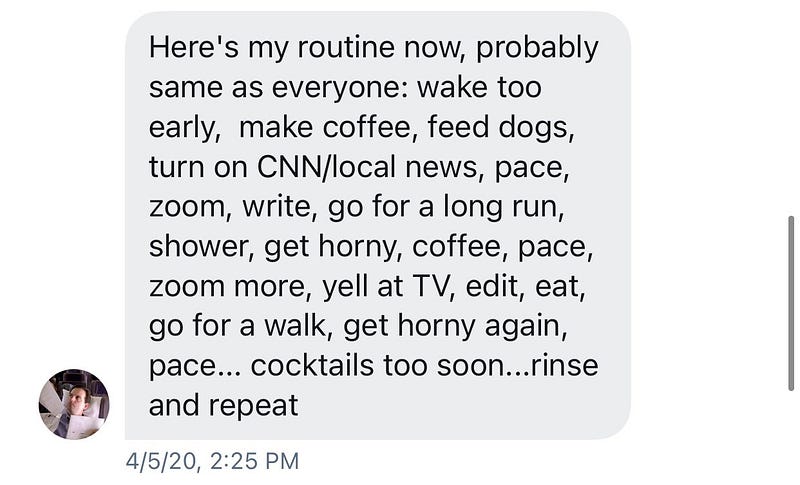
He spent a lot of time finding and messaging men.
He was crass (“versatile? like a big cock?”), as he lured them into meetings at hotels. As Stedman reported on Weaver’s routine:
“Weaver pressured the man to give him a massage. Later on, Weaver asked the man to be ‘licked down there,’ which shocked the man given his expectation of having a professional discussion over dinner.”
When the young men got sexual on cue, Weaver had a habit of ghosting them—blocking them on social media. They’d be able to see their abuser on T.V., posing as the Republican with a conscience.
Weaver and the Lincoln Project were oddly flat-footed with publicity.
For a lot of campaign advisers and strategists, they couldn’t seem to help themselves with fancy talk. There was no statement of support for victims. Weaver was just quietly dropped.
Weaver locked his Twitter account and made a written statement to apologize for “inappropriate” messages.
“The truth is that I’m gay,” he says. “And that I have a wife and two kids who I love. My inability to reconcile those two truths has led to this agonizing place.”
The New York Times did an update, reporting on Weaver pursuing dozens of men, initiating communication with one who was age 14. The Lincoln Project denied knowing, and the matter was forgotten. 🔶


