
Short fiction
A Bloody Reunion by the River Thames
Ten Years on the Run: Unraveling a Family Secret
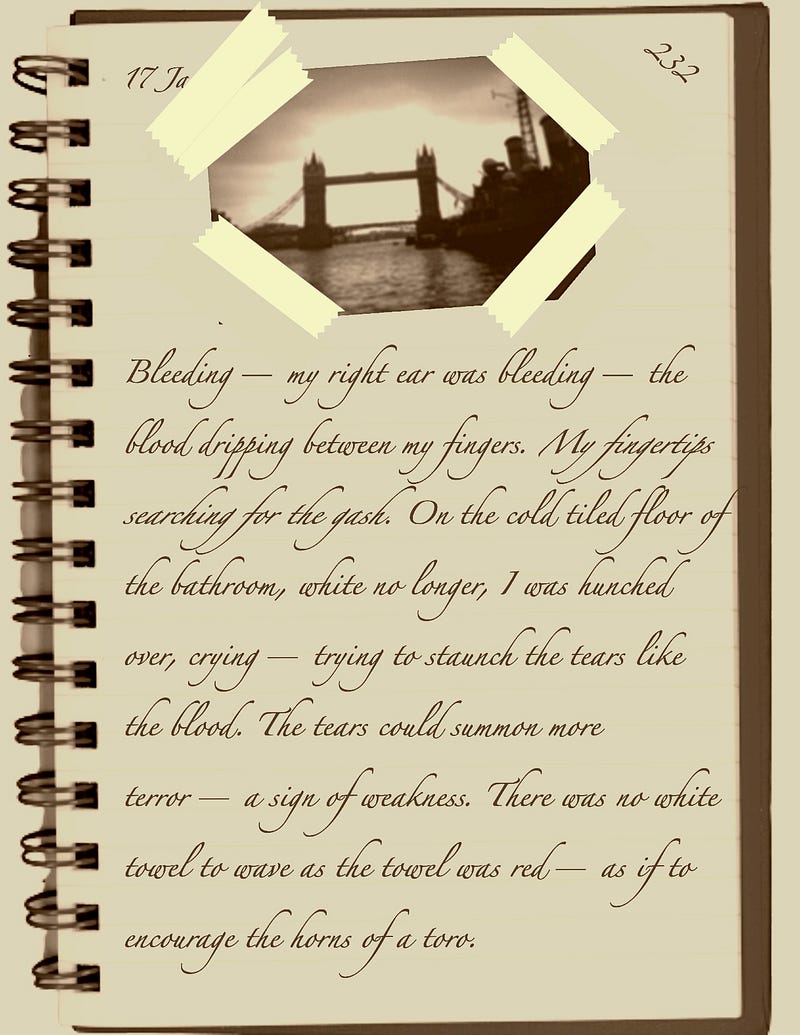
Bleeding — my right ear was bleeding — the blood dripping between my fingers. My fingertips searched for the gash. On the cold tiled floor of the bathroom, white no longer, I was hunched over, crying — trying to staunch the tears like the blood. The tears could summon more terror — a fucking sign of weakness? There was no white towel to wave as the towel was red — as if to summon the return of the toro.
I locked the door — and then, a bang and a click at the front door. Under the cold faucet, I stuck my head. The water diluted the flood, the mixture twirling the drain, Hitchcock-like, but worse, because this shower scene was mine. It was in color. And I was alive while the blood swirled like a crazy second hand.
On wet towels, I fell asleep, the towel a million bandaids. For how long? I rinsed the towels, dried them, and crawled to the vent for warmth. With no window — did I know the passing of days and nights?
The bleeding stopped, of course, and I lived. Escaped. The only stitches came from the fibers of the white towels, a gift from my mother, from the long, long ago.
So that’s how I got the damn scar. I usually lie. I’m honest to a fault. A cardinal virtue. The scar came from a pub brawl. Hit by a flying pint glass. A woman’s dishonor, protecting. “You should see the other bloke, mate.” Or was I protecting all the mums of the world — mother? Mama. Mom. Mommy. Madre. Maman.
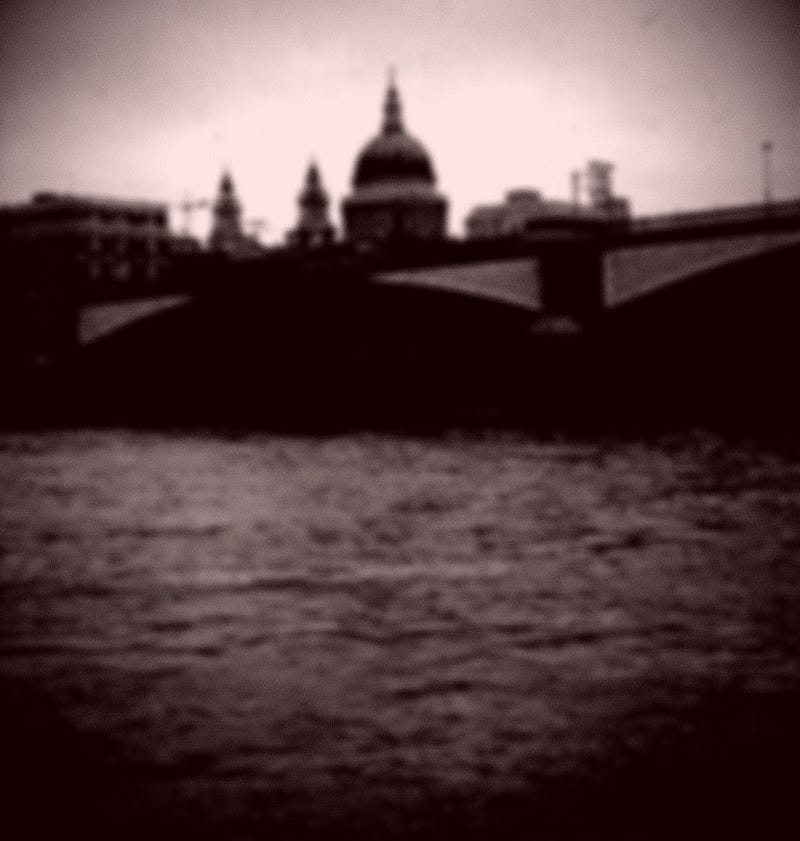
My glasses fog with the warmth of the pub in Bayswater, London — the Lion’s Head. Plenty of cold, gloomy nights here — cold nights and bloody warmth.
With a pocket nappy, I clean my glasses with spit, the white now snot-grey. No tables — the counters crowded. The beautiful wood engraved bar, mahogany,— my favorite work of art in the whole world — is stained with stacks of elbows and pint glasses and smoldering fags and butts in shallow streams of sour yellow.
The smell — as if the bar was heated, heating the smell— I relish. So many familiar faces, not known by name or gender or career or class level. Class is big here. In the insipid States, it’s called “Business Class” rather than “First Class.”
Rob pulls frothy pints of black, brown, amber, and gold. Rutland County is my favorite. He’s awfully nice — a good bloke. Die for Queen and Country — but not God. Why the Queen’s English? What a bloody bastard — ten years isolated on this island. A century here could not erase twenty in America, even with an awfully nice chap like Robert.
Did Robert ever ask me about the scar?
My gray trench coat provides extra warmth. But soon, it’ll be too much with this crowd — every body generating 250 and 400 BTUs — enough to light two hundred lights — blinding at 75 watts each. A slit opens by the bar. I fill it fast. Rob doesn’t see me. Why not? Hey Rob — I’m here. Two blokes to my right are talking — yelling to hear. It’s obviously a Leicestershire Origin — one of my favorite dialects — as I’ve become a regular ‘enry ‘iggins, I have.
It’s hard to find English in London. Lots of everyone else — West Indians, Pakistanis, Indians, Saudis, Russians — damn Russians —Caucus Russians? Crimean Russians? Oligarchs? Nigerians — Kenyans —the Congolese — the Chinese — the Kiwis — the Aussies — the Irish — the American Lites, the Canadiens — the whole Commonwealth finding a refuge in London with its Overlord Colonizer — all with Stockholm Syndrome — even this Ex-Pat Yankee Doodle Dandy with the scar.
To my left, I spot two birds, one brown, the other golden. Accent and scar story works, sometimes, especially after the liquids dissolve defensive walls of sense and sensibilities. Just a matter of time — that’s all — and the time is still early for a Friday evening. What will it be this time, mates? A political row? House of York versus House of Lancaster? Mary and Elizabeth? A protecting a girlfriend fight? Stopping a fight between Liverpool and Man United? Hooliganism. Nothing like old-fashioned British hooliganism.
The Mods vs. the Rockers. Anything to fight about — clothes and soccer goals and race and the Pope. Join a cult — and then put the boot in the groin — to watch all that red warm ousssie spill out.
Ten years gone. Gone. Goodnight.
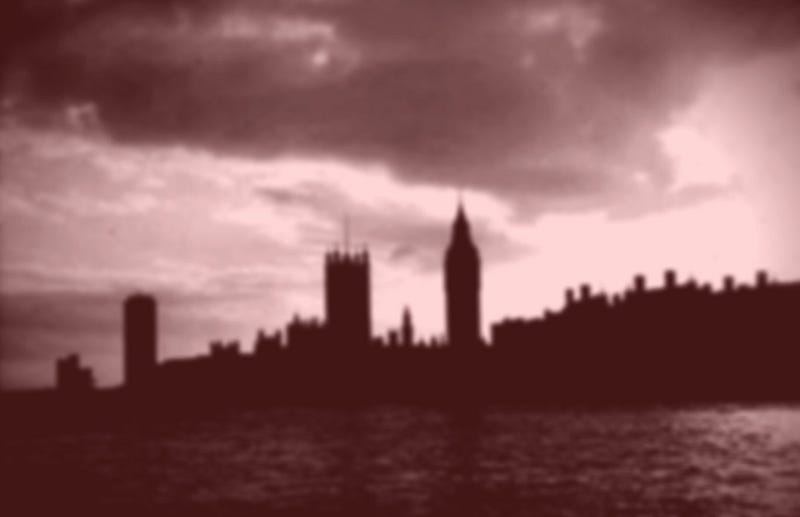
I rub pound coins together — what I used to call Mickey Mouse money — waiting. Rob would usually serve me first. But I’m later tonight — I thought I saw him — not Rob — not him — him — Papa Bear — and I took a detour, but it wasn’t him, but I got a lot of exercise — and 5K steps on my watch. I finally calculate in kilometers now. How many cubic milliliters of blood does the body contain? How much does one need in the tank not to die? How many slits does it take to die?
Could Rob be avoiding me? Is he still upset — about last time? Just chalk one up to a momentary lapse of humanity. Who doesn’t lose it, especially after the ribbing I take from day to day.
The Lion’s Head is decorated for Christmas, but nothing too fancy — and not for God or Jesus. Is the holiday going back to its original pagan origins? God, I hope so. No need to believe in miracles that way, right? Just the miracle of Nature — and the Sun and the Moon and Natural Resurrection — life feeding on death and death feeding on life.
Back home, a long, long time ago, the house was turned into Macy’s for the Holy Days. Silver tinsel was everywhere, even in the pasta. I would fall asleep underneath the tree, staring up through the forest wonderland of twinkling lights and colored ornaments sparkling like a psychedelic Milky Way.
One year, with that cat, the tree toppled on top of me. I was buried in balls and pine and tinsel. I called that cat Lady Guinevere because she was all white. That tree incident was the last twig for her — and before she could be beaten — I pulled her from under her hiding place under the bed — and ran what seemed like miles in my slippers and set her free. She was free — free to find her Lancelot in the Camelot of her choosing. She was dreadfully lonely — that cat.
I took the beating for her. The secret is not minding — and also thinking it’s deserved, like who would love a poor wretched sinner like me? Surely not anything or anyone called a God. “What fools these mortals be!”
Those two ladies in the back are attractive. I love all women — black ones, brown ones, old ones, young ones over the legal limit (another cardinal virtue, mates) and thin ones and surplus of flesh ones. As me Pop said, the larger the cushion, the better the pushing. What a pig! I hate males, really. Why aren’t more women lesbians, really? What is it about males? A dude with an erection is perhaps the grossest, most unartistic thing ever. On statues that thing needs to be as small as possible for aesthetic purposes. If not, it’s like you want to hang something on it. A plant or a noose.
Sharp. Stunning. I can’t help but stare. Their chatter blends — talk — talk — noise, drinking half pints. Cider. Child’s apple juice. Almost finished, too. Would they like refills? Would they like my American accent? My scar story? My Lady Guinevere tale?
I’m still waiting for my pint. Rob calls me “The Yank,” but I’m from Richmond, Virginia, and that’s fine. I do wish he would learn my real name. Jeb! Can he really be slighting me again tonight? Should I shout his name?
“Hey, Robert! A pint of Rutlands — you bloody Aussie fucking bastard!”
Another barkeep — a young Indian lad named Ameet — with the best-received pronunciation ever — as if groomed at Christ Church for the Bar or the BBC— pulls my pint. He pulls the pint too fast, and doesn’t rinse the glass first. The bishop collar suffocates. Maybe he’d be better at pouring tea. Bollocks. Does that sound insensitively racist?
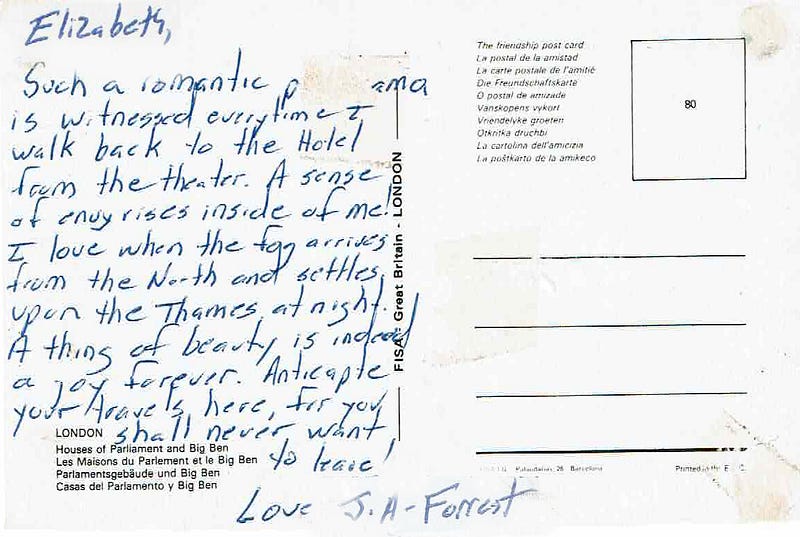
At the bar, I write a postcard back to Elizabeth. Does she even think about me? This is what I wrote — for authenticity's sake. I will stick it in this journal, and maybe, one day, post it.
The ladies behind me are all smiles, laughing, laughing loudly — too loudly. Must be something funny — humorous, indeed. What is more splendid than laughter from a lady? The laughter fills the room with warmth and comfort! I sip — then another, and I approach them — courtly-like, curious then even curiouser. The brown one stares at me. A laugh no longer funny — a smile, no longer welcoming. But crazed. Someone keeps the door ajar, waiting for his girl to adjust herself, and the cold sweeps in. My hand freezes. My pint glass falls and shatters. Faces laugh — jeer — it all hits me — each laugh like a boot to the groin.
“What’s so damn funny?” I scream.
“Hey Yank!” Rob yells from behind the bar. “I told you to stay out of here!”
I rush the bar, and a path to him slits open — so I can see how my new rings appear on his face, but two blokes stop me and throw me to the floor. I reach for my shiv in my black boot, but another stomps my hand. The knife gets kicked away — and with calls for help and the police police police — I rush out of the Lion’s Head — and calls for “stay out of here” usher me out.
I will need a new home, once again, after these ten years gone. Gone. Goodbye.
In the cold, I’m on Moscow Road. How will I spend my night? Where will I find warmth? A vagina — a uterus to crawl into? And never leave. Ah — a return to the Origin of the Universe! The Eternal Mother. My back aches with that tryst with the floor — and I rub my swollen wrist. Believe me, I’ve had much worse. Why worry about me? I’ll be fine if anyone will actually be reading this. I’m writing this now, trying to get everything correct in writing. History, as they say, is composed of the winners.
Those of the Word usually win, right? Shakespeare and the King James Bible.
The wind stings. My scar feels the bite even more. I walk briskly towards Bayswater Road passing Bayswater Tube Station, heading for Queensway and the Underground Central Line. I didn’t really have a destination, just a nice walk through London, this city of villages, and maybe throw myself in the Thames — not warm, by the way, which I didn’t because I’m writing this now. Unless your narrator is a ghost.
I flee far from my flat in Paddington. How could I remain in that damn small rectangle cave with little heat and comfort? Was it like a jail cell? How like bees in our honeycombs we are. My life belongs to the streets and to the people of my adopted London, of my adopted Britain.
My adopted cat, Lady Guinevere, was found by me twice; when I first brought her home and the second when I found her dead in the school park. I was forced to look for her when I set her loose. She was so cold there, dead cold, underneath the Helter Skelter in the park. Cold, beautiful, and free. I petted her frozen fur and rubbed her pink pads. By the stream near our house, I floated her dead body like some Moses baby to a better place. I was ten when my cat died — and I suspect someone smashed her head with a brick.
Ten Years Gone. Gone. Goodbye.
There were Germans on the Tube across me — speaking their Panzer Man Panzer Man language. Individual cruelty is one thing — like revenge — but such mass cruelty on such an epic scale — is simple madness. Did I feel like a passenger on the train to Dachau? How many generations does it take to erase millions of sins and deaths? A Bavarian Alp of Ash.
I say to them, “Would you like some sauerkraut? A frankfurter? A wiener schnitzel? Some schadenfreude? Some Zeitgeist? Some Fremdschämen? Kopfkino? Lebensmüde?”
The German family does not laugh. Too dignified to respond. They find better seats — Neville Chamberlain seats — if you will, away from me. At the next stop, two blokes take a seat. I smile. But The London Times blocks all faces. Something tragic just happened in China. With a trillion people, don’t you think something tragic happens every second?
If I know something bad’s going to happen, like a murder in Manchester or a rape in Soho, or an ethnic cleansing in Kosovo, why do I need to read about it? What can I do? Why get so upset — and have your blood pressure rise?
Marble Arch — Bond Street — Oxford Circus. This is where I get off. Some lady — a blonde — startles me. She asked for directions to King’s Cross Station. Heading north? Maybe even to Edinburgh? She’s so damn pretty — so fair and light and downy white — maybe Scandinavian with that accent. Lovely and charming and soft-spoken — like soft snow. Seemingly fragile — like my cat — warm and fragile in my hands. Her lips are sharp and curved blood red.
Take Victoria Blue Line North for three stops. She’s carrying two suitcases by herself. Should I help her? Escort her? She thanks me — “Ja!” Then disappears in those cold tile tubes. The wheels of her luggage — click click click. I clench my fists, stuck both into my coat pockets, and throw myself against my own gravity and veritas up the stairs and back into the cold.
Cross Oxford Street. Head down elegant Regent Street — my favorite, so posh, but I need the river. I have always been drawn to water — a lake, a stream, a river, the sea — the Milky Way of Eternity. It was on a rowboat where I first made love to a lass named Elizabeth. I was 17. She was, too. Two virgins. So romantic. She even had an Anglo name — Elizabeth. Never Liz or Lizzy or Lisa. I think about her often — when I fantasize — about making a hanger for a noose. She would kiss my ears and whisper in my ears. Could such kisses and chills serve as a biblical balm and frankincense for that scar?
But she lost out — that bloody fucking wench!
Ten years gone. Gone. Goodbye.
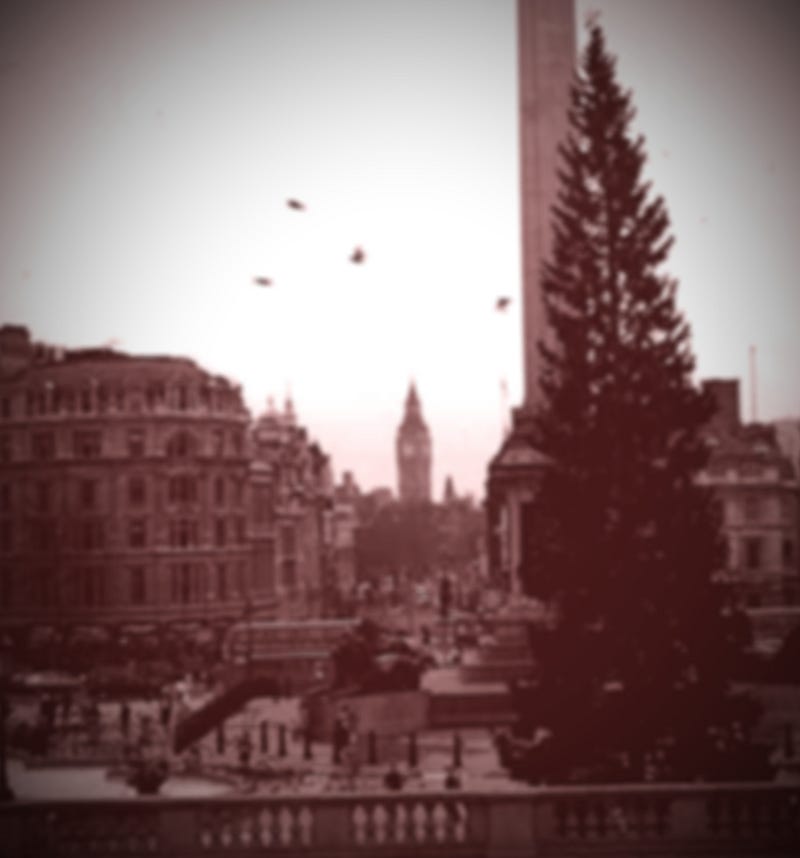
Reading Street. Piccadilly Circus. Leicester (pronounced less-stir). Charing Cross. Trafalgar Square. The City Christmas tree — the pigeons were gone — so I couldn’t kick them — those dirty things. I did eat one or two — for that taste of home and memories from the long, long ago. My sweet Virginia home. Why not? They were still warm. Why waste protein?
Horatio Nelson forever glances down Whitehall. A good hour walk. Great for one’s mental health. Dickens was a great walker! The cold no longer bothered me.
The half-hour bell of Big Ben rings out, a sound that will ring out forever. Does another city have a sound so tied to the city? Those police sirens in Paris, yes. Oh, the bells of Notre Dame, too. The call to prayer in Mecca? Perhaps.
I ignore hunger pains and trudge on.
Then: I catch a glimpse — a profile — with that Roman nose and granite jaw — and I think that may be him. Once again. Following me by not trying to follow me. We both wait sensibly in silence for the #12 Bus. What was that he was saying to the bloke next to him? Did they know each other? Work together? Was it an American accent — a Southern accent?
Did he see me? Why was he glancing just over his shoulder? At me. I reached down into my black boot and felt the other knife — one cannot have too many on hand for just the right moment. Hunger comes suddenly.
I climb to the upper part of the bus — to see if they follow me. They did. I sat in the back. To make sure the knife was sharp, I pulled my sock up and felt the blade, and blood formed a beautiful inch slit across my finger. It could slice paper or the veneer of heaven. His face now was clear — not a day older, but now shaven. It was always a handsome face — but cruel when the terror swelled and mutated his eyes — narrowing and forming two slits, the eyebrows forming a V-shape — like a black predator bird in gothic profile — like an old film — black and white and red in a porter filter lens.
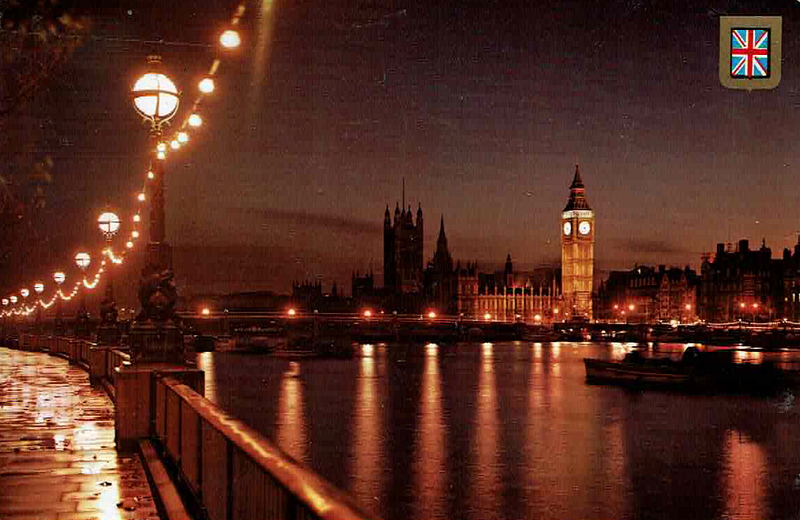
The #12 bus crossed Westminster Bridge. Parliament was all lit up — all lace- nicely-nice and Victorian-like. Like from Sherlock Holmes. Or Jekyll and Hyde. Or Dorian Gray. The lamps along the river illuminated the high tide.
To the East End and down Stamford Road towards Waterloo Bridge — I was in unfamiliar hunting grounds here — the terrorreign of Jack the Ripper. With the next stop, should I get off and hope he gets off, too? But there are two of them — yes, but two older chaps. One even walks with a gummy leg. And the other — well — his arm must still be an issue. Or should I leave when they leave? What happens if we’re left on the top of the bus together? The last stop. Termination. End of the line? Haven’t I expected this meeting — this family reunion? Why hasn’t it happened sooner?
Did no one really care about my welfare?
Ten years gone. Gone. Goodbye.
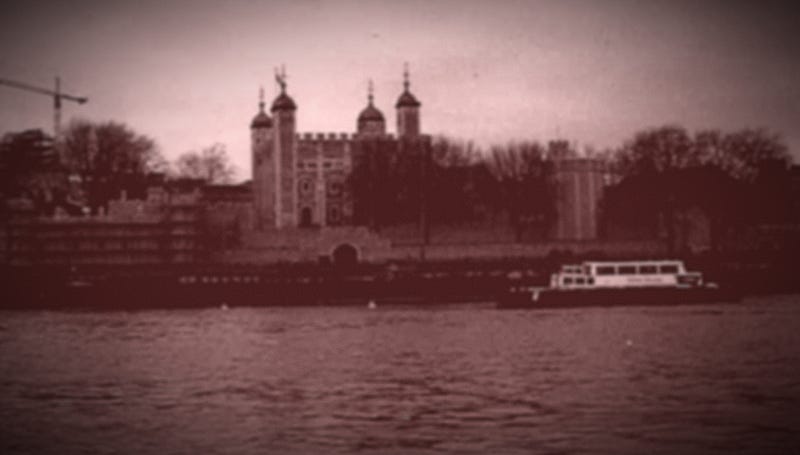
It’s then — lost in these warm memories — that I lose sight of him. His friend is still on the bus, but I rush down the aisle and kick force the door — which makes the driver curse me like a fiend. “Sorry, I fell asleep, mate,” I chime. Was I lying? You know I never lie. I was sleeping with the dead.
The man turns — looks both ways — but looks the wrong way first — as if he doesn’t know about roads in England. That’s a sign. Egads, a clue! Elementary, dear reader. He glances behind him — looking for me — hoping I’m still on his trail. I have seen this same man in the same trench coat, outside my flat in Paddington — so this is not new — this game of mouse and cat. Are his hands still large? The way he would wring the necks of pigeons from the wire coop— as that was more preferable than using a hatchet called Molly.
“Watch,” he would tell me. Then he’d slice the head — and the body would run, stagger — the nerves in the body still reacting to all that confused electricity running out of the circuits quickly. “Funny, right? Now, strip the feathers and take the bones. We’ll grind that for bone meal.”
It was supper. The next day I freed all the pigeons. I expected my head to be next. Funny, right? Funny. Real funny.
Ten years gone. Gone. Goodbye.
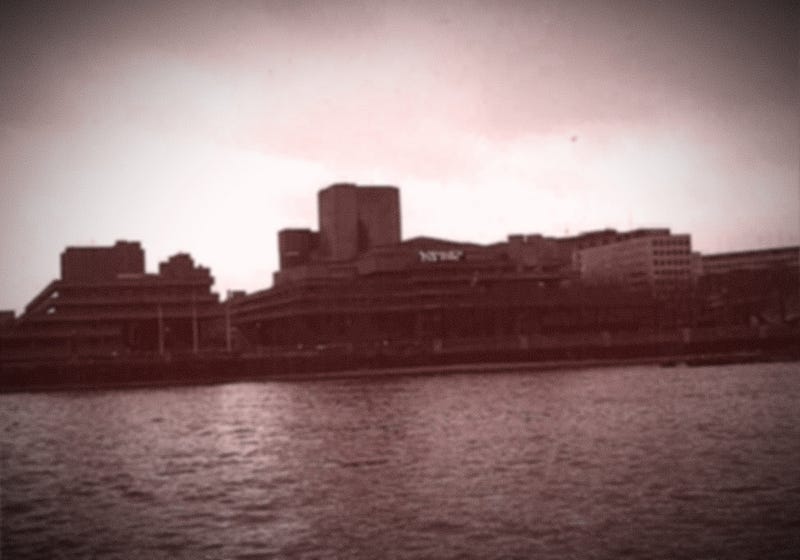
At The National, he moves towards the river. I follow, matching step with step. I touch my ear. Is it bleeding again? No — just the blood from the slit on my finger. The knife I move to my trench coat. I did get away from home — from him and from everyone, but did I really?
In my head, they still reside, but now I have the nerve and the resolve.
By the river, underneath one of those Victorian noir yellow lamps, he glanced at his watch. He leaned over the railing, gazing across the black running tidal waters of the Thames. The river had a tinge of red from the sky and the clouds. He says, “Good evening” to me. No accent from around here, but really only one place. Does he not recognize me? Is he playing games? In ten years I have grown taller, thinner, my face less callow.
Surely he must know his own son. What poor father does not know his own son? I approach — knife ready. No one is around.
I take a position near him — this man — this man my father — and gaze as he does out to the water. The lights blend together on the waves.
“London is safe,” I say to him, not looking at him. “The lions are not thirsty tonight. The river doth glideth at its own will.”
“A lovely evening, indeed,” he says.
“You taught me the thrill of the kill,” I say to him. “Funny, right? Feeling life flee from one’s own hands to things so weak. I was so weak.”
Fear appears — that fright on every animal — from low to high — but it was too late for him to escape. I stepped in front of him, seized him, and slit his throat with the perfect cut — deep and strong — and his head tilted toward the Thames — and I really wanted to see him stagger like a headless father. The brute. That black booted brute!
I heard footsteps and shadows and voices. I tossed his body into the Thames — as many have gone before — and tossed my knife into that historic, lovely, lonely river. That splash was so satisfying. The water even baptized my face, spraying the scar he had left — like holy water sprinkled by a shaman priest. The blood I concealed with two hands stuffed into my trench coat. The red was warm on such a cold night.
“Good evening,” one lady said, passing.
It was such a lovely night. Ten years now done. Done. Goodbye. And if forever, still forever, fare thee well.
Until tomorrow. Good night, diary. — Jeb Allan Forrest
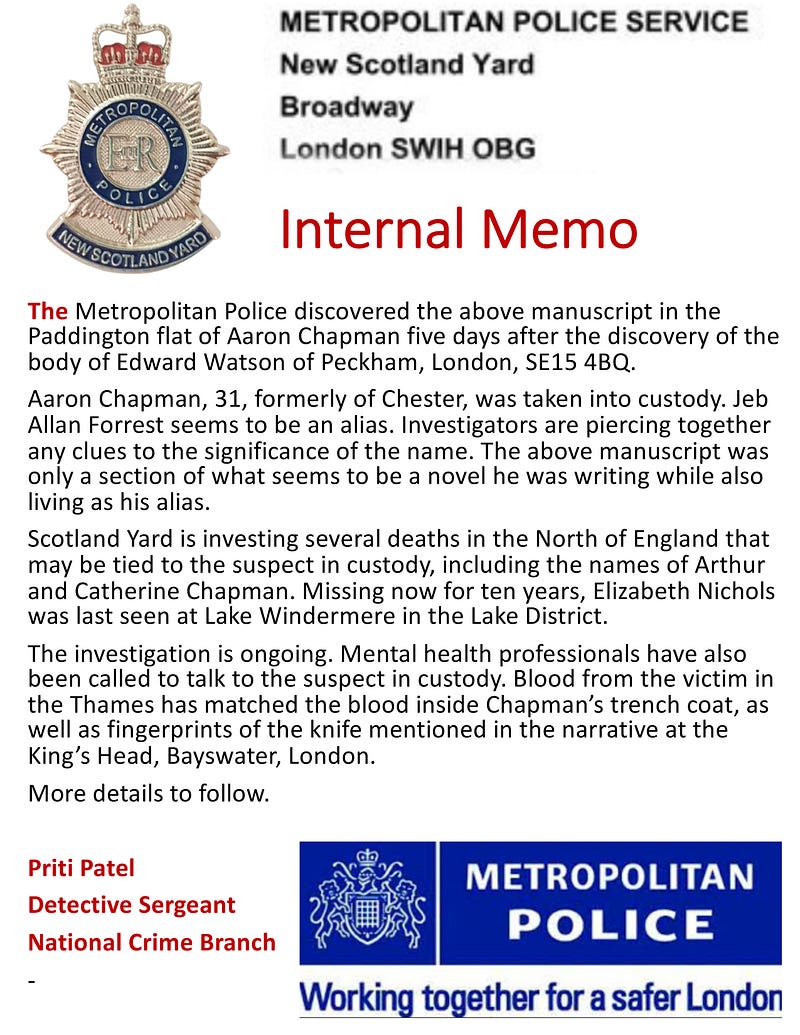
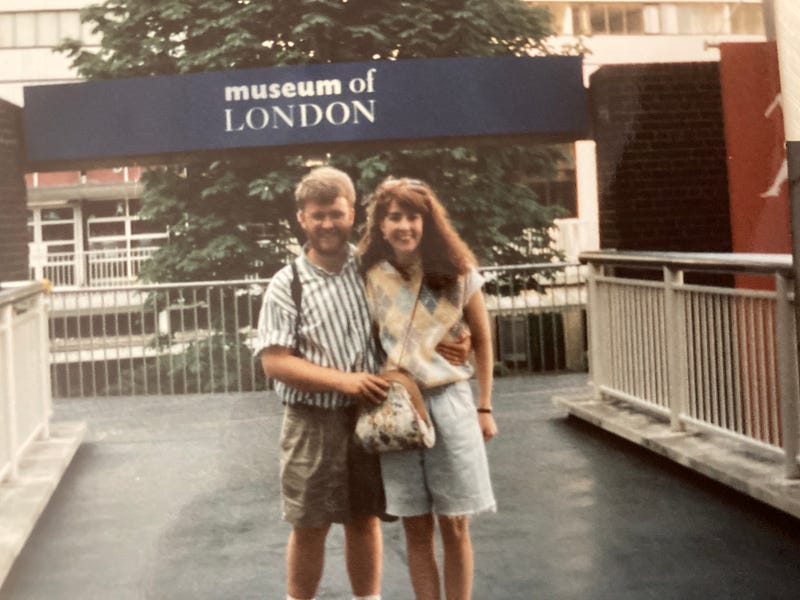
The original story, composed in London, in January 1990, in Bayswater, was called The Prodigal Son. It has been edited and slightly updated.
Thank you for reading. For more short fiction from Walter Bowne on Lit Up, check out: