CINEMA
Telling a Contemporary Indian Urban Love Story
‘Kho Gaye Hum Kahan’ and the Hindi Romantic Comedy in 2024.
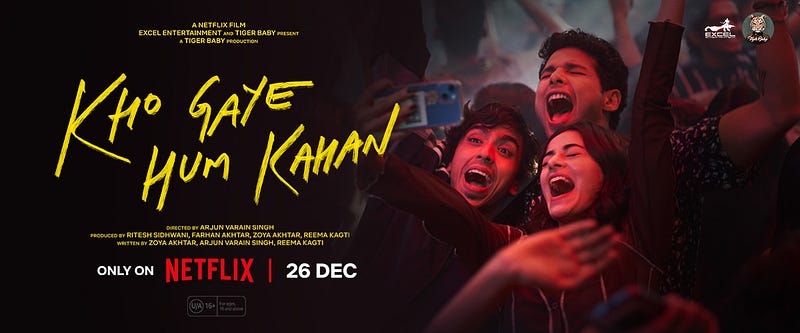
Hindi movies are usually romantic comedies. In fact, it’s hard to think of a Hindi film without love, laughter, and music. The big challenge for filmmakers is to connect with audiences while not using old wine in a new bottle. How do you tell a story differently when every film being made in your industry belongs to the same genre? What is the right balance when you are communicating to rural, urban, and international audiences? How do you find an authentic voice for an Indian millennial and resonate with the complexity of contemporary urban living? Finally, in a country where there are many Indias, who is young India? Occasionally, a filmmaker does get it all right.
Kho Gaye Hum Kahan is such a film. The film is a coming-of-age narrative, produced by Excel Entertainment and Tiger Baby Films, which marks Arjun Varain Singh’s debut as a director. It tells the story of three twenty-something-year-old friends — Imaad Ali (Siddhant Chaturvedi), Ahana Singh (Ananya Panday), and Neil Pereira (Adarsh Gourav) — who are navigating their way through living and loving in Mumbai while getting ahead and even finding themselves in an amorphous web of social identities. Humor and romance in Kho Gaye Hum Kahan are dark. The film draws laughter while making you cry.
Arjun Varain Singh’s previous filmmaking venture Gully Boy (2019), where he was assistant director, grew to be immensely popular in India and was the country’s official nomination for Best International Feature Film at the Academy Awards. Now, his directorial debut also gets our attention. But it is the film’s script written by Arjun himself, in collaboration with Zoya Akhtar, Reema Kagti, and Yash Sahai that shines. The film’s multiple storylines are brought together masterfully without striking a false note. The idiom and vocabulary of Kho Gaye Hum Kahan is the language of Mumbai.
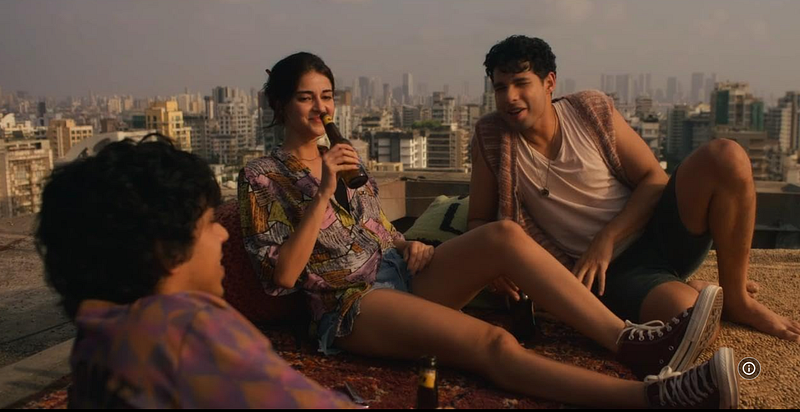
The career choices the protagonists make are contemporary, as are their life decisions. All of this finds its way into the film without apology or pretension. This is young India living and loving in an urban metropolis. The film’s honesty is its strength. But Kho Gaye Hum Kahan is a romantic comedy and has some of the frothiness of a Hindi cinema blockbuster. Yet, what is unusual is the darkness at the edges of the film that never fails to creep into the main storyline.
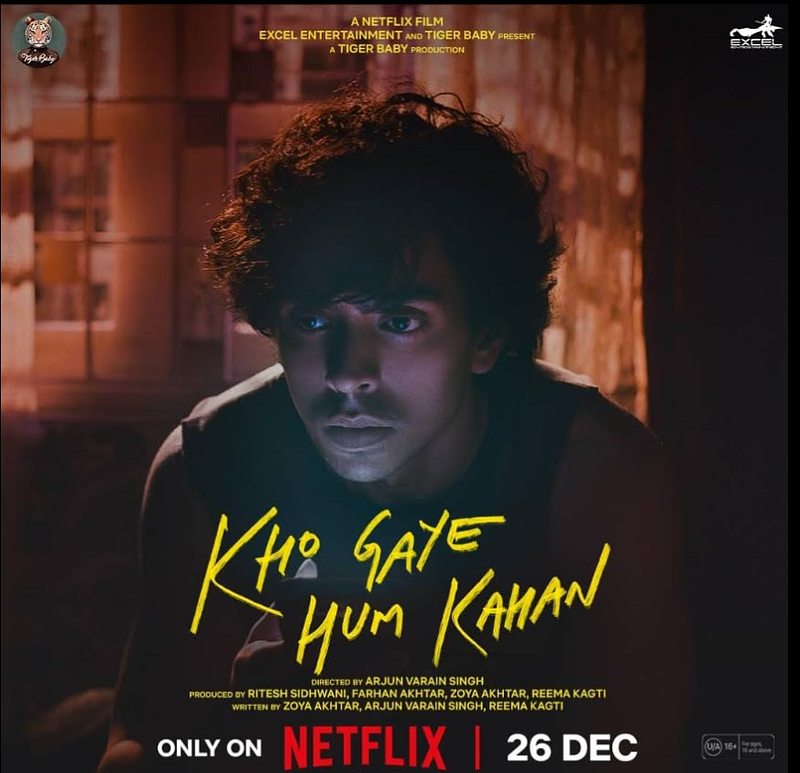
This combination of lightness and brooding darkness finds expression in the performances of the leading trio. Siddhant Chaturvedi brings an edginess to his portrayal of Imaad, similar to when he was Zain Oberoi in Gehraiyaan (2022). But the real revelation is Adarsh Gourav, who played Balram Halwai in The White Tiger (2021). His performance in The White Tiger earned him a BAFTA nomination for Best Actor in a Leading Role then, and now the most intense moments of Kho Gaye Hum Kahan belong to Adarsh as well. Ananya Pandey also delivers her best performance to date and comes into her own as Ahana. Like The Archies (2023), also from Excel Entertainment, Kho Gaye Hum Kahan is not just a coming-of-age romantic comedy, it is the coming of age of a new generation of actors who will play pivotal roles in Hindi cinema for many years to come.
As is expected in Hindi cinema, the music adds another layer to the film. The soundtrack is mainly composed by independent artists OAFF and Savera, who won critical acclaim for their unusual but haunting musical score earlier in Gehraiyaan. They bring the same experimental quality to Kho Gaye Hum Kahan and mark another departure from tradition for the film, adding to the freshness of the soundtrack. This is combined with compositions from the legendary Javed Akhtar, which give the film a poetic lyricism in the best traditions of Hindi cinema.
Kho Gaye Hum Kahan is just one in a long series of contemporary romantic comedies produced by filmmakers Farhan Akhtar, Ritesh Sidhwani, Zoya Akhtar, and Reema Kagti after the release of Farhan’s breakthrough romantic comedy Dil Chahta Hai (The Heart Desires) in 2001. At that time, Hindi cinema mostly ignored young, urban India. So, Farhan’s decision to make contemporary Indian cinema was unusual. He did not draw inspiration from the past or the films around him but from his own life. While it may seem like a logical choice now, not many filmmakers in India were making such movies. Young India welcomed him as a filmmaker who spoke with their voice. Kho Gaye Hum Kahan continues in the same tradition.
But if Dil Chahta Hai was a pivotal moment for Indian cinema, Kho Gaye Hum Kahan tells us how far we have come. While there was awkwardness and self-consciousness in how Dil Chahta Hai dealt with themes like a younger man’s infatuation with an older woman and how this was accepted by his family, in Kho Gaye Hum Kahan it fits effortlessly into the storyline, as do other themes like a more nuanced view of sexual intimacy. This is new ground for popular Hindi cinema, but director Arjun Varain Singh treads this ground effortlessly.
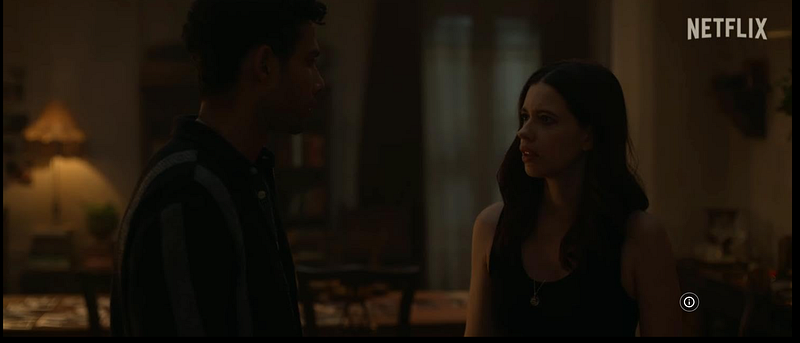
Yet what truly stands out about Kho Gaye Hum Kahan is its comfort with ambiguity. The film does not attempt to fit everything into neatly defined labels, which are then put away into a perfectly sealed box. The filmmakers are comfortable with open endings, where protagonists may find freedom, but not necessarily live happily ever after. This is a big step forward for mainstream romantic comedy. Standup comedy sequences in the films are also bitingly funny. They make you uncomfortable, but they also make you laugh, just like how good standup comedy should do.
Interestingly, in an industry traditionally dependent solely on theaters and multiplexes for distribution, Kho Gaye Hum Kahan was released on Netflix. It will be distributed only on OTT platforms. The Hindi film industry has been doing this more frequently now, but Excel Entertainment’s decision to release both Kho Gaye Hum Kahan and The Archies only on Netflix points to a future where this could well become the norm. Just as Dil Chahta Hai allowed filmmakers to pivot to multiplexes from cinema halls, Kho Gaye Hum Kahan marks the coming of age of OTT platforms as a distribution platform for mainstream Hindi cinema. Filmmakers will increasingly now make films for this audience. Like when Dil Chahta Hai established multiplexes as new distribution platforms two decades ago. This could be the next stage in the evolution of Hindi cinema’s romantic comedies, where filmmakers tell their stories for an audience now more ready to explore complex themes than ever before.
This is written in response to the Counter Arts February film prompt from Reece Beckett.
You can also read about some of the films from India I have discussed in previous months here:


