In ‘Samskara’, Indian Cinema Has an Ageless Classic that Endures
Half a century after it was made, Samskara still asks tough questions.
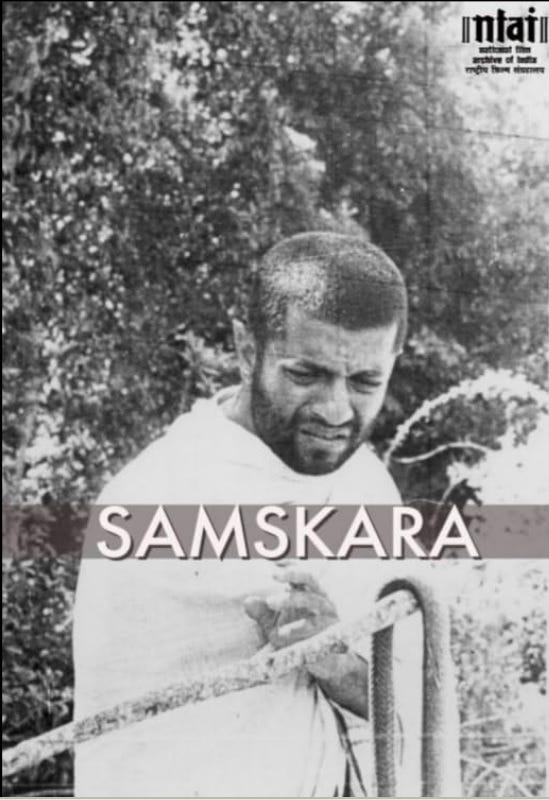
Cinema has forgotten the art of being comfortable in long silences. I was reminded of this when I watched Samskara again. The film still succeeds today because it shows you a story. Dialogue adds to its brooding landscape, tinged with symbolic visual metaphors.
Samskara (or Funeral Rites in its English title) is a 1970 Indian Kannada language film directed and produced by Pattabhirama Reddy. While Hindi language films have often come to represent Indian cinema globally, the Kannada film industry is among India’s many diverse state industries. It is the fourth largest film industry in India, following the Hindi, Tamil, and Telugu industries.
Samskara is among its most enduring classics.
The film, based on UR Ananthamurthy’s book of the same name, is a bold exploration of the multilayered structure of Indian society, specifically its 3000-year-old caste system. Pattabhirama Reddy transforms Ananthamurthy’s manuscript into a screenplay — layering each frame with the symbols of ritual and tradition, adding cultural references imbued with underlying meaning, accentuating the richness of the narrative. The story is told through the long lingering movement of the camera, where the viewer is not merely drawn into the action, but is absorbed by the intricacy of detail and rich symbolism.
Among the film’s most striking sequences is its opening scene, where dialogue begins only three minutes into the film, which till then is immersed in different elements of Hindu ritual. This sets the tone for the rest of the film.
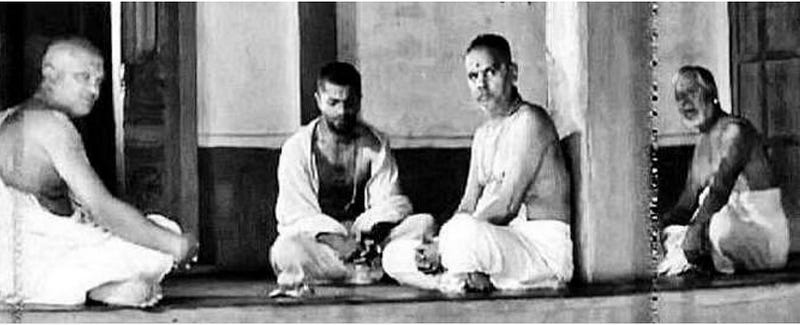
The film opens with the death of Narayanappa (played by P Lankesh) in the remote southern village of Durvasapur in Karnataka. The village now faces the question of who will perform Narayanappa’s funeral rites. By birth, he was a Brahmin and had the highest ritual status in the Hindu caste system. But Narayanappa was a non-conformist who did not live by the principles of Brahminism — openly eating meat and even living with a low-caste prostitute Chandri (played by Snehalatha Reddy). Since he does not have any family, it falls on a Brahmin member of his community to perform his funeral rites, which are essential if his soul is to be released from his body. However, no Brahmin steps forward because Narayanappa has angered all of them with his lifestyle. It falls on the compassionate and respected village priest Praneshacharya (played by Girish Karnad) to find a solution, drawing from his knowledge of the scriptures. But to do this, Praneshacharya begins a journey within himself, where he confronts his deepest desires and the world in all its shades of grey, discarding the secure certainty that arises from all convenient demarcations of black and white.
The stage for the film is set by Ananthamurthy’s book. The situation is a simple one, but Ananthamurthy’s questions remain complex. He treads fearlessly and questions everything. Nothing is sacrosanct or above reproach.
The visual fabric and rhythm of the film are created by art director S G Vasudev and Indian classical musician Rajeev Taranath. Both have the authentic, earthy rusticism of the sights and sounds of an Indian village. The use of make-up is also minimalistic, differentiating it from popular mainstream productions of its time. Dialogues from Girish Karnad are simple and drawn from the real world. The authenticity of the film is enhanced by the decision to shoot on location in the predominantly Brahmin village of Vaikunthapura, also in Karnataka, in South India.
Old traditions that have survived for thousands of years were brought to the screen by Australian cinematographer Tom Cowan’s modern cinematic technique in a film shot entirely in black and white. But just as Ananthamurthy’s questions are still relevant, Cowan’s cinematography remains contemporary. Both combine to make Samskara a classic for all time.
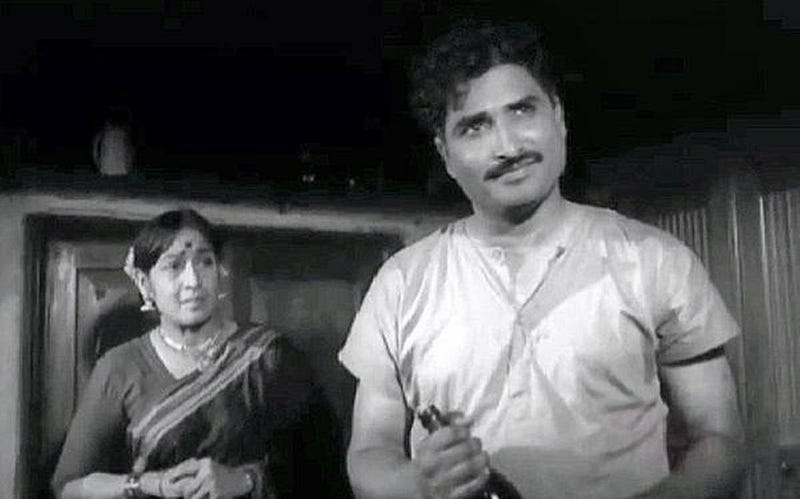
The film is also helped by powerful performances from P Lankesh, Girish Karnad and Snehaltha Reddy. Particularly, Girish Karnad gives the debut performance of a lifetime. His performances would give life to many characters over the next fifty years, but Samskara remains among his finest performances. In an age known for its overblown melodrama, the restrained intensity of the lead actors in the film is impressive. The freshness of the performances accentuate the timelessness and continued appeal of Samskara.
When Samskara was released, its many uncomfortable questions hit home. The film was initially banned in the state because it was felt that it would escalate caste tensions. The central government would then intervene to lift the ban, as the film gradually gained critical acclaim.
But as someone who has been among audiences watching Samskara, it is always interesting to see the multiplicity of responses to the film. Even as the audience often stands up to applaud the film, there are also those who voice their dissent. Yet whether they squirm or applaud, it is true that Samskara never fails to touch its audience.
The film is also significant because of the role it played in the evolution of Kannada cinema. Samskara marked the beginning of the parallel cinema movement in Karnataka, which continues to make vibrant and thought-provoking cinema alongside popular mainstream productions half a century later. Girish Karnad would not just become a respected actor, he also became Karnataka’s most celebrated contemporary playwright and director. P Lankesh would go on to become one of the state’s best-known journalists. Pattabhirama Reddy would emerge as a torch bearer of the Kannada parallel film movement.
Yet, at the time the film was made, none of them were Kannada film industry veterans. They were just a group of journalists and theatre artistes creating the kind of cinema they wanted to see on the screen.
They were scripting change. And they succeeded.
They came together and left behind one of Indian and Kannada cinema’s finest classics. Its appeal continues to endure half a century later.