
Tell Me Your Income, and I’ll Budget the Good Life for You in a Big City
A low cost of living is attainable just about anywhere you choose to live — even in urban, coastal California
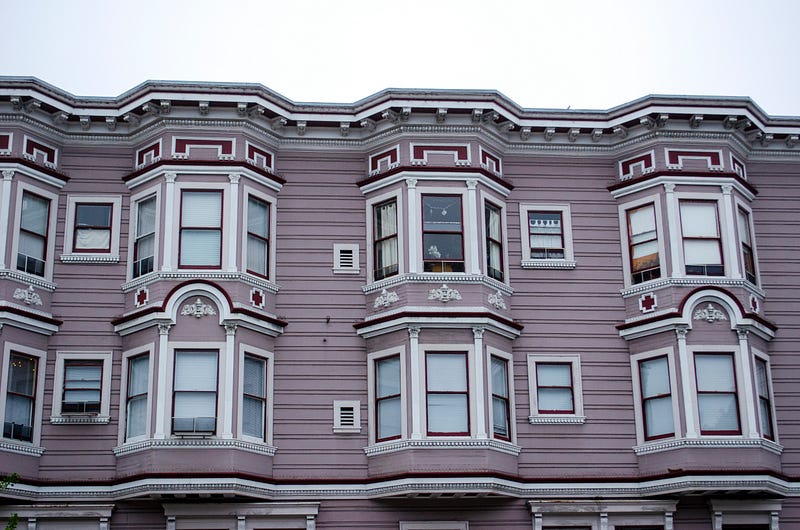
Give me your estimated monthly income, a handful of preferences, and five minutes and I can map out a (relatively) stress-free budget that will allow you to live — and live well — in San Francisco or Los Angeles.
As long as you take home, say, $3,500 a month minimum, you can do it and do it well. You can probably make it work on less, but it’s not optimal, and I don’t want to put that type of pressure on myself (or you!).
It might require some prep work to get to the point where you can confidently and consistently pull it off. It also requires compromise, the precise definition of which we’ll discuss in like 90 seconds with super-specific examples.
For now, just know — compromise isn’t a bad word.
Consider Jacob Wachtel’s response to my recent Making of a Millionaire article, “Of Course Poor People Don’t Have Emergency Funds”:
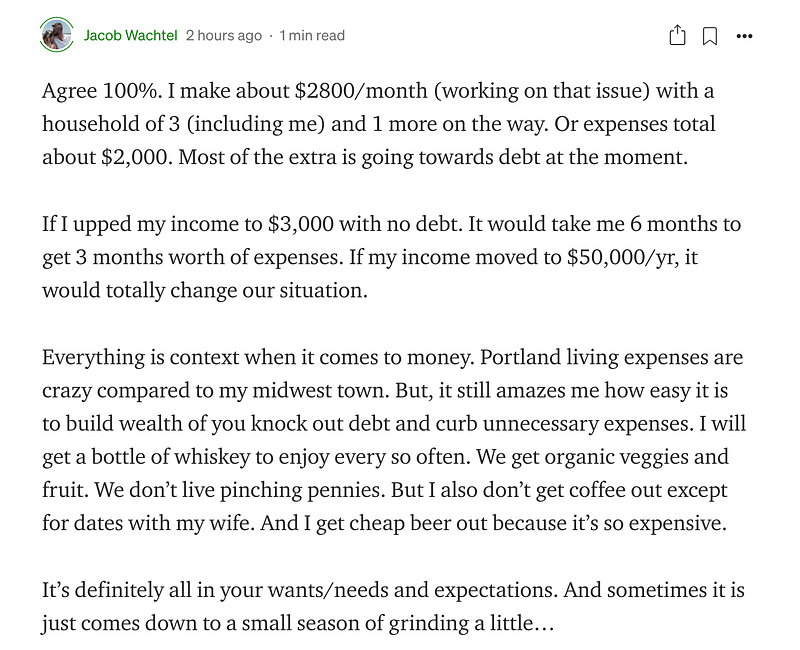
Sometimes it just takes “a small season of grinding a little.”
So well-stated. And a testament to being able to do a lot with a little and visioning a more financially joyous future. Not to mention being positive and living the good life even while you’re not exactly where you want to be.
It’s all about mindset. Mindset is everything.
Too many people throw their hands up in the air, listen to what they hear in the media and from uninformed friends and observers, and say I could never afford to live in a place like Los Angeles or San Francisco (or Portland, for that matter).
So untrue.
I lived in San Francisco from 1999–2006. I have been in Southern California since 2006, spending most of my time in Los Angeles proper and Santa Monica. I make it work — and work well. At the moment, my cost of living is lower than it has ever been and heading lower.
My experience in big cities — of seeing how it can work in big cities — makes me think I ought to start a consultancy. A business where I take people with these unfounded doubts and help them craft a life they’ll love in a city they consider out of reach.
Let’s put together a hypothetical case study, but a somewhat specific one.
Expense by expense.
Rent. In Los Angeles, we begin and end with my rent.
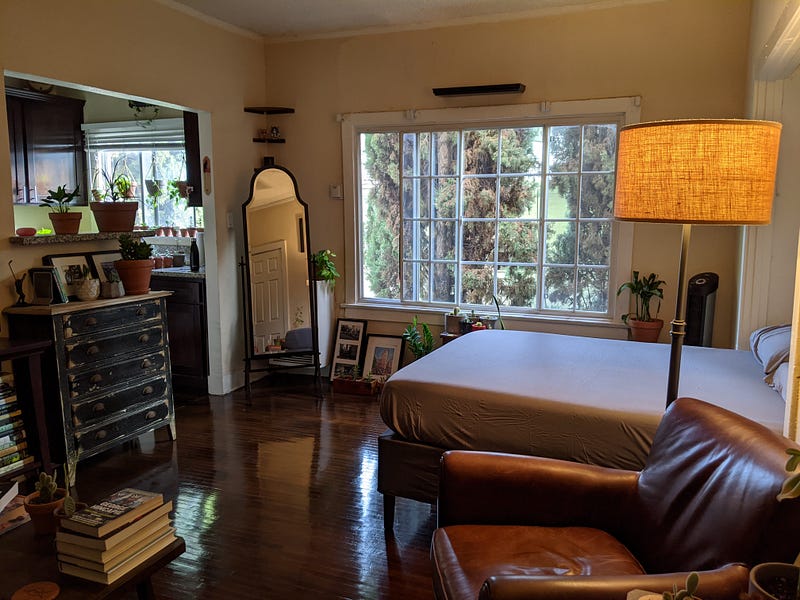
For $1,342.11 a month, I have a spacious and cozy (I should be an apartment broker) in a 1924 building that looks like it could be in New York City.
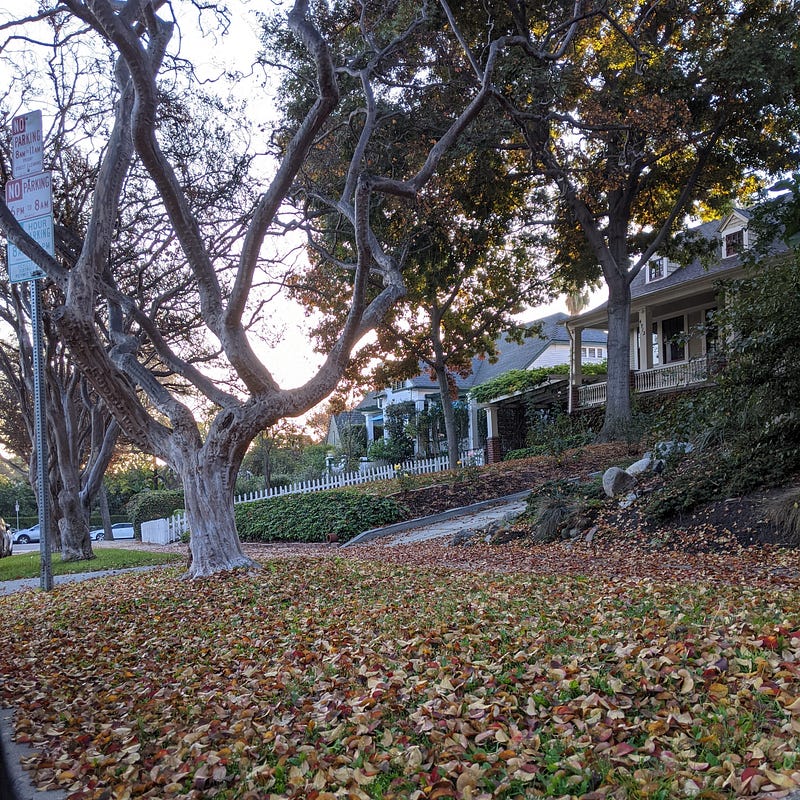
I live in a gritty but rapidly gentrifying neighborhood that’s steps away from a 42-home, a three-block historic district with classic Los Angeles Craftsman style dwellings, tons of trees, and much sought-after shade.
Look at this picture. Who says we don’t get fall in Los Angeles?
Compromise number one. Smallish space. Technically a second-tier neighborhood. I don’t feel like I’m compromising at all, but I can see where you might.
Here’s where the (my) definition of compromise comes in — yet again.
It’s just a choice you make in one area to get something you want more in another.
You can do likewise in San Francisco, especially now with rents down in that city due to the pandemic.
Case in point —
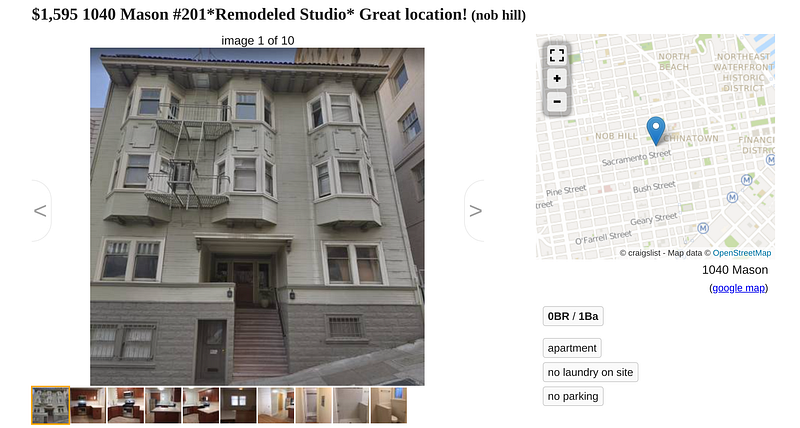
It took me literally less than five minutes to find several nice options in this price range. A $1,600 a month studio in Nob Hill used to be unheard of.
My apartment hunting superpowers make me confident that if I looked hard, I could find dozens more vacancies for somebody hoping to stay meaningfully under $2,000 a month in San Francisco.
A typical response is yeah, but…
Over the years, I have learned something about the yeah but crowd when you discuss city life. They’re going to find every reason on Earth to argue why it’s not going to work. Bottom line — living in big cities isn’t for everyone.
They’re used suburban life where compromise means doing without a “bonus room” or not having a pool. Totally different experiences and lifestyle views.
Transportation. In San Francisco, we begin and end with you don’t need a car. You really don’t. It makes financial sense to rent one when you want to get out of town.
Walk. Bike. Public transit. Even car share. This is the way to go.
In Los Angeles, it’s tough to not have a car. Even if you live in a self-contained, amenity-laden neighborhood, you’re going to want to explore this vast expanse of amazing stuff. We have the best urban and “natural” environments here, side-by-side and often rolled into one. Without a car, you lack easy and convenient access.
Of course, the cost of transportation varies widely depending on the choices you make.
Admittedly, I made a bad choice. My car payment is too high (in part because the salesperson screwed me). Anyhow, I’m working to eliminate it as soon as possible, lower my cost of living substantially, and drive this fine car into the ground.
Food. This one makes me laugh.
Guess where you can find the least expensive food — in America’s (and the world’s) greatest and biggest cities. Granted, you can also find the most expensive food in these places.
Isn’t this part of the beauty of big cities? The diversity and choice in just about every aspect of life.
In Los Angeles, we begin and end with the taco.
In San Francisco, we begin and end with the burrito.
I could literally live on tacos in Los Angeles (and a couple places with good burritos) and exclusively burritos in San Francisco. But I’m weird. And I also like a lot more than Mexican food.
We’d go on a 45-minute read tangent if I started listing quality cheap eats in Los Angeles and San Francisco. Trust me. They exist. In great abundance.
There’s also a place called Trader Joe’s. I go there once a week. I spend $75 a trip when I’m not paying attention. If I really tried I could keep my weekly grocery shopping to $50 a week. Maybe less if I went to a less expensive grocery store. Trader Joe’s probably sits in the middle in terms of cost.
Rent, transportation, and food compose most people’s three largest expenses.
We’ll go high in each area, figuring that any difference between San Francisco and Los Angeles we’ll just even out in the wash.
- Rent: $1,600
- Transportation: $400 (modest car payment, gas, insurance OR charges and fees for public transit and other alternative modes of transportation)
- Food: $750 ($300 for groceries, $450 eating out)
- TOTAL: $2,750
If you’re making the minimum — $3,500 a month — this leaves you with $750 to pay for the rest of your expenses. For most people, these include utilities (cheap in both cities, so we’ll call it $50 a month), internet ($50), streaming subscriptions ($50), laundry ($50), and random entertainment ($150).
Add it up and you’re left with $400.
And this is going with the minimum I’d argue you need to make to comfortably dwell in San Francisco or Los Angeles. Of course, it’s a heck of a lot better if you can execute a blend of these two things:
- Make more money because $400 isn’t a big surplus AND you might have debt or other expenses, such as healthcare.
- Whether you make more money or not, maintain this expense level or, better yet, try to go lower.
In this article, I present a rough sketch.
I’m not gonna lie. You can yeah but this a lot. However, one thing I have learned over the years, particularly when trying to do something I’m not sure I can pull off is that you can either yeah but your way through it and not end up doing it or you can set the yeah buts aside and make it work.
If you really want something, you have no choice but the latter.
Here’s the beauty of it — trying to live on a relatively modest salary in a big city might not be something you really want to do. Or maybe you go for it and see that, for whatever reason, it can’t actually work for you. If something along these lines happens, you can bounce the idea in favor of a smaller city that might or might not be less expensive.
City living isn’t for everyone. It takes compromises — and maybe an actual sacrifice or three — to make it happen. I have come across countless people who live in cities, particularly Los Angeles and San Francisco, who never thought they could make it work until they tried.
I was one of those people. When I moved from home, I gravitated toward suburban neighborhoods outside the city center. Then, on a trip to Boston for work, I fell in love with the city. Within a few months I was living in San Francisco.
I can say, with no doubt whatsoever, I’ll always live in a city. Most likely Los Angeles. My life would be completely different today — and certainly not for the better — had I not taken the plunge.
So I wanted to throw this out there. We’ll continue the conversation and expand on what we started in greater detail. For now, I’m prepared to field all of the yeah buts.