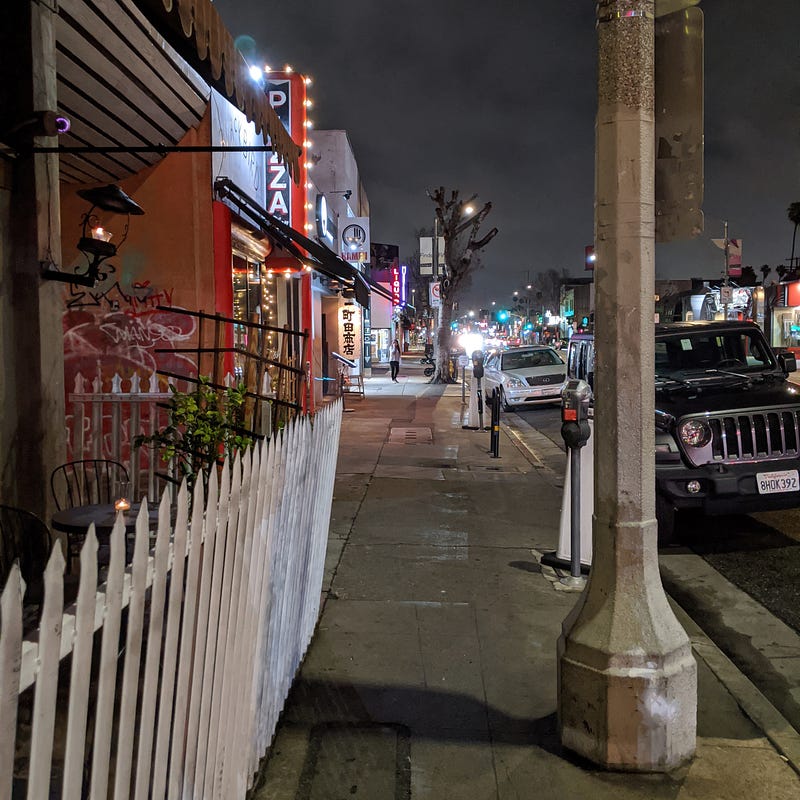
My Favorite Corner of LA: Melrose and Gardner
Much of my life in the last three years happened here — and continues to happen
I’m a huge fan of The Bold Italic’s San Francisco street corner series. One of the latest — My Favorite Corner of SF: Carl and Cole — resonates hard because I lived just a few blocks away, at Cole and Hayes when I resided in The City. I always envied my Cole Valley neighbors.
Thanks daisy barringer for the fantastic work.
I understand how great it is to be a hop, skip, and jump from Cole Valley! Next time I visit San Francisco — hopefully soon and with the girl who co-stars in this story — Cole Valley will be a definite stop, stroll, and linger.
I live in Los Angeles now. And I love it. So I’ll humbly steal and tweak the street corner idea and adapt it to LA, putting on a personal touch. It’s not as much a neighborhood tour, as a personal story highlighting the importance of place. How place can create the conditions for all kinds of experiences — from the seemingly mundane day-to-day to the profoundly life changing.
I won’t do Daisy’s work justice, but it’s not a competition. Just an inspiration for me to take a break from writing on money for a minute and riff about my life as it relates to a place.
Some places have a hold on us. They draw us back again and again.
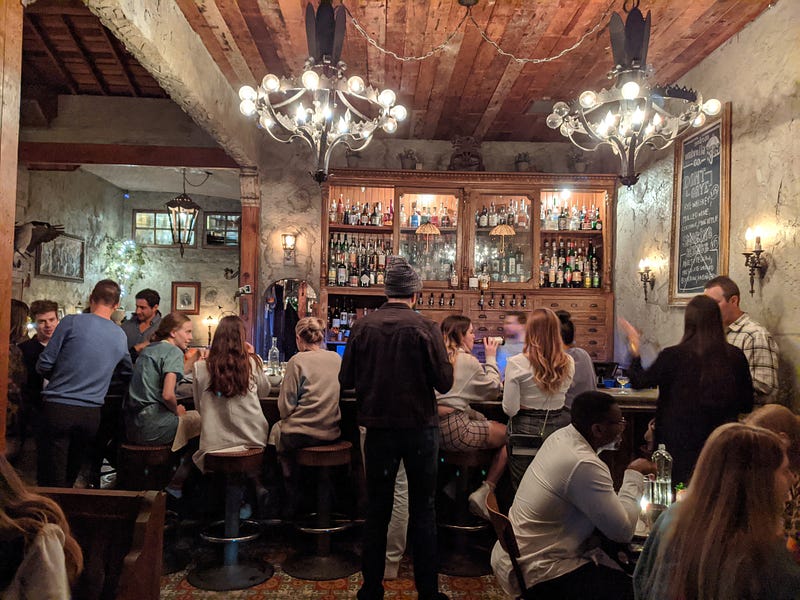
I often wonder what my life would be like if, in 2018, I didn’t somehow end up on Melrose Avenue in Los Angeles, particularly at a bar called Melrose Umbrella Company and around the corner from the love of my life’s studio.
Before we get into the particulars, let’s consider what makes a place. Let’s define sense of place and relate it to the corner of Melrose and Gardner.
Sense of place refers to the emotive bonds and attachments people develop or experience in particular locations and environments… Sense of place is also used to describe the distinctiveness or unique character of particular localities and regions. Sense of place can refer to positive bonds of comfort, safety, and well-being engendered by place, home, and dwelling…
Via Science Direct, that’s the academic definition of sense of place.
It’s a good one. However, it’s incomplete. I spent roughly eight years studying urban planning — focused on urban sociology, design, and sense of community — in college. In school, we learned of the elements of the built environment that forge a sense of place. While there’s no doubt physical form matters, it’s the people who make a place.
You experience a place through the individuals and groups who populate it. They create the theater you long to experience. That you want as part of your daily routine — of your life.
You get attached to a place because of these people, even the ones you never physically meet. You feel bonded and connected to a place because of people and the atmosphere they — often unknowingly — combine to create. Your experiences with people in and around a specific place help create a sense of place.
Comfort, safety, well-being… and familiarity.
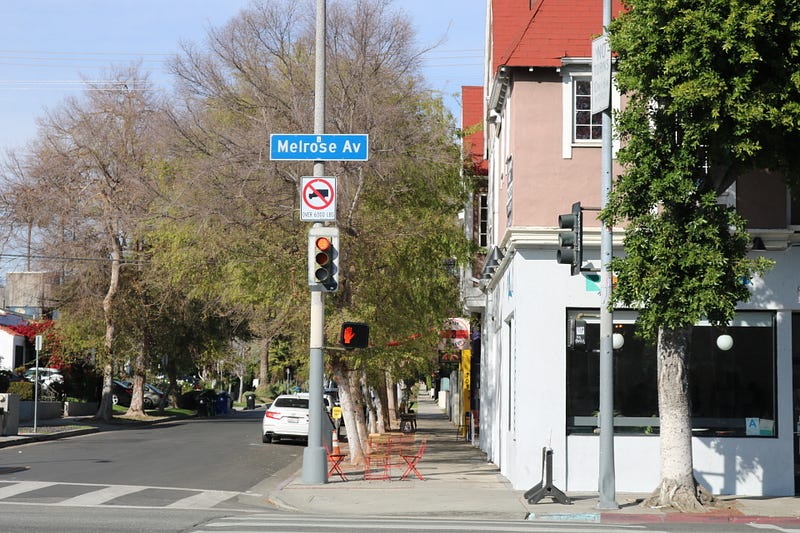
You could drop me at the corner of Melrose and Gardner, blindfolded, and I’m convinced I could tell you we are at the corner of Melrose and Gardner on the basis of how it “feels.”
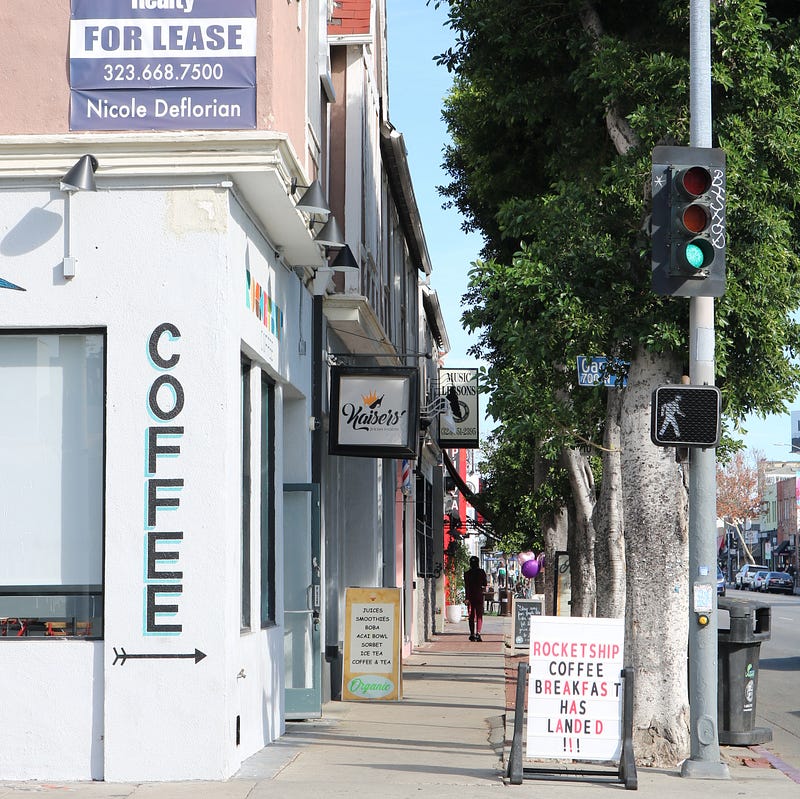
I have cut that corner literally thousands of times.
For the longest time, I had a crush on a girl who works in the neighborhood. I worked at that bar on Melrose. I’d purposely make CVS runs just to see if she was around. I’d walk Gardner to and from my car even if I didn’t have to just to see if she was around.
I still have a crush on the girl. I always will.
Except now I often meet her at her studio at the end of her day. We sip scotch, talk, and kiss in her darkened storefront window that looks onto Gardner with a view of the street life at Melrose and Gardner.
In our own small way, we’re part of “the intricate sidewalk ballet” Jane Jacobs referred to in her urban studies classic, The Death and Life of Great American Cities. Every actor, character, and worker in a shop, bar, restaurant, retail store, or studio. Every neighborhood resident. We all contribute to the sense of place at Melrose and Gardner.
Kisses in that or some other window or when you’re saying goodbye on the sidewalk. All the good times in that bar with regulars and perfect strangers. My girlfriend’s genuine interactions with her clients. The guy who owns the pizza place next to Melrose Umbrella Company asking to borrow a bottle and doing a shot of tequila during his quick visit. Giving the girl who works at the nail salon a free drink while she’s waiting on her lunch.
These events don’t merely fly under the radar. They matter. Cumulatively, they contribute to the sense of place. They’re the reasons we keep coming back. We’re interchangeable at the same time as being irreplaceable. We provide experiences. We participate in our own.
Places facilitate experiences. You live in tons of places in your life. For me, 13 apartments across seven cities in 13 distinct neighborhoods from age 19. While I liked most of these places on some level, none brought me life and experience the way Melrose and Gardner has (and does).
I met some of my favorite people in the world at that bar. When I wasn’t working, I wanted to be around these people. I still do. They make the place. They make me happy. They make me feel like I’m part of something that people actually care about. Part of the tangible, collective something that makes a place.
I met a girl in that bar in 2018. That relationship was doomed to fail. And it did, in August 2019. I’m glad it did. I’m way better off for it. That said, when I was hurting, where did I go for comfort? Back to that bar to be with the people I love most.
You can drink anywhere. It’s rare to find a place that makes you feel as if you belong, like everything’s going to be alright.
I learned how to be in a relationship in that bar.
By sitting at a table — alone or with friends who stopped to chat — reading about interpersonal dynamics, self-awareness, and resilience. By writing down ideas about money, love, and sex on my laptop. Ideas I only recently mustered the guts to turn into stories and publish. By having meaningful, often productive conversations with co-workers, regulars, and acquaintances.
The types of talks you remember. Talks that prepare you to have even bigger, more meaningful and productive talks.
When I wasn’t in that bar, working or hanging out, I was walking in the neighborhood. Alone or with a friend. Having more talks. Doing the work on myself. These walks almost always traversed Melrose and Gardner.
And, quite often, I took those walks just to see if that girl was standing in front of her studio, drinking coffee with her sister.
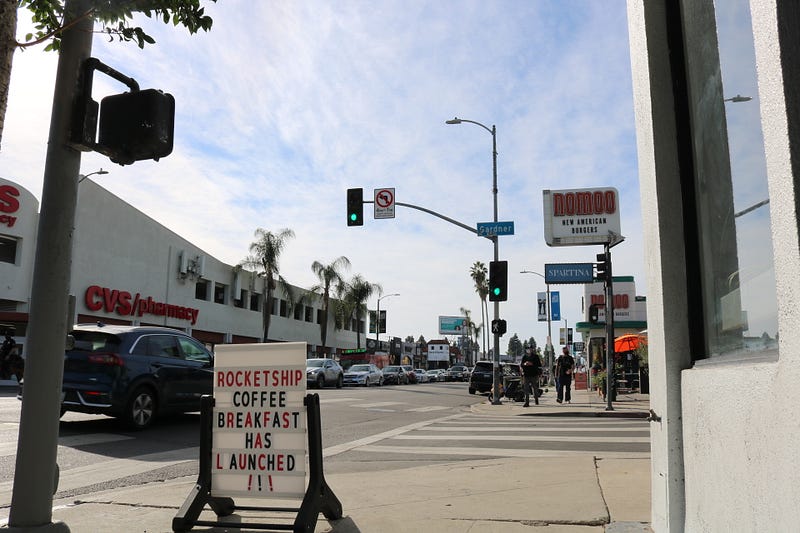
It was at the corner of Melrose and Gardner where I worked up the courage to ask her out. My decision, her response, and our subsequent connection changed my life.
However, it took the previous life-changing fits and starts to put me in the position to alter my course for the better — and probably for the last time. Any future conscious changes — be it to me as an individual or as part of a couple — will happen, if I end up so lucky, with her next to me.
If I left Melrose and Gardner, my life would not have changed the way it has.
I had a chance to leave that corner. To abandon the neighborhood for another bar. I backed out of that decision in late 2019. I retreated — proudly and willingly — to Melrose and Gardner.
The pandemic could have rendered Melrose and Gardner part of my past. But it didn’t. Still, I was drawn to it. I probably always will be.
The power of place.
Millions of interactions happen on city streets. We don’t see most of them. Some are out of view. We don’t notice others, often because we’re too busy playing our role in the street scenes that breed vibrancy that only exists in the world’s great cities.
This neighborhood and street life makes a random corner matter.
In this randomness, I found order as well as meaning and a home.