
avatarFaisal Khan

Free AI web copilot to create summaries, insights and extended knowledge, download it at here

3532

Abstract

y, some additions were done to give them this maneuverability.</p><ol><li>A small lithium-polymer battery to power its operations & motions.</li><li>Motions are powered by shape-memory alloy driven by temperature.</li><li>The circuit board & polymer are made as a flat, triangular unit originally with a couple of folds converting it into a Tribot’s trefoil design.</li></ol> <figure id="3749"> <div> <div> <img class="ratio" src="http://placehold.it/16x9"> <iframe class="" src="https://cdn.embedly.com/widgets/media.html?src=https%3A%2F%2Fwww.youtube.com%2Fembed%2FYGpBieCrKKQ%3Ffeature%3Doembed&amp;url=http%3A%2F%2Fwww.youtube.com%2Fwatch%3Fv%3DYGpBieCrKKQ&amp;image=https%3A%2F%2Fi.ytimg.com%2Fvi%2FYGpBieCrKKQ%2Fhqdefault.jpg&amp;key=a19fcc184b9711e1b4764040d3dc5c07&amp;type=text%2Fhtml&amp;schema=youtube" allowfullscreen="" frameborder="0" height="480" width="854"> </div> </div> </figure></iframe></div></div></figure><h2 id="4ecb">Lightyear One</h2><p id="84df">The World is rapidly moving towards sustainable solutions that are environmentally friendly & replenished from renewable energy rather than burning fossil fuels. A Netherlands based startup called <a href="https://lightyear.one/"><b>Lightyear</b></a><b> </b>has come out with a prototype vehicle which runs for 450 miles (or 725 km) on a single charge — more importantly, the futuristic car is completely powered by solar energy.</p><p id="6437">The car features a smaller than a typical battery, 16 square feet of solar cells embedded in safety glass for passenger safety. It can also power up from the existing network of charging stations. Although the mass production is expected to begin sometimes in 2021 with a price tag of €119,000 (around $136,000 USD), the company claims to have sold more than 100 cars.</p> <figure id="cc91"> <div> <div> <img class="ratio" src="http://placehold.it/16x9"> <iframe class="" src="https://cdn.embedly.com/widgets/media.html?src=https%3A%2F%2Fwww.youtube.com%2Fembed%2FZV9CzBWICO0%3Ffeature%3Doembed&amp;url=http%3A%2F%2Fwww.youtube.com%2Fwatch%3Fv%3DZV9CzBWICO0&amp;image=https%3A%2F%2Fi.ytimg.com%2Fvi%2FZV9CzBWICO0%2Fhqdefault.jpg&amp;key=a19fcc184b9711e1b4764040d3dc5c07&amp;type=text%2Fhtml&amp;schema=youtube" allowfullscreen="" frameborder="0" height="480" width="854"> </div> </div> </figure></iframe></div></div></figure><h2 id="c23d">LEAPER</h2><p id="2ef6">One of the Chinese Biophysicists was recently in the news with his use of the controversial <a href="https://readmedium.com/tech-diaries-the-controversy-around-the-crispr-gene-edited-babies-1c64f0a797f">CRISPR gene-editing</a> technology to bring two baby girls into the World & attempting further human trials. The critique put the Chinese authorities in an awkward spot whether to acknowledge the achievement or censor the procedure.</p><p id="c1ce">While the researcher still remains underground, Researchers from China’s Peking University have now proclaimed to develop a safer CRISPR alternative dubbed as LEAPER — leveraging endogenous ADAR for programmable editing of RNA.</p><p id="3b75">According to the <a href="https://www.nature.com/articles/s41587-019-0178-z">paper published</a> in the journal <i>Nature Biotechnology</i>, LEAPER targets the RNA molecules as compared to the DNA in CRISPR-Cas9 to treat human diseases. T

Options

his makes it easy to deliver & avoids an unwanted reaction. The research is in the early stages of development & will be moving to animal trials soon to prove its success. The move towards replacing CRISPR as the premier gene-editing technology might be a little further off in the future.</p><figure id="ffd2"><img src="https://cdn-images-1.readmedium.com/v2/resize:fit:800/1*VBPKD0rffaDgRRVe7p89mw.png"><figcaption><i>A two-qudit gate, among the first of its kind, maximizes the entanglement of photons so that quantum information can be manipulated more predictably and reliably. (Purdue University image/Allison Rice)</i></figcaption></figure><h2 id="f23b">Qudits</h2><p id="b9d5">Just like the new-age <a href="https://readmedium.com/how-is-moores-law-becoming-irrelevant-in-the-age-of-quantum-computing-5beb39fafc01">quantum computers</a> use qubits as their smallest units of measure, their property of existence in two states (0,1) simultaneously requires a different version of logic from the traditional ones to keep the information flowing in a quantum computing system. A team of Purdue University researchers has published a <a href="https://www.nature.com/articles/s41534-019-0173-8#Fig1">study</a>, attempting to create first known quantum gates incorporating <b>qudits</b>.</p><p id="53fd">The problem with qubits is that they are unstable & creating a system with a lot of them becomes challenging & tedious. That is why quantum computing growth is somewhat limited — In 2018, Google demonstrated 72 qubits information processing power.</p><p id="d9e6">Now, <b>Rigetti Computing</b>, a Berkley (California) — based startup is on a mission to build the World’s most powerful quantum computer yet with 128 qubits processing power.</p><p id="a344">Qudits can solve this problem now — since they can exist in multiple states simultaneously (0, 1, 2), which means fewer of these qudits would be needed to encode & process the information as compared to qubits. Quantum computers may be going mainstream as the race to the Future gathers steam.</p><h2 id="1f45">Email📭| Twitter📜 | LinkedIn📑| StockTwits📉 | Telegram🔗</h2><div id="d96f" class="link-block"> <a href="https://readmedium.com/which-countries-are-most-at-risk-of-a-housing-bubble-154154efb18e"> <div> <div> <h2>Which Countries are most at risk of a Housing Bubble?</h2> <div><h3>Looking at the 4 key Housing Market Indicators in 22 developed Economies</h3></div> <div><p>medium.com</p></div> </div> <div> <div style="background-image: url(https://miro.readmedium.com/v2/resize:fit:320/0*3qt9vuOpnJURSV6v)"></div> </div> </div> </a> </div><div id="dd77" class="link-block"> <a href="https://readmedium.com/what-is-merged-mining-can-it-mitigate-the-effects-of-btc-ltc-halving-ed0266db5574"> <div> <div> <h2>What is merged mining & can it mitigate the effects of BTC & LTC halving</h2> <div><h3>As the deadline for halving nears, Miners might find an unlikely ally in this concept</h3></div> <div><p>medium.com</p></div> </div> <div> <div style="background-image: url(https://miro.readmedium.com/v2/resize:fit:320/0*cfKkDuUP4vYlVR2C.png)"></div> </div> </div> </a> </div></article></body>

Tech Diaries: Neuralink ready to test the Brain-computer Interface (BCI)

Chinese safe alternative to CRISPR, First Long-range solar-powered Car, Tiny Robots & Qudits

After being in a hiatus for about two years, Elon Musk’s futuristic technology company, which set out with a vision of allowing brains to communicate with machines and ultimately giving them the capacity to compete with the Artificial Intelligence has come alive. Musk has already spent $100 million on the company.

The visionary announced the next phase of the BCI — designed fine threads, which are thinner than the human hair will be implanted in a human brain to detect the activity of neurons. A robot, also developed by the company will be executing the procedure under the direction of a neurosurgeon.

He further elaborated that a rat & a monkey are among 19 animals upon which these threads have been implanted for trial purposes with a success rate of 87%. Neuralink plans to start human trials in the second quarter of 2020 pending FDA approval in the U.S. The full transcript of the presentation can be found here.
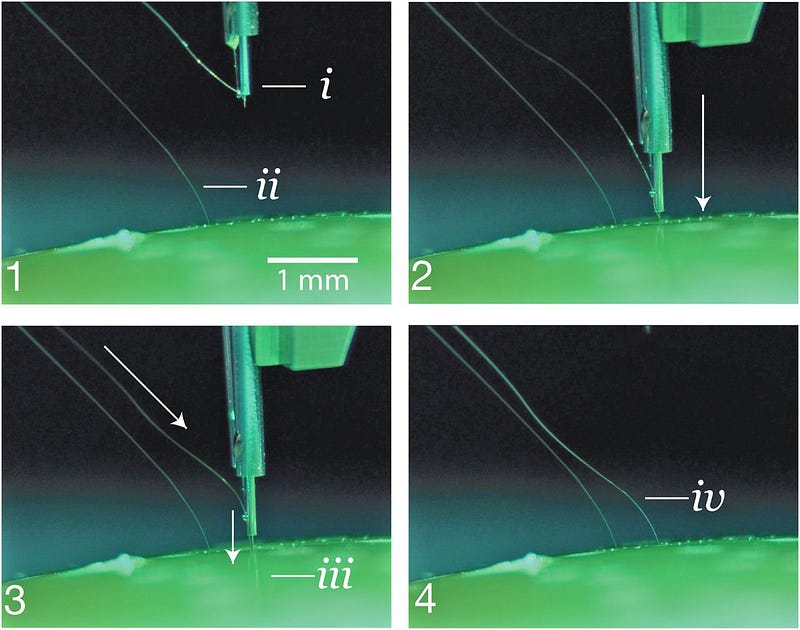
1. The inserter approaches the brain proxy with a thread. i. needle and cannula. ii. previously inserted thread. 2. The Inserter touches down on the brain proxy surface. 3. The needle penetrates tissue proxy, advancing the thread to the desired depth. iii. inserting thread. 4. Inserter pulls away, leaving the thread behind in the tissue proxy. iv. inserted thread. Credit— BCI White Paper

Although exciting to futurists, technology comes with its own sets of risks & hurdles. Researchers are of the opinion that drilling holes in the brain is much riskier than external wearable devices. Also, the ambitious launch target might hit roadblocks, once the Food & Drug Administration gets involved.

And we all know how edgy our friend Elon gets with regulators — earlier, he had to step down as the Chairman of Tesla’s board of directors for three years after a similar ordeal with the SEC (Securities & Exchange Commission) last year. Nonetheless, the implication of this technology is huge. Volunteers anyone?

Tribots

We usually visualize Robots in the humanoid form, but this traditional design has been undergoing a fundamental change with robotic animals & insects becoming popular. Boston Dynamics is one such company, which is getting ready to make their ‘robot dogs’ commercially available soon. Enter the Transformers Age — Swiss researchers have gone a step further by producing robots which are basically a walking circuit board.

These tiny robots can perform hopping, leaping, or walking functions with ease — on their own or in a group activity. Simplistically speaking, tribots are tiny circuit boards on legs, but actually, some additions were done to give them this maneuverability.

  1. A small lithium-polymer battery to power its operations & motions.
  2. Motions are powered by shape-memory alloy driven by temperature.
  3. The circuit board & polymer are made as a flat, triangular unit originally with a couple of folds converting it into a Tribot’s trefoil design.

Lightyear One

The World is rapidly moving towards sustainable solutions that are environmentally friendly & replenished from renewable energy rather than burning fossil fuels. A Netherlands based startup called Lightyear has come out with a prototype vehicle which runs for 450 miles (or 725 km) on a single charge — more importantly, the futuristic car is completely powered by solar energy.

The car features a smaller than a typical battery, 16 square feet of solar cells embedded in safety glass for passenger safety. It can also power up from the existing network of charging stations. Although the mass production is expected to begin sometimes in 2021 with a price tag of €119,000 (around $136,000 USD), the company claims to have sold more than 100 cars.

LEAPER

One of the Chinese Biophysicists was recently in the news with his use of the controversial CRISPR gene-editing technology to bring two baby girls into the World & attempting further human trials. The critique put the Chinese authorities in an awkward spot whether to acknowledge the achievement or censor the procedure.

While the researcher still remains underground, Researchers from China’s Peking University have now proclaimed to develop a safer CRISPR alternative dubbed as LEAPER — leveraging endogenous ADAR for programmable editing of RNA.

According to the paper published in the journal Nature Biotechnology, LEAPER targets the RNA molecules as compared to the DNA in CRISPR-Cas9 to treat human diseases. This makes it easy to deliver & avoids an unwanted reaction. The research is in the early stages of development & will be moving to animal trials soon to prove its success. The move towards replacing CRISPR as the premier gene-editing technology might be a little further off in the future.
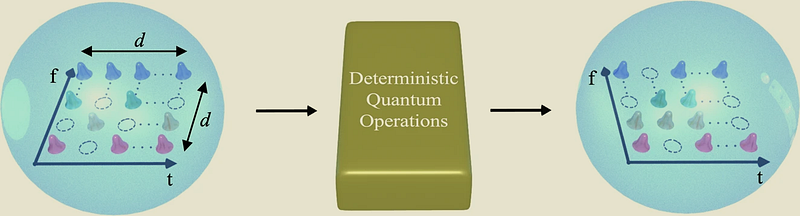
A two-qudit gate, among the first of its kind, maximizes the entanglement of photons so that quantum information can be manipulated more predictably and reliably. (Purdue University image/Allison Rice)

Qudits

Just like the new-age quantum computers use qubits as their smallest units of measure, their property of existence in two states (0,1) simultaneously requires a different version of logic from the traditional ones to keep the information flowing in a quantum computing system. A team of Purdue University researchers has published a study, attempting to create first known quantum gates incorporating qudits.

The problem with qubits is that they are unstable & creating a system with a lot of them becomes challenging & tedious. That is why quantum computing growth is somewhat limited — In 2018, Google demonstrated 72 qubits information processing power.

Now, Rigetti Computing, a Berkley (California) — based startup is on a mission to build the World’s most powerful quantum computer yet with 128 qubits processing power.

Qudits can solve this problem now — since they can exist in multiple states simultaneously (0, 1, 2), which means fewer of these qudits would be needed to encode & process the information as compared to qubits. Quantum computers may be going mainstream as the race to the Future gathers steam.

Email📭| Twitter📜 | LinkedIn📑| StockTwits📉 | Telegram🔗

Technology
Artificial Intelligence
Future
Science
AI
Recommended from ReadMedium