avatarJillian Amatt - Artistic Voyages

Free AI web copilot to create summaries, insights and extended knowledge, download it at here

6134

Abstract

ith a view to Spain from Tangier. Our Moroccan friend pouring tea the right way! Photo Credits: Author</figcaption></figure><p id="0d09">For Moroccans, coffee is not a morning pick-me-up like it is in our culture, rather they will drink it in the afternoon or evening time as a way to relax.</p><h2 id="1d52">Turkey</h2><p id="7cc6">Turkey does both tea and coffee interchangeably. Our first time in Turkey was in 2015 when we were transiting through the Istanbul airport en route from Bulgaria to Greece. There we had our first Turkish coffee and we were shocked by what was left in the bottom of the cup. <b>I wrote a short funny post about that here:</b></p><div id="9407" class="link-block"> <a href="https://artisticvoyages.medium.com/our-first-turkish-coffees-bab92829ffdc"> <div> <div> <h2>Trying Our First Turkish Coffees</h2> <div><h3>We were embarrassingly clueless!</h3></div> <div><p>artisticvoyages.medium.com</p></div> </div> <div> <div style="background-image: url(https://miro.readmedium.com/v2/resize:fit:320/1*Rs17UItw9t82JTKJX3vaaA.jpeg)"></div> </div> </div> </a> </div><p id="ab46">In 2020 we flew to Istanbul from Morocco and spent 2.5 months in the city. Of course, over our time there, we had many, many coffees and teas. They always serve SMALL coffees and this is a big pet peeve of mine in European countries in general.<b> Canadians mostly prefer big coffees!</b></p><p id="9ae2" type="7">Did you know that Istanbul spans both continents of Europe and Asia?</p><figure id="17e0"><img src="https://cdn-images-1.readmedium.com/v2/resize:fit:800/1*bNnEUxT7a_uNH4wdrOwL5g.jpeg"><figcaption>A tiny Turkish coffee. Photo Credit: Author</figcaption></figure><p id="bd4f">The Turkish also do their tea in a unique way. They serve it in adorable little decorative glasses.</p><figure id="70de"><img src="https://cdn-images-1.readmedium.com/v2/resize:fit:800/1*osOj1AzNVqxtqRRbr6OKpA.jpeg"><figcaption>An adorable little tea tray served at Mado. Photo Credit: Author</figcaption></figure><p id="8e45">One day while Chris was getting his haircut, I was offered some tea from the barber.</p><figure id="3518"><img src="https://cdn-images-1.readmedium.com/v2/resize:fit:800/1*vda4ljuL-VYBex8Ilax0Gg.jpeg"><figcaption>Tea at the barber shop. Photo Credit: Author</figcaption></figure><p id="a725">In fact, most businesses in both Morocco and Turkey will insist on serving tea to their patrons. We have sat in many, many different establishments drinking tea with shop owners.</p><p id="d334" type="7">It’s always a nice time.</p><h2 id="4e2d">Sudan</h2><p id="8f9f">Sudan does its tea and coffee on the streets at little street side stalls that are set up on almost every corner. All men sit around on the tiny stools and drink tea and coffee while carrying on about the gossip of the day.</p><figure id="9c7c"><img src="https://cdn-images-1.readmedium.com/v2/resize:fit:800/0*yJTfTk2hqExhwV-j.jpeg"><figcaption></figcaption></figure><figure id="e209"><img src="https://cdn-images-1.readmedium.com/v2/resize:fit:800/1*xH1THsKACpO1mJIijLymkg.jpeg"><figcaption>A small traditional Sudanese coffee pot. They also make them out of clay. The fuzzy part on top is a filter. Photo Credits: Author</figcaption></figure><p id="2b8e">Coffee, called ‘jabna’ by the locals, is made with boiled water that is cooked over open fires fueled by wood.</p><p id="e6c5"><b>They add ginger powder to it to make it healthy and delicious!</b></p><p id="a486">We have adopted this tradition slightly, but grate fresh ginger into our coffees when we find some available, these days.</p><figure id="79b2"><img src="https://cdn-images-1.readmedium.com/v2/resize:fit:800/0*NxkesHBJoKQFJuCw.jpeg"><figcaption>Water boiling on the street. Photo Credit: Author</figcaption></figure><p id="cafa">While living in Port Sudan for a couple of months, we found many nice coffee stands. We made friends with some of the locals and would meet them repeatedly at a specific spot. <b>We were amazed at how long they would sit and drink coffee and tea throughout the day.</b></p><figure id="7775"><img src="https://cdn-images-1.readmedium.com/v2/resize:fit:800/1*fmveuH-_OFiZDw42_bEjuA.jpeg"><figcaption>Our coffee friends. Photo Credit: Author Image used with permission from subjects.</figcaption></figure><p id="adde">We didn’t drink much tea in Sudan, but we noticed that those who did always drank it from a pre-packaged tea bag. They didn’t seem to do loose tea at all.</p><p id="f80c">We also found a really nice place on the water where we could watch the sunset from. Sudan has very little alcohol as it is against the law, so people come out in the evening and gather after work to drink coffee and tea.</p><p id="1566" type="7">Coffee and tea is a huge part of Sudan’s evening culture.</p><div id="9219" class="link-block"> <a href="https://youtube.com/shorts/SfjKEvMfCSs?feature=share"> <div> <div> <h2>SUDANESE COFFEE ON THE INLET | #shorts | Port Sudan, Sudan | السودان</h2> <div><h3>We LOVE our coffees and are thrilled that Sudan has such a strong coffee culture. Check out how amazing the little…</h3></div> <div><p>youtube.com</p></div> </div> <div> <div style="background-image: url(https://miro.readmedium.com/v2/resize:fit:320/0*Of9F6eUMgJd3Ql7e)"></div> </div> </div> </a> </div><h2 id="45da">Uganda</h2><p id="151f">It was in Uganda where we learned the most about coffee and how it is grown, harvested and made into the drink we enjoy today. We accompanied a friend to his coffee plantation one day, and we picked some coffee beans.</p><figure id="2497"><img src="https://cdn-images-1.readmedium.com/v2/resize:fit:800/1*KRK6WO2yKU8ZbfgWpD6Eqw.jpeg"><figcaption>Photo Credit: Cris Kaseke, Used with permission.</figcaption></figure><p id="83aa" type="7">Did you know that only the red beans are

Options

ready for picking? All coffee that you drink is HAND PICKED by somebody!</p><figure id="945c"><img src="https://cdn-images-1.readmedium.com/v2/resize:fit:800/1*scR279nH7cDSl-PDQKxP6g.jpeg"><figcaption></figcaption></figure><figure id="e8a8"><img src="https://cdn-images-1.readmedium.com/v2/resize:fit:800/1*kZp1lhHzdqEph7tCYwCFSA.jpeg"><figcaption>The green beans stay on the plant. It is a VERY laborious process and this is just the beginning. Photo Credits: Author</figcaption></figure><p id="d7e9">The process of getting coffee into your cup is extremely laborious and quite a complicated process. We did make coffee out of the beans that we picked on this day, and I plan to write an article about the whole process soon.</p><p id="9c27">Like many places that produce coffee, they send most of the good stuff out of the country. Ugandans don’t really drink coffee, they mostly drink tea, but when they do, it is usually instant coffee.</p><p id="8301">They make it into “African Coffee” which is instant coffee mixed with hot milk and sugar. If you order it in a restaurant, it usually comes in your own personal little pot that you pour yourself.</p><figure id="6407"><img src="https://cdn-images-1.readmedium.com/v2/resize:fit:800/1*8xE6hHomqegfL10RdQVoqA.jpeg"><figcaption>African coffee ready in a personal pot. Photo Credit: Author</figcaption></figure><p id="a8e9">Some places may add spices for flavor, and of course, you can find coffee shops that serve cappuccinos and higher-end coffee, but you pay a lot for it in comparison to the local coffee.</p><p id="6c0f">Uganda also is a huge tea-producing country. While traveling by bus we noticed many tea plantations throughout the country.</p><figure id="5175"><img src="https://cdn-images-1.readmedium.com/v2/resize:fit:800/1*2ot-x4R0awE2m3K62q_46w.jpeg"><figcaption></figcaption></figure><figure id="db71"><img src="https://cdn-images-1.readmedium.com/v2/resize:fit:800/1*3NlzTXLzbJ1pqpaqGHustQ.jpeg"><figcaption>Tea plantations stretch for miles in Uganda. Photo Credits: Author</figcaption></figure><p id="658c" type="7">Tea is also handpicked!</p><h2 id="c682">Our everyday coffee</h2><p id="10f0">As mentioned, we purchased a few ‘coffee socks’ in Costa Rica, and we tend to make our own coffee wherever we go. We purchase the coffee and carry it with us, so we know that no matter what, we can always have a good cup of coffee in the morning. It is something that gets us started on the day, and most days is non-negotiable.</p><p id="7d41">I hope you enjoyed our coffee and tea highlights from the places that we have traveled. I know that many places in the world have their own specific coffee or tea culture, and if you feel like telling me about it, I would love for you to comment below:)</p><p id="f61f" type="7">A special thanks to the Digital Global Traveler publication for publishing my story!</p><p id="ea93"><b><i>More articles by me:</i></b></p><div id="c8b3" class="link-block"> <a href="https://readmedium.com/ugandan-sayings-that-we-love-and-will-miss-ecff072f2dcb"> <div> <div> <h2>Ugandan Sayings That We Love and Will Miss</h2> <div><h3>We have learned a new way of saying things this past year.</h3></div> <div><p>medium.com</p></div> </div> <div> <div style="background-image: url(https://miro.readmedium.com/v2/resize:fit:320/0*B7qhFjcM9lWJDFbm)"></div> </div> </div> </a> </div><div id="f7c6" class="link-block"> <a href="https://readmedium.com/the-strangest-thing-i-ever-ate-i-think-efb02aecd3cc"> <div> <div> <h2>The Strangest Thing I Ever Ate, I Think</h2> <div><h3>I want to believe that I didn’t, but I probably did.</h3></div> <div><p>medium.com</p></div> </div> <div> <div style="background-image: url(https://miro.readmedium.com/v2/resize:fit:320/1*8oGUKlX7QcpOC3Hec3RnJQ.jpeg)"></div> </div> </div> </a> </div><div id="6ff9" class="link-block"> <a href="https://readmedium.com/a-visit-to-kassala-sudan-6c1c95410e1c"> <div> <div> <h2>A Visit To Kassala, Sudan</h2> <div><h3>Home of the Taka Mountains and the Gash River.</h3></div> <div><p>medium.com</p></div> </div> <div> <div style="background-image: url(https://miro.readmedium.com/v2/resize:fit:320/1*ZNSlo8bib5nIVvk_K2uc-g.jpeg)"></div> </div> </div> </a> </div><figure id="a745"><img src="https://cdn-images-1.readmedium.com/v2/resize:fit:800/1*IDlDKuxoG0gmCX-cVp-Utw.png"><figcaption></figcaption></figure><p id="238a"><i>Hi there, we are 2 Canadians, Jill and Chris from Artistic Voyages. We have been nomadic since 2017 living in numerous different countries, and experiencing the life and diversity of our planet on the ground and firsthand. We paint FREE murals in exchange for accommodation.<b> <a href="https://ko-fi.com/artisticvoyages">Consider tipping us on Ko-fi!</a></b></i></p><p id="9119"><b><i>Subscribe to Medium through my <a href="https://artisticvoyages.medium.com/membership">referral link</a> (I will earn a small commission) to get full access to my writing plus thousands of others! Plus sign up <a href="https://artisticvoyages.medium.com/subscribe">here</a> to get my articles by email!</i></b></p><p id="ff1d"><i>Join our adventure by hitting the links below!</i></p><p id="d9d6"><a href="http://www.artisticvoyages.com/">Website</a> | <a href="http://www.instagram.com/artisticvoyages">Instagram</a> | <a href="http://www.facebook.com/artisticvoyages">Facebook</a> | <a href="http://www.twitter.com/artisticvoyages">Twitter</a> | <a href="http://www.patreon.com/artisticvoyages">Patreon</a>|<a href="http://www.youtube.com/c/artisticvoyages"> YouTube</a> | <a href="https://artisticvoyages.medium.com/">Mediu</a>m</p></article></body>

Tea and Coffee Culture Around the World

Every country loves one of these popular drinks.
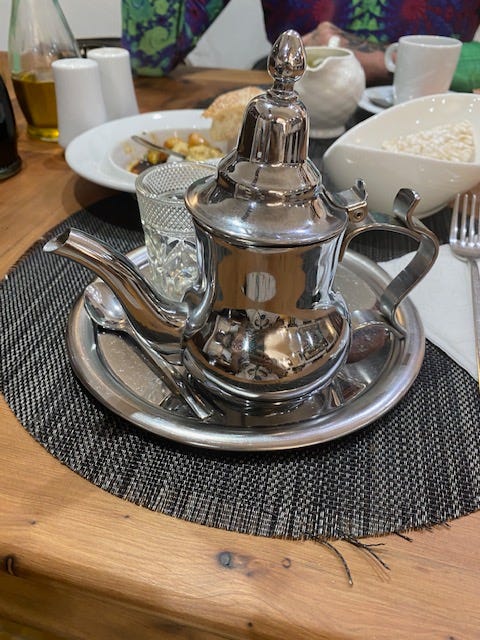
A beautiful Moroccan teapot. Photo Credit: Author

I recently wrote an article about how much Moroccans love their mint tea, and it inspired me to dive deeper into our experiences with tea and coffee while we have full-time traveled around the world for the past (almost) 5 years.

According to this website, Tea and Coffee find themselves in the top four consumed drinks in the world.

  1. Orange Juice
  2. Tea
  3. Milk
  4. Coffee

Because my dad is British, I was introduced to the tea tradition at a young age. While he didn’t really drink it much when I was a kid growing up in Canada, I learned all about it when I would visit my grandparents in England. Tea times would happen throughout the day and we often would move around their neighborhood visiting people during tea time many days of our visit.

I could see then how much tea was a part of their culture.

I started drinking coffee in high school in Canada. My friends and I would spend many hours sitting in the local coffee houses, drinking coffee and hanging out. At some point, Tim Hortons* became a growing concern, and many of us got onto the double-double train.

*Tim Hortons is a coffee and donut chain much like Dunkin Donuts in the US. A double-double is a coffee with 2 creams and 2 sugars.*

But, I have also learned that tea and coffee are famous drinks in many parts of the world, and along with them come customs and traditions that sometimes date back thousands of years.

In this article, I will take you on a tour of our tea and coffee experiences over our past (almost) five years of full-time travel and will highlight the countries of Costa Rica, Morocco, Turkey, Sudan, and Uganda.

Costa Rica
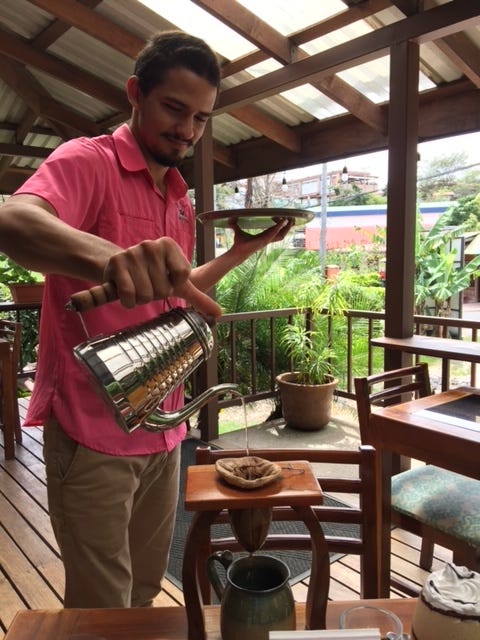
Pouring hot water through a ‘coffee sock’.

Costa Rica was the first stop on our nomadic journey back in 2017. Of course, Costa Rica is a HUGE coffee-producing nation, so it is no surprise that they have their own way of drinking it (although most locals can’t afford it and I learned that they export most of the good stuff). There they use what they call a ‘bolsa de cafe’ with translates to ‘coffee bag’, but we prefer to call them “coffee socks”. It's simply a cotton bag that you put the coffee grounds in, then you pour hot water through it into your cup below (see picture.)

Many places have these elaborate stands with which to put the sock, but we ended up purchasing many of these socks and we hold them over our cup while we pour water through it. We use our coffee socks quite frequently on the road because we also carry our own travel mugs, so as long as we can find hot water, we can always make our own coffees.

Morocco

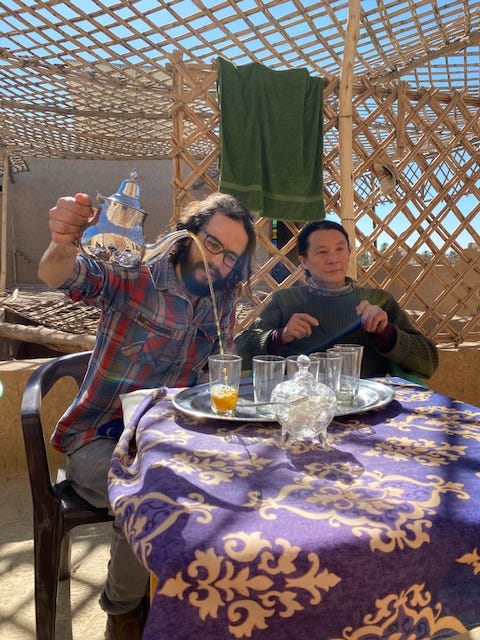
Morocco does both coffee and tea, but its tea culture takes center stage. Specifically, the mint tea.

We lived in a few different places in Morocco and can attest that tea is served all day!

As stated above, I wrote a whole post about it, so I won’t write more here but will share a couple of photos. To read the article, click below.

Despite it not being as popular as their tea, Morocco also does coffee very well. In fact, they add a whole bunch of spices to their coffee which makes it delicious! If you go to the markets to buy coffee in bulk, you can request that they make it the traditional way and they will mix a bunch of spices right into it for you.

If you are interested in the ingredients of Moroccan spiced coffee, it seems to be a combination of:

  • Cinnamon
  • Ginger
  • Cardamom
  • Clove
  • Black Pepper
  • Nutmeg.

The Hungry Traveller goes into more details about the recipe and cooking process here:
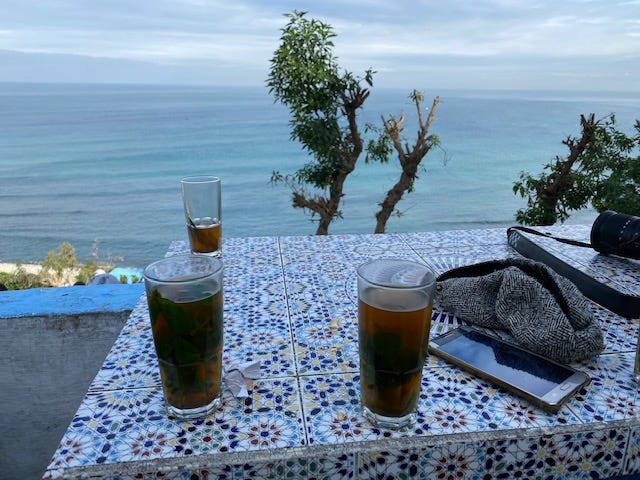
Tea with a view to Spain from Tangier. Our Moroccan friend pouring tea the right way! Photo Credits: Author

For Moroccans, coffee is not a morning pick-me-up like it is in our culture, rather they will drink it in the afternoon or evening time as a way to relax.

Turkey

Turkey does both tea and coffee interchangeably. Our first time in Turkey was in 2015 when we were transiting through the Istanbul airport en route from Bulgaria to Greece. There we had our first Turkish coffee and we were shocked by what was left in the bottom of the cup. I wrote a short funny post about that here:

In 2020 we flew to Istanbul from Morocco and spent 2.5 months in the city. Of course, over our time there, we had many, many coffees and teas. They always serve SMALL coffees and this is a big pet peeve of mine in European countries in general. Canadians mostly prefer big coffees!

Did you know that Istanbul spans both continents of Europe and Asia?
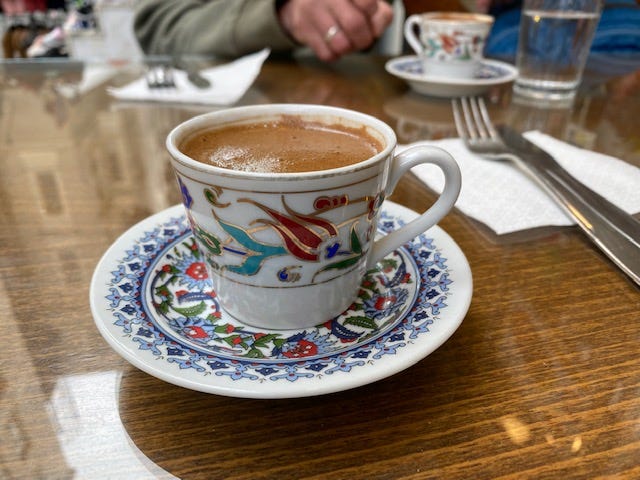
A tiny Turkish coffee. Photo Credit: Author

The Turkish also do their tea in a unique way. They serve it in adorable little decorative glasses.
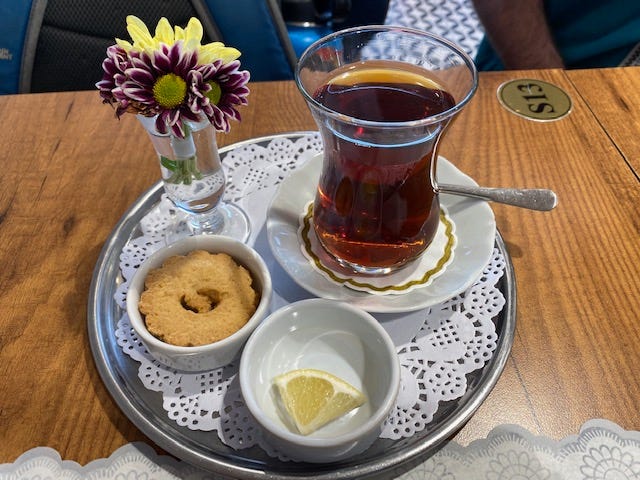
An adorable little tea tray served at Mado. Photo Credit: Author

One day while Chris was getting his haircut, I was offered some tea from the barber.
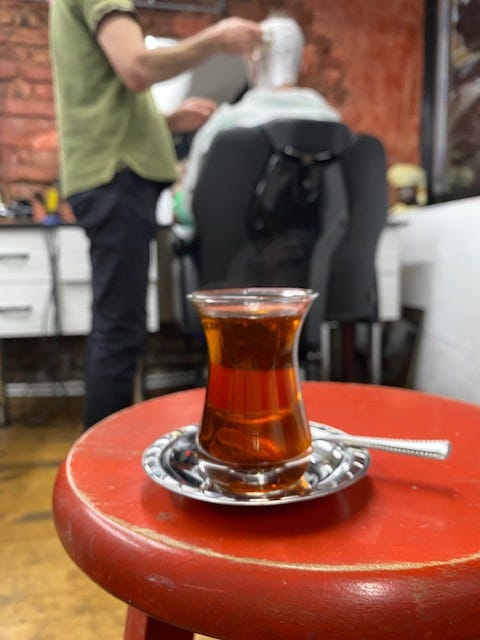
Tea at the barber shop. Photo Credit: Author

In fact, most businesses in both Morocco and Turkey will insist on serving tea to their patrons. We have sat in many, many different establishments drinking tea with shop owners.

It’s always a nice time.

Sudan

Sudan does its tea and coffee on the streets at little street side stalls that are set up on almost every corner. All men sit around on the tiny stools and drink tea and coffee while carrying on about the gossip of the day.
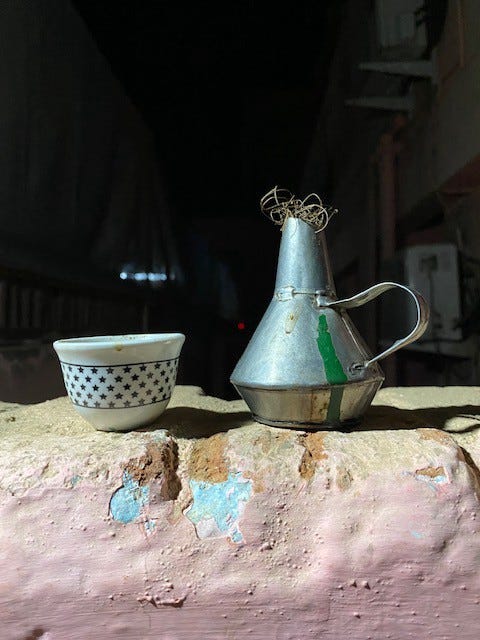
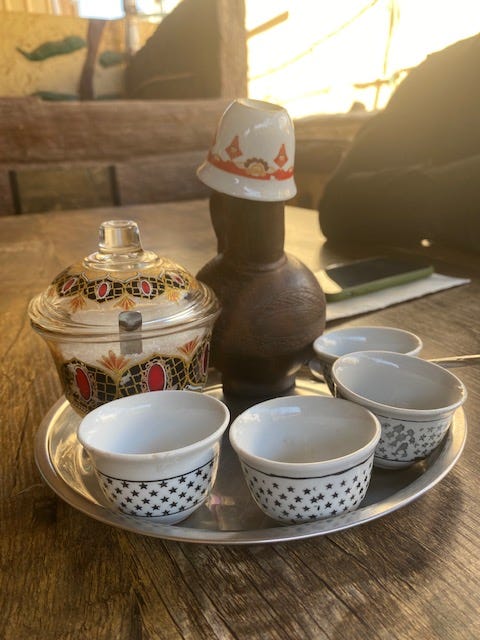
A small traditional Sudanese coffee pot. They also make them out of clay. The fuzzy part on top is a filter. Photo Credits: Author

Coffee, called ‘jabna’ by the locals, is made with boiled water that is cooked over open fires fueled by wood.

They add ginger powder to it to make it healthy and delicious!

We have adopted this tradition slightly, but grate fresh ginger into our coffees when we find some available, these days.
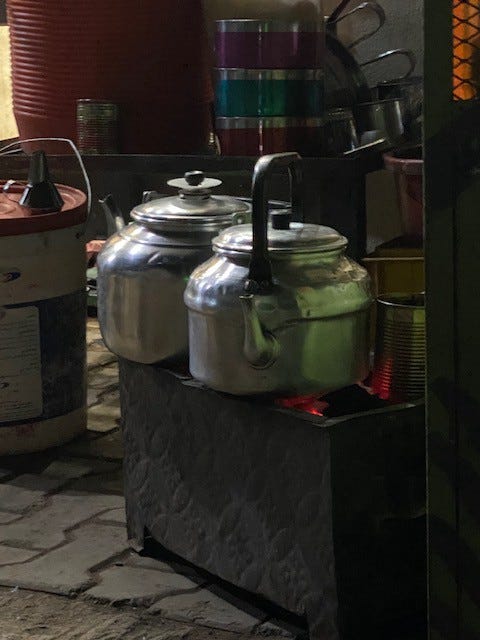
Water boiling on the street. Photo Credit: Author

While living in Port Sudan for a couple of months, we found many nice coffee stands. We made friends with some of the locals and would meet them repeatedly at a specific spot. We were amazed at how long they would sit and drink coffee and tea throughout the day.
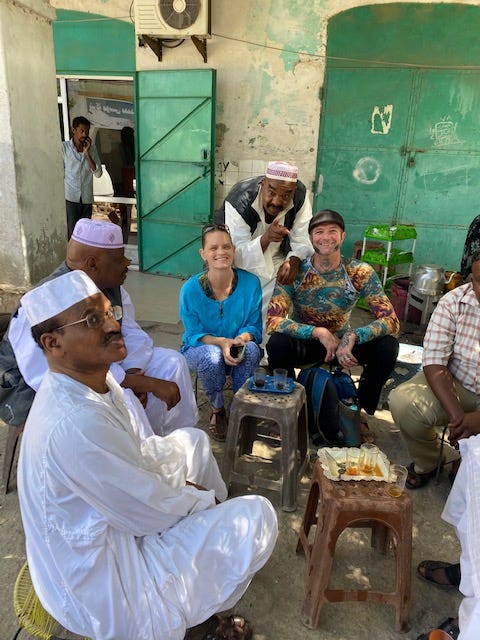
Our coffee friends. Photo Credit: Author Image used with permission from subjects.

We didn’t drink much tea in Sudan, but we noticed that those who did always drank it from a pre-packaged tea bag. They didn’t seem to do loose tea at all.

We also found a really nice place on the water where we could watch the sunset from. Sudan has very little alcohol as it is against the law, so people come out in the evening and gather after work to drink coffee and tea.

Coffee and tea is a huge part of Sudan’s evening culture.

Uganda

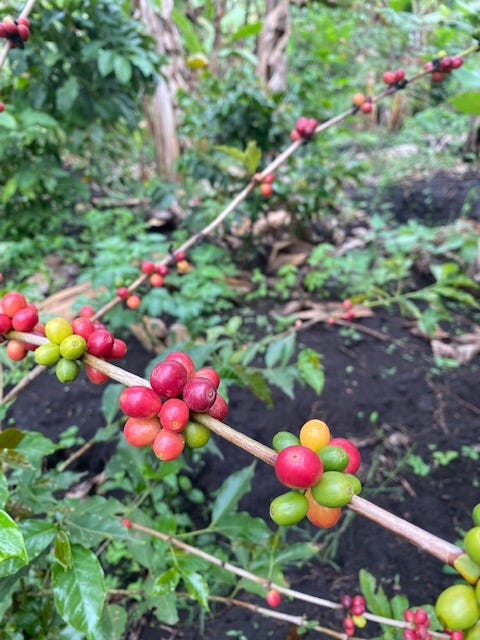
It was in Uganda where we learned the most about coffee and how it is grown, harvested and made into the drink we enjoy today. We accompanied a friend to his coffee plantation one day, and we picked some coffee beans.
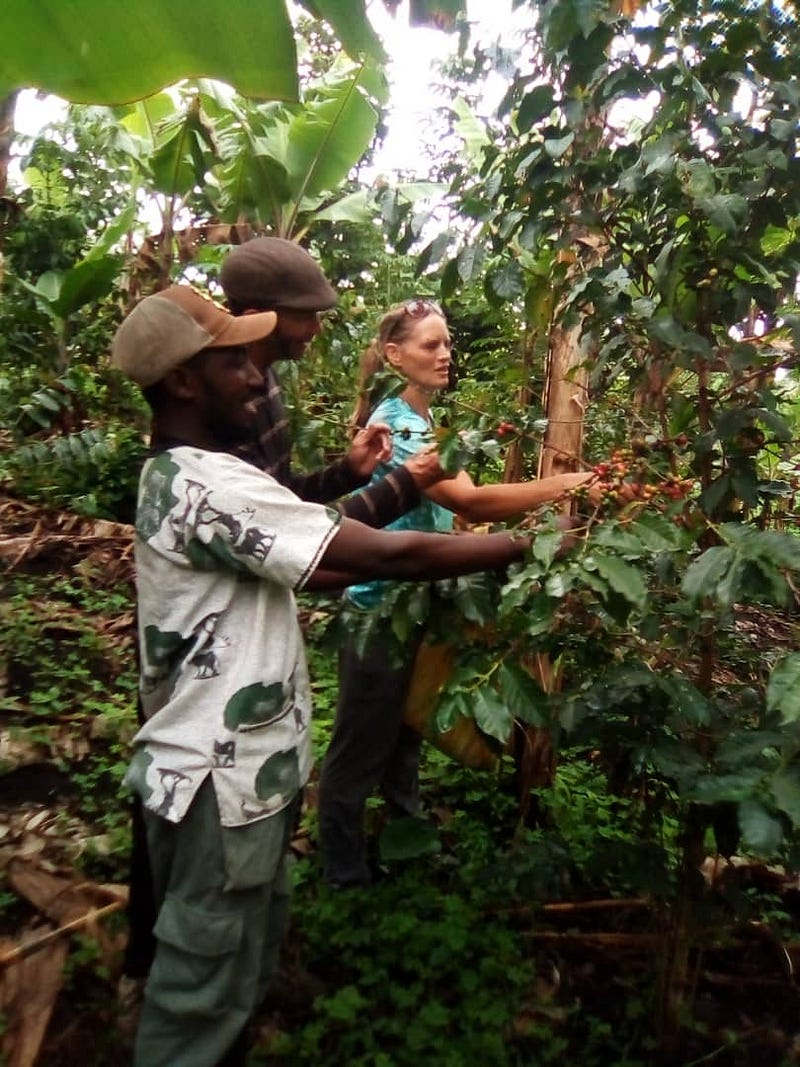
Photo Credit: Cris Kaseke, Used with permission.

Did you know that only the red beans are ready for picking? All coffee that you drink is HAND PICKED by somebody!
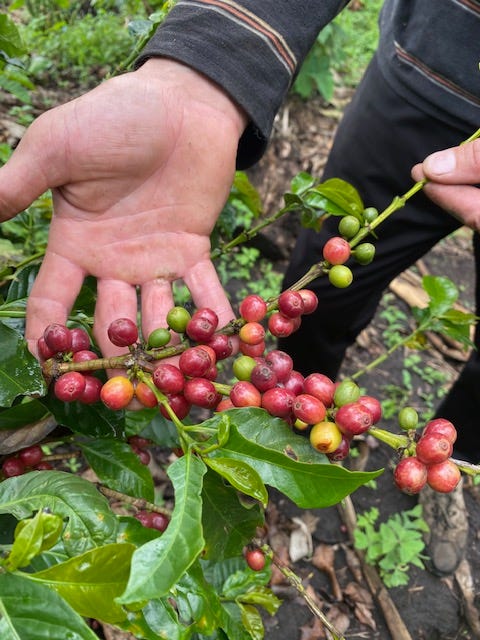
The green beans stay on the plant. It is a VERY laborious process and this is just the beginning. Photo Credits: Author

The process of getting coffee into your cup is extremely laborious and quite a complicated process. We did make coffee out of the beans that we picked on this day, and I plan to write an article about the whole process soon.

Like many places that produce coffee, they send most of the good stuff out of the country. Ugandans don’t really drink coffee, they mostly drink tea, but when they do, it is usually instant coffee.

They make it into “African Coffee” which is instant coffee mixed with hot milk and sugar. If you order it in a restaurant, it usually comes in your own personal little pot that you pour yourself.
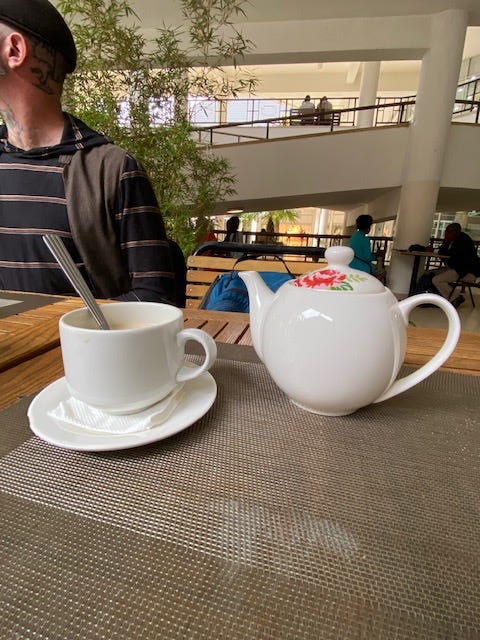
African coffee ready in a personal pot. Photo Credit: Author

Some places may add spices for flavor, and of course, you can find coffee shops that serve cappuccinos and higher-end coffee, but you pay a lot for it in comparison to the local coffee.

Uganda also is a huge tea-producing country. While traveling by bus we noticed many tea plantations throughout the country.
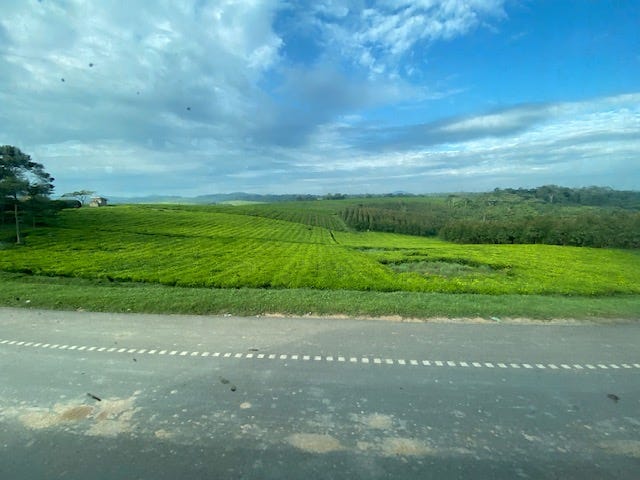
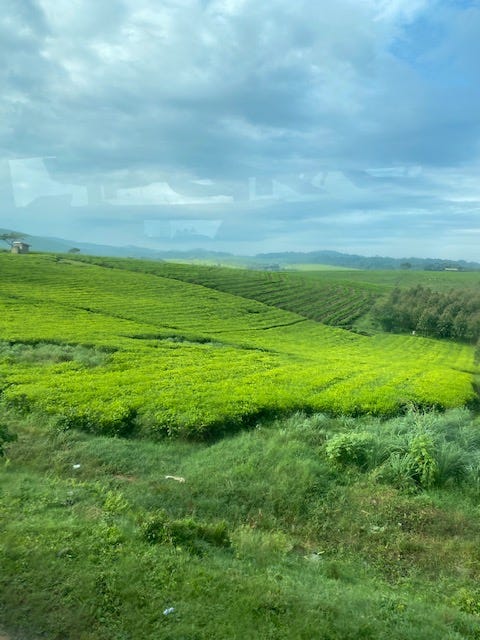
Tea plantations stretch for miles in Uganda. Photo Credits: Author

Tea is also handpicked!

Our everyday coffee

As mentioned, we purchased a few ‘coffee socks’ in Costa Rica, and we tend to make our own coffee wherever we go. We purchase the coffee and carry it with us, so we know that no matter what, we can always have a good cup of coffee in the morning. It is something that gets us started on the day, and most days is non-negotiable.

I hope you enjoyed our coffee and tea highlights from the places that we have traveled. I know that many places in the world have their own specific coffee or tea culture, and if you feel like telling me about it, I would love for you to comment below:)

A special thanks to the Digital Global Traveler publication for publishing my story!

More articles by me:

Hi there, we are 2 Canadians, Jill and Chris from Artistic Voyages. We have been nomadic since 2017 living in numerous different countries, and experiencing the life and diversity of our planet on the ground and firsthand. We paint FREE murals in exchange for accommodation. Consider tipping us on Ko-fi!

Subscribe to Medium through my referral link (I will earn a small commission) to get full access to my writing plus thousands of others! Plus sign up here to get my articles by email!

Join our adventure by hitting the links below!

Website | Instagram | Facebook | Twitter | Patreon| YouTube | Medium

Coffee
Tea
Travel
Food And Drink
Digital Global Traveler
Recommended from ReadMedium
avatarAuthor, D. Denise Dianaty
Citrus Cake

My son’s favorite birthday cake

5 min read