avatarPaul Myers MBA

Free AI web copilot to create summaries, insights and extended knowledge, download it at here

4495

Abstract

Neisser (1976), who defined tacit knowledge as the “knowledge that is largely acquired through experience, about how to act in specific situations, but that is not readily articulated or widely shared.”</p><p id="7cc6">Wagner (1985) defines tacit knowledge as an aspect of practically intelligent behavior that is acquired through experience and is unrelated to general cognitive ability.</p><p id="7e97" type="7">Tacit knowledge is our level of practical intelligence.</p><p id="758e">Sternberg (1998) said, “it is a function of an individual’s practical ability to learn from and to solve everyday problems in order to adapt to, to select, and to shape one’s environment in the pursuit of one’s personal goals.”</p><p id="5b06">Tacit knowledge differentiates between top performers across domains, like architecture, innovation, psychology, sales, academia, <a href="https://readmedium.com/a-complete-marketing-plan-for-the-photography-studio-i-just-got-beautiful-portraits-from-6700e7854cbe">marketing</a>, and leadership.</p><p id="b60b">Schon (1983) described it as “knowing-in-action”, akin to Polanyi’s (1958) “knowing more than we can tell.”</p><figure id="0ba2"><img src="https://cdn-images-1.readmedium.com/v2/resize:fit:800/0*3gpOv9LdYEFTzsBS"><figcaption>Photo by <a href="https://unsplash.com/@timmossholder?utm_source=medium&amp;utm_medium=referral">Tim Mossholder</a> on <a href="https://unsplash.com?utm_source=medium&amp;utm_medium=referral">Unsplash</a></figcaption></figure><h2 id="7776">Application</h2><p id="17d3">Applying tacit knowledge at work is through employees, leaders, and <a href="https://readmedium.com/the-difference-between-toxic-micromanagers-and-leaders-ad7899ed06a4">managers</a> who make decisions every day that they cannot fully explain in lay terms — the how or why they know the correct course of action.</p><p id="a4b1">All knowledge is acquired by doing, performing everyday activities. It simply lacks conscious awareness of what was learned. I can't recall learning how to walk, but I did it, and do it every day without a second thought.</p><blockquote id="80c7"><p>Studies show that tacit knowledge increases in proportion with job experience and correlates highly with one’s career success.</p></blockquote><p id="d20c">Sternberg (2000) noted that tacit knowledge is a better predictor of career success than general intelligence. That is, people who are skilled at acquiring and developing tacit knowledge perform better in a variety of fields.</p><h2 id="77bd">The future</h2><p id="2edb">Tacit knowledge is a hidden talent; needed now more than ever to successfully adapt, select, improve, and shape our future environment.</p><p id="29cc">It’s an aspect of practical cognition, providing realtime insights to the beholder. Philips said that “knowledge associated with successful performance is tacit” (Philips, 2006).</p><p id="9b0f" type="7">Entrepreneurship is the collision of ignorance, curiosity, courage, and tacit knowledge.</p><p id="9da8">Bennett (1998) argued that the optimal mix is most likely dual processing, using a combination of analytics and tacit knowledge or intuition.</p><div id="f0a2" class="link-block"> <a href="https://readmedium.com/the-top-7-mistakes-i-learned-from-hundreds-of-entrepreneurs-e0f941b3bd76"> <div> <div> <h2>The Top 7 Mistakes I Learned From Hundreds of Entrepreneurs</h2> <div><h3>A spotlight on Entrepreneurship</h3></div> <div><p>medium.com</p></div> </div> <div> <div style="background-image: url(https://miro.readmedium.com/v2/resize:fit:320/1*NysMn4G79Fjgp1CU0XIhcA.jpeg)"></div> </div> </div> </a> </div><p id="6231">For <a href="https://smallbusiness.chron.com/importance-knowledge-management-startup-company-11704.html">startups</a>, ignorant-curiosity, coupled with courage, evolves into a new form of tacit knowledge.</p><p id="1d42">Moreover, Mintzberg (1976) noted that good planners use left-brain analysis, while good <a href="https://readmedium.com/the-difference-between-toxic-micromanagers-and-leaders-ad7899ed06a4">managers</a> feel the intuition associated with the right side function of the brain.</p><p id="4944"><a href="https://en.wikipedia.org/wiki/Henry_Mintzberg">Mintzberg</a> (1976) expanded, concluding that both styles are needed, but are not common in everyone.</p><p id="d3ec">As such, tacit

Options

knowledge should be encouraged as a vital resource to mine, an asset in strategic planning.</p><h2 id="88fb">Problem-based learning</h2><p id="cd4a">Critical thinking and problem-based learning (PBL) are great methods to encourage tacit knowledge uptake, growth, and maturity.</p><p id="351a"><a href="https://en.wikipedia.org/wiki/Problem-based_learning#:~:text=Problem%2Dbased%20learning%20(PBL),problem%20found%20in%20trigger%20material.">Problem-based learning</a> ignites <a href="https://en.wikipedia.org/wiki/Critical_thinking#:~:text=According%20to%20Ennis%2C%20%22Critical%20thinking,guide%20to%20belief%20and%20action.">critical thinking</a>, characteristics of which are:</p><ol><li><i>Learning driven by challenging open-ended problems</i></li><li><i>Work done in small collaborative groups</i></li><li><i>Mentors take on the role of learning“facilitators of learning</i></li></ol><p id="b6e9">PBL is used to improve content knowledge, communication, problem-solving, and self-taught skills; as such its the ideal method to develop tacit knowledge (Sweller<i> et al</i>, 1998).</p><p id="fe35">The lifelong training of tacit knowledge skills can produce a greater caliber of leaders. Problem-based learning is the best method to develop these skills.</p><h1 id="51ea">Final Thoughts</h1><p id="0a9f">Clearly tacit knowledge is a critical skill for future leaders. The development of this skill should be encouraged in early life, from infancy, throughout <a href="https://www.youtube.com/watch?v=Hkd-1zc_Gn4">education</a>, at business schools, and in the workplace.</p><p id="67fe" type="7">Tacit knowledge is lifetime learning.</p><p id="eb27">This can be achieved through practical “on the job experience” rather than “do as I say” lectures or instructions, regardless of life stages.</p><p id="ce73">From recent experience, writers like <a href="undefined">Dr Mehmet</a>, <a href="undefined">George</a>, <a href="undefined">P.G.</a>, <a href="undefined">Joe</a>, <a href="undefined">Sinem</a>, <a href="undefined">Julia</a>, <a href="undefined">Kathryn</a>, <a href="undefined">Aurora</a>, <a href="undefined">Timothy</a>, <a href="undefined">Sean</a>, <a href="undefined">Tony</a>, <a href="undefined">Desiree</a>, <a href="undefined">Matt</a>, <a href="undefined">B. A. Cumberlidge.</a>, <a href="undefined">Rasheed</a>, <a href="undefined">Matthew</a>, <a href="undefined">Chris</a>, <a href="undefined">Casey</a>, <a href="undefined">Tree</a>, and many more demonstrate PBL in motion, its fruition.</p><p id="1066"><a href="https://en.wikipedia.org/wiki/Problem-based_learning#:~:text=Problem%2Dbased%20learning%20(PBL),problem%20found%20in%20trigger%20material.">Problem-based learning</a> should be embedded in society, in our communities, our culture, education, families, and at work.</p><p id="4da6" type="7">Tacit knowledge is the Oracle!</p><p id="3930">Ultimately, tacit knowledge will add equity to <a href="https://readmedium.com/5-human-concepts-to-be-a-better-leader-e9c8434e82e1">humanity</a>, enhancing strategic decisions and activities that impact <a href="https://readmedium.com/21-well-paid-jobs-of-the-future-a9e4001cea8b">the future</a> of everything.</p><div id="ed5d" class="link-block"> <a href="https://readmedium.com/a-new-style-of-leadership-is-emerging-29e4e2b021bf"> <div> <div> <h2>A New Style of Leadership Is Emerging</h2> <div><h3>Startup Entrepreneurs are reinventing leadership.</h3></div> <div><p>medium.com</p></div> </div> <div> <div style="background-image: url(https://miro.readmedium.com/v2/resize:fit:320/1*F7C8tqZp-qe5VA0aVoYtOg.jpeg)"></div> </div> </div> </a> </div><div id="9c21" class="link-block"> <a href="https://readmedium.com/is-it-time-to-reconstruct-porters-five-forces-f4c0cb7b47a"> <div> <div> <h2>Is It Time to Reconstruct Porter’s Five Forces?</h2> <div><h3>A discussion about a 40-year-old business model and two new dimensions that leaders must now consider.</h3></div> <div><p>medium.com</p></div> </div> <div> <div style="background-image: url(https://miro.readmedium.com/v2/resize:fit:320/1*6yY4ntlmJ-F8bo5xzi_ipg.jpeg)"></div> </div> </div> </a> </div></article></body>

LEADERSHIP | FUTURE | EDUCATION

Tacit Knowledge for Leaders of the Future

An insight into the most valuable human asset

Image by Enrique Meseguer from Pixabay

In the smart-economy, traditional assets and resources of production like land, labor, and capital, are fast “becoming secondary to knowledge” (Drucker, 1993).

In the digital world, knowledge “within an organization is frequently identified as the main source of its competitive advantage” (Philips, 2006).

This view is echoed by Nonaka (1994), who proposed that it’s now “the single most important factor”, in terms of resource, for business to survive, innovate, gain and sustain “competitive advantage”.

“Tacit knowledge is the knowledge that individuals possess”

— Nonaka, 1994

Explicit knowledge is the knowledge derived in tangible form. Cultivating explicit knowledge is the aim of business schools in the form of historical management theories and business models.
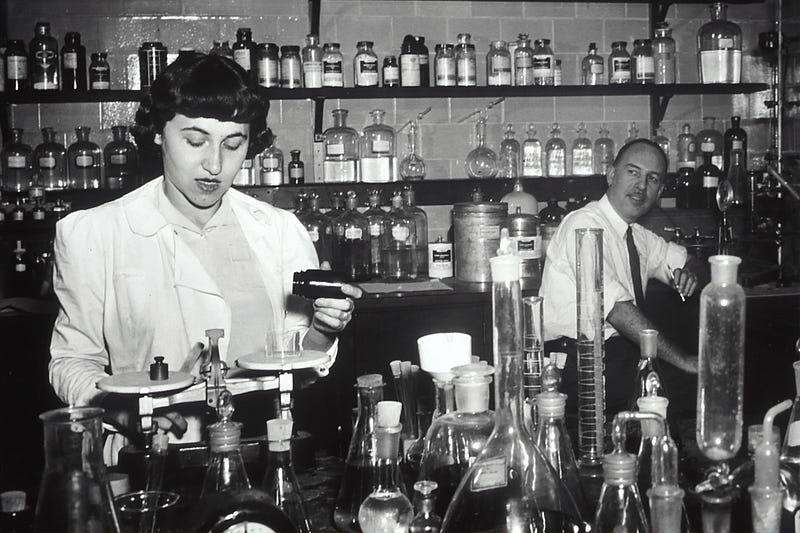
Photo by National Cancer Institute on Unsplash

Contemporary strategic leadership decisions have no precedent, model, or guide and are not easily modeled or analyzed (Daft et al, 1986). So explicit knowledge is underpinned by tacit knowledge.

That article will discuss tacit knowledge for its inclusion in modern society, education, and organizational structure.

Tacit Knowledge

The term tacit knowledge evolved from studies on ecological psychology, science, and organizational behavior by experts like Polanyi, Nonaka, Neisser, Wagner, Sternberg, Schon, and Mintzberg.

So what is tacit knowledge?

The concept comes from the concept, expressed in everyday phrases like or “common sense” or “professional intuition” or “gut-feeling”, hence the reason why much of the knowledge around competent performance, in a particular field, is not always expressed or readily stated (Philips, 2006)

Let’s define tacit knowledge

Polanyi (1958) defined tacit knowledge as “we know more than we can tell.” It’s the notion that people cannot always verbalize how they do some things, but they know how to do it. Whatever it is.

Think of a mechanic who overhears a sound in an engine, instantly he/she knows it’s the oil, the timing belt, or fan. The untrained ear is oblivious.

Other rapid feats include recognition, perception, attention, awareness, information retrieval, and motor control.

Possibly the best definition was by Neisser (1976), who defined tacit knowledge as the “knowledge that is largely acquired through experience, about how to act in specific situations, but that is not readily articulated or widely shared.”

Wagner (1985) defines tacit knowledge as an aspect of practically intelligent behavior that is acquired through experience and is unrelated to general cognitive ability.

Tacit knowledge is our level of practical intelligence.

Sternberg (1998) said, “it is a function of an individual’s practical ability to learn from and to solve everyday problems in order to adapt to, to select, and to shape one’s environment in the pursuit of one’s personal goals.”

Tacit knowledge differentiates between top performers across domains, like architecture, innovation, psychology, sales, academia, marketing, and leadership.

Schon (1983) described it as “knowing-in-action”, akin to Polanyi’s (1958) “knowing more than we can tell.”

Photo by Tim Mossholder on Unsplash

Application

Applying tacit knowledge at work is through employees, leaders, and managers who make decisions every day that they cannot fully explain in lay terms — the how or why they know the correct course of action.

All knowledge is acquired by doing, performing everyday activities. It simply lacks conscious awareness of what was learned. I can't recall learning how to walk, but I did it, and do it every day without a second thought.

Studies show that tacit knowledge increases in proportion with job experience and correlates highly with one’s career success.

Sternberg (2000) noted that tacit knowledge is a better predictor of career success than general intelligence. That is, people who are skilled at acquiring and developing tacit knowledge perform better in a variety of fields.

The future

Tacit knowledge is a hidden talent; needed now more than ever to successfully adapt, select, improve, and shape our future environment.

It’s an aspect of practical cognition, providing realtime insights to the beholder. Philips said that “knowledge associated with successful performance is tacit” (Philips, 2006).

Entrepreneurship is the collision of ignorance, curiosity, courage, and tacit knowledge.

Bennett (1998) argued that the optimal mix is most likely dual processing, using a combination of analytics and tacit knowledge or intuition.

For startups, ignorant-curiosity, coupled with courage, evolves into a new form of tacit knowledge.

Moreover, Mintzberg (1976) noted that good planners use left-brain analysis, while good managers feel the intuition associated with the right side function of the brain.

Mintzberg (1976) expanded, concluding that both styles are needed, but are not common in everyone.

As such, tacit knowledge should be encouraged as a vital resource to mine, an asset in strategic planning.

Problem-based learning

Critical thinking and problem-based learning (PBL) are great methods to encourage tacit knowledge uptake, growth, and maturity.

Problem-based learning ignites critical thinking, characteristics of which are:

  1. Learning driven by challenging open-ended problems
  2. Work done in small collaborative groups
  3. Mentors take on the role of learning“facilitators of learning

PBL is used to improve content knowledge, communication, problem-solving, and self-taught skills; as such its the ideal method to develop tacit knowledge (Sweller et al, 1998).

The lifelong training of tacit knowledge skills can produce a greater caliber of leaders. Problem-based learning is the best method to develop these skills.

Final Thoughts

Clearly tacit knowledge is a critical skill for future leaders. The development of this skill should be encouraged in early life, from infancy, throughout education, at business schools, and in the workplace.

Tacit knowledge is lifetime learning.

This can be achieved through practical “on the job experience” rather than “do as I say” lectures or instructions, regardless of life stages.

From recent experience, writers like Dr Mehmet, George, P.G., Joe, Sinem, Julia, Kathryn, Aurora, Timothy, Sean, Tony, Desiree, Matt, B. A. Cumberlidge., Rasheed, Matthew, Chris, Casey, Tree, and many more demonstrate PBL in motion, its fruition.

Problem-based learning should be embedded in society, in our communities, our culture, education, families, and at work.

Tacit knowledge is the Oracle!

Ultimately, tacit knowledge will add equity to humanity, enhancing strategic decisions and activities that impact the future of everything.

Leadership
Entrepreneurship
Education
Society
Business
Recommended from ReadMedium